Are grey flannel trousers worth adding to your autumn wardrobe?
Yes. Grey flannel trousers earn their place because they sit between denim, chinos and suit trousers: warmer and softer than flat cotton, calmer than sharp worsted wool, and smart enough for work, dinners and travel. In autumn, that middle ground gets worn far more than novelty pieces.
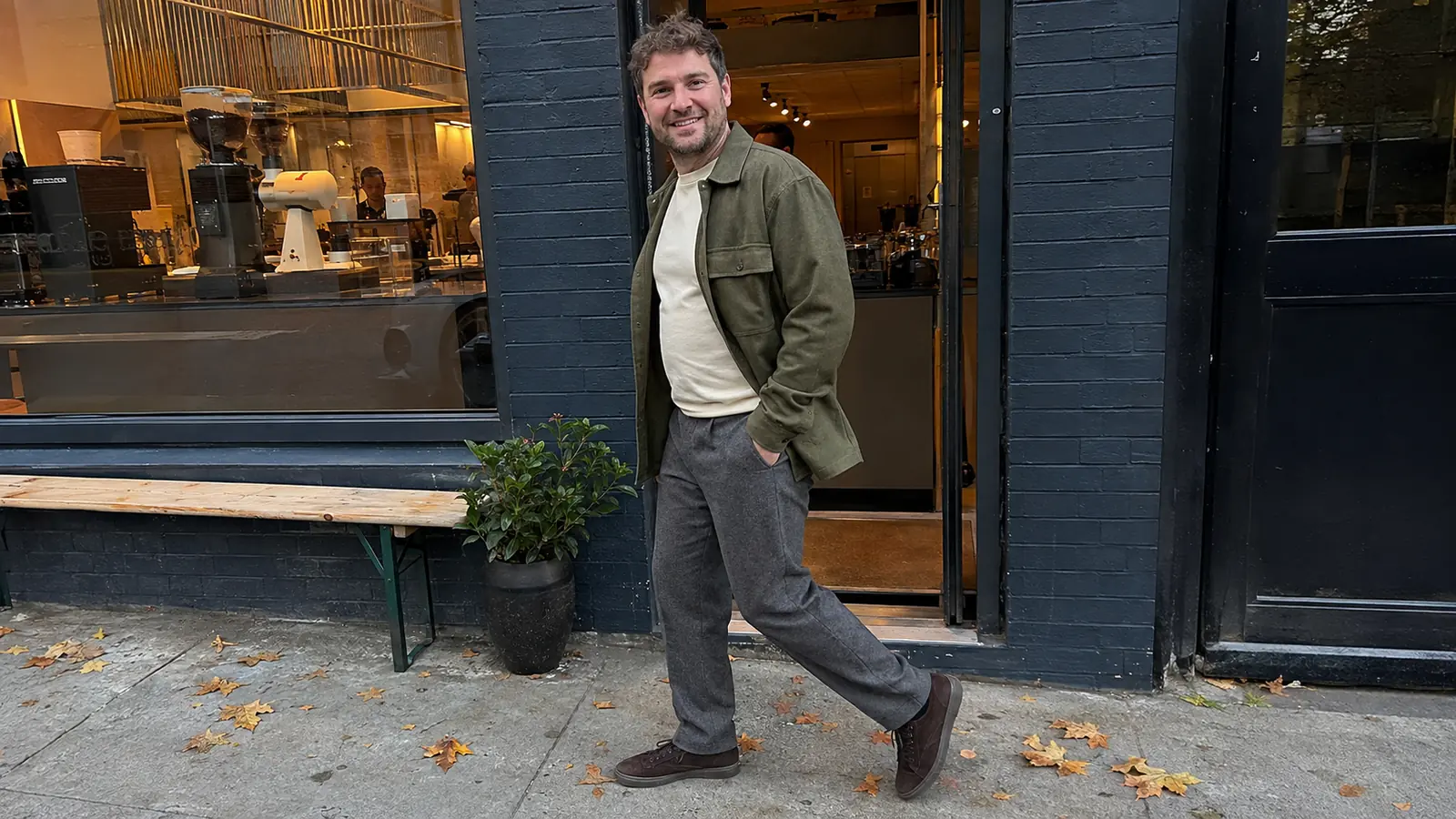
Men's Grey Flannel Trousers Add Relaxed Texture to Everyday Autumn City Outfits
Start with why grey flannel earns its place
Grey flannel answers a very ordinary wardrobe problem: autumn asks for clothes that look polished but still feel at ease. Denim can feel too casual, chinos can look too flat, and suit trousers can seem too sharp once you leave the office.
The Met Office describes UK autumn as a season of cooler temperatures, shorter days and unsettled weather as winter approaches. That matters because dressing becomes less about one perfect outfit and more about layers that sit well together. Grey flannel helps here because it adds texture without shouting.
Mid-grey is the most adaptable shade for most wardrobes. Charcoal reads smarter and works well with darker knitwear or black shoes. Lighter grey can look fresh, although it needs a little more care with shoes, coats and the rest of the outfit.
We see grey flannel as useful because it is neither too formal nor too casual. A pair can sit under a navy blazer during the week, then work with knitwear and suede shoes at the weekend. That repeat wear is the point.
Compare flannel with chinos, denim and worsted wool
The same grey trouser can look entirely different once the cloth changes. Smooth cloth gives a cleaner line, brushed cloth gives softness, and cotton twill gives a flatter, more casual surface.
| Trouser cloth | How it reads | Best autumn use |
|---|---|---|
| Denim | Casual, sturdy, familiar | Weekends, travel, relaxed layers |
| Chinos | Clean but flatter in texture | Mild days, casual offices, simple knitwear |
| Worsted wool | Sharp, smooth, more formal | Suits, formal separates, business wear |
| Flannel | Soft, matte, textured | Jackets, knitwear, coats, smart casual dressing |
| Tweed | Heavier in character, more country in feel | Outdoor jackets, rugged layering, colder days |
Flannel is a soft fabric, usually made from cotton or wool, with a brushed surface that raises the fibres. That brushed surface, called nap, gives the cloth its muted look and its gentle warmth. Wool flannel adds another benefit. According to the International Wool Textile Organisation, wool can absorb up to 35% of its own weight in moisture and then release it as vapour into the air.
That does not mean every flannel trouser feels the same. Cloth weight, fibre and finish change the handle, so two grey flannels can behave quite differently. When we choose cloth at Fielding & Nicholson, we look at how the trousers will be worn first: office, travel, evening, weekend, or all of those in rotation.
Texture is the reason flannel bridges outfits so well. A navy blazer looks more relaxed with grey flannel than it does with sharp suit cloth, and more grown-up than it does with jeans. The cloth changes the whole tone before you add a shirt, knit or shoe.
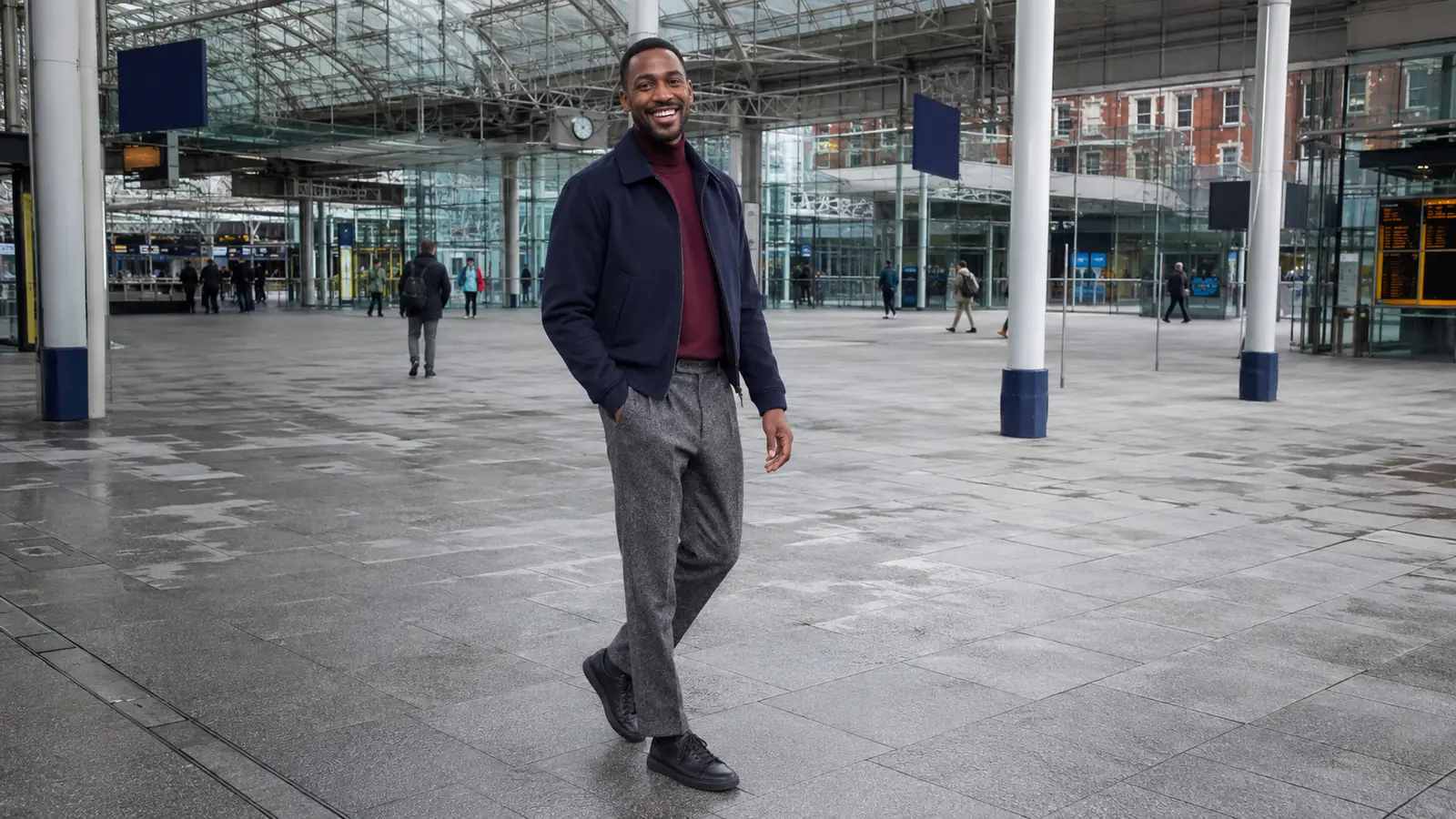
Men's Charcoal Flannel Trousers Create Modern Contrast with Rich Autumn Knitwear Layers

Pro Tip: Mid grey is the most adaptable shade when you want grey flannel trousers to move between navy blazers, knitwear and darker outerwear. It usually gives the widest range of outfit combinations.
Cut the trousers for modern proportion
Put two pairs of grey flannel trousers in the same cloth side by side. One is cut low, tight through the thigh and narrow at the hem; the other has a balanced rise, room through the leg and a clean line over the shoe. The second pair will almost always look easier, newer and more expensive.
The rise sets the line before leg width
Rise means the distance between the waistband and the seat seam. In plain terms, it decides where the trousers sit on your body. A higher rise can lengthen the leg line and sit well under a jacket, while a mid rise may feel more natural if you wear the trousers with knitwear or an open shirt.
A low rise rarely serves flannel well because the cloth wants to hang. If the waistband sits too low, the front can pull and the seat can lose shape. Good flannel trousers need enough room to move, especially if you expect them to work through a full day rather than look good for a photograph.
Pleats and turn-ups need a reason
Pleats are useful when they give the cloth room to fall from the waistband. They can suit many bodies because they let the front of the trouser move with you. Flat fronts can also work, especially in a cleaner, slimmer cut, provided the cloth is not forced tight.
Turn-ups add weight at the hem and can help the trouser hang neatly. They also make the trouser feel a little more relaxed, which suits flannel well. In our bespoke work at Fielding & Nicholson, we judge those choices against the wearer, the shoe and the rest of the wardrobe, because a detail that flatters one person can look heavy on another.
The break is finished around the shoe
Break is the small fold where the trouser meets the shoe. Too much fabric pooling over loafers or polished shoes can make grey flannel look tired. A cleaner break works better for most modern wardrobes, especially when the leg has a little shape through the calf and hem.
Shoes matter here. A fuller boot can take a slightly stronger hem, while a fine loafer needs less fabric sitting on top of it. Once that final line is right, grey flannel stops looking like a suit separate and starts behaving like a deliberate wardrobe piece.
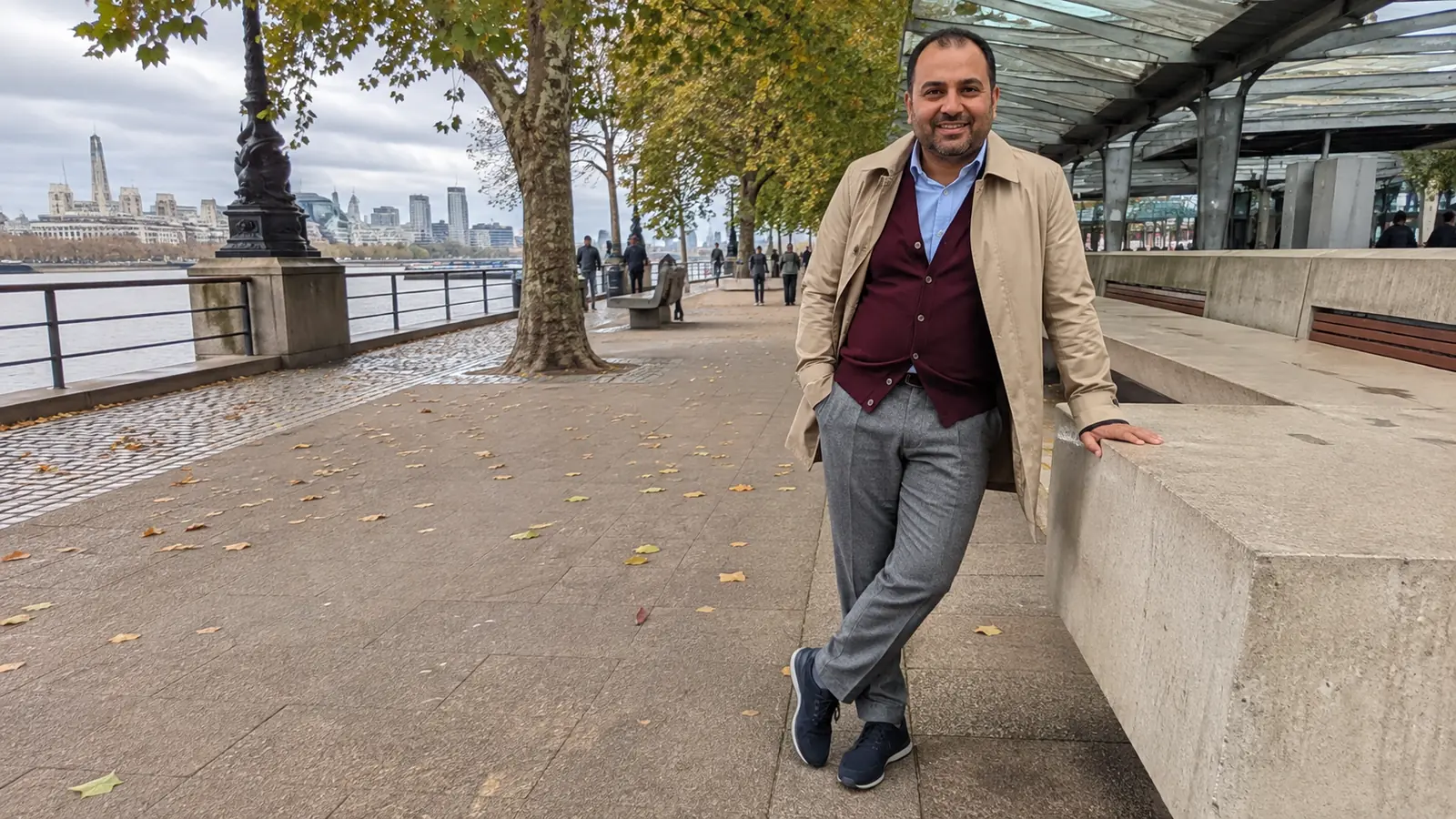
Men's Mid Grey Flannel Trousers Make Versatile Autumn Layering Feel Effortlessly Polished
Wear grey flannel beyond the office
What changes once the trousers leave the office? The top half needs enough texture or structure to hold its own, and the shoes decide how smart the whole outfit feels.
Use these pairings as starting points rather than rules:
- Navy blazer and white or blue shirt. This is the cleanest route into grey flannel, especially in mid-grey. Brown, oxblood or black shoes can all work, depending on the jacket and the setting.
- Fine knitwear, such as a crew neck or roll neck, softens the trousers without making them careless. A flannel trouser with a crease still looks intentional under knitwear.
- Overshirt or soft jacket. This works well when the cloth is mid to dark grey and the shoe has some substance, such as suede loafers or boots.
- Coats should have enough weight or texture to sit with the flannel. Very slick outerwear can make the trousers look disconnected.
- Trainers can work in a restrained outfit, but the cut must be clean and the shoe must look considered. Flannel does not forgive a lazy hem or a tired trainer.
Grey flannel also works without a jacket when the upper half has shape. A fine roll neck under a coat, a crisp shirt under knitwear, or a soft overshirt can all carry the trouser. Casual dressing with flannel still needs polish, especially at the crease, hem and shoe.

Pro Tip: A cleaner break at the shoe helps flannel look deliberate, especially when the cloth has a soft nap. Too much pooling at the hem can make the trousers look tired very quickly.
Treat grey flannel as a long-term wardrobe piece
A poor cloth choice, a cut that fights the body, or careless maintenance can make even a handsome pair of trousers sit unworn. Grey flannel earns its keep when it connects with what you already own: the jackets you reach for, the knitwear you pack for travel, the coats you wear on darker evenings and the shoes that make you feel properly dressed.
Care is straightforward, but it matters. Brush the cloth to lift surface dust, let the trousers air after wear, and give them time on a proper hanger. Steaming can freshen the cloth, though too much heat and pressure can flatten the nap. Dry cleaning has its place, but constant cleaning is rarely kind to flannel.
Wardrobe planning sounds grand until you reduce it to a simple question: will this pair make getting dressed easier on the days you actually live? If the answer is yes, grey flannel becomes one of the most dependable autumn choices you can own.
Fashion is the least useful test here. The sharper test is whether the trousers make your existing wardrobe work harder, with less effort and better proportion. Chosen well, grey flannel is not a costume piece. It is the quiet link between tailoring and real life.

Men's Light Grey Flannel Trousers Balance Contemporary Tailoring with Relaxed Autumn Comfort
Questions we get asked about grey flannel trousers
Are grey flannel trousers only for winter?
Grey flannel trousers are strongest in autumn, winter and cooler spring weather. They can feel too warm or too textured for high summer, depending on the cloth.
Can grey flannel trousers be worn with a navy blazer?
Yes, grey flannel and a navy blazer are a strong pairing because the grey softens the jacket and keeps the outfit away from full suit formality. Mid-grey is the easiest shade to wear with navy.
Should grey flannel trousers have pleats?
Pleats are a choice, not a rule. We consider them when the wearer wants more comfort through the front, a softer drape or a more classic line.
What shoes work best with grey flannel trousers?
Loafers, suede shoes, boots, black leather, brown leather and oxblood shoes can all work with grey flannel. The right choice depends on the shade of grey, the cut of the trouser and how smart the outfit needs to feel.
Can grey flannel trousers work across menswear, womenswear and non-binary tailoring?
Yes. Grey flannel is a cloth and colour choice, not a gendered uniform, so the success comes from proportion, fit and styling. The cut should serve the person wearing it.