Bespoke tailoring for women
Suits, separates, outerwear and occasion wear. Cut to your body, built for your life.
Rated 5 stars on Google from over 150 reviews
Tell us what you're looking for
Replies within a couple of working hours. Prefer to talk? Call 020 7167 3490 or choose one of our five showrooms.
Women's clothing we make
Suits, blazers, trousers, waistcoats, coats, shirts and occasion pieces. All built to your measurements.
Business suits
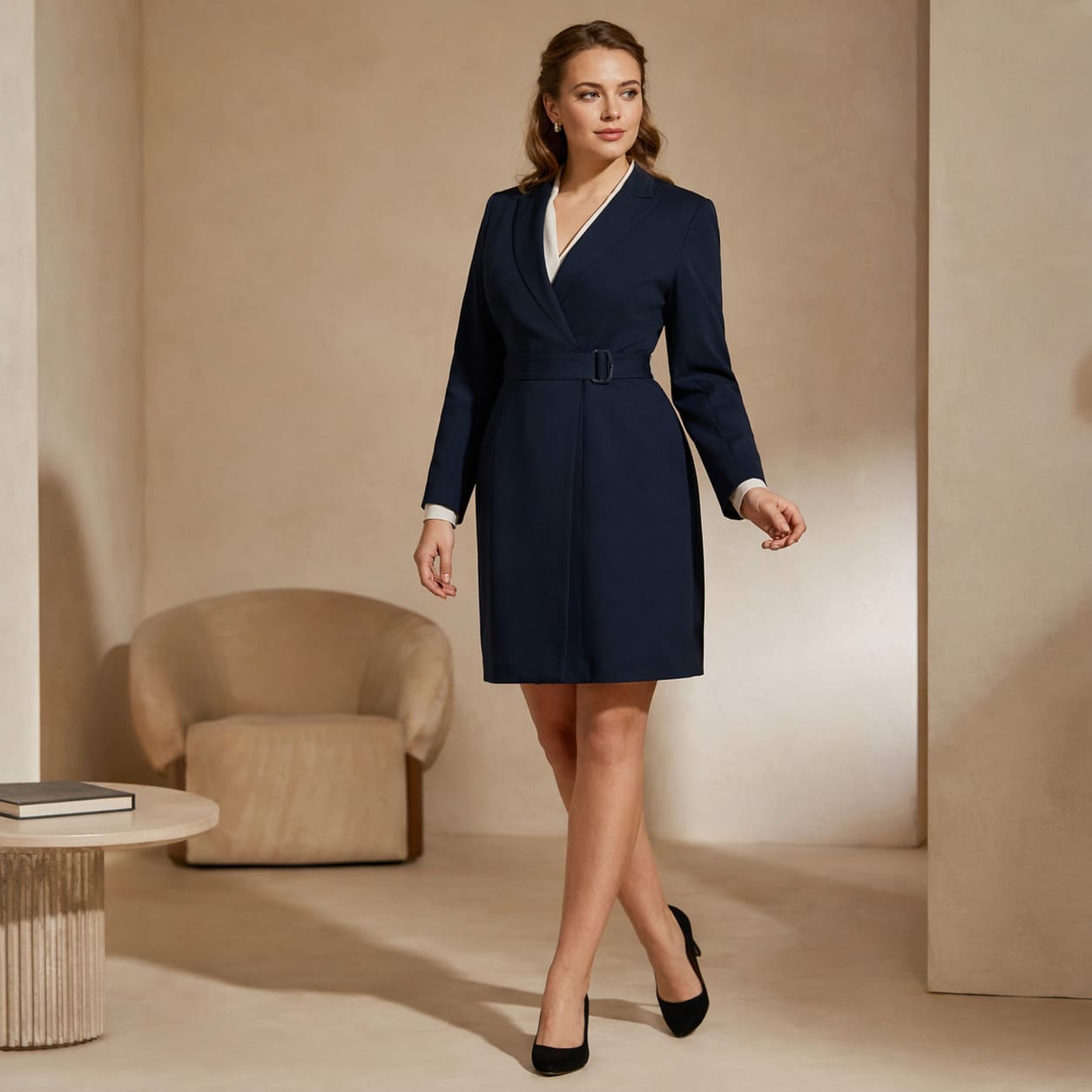
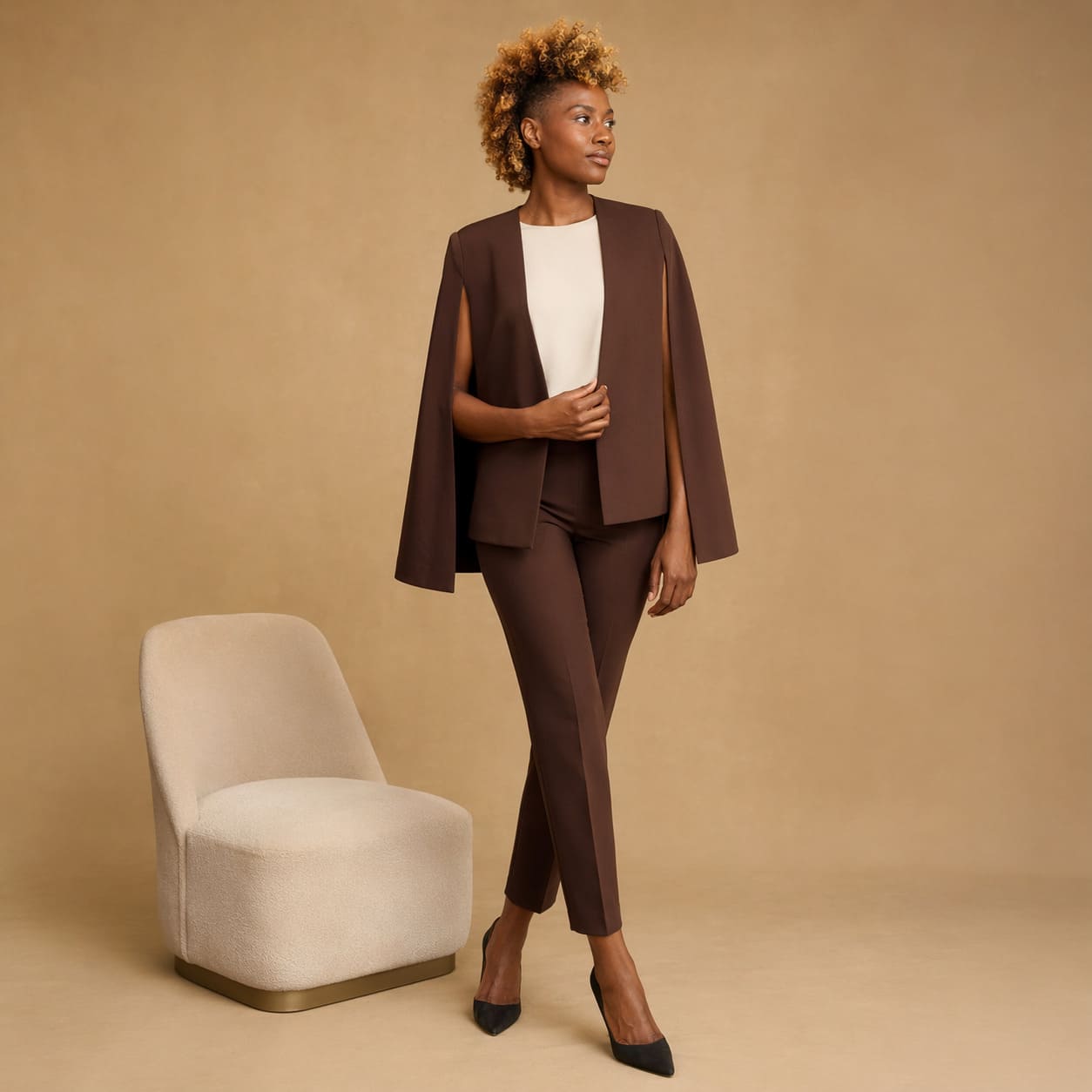
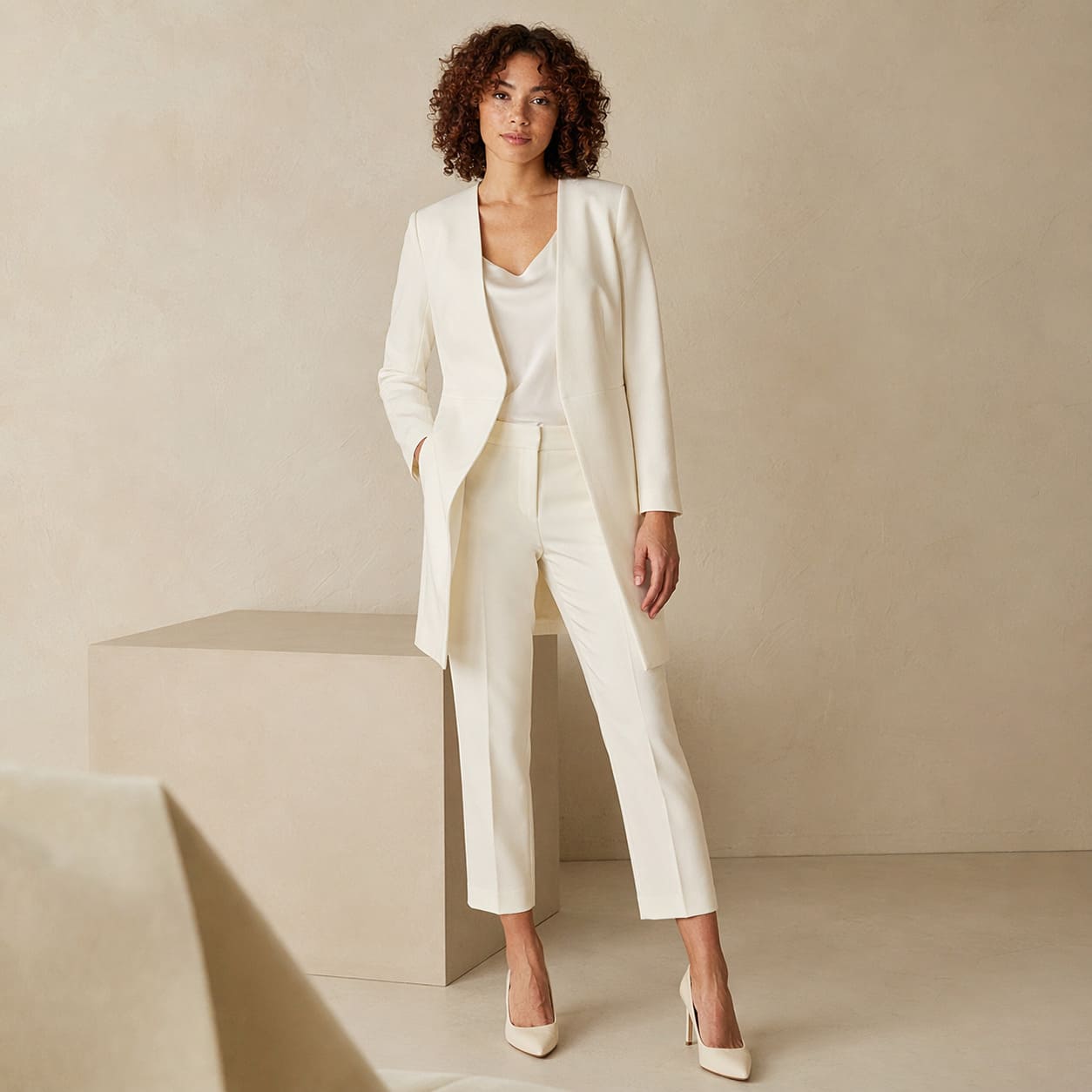
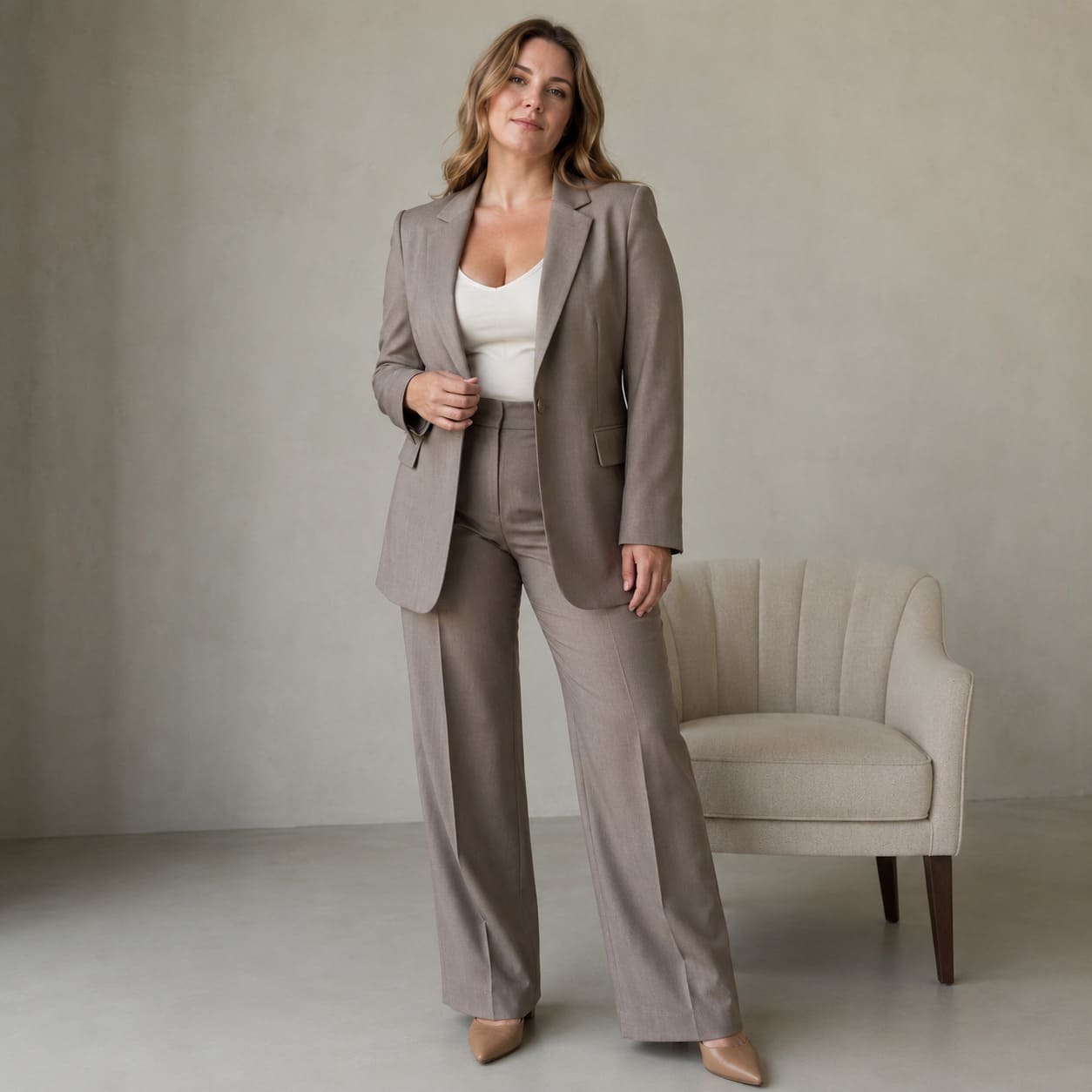
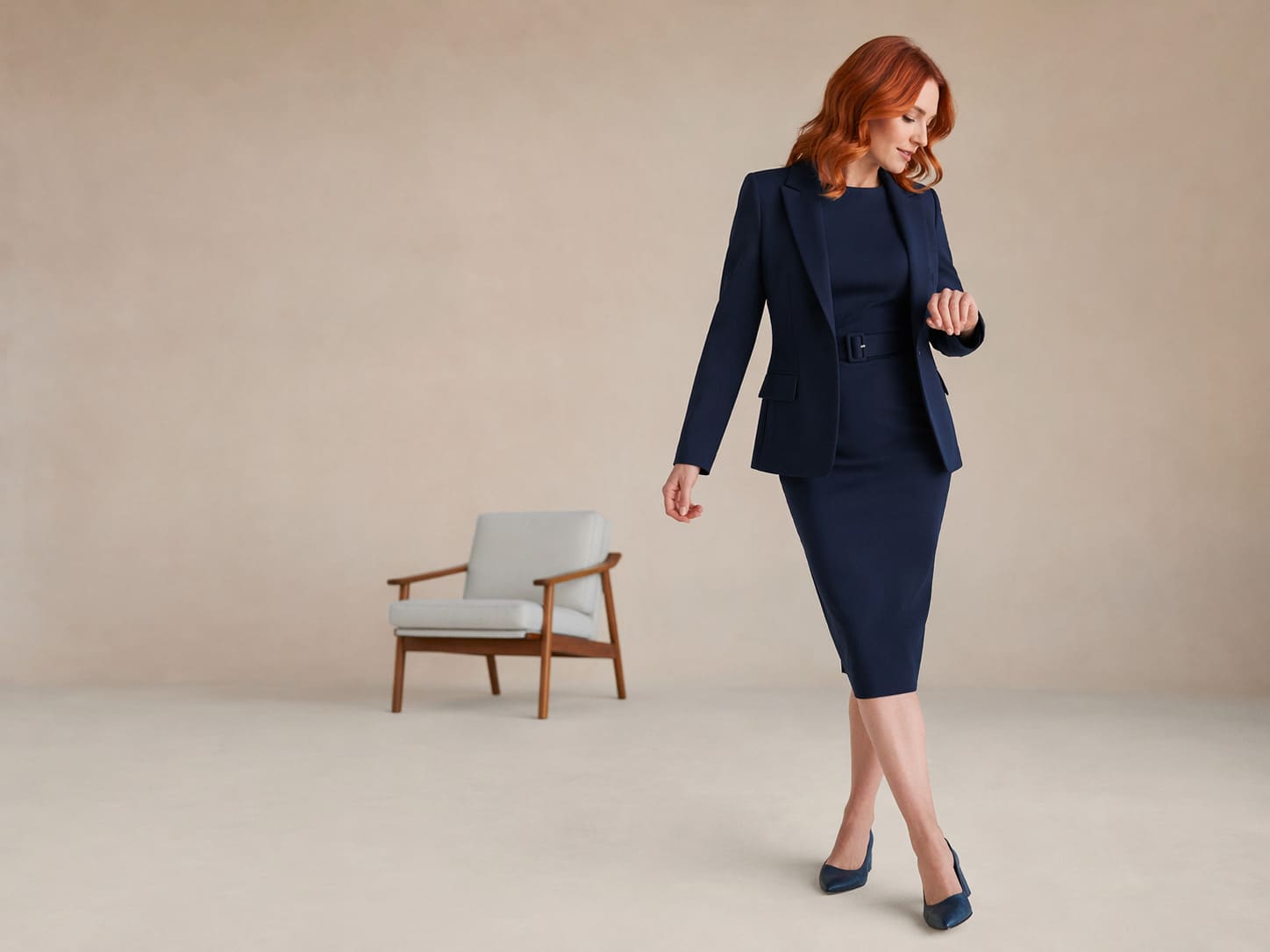
A tailored business suit changes how you carry yourself. We make two-piece and three-piece suits for the office in wools, worsteds, and blends that hold their shape through a long day. You choose the cut, the lapels, the trouser style, and every detail. The result is a suit that fits your body and your working life.
Separates
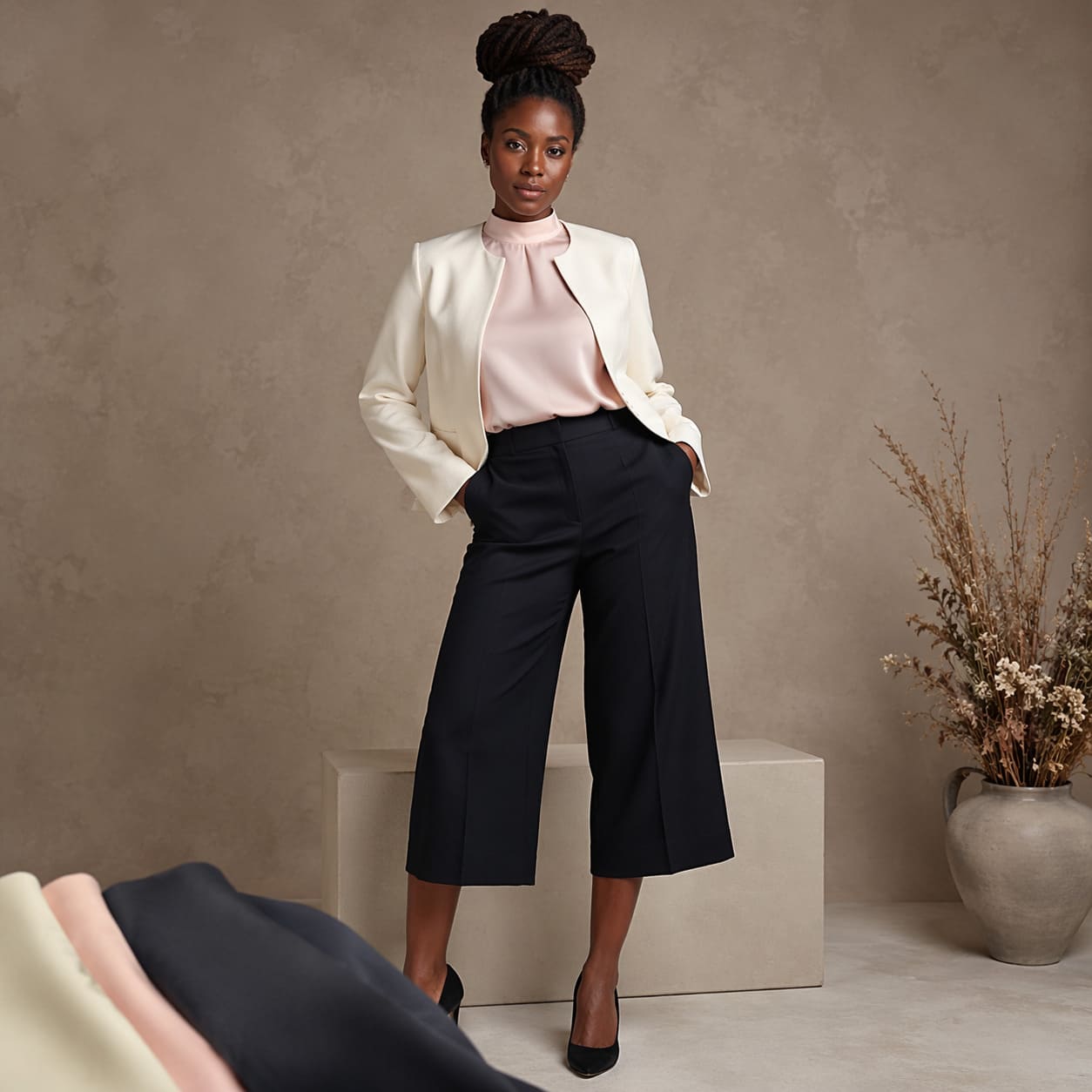
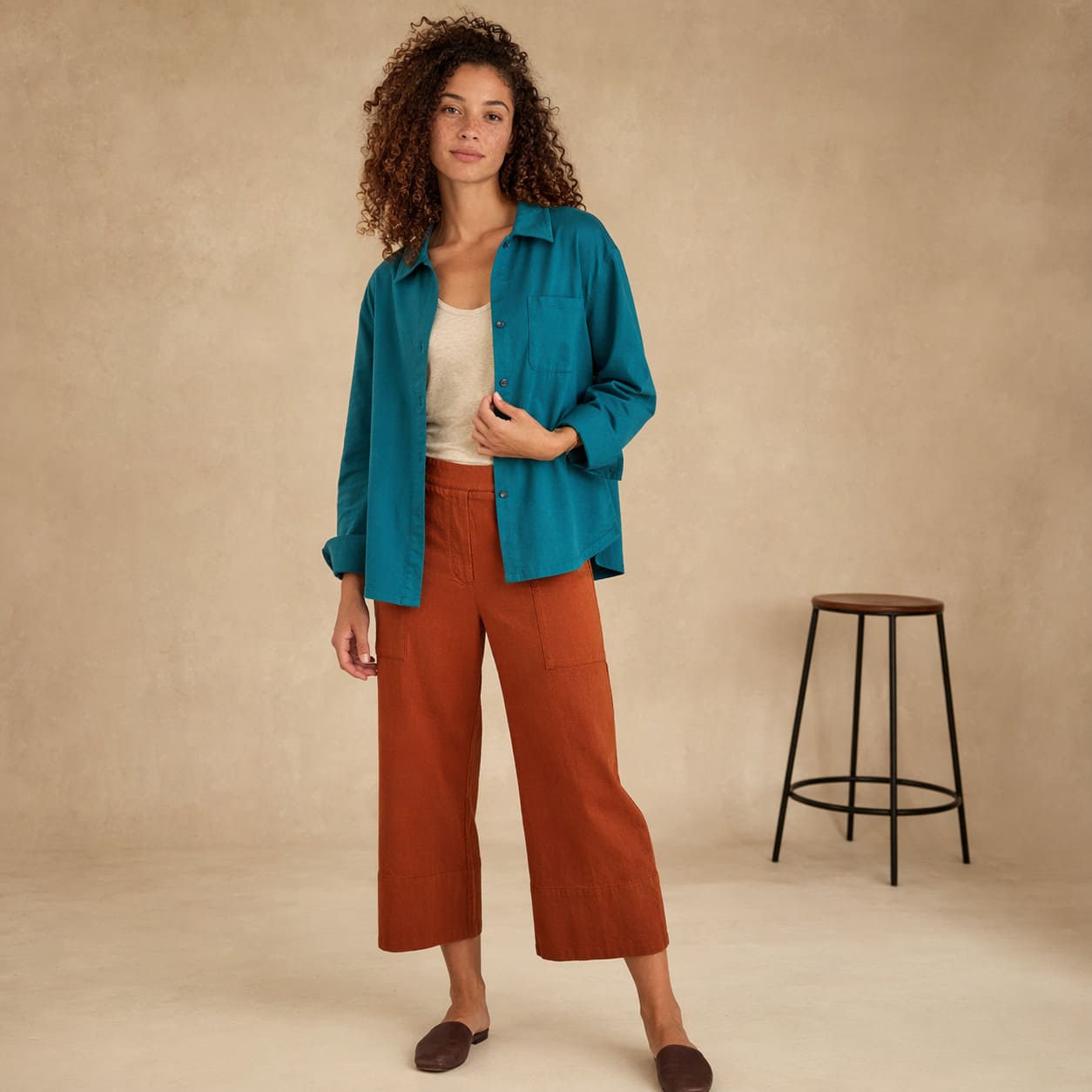
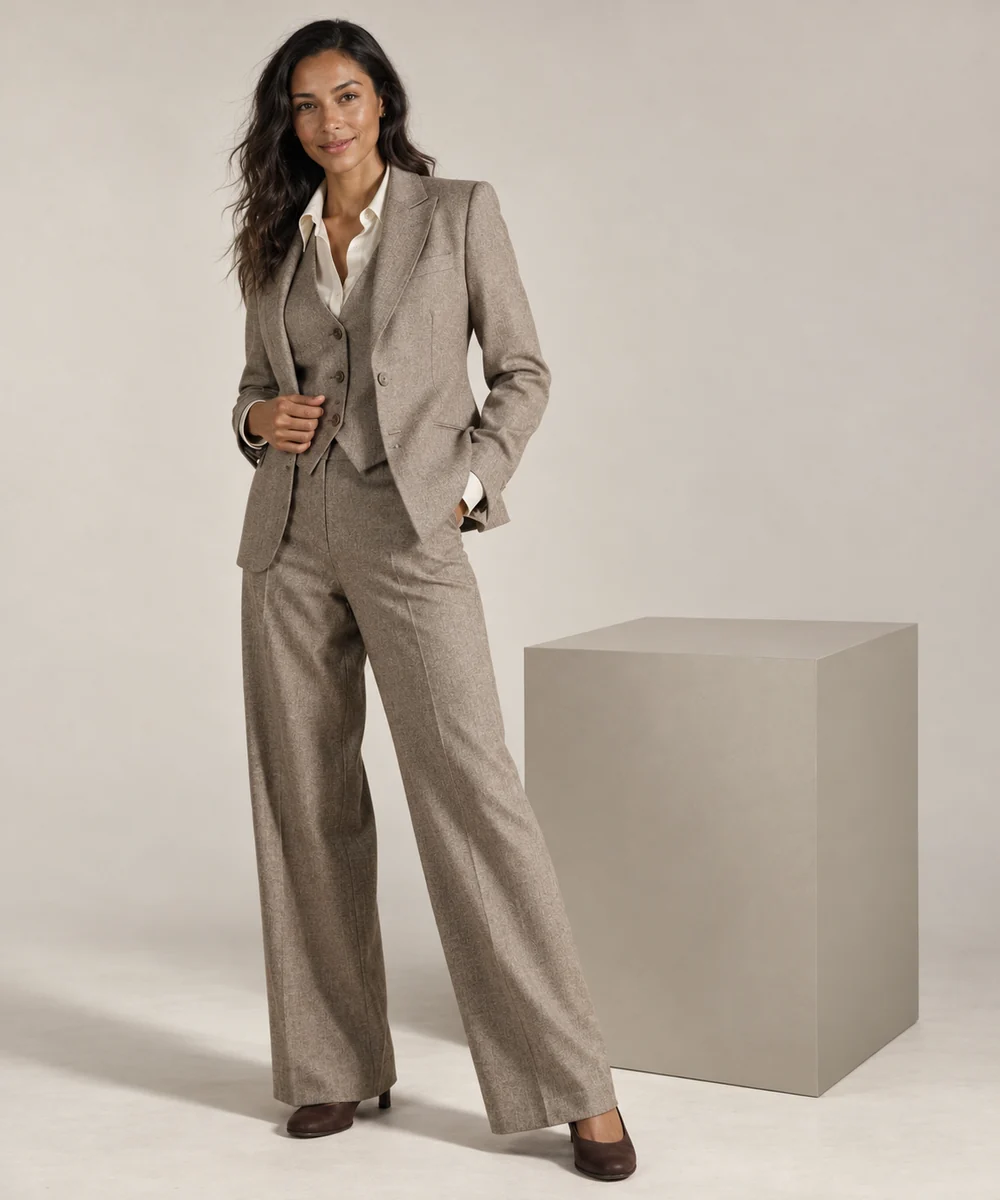
Not everything needs to be a matching suit. A well-cut blazer with tailored trousers is one of the most useful things in any wardrobe. We build separates that work on their own or pair with pieces you already own. Blazers, trousers, waistcoats and skirts, all made to your size.
Occasion and evening wear
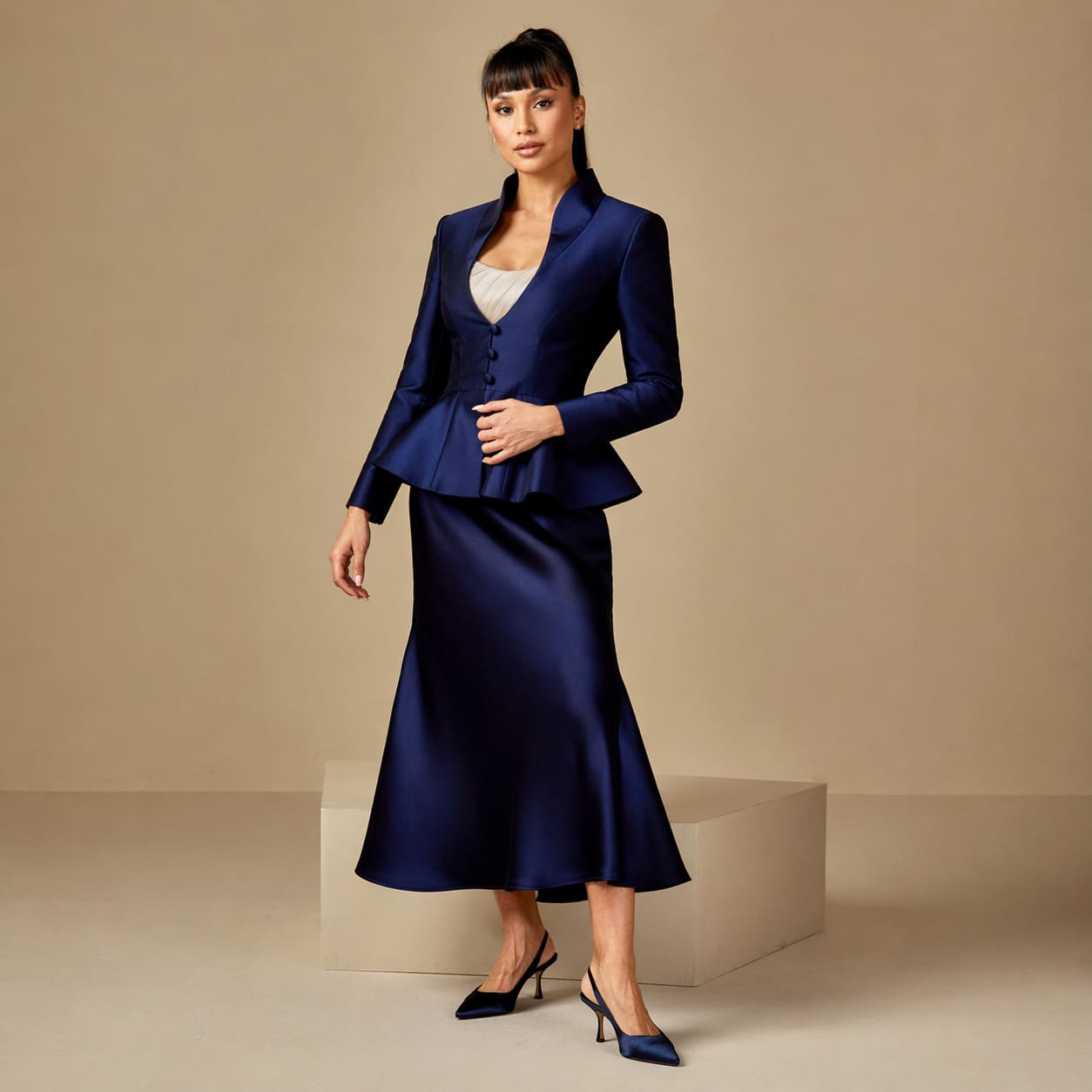
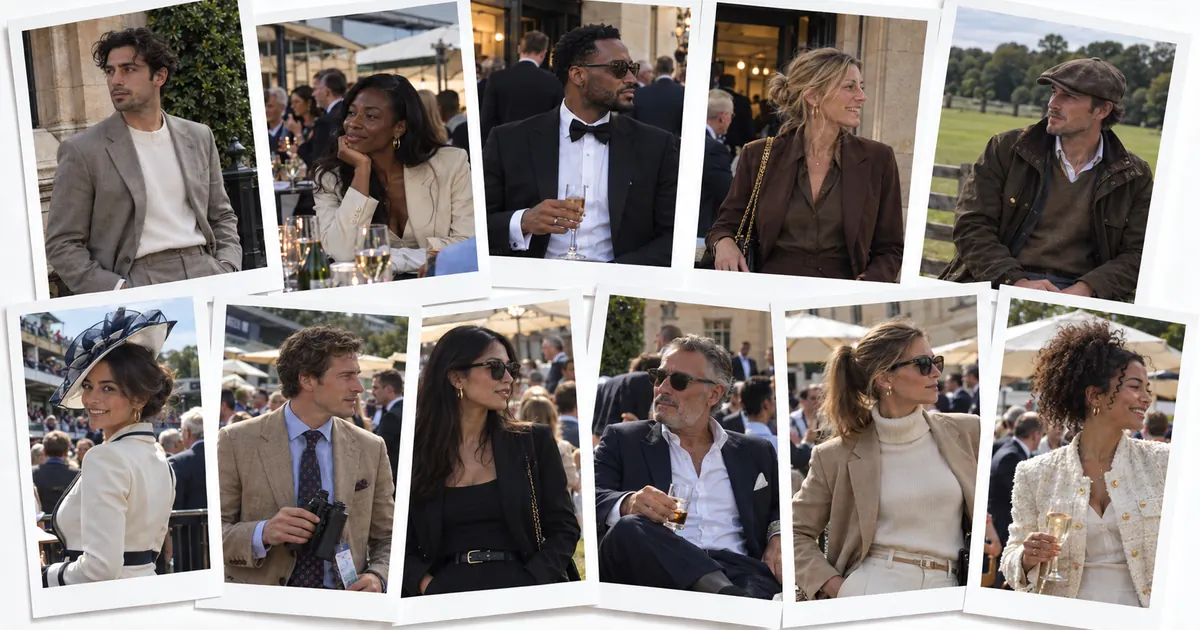
For weddings, galas, the races, and black-tie events, we make tailored suits, tuxedo-style pieces, and evening separates. See our occasion wear for women and weddings and events pages for more detail.
Outerwear
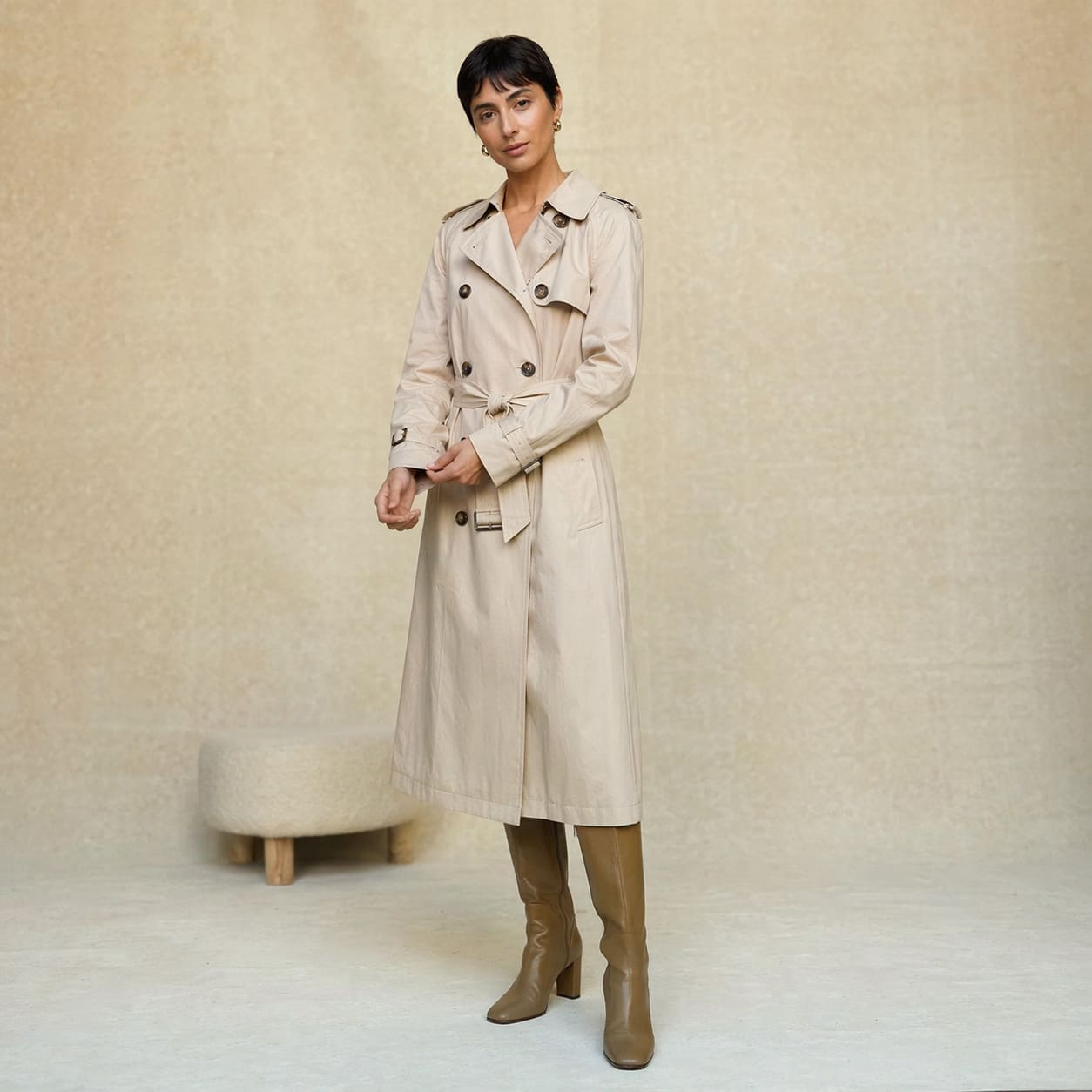
Overcoats, topcoats, blazers, and lighter jackets. Made to your measurements in cloths that suit the season. A coat is the first thing people see. It should fit as well as everything underneath.
Shirts
Casual and formal shirts cut to your neck, shoulders, chest and arm length. No more choosing between a collar that fits and a body that does not.
Send us a photo, get a price
Send a picture of any garment and a tailor replies with a price to create it for you.
Or call 020 7167 3490
How women's tailoring is different
Why fit matters more, how we measure, and what makes the process work for your body.
The fit challenge
Women's bodies are more varied than men's. Bust, waist, hips, shoulder slope, torso length. These all change the way cloth sits and moves. Off-the-peg clothes are sized to averages, and most women do not fit the average. That is not your fault. That is poor design.
Bespoke tailoring fixes this by starting with your body as it is. We take detailed measurements, look at your posture, and build a pattern from scratch. The cloth is then cut to that pattern, not a template.
How we measure
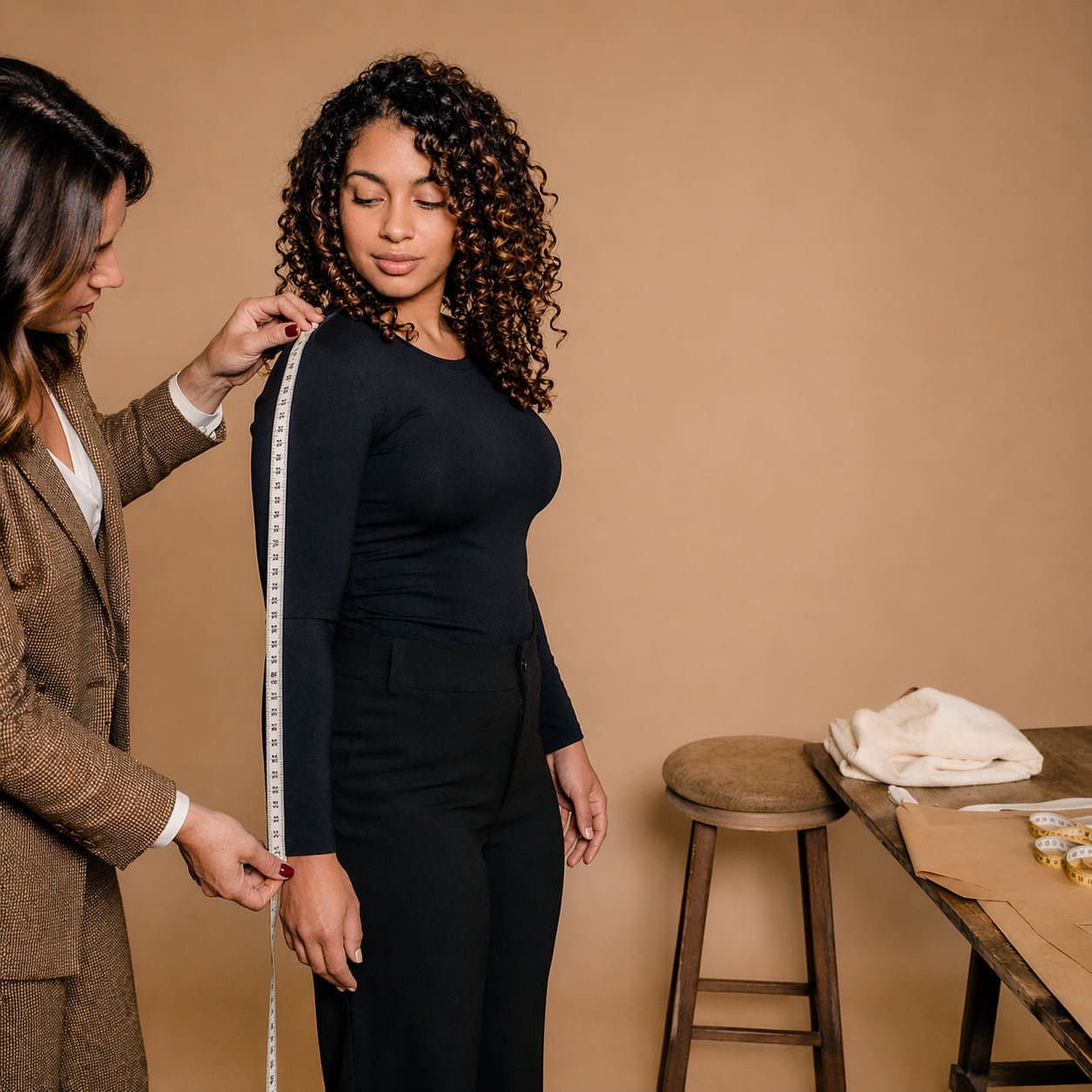
We take more measurements for women's tailoring than for men's. Across the bust, around the waist at its natural point, through the hips, shoulder to shoulder, arm length, back length, and more. These numbers, along with a posture check, give us what we need to build a pattern that works.
If you are not used to being measured, that is fine. Your tailor will talk you through each step and make sure you are comfortable.
Fitting
You will have two to three fittings before the piece is finished. Each one is a chance to check how the cloth sits, how the shape feels, and whether anything needs to shift. We do not rush this. Getting the fit right is the whole point.
Cloth and style
Wools, silks, linens and cotton in every colour and weight. Matched to your taste, your job, and your plans.
Fabric range
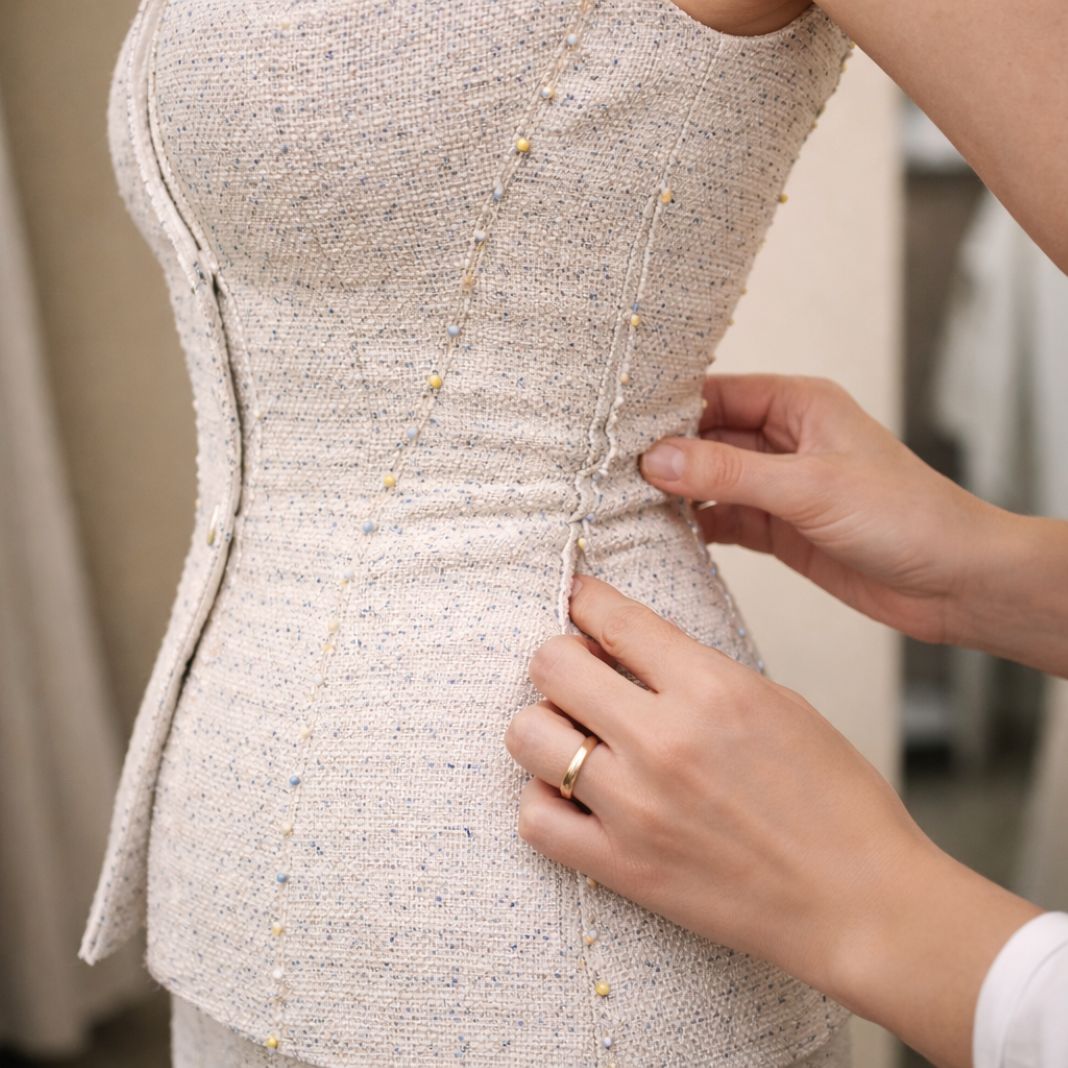
We carry a wide range of cloths from leading mills. Fine worsteds for business. Silk-wool blends for events. Linen and cotton for summer. Heavier wools and cashmere for winter coats. Your tailor will bring samples to the consultation so you can see and feel the options.
Colour
There is no standard palette. We make pieces in classic navy, charcoal and black, and just as happily in dusty pink, sage, cobalt, cream, burgundy and beyond. If you have a colour in mind, we will find a cloth to match.
Style
You are not limited to what a tailor thinks a woman should wear. Want a double-breasted blazer with a wide leg? A single-breasted jacket with a slim trouser? A long-line waistcoat? A relaxed, unstructured coat? We make what you want, not what we think you should want. Your style is the starting point.
First time at a tailor?
What to expect, what to bring, and why there is nothing to worry about.
What happens at the consultation
You come in, we talk. We ask about your life, your job, what you wear now, what you wish fitted better, and what you are looking for. Then we look at cloths, talk about styles, and take your measurements. The whole thing takes about an hour. There is no pressure to decide on the spot.
You can read the full bespoke tailoring process from first visit to final fitting.
What to bring
Wear something comfortable and close-fitting so we can measure well. If you have photos of styles you like, bring those too. If you have no idea what you want, that is also fine. Helping you figure it out is part of what we do.
What it costs
Pricing depends on the garment, the cloth, and the level of construction. We are happy to talk through budgets at the consultation. There is no minimum spend and no hard sell.
Questions about bespoke?
Fill in the form and we will get back to you. Ask about cloth, cut, how the fittings work, how long it takes or what it costs.
If you are not sure bespoke is the right route for you, say so in your message. We will explain how it compares with made to measure and which one suits what you need.
We are in London (Mayfair), Manchester, Zurich and New York. We can also come to you, or start with a video call.
New To Bespoke Womenswear?
The practical detail behind having something made for you, from patterns and cloth to alterations years later.
What is the difference between bespoke and made-to-measure for women?
Bespoke begins with a paper pattern drawn from scratch for your body. Made-to-measure begins with an existing pattern and adjusts it to your measurements. Both are a long way ahead of off the peg, but bespoke gives far more control over shape, balance and how the garment is built, which counts most where a body is asymmetric or where the bust, waist and hip measurements sit a long way apart. Made-to-measure is usually quicker and costs less. See our made-to-measure tailoring for women if you want to compare the two.
Can you stop a jacket gaping across the bust?
Yes, and it is the single most common reason women come to a tailor. Gaping happens because a ready-to-wear jacket is cut for one fixed bust-to-waist ratio, and when yours is different the front closure is pulled off the vertical. A bespoke pattern fixes it at source rather than patching it afterwards. The darts, the chest shaping and the button stance are all placed where your body needs them, instead of where a size chart put them. That is why a well-cut jacket can close cleanly without feeling tight anywhere.
Can I bring my own cloth?
Yes, though your tailor will want to check it first. Cloth needs enough weight, a stable weave and enough width to be cut and shaped properly, and plenty of dress fabrics will not hold a tailored line or take a press. Bring it to your consultation and we will tell you honestly what it will make well, what it will not, and how much you need. If it is wrong for the piece you have in mind, we will find something close in the books.
Can you copy a jacket or coat I already own?
Yes, if you bring the garment in. A tailor can read the shape of a piece you already love, take the proportions from it, and rebuild it to your measurements in a cloth of your choosing. It is often easier than describing a style from scratch, because the thing you are trying to explain is already in the room. We will not reproduce another house's labels or branded trims, but the cut, the proportions and the details are yours to repeat.
Do you keep my pattern after the first order?
Yes. Your pattern is kept on file, so a second piece never starts from nothing. This is one of the real practical arguments for bespoke: the first commission carries the pattern-making work, and everything after it is quicker because the shape is already drawn. Patterns are amended as your body changes, so the file stays true to you rather than frozen at the day you were first measured.
Can a piece be altered if my size changes?
Usually, yes. Tailored garments are built with spare cloth left in the seams, called inlay, precisely so they can be let out or taken in later. It is one of the reasons a properly made piece outlasts ready-to-wear by years. How far a garment can move depends on the cut and the cloth: a structured jacket with generous inlay has more room than a close-cut skirt in a fabric that shows old seam lines. Bring the piece back and we will tell you what is possible before touching it.
Can you tailor for a body that is changing or asymmetric?
Yes. A pattern drawn from scratch makes no assumption of symmetry, so one shoulder sitting lower than the other, a curve in the spine, a changing waistline or a body altered by surgery are all built into the pattern rather than corrected afterwards. Tell your tailor what you need at the first visit, including anything about comfort, closures or ease of dressing, and it is designed in from the start rather than worked around at the end. See our adaptive tailoring for women.
Can you make a wedding outfit if I do not want a dress?
Yes. A bridal suit is not simply a suit in white. Ivory and pale cloths show every seam and every press mark, so the construction has to be cleaner, linings are chosen so nothing shadows through from beneath, and the cut has to survive sitting, dancing and being photographed from every angle for a whole day. Trousers, a skirt, a jumpsuit or a longline jacket worn over a dress are all possible. See our wedding suits for women.
How far ahead should I book if I have a date to hit?
As early as you reasonably can, and earlier than you think for anything unrepeatable. The making is rarely the constraint. Fittings are, because each one needs a slot in your diary and time afterwards for the work to be done before the next. Cloth has to be in stock or ordered in, and a mill delivery nobody controls is the usual reason a job finishes tight. Tell us the date at your first enquiry and we will say straight away whether it is comfortable, tight, or not worth starting.