Can a blazer be worn with any trousers, or does it need a matching pair?
A blazer does not always need matching trousers. In most modern wardrobes, a blazer can work well with chinos, wool trousers, denim, or tailored separates, provided the colour, cloth, fit, and occasion make sense together. Matching still matters in formal settings such as interviews, ceremonies, and business situations with stricter dress codes.
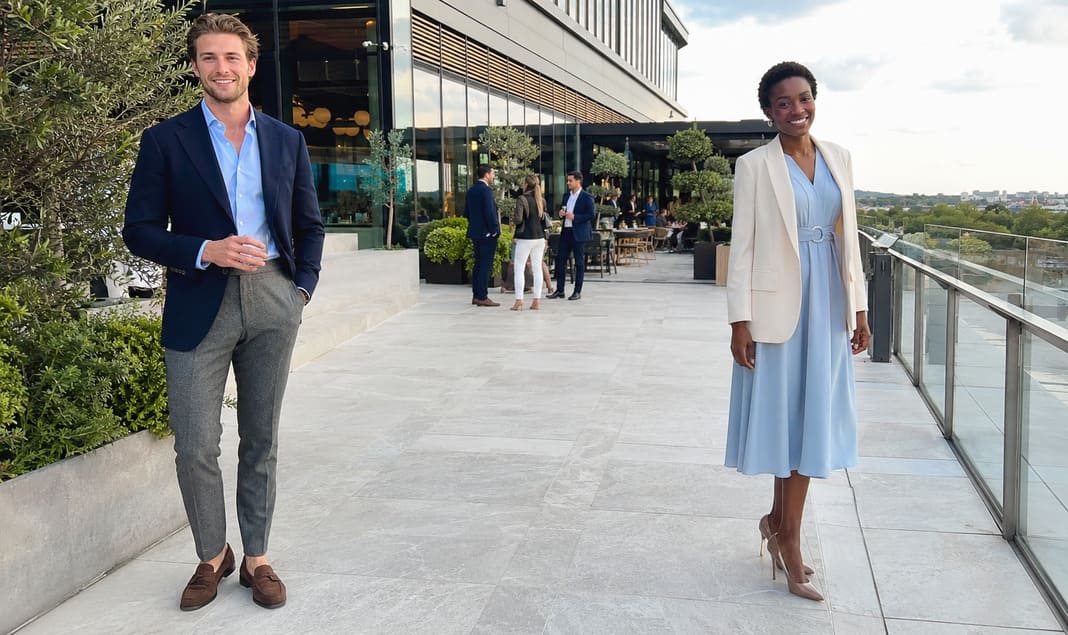
Men's navy blazer with grey trousers demonstrates successful blazer separates, while the woman's white blazer over a light blue dress shows how tailored jackets can complement outfits without matching trousers or a full suit.
What Is In This Article
The Blazer’s Place in Modern Wardrobes
The blazer has moved a long way from its roots in club wear, school uniforms, and military influence. Today, it sits in that useful middle ground between formal tailoring and everyday dressing, which means that many people reach for one when they want structure without the full commitment of a suit.
Part of the confusion comes from the fact that people often use blazer, suit jacket, and sports jacket as if they mean the same thing. They do not.
- A blazer usually stands alone and is intended to be worn as a separate piece.
- A suit jacket is made with matching trousers from the same cloth.
- A sports jacket tends to be more casual, often with heavier texture or pattern.
Savile Row and other British tailoring houses helped shape these distinctions, even if modern blazer style has softened them a little. A navy blazer with metal buttons still carries echoes of its formal past, yet the same wardrobe staple can now sit comfortably over a knitted polo with grey flannel trousers on a weekday afternoon.
Versatility matters because dress codes are less fixed than they once were. Many wardrobes now need to move between office meetings, dinners, travel, and social events without a full change of clothes. That shift has made the blazer meaning broader, but it has also made good judgement more important.
Matching Trousers: Tradition, Rules, and Exceptions
For much of modern tailoring history, matching cloth signalled purpose. A suit looked orderly, intentional, and appropriate for business or ceremony, so blazer with matching trousers became the expected answer whenever the setting called for polish.
British tailoring still treats the matching suit as the clearest expression of formality. If the jacket and trousers are cut from the same cloth, the outfit reads as one complete idea. That matters in places where suit etiquette still carries weight, including boardrooms, formal receptions, and some professional events.
A few broad rules still hold up well:
- Matching is usually expected for formal dress codes, interviews, ceremonies, and conservative business settings.
- Non-matching separates are usually acceptable for smart casual environments, relaxed offices, dinners, and travel.
- Grey areas depend on the host, the industry, and how polished the full outfit looks.
Modern tailoring practice leaves more room than old rule books suggest. A client might want the clean authority of a suit for one meeting, then prefer the same jacket worn separately on another day. Tailoring consultations often account for that kind of real use, especially in houses such as Fielding & Nicholson, where wardrobe planning tends to focus on how people actually dress rather than on fixed formulas.
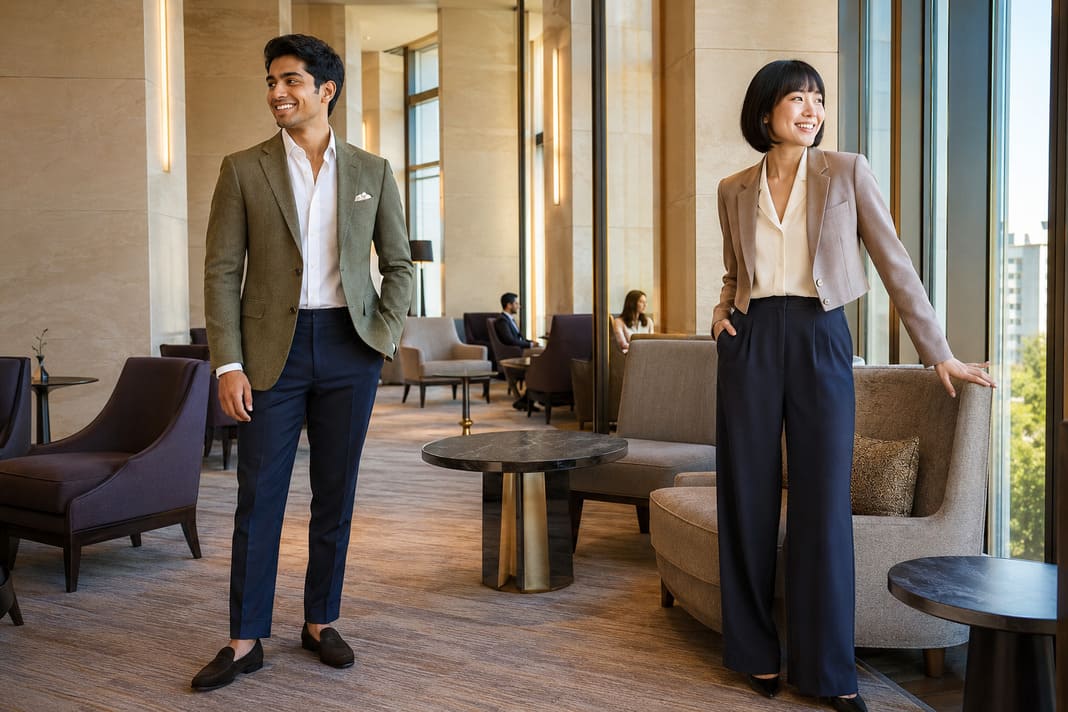
Men's olive blazer with navy trousers illustrates how blazers work without matching trousers, while the woman's ivory blouse and wide-leg navy trousers with a coordinating blazer create a polished smart casual tailored outfit.
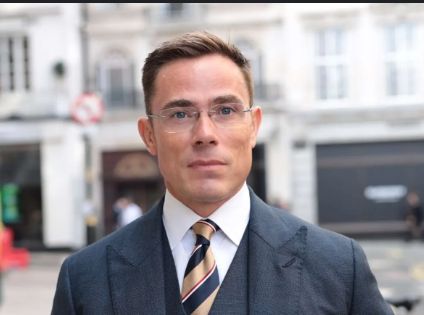
Pro Tip: Try pairing your blazer with high-contrast trousers for a confident yet intentional style that avoids mismatched tones.
Wearing a Blazer With Non-Matching Trousers: Style Considerations
A blazer can look excellent with non-matching trousers if the outfit feels intentional.
Colour is usually the first thing people notice. Strong contrast can work, but accidental near-matching often looks off. A navy blazer with mid-grey trousers feels classic because the distinction is clear. A jacket and trouser combination in slightly different shades of blue can look like a suit that lost half its set.
Texture matters almost as much as colour. Smooth worsted cloth paired with equally smooth trousers can seem too formal if the colours do not match. By contrast, a hopsack blazer, brushed wool trousers, or heavier cotton chinos create visual separation. British wool often works particularly well here because the cloth carries enough character to stand on its own.
Fit and proportion also do a great deal of quiet work. A softly structured blazer with slim trousers may feel balanced on one person and strained on another. Tailoring consultants and personal stylists usually look first at shoulder line, jacket length, trouser rise, and the amount of shape through the body.
A useful guide is to check these points before leaving the house:
- Keep a visible difference between jacket and trouser colour.
- Mix textures with purpose, especially in smart casual outfits.
- Make sure the formality level feels consistent from top to bottom.
- Watch the fit at the waist, seat, and hem so the silhouette reads cleanly.
Picture a navy blazer in textured wool, cream trousers, a pale blue shirt, and dark brown loafers. The combination works because each part supports the same level of polish, even though nothing matches exactly.
Common combinations that usually work
Grey wool trousers with a navy blazer are reliable because the pairing has enough contrast and very little fuss. Dark denim can also work, although the blazer normally looks better if it has a softer shoulder or more casual cloth. Black trousers with a navy blazer are trickier, as the contrast is lower and the combination can look uncertain under artificial light.

A men's charcoal matching suit demonstrates traditional formal tailoring, while the woman wears a navy blazer with contrasting trousers, highlighting when blazer separates work instead of a fully matching suit.
When Matching Matters: Occasions, Impressions, and Expectations
Imagine arriving at a wedding, an interview, or a ceremonial event in separates when everyone else is wearing a full suit. You may still be well dressed, but the room will read your clothes against its own expectations before anyone notices the quality of the jacket.
That is why matching still has a place. A formal blazer outfit is not always enough when the setting signals that a complete suit is the safer choice.
- Interviews in traditional sectors often favour a matching suit because it reads as focused and professional.
- Weddings depend on the role, venue, and timing, but ceremony usually leans more formal than guests expect.
- Memorials, official receptions, and certain evening events often call for greater consistency in the outfit.
- Client-facing roles with established professional dress codes may still treat separates as too relaxed.
Regional and cultural habits can shift the answer slightly. Some offices welcome a smart casual blazer with contrasting trousers every day, whereas others still treat matching as the standard for senior meetings. Ceremonial tailoring follows its own logic too, especially where photographs, family expectations, or institutional norms matter.
Good tailoring advice sits in the space between personal taste and social reading. A strong outfit should still feel like the wearer, but the context decides how much freedom the clothes can carry.

Pro Tip: Choose textured fabrics for your separates to naturally distinguish each piece and keep the outfit from appearing accidental.
A men's charcoal matching suit demonstrates traditional formal tailoring, while the woman wears a navy blazer with contrasting trousers, highlighting when blazer separates work instead of a fully matching suit.
Personal Expression and the Role of the Tailor
One person may want a navy blazer that works with denim on Friday and flannel on Monday. Another may need a wardrobe that accommodates a changing body shape, a mobility requirement, or a preference that does not fit neatly into standard menswear or womenswear categories. Those decisions are where tailoring becomes genuinely useful.
Bespoke tailoring advice is often less about telling someone what is allowed and more about helping them see what suits their life, proportions, and comfort. Fit usually matters more than rule-following, because even a textbook pairing can look awkward if the jacket pulls, the sleeve pitch is wrong, or the trouser break is heavy and uneven.
A tailor can help by:
- building a jacket that works as a separate from the start
- choosing cloth with enough texture or versatility for mixed outfits
- adjusting balance and proportion for different body shapes
- guiding colour combinations that fit the wearer rather than a trend
- shaping garments for inclusive tailoring needs with sensitivity and precision
That consultative side of tailoring is one reason long-term wardrobe planning often works better than buying isolated pieces. Within houses such as Fielding & Nicholson, the conversation may include occasionwear, workwear, and personal styling in the same discussion, so the blazer is considered as part of a larger wardrobe rather than as a stand-alone purchase.
Inclusive tailoring has added welcome depth to this process. Clients who want sharper structure, softer lines, a non-traditional silhouette, or more flexibility between formal and casual dress can work from the same principles of balance, cloth, and fit. The result feels personal because it is built around a real wearer, not an abstract dress code.
Beyond Rules: Rethinking Blazer and Trouser Pairing for Today
The old question assumes that there must be one fixed answer. Modern tailoring suggests something more useful: matching is sometimes right, mixing is often right, and context decides which one makes better sense.
A few common misconceptions are worth leaving behind.
- A blazer is not automatically casual.
- Matching trousers are not automatically more stylish.
- Contrasting separates do not automatically look creative.
- Confidence alone does not rescue a poor fit or a confused combination.
Clothes still communicate, and dress codes still exist, but they no longer need to flatten personal style into one approved formula. The strongest outfits usually come from reading the room, knowing the purpose of the garment, and paying attention to fit, cloth, and proportion.
A blazer can do more than many wardrobes ask of it. The smarter approach is to stop treating matching as a permanent rule and start treating it as one option among several, chosen with care for the occasion in front of you.