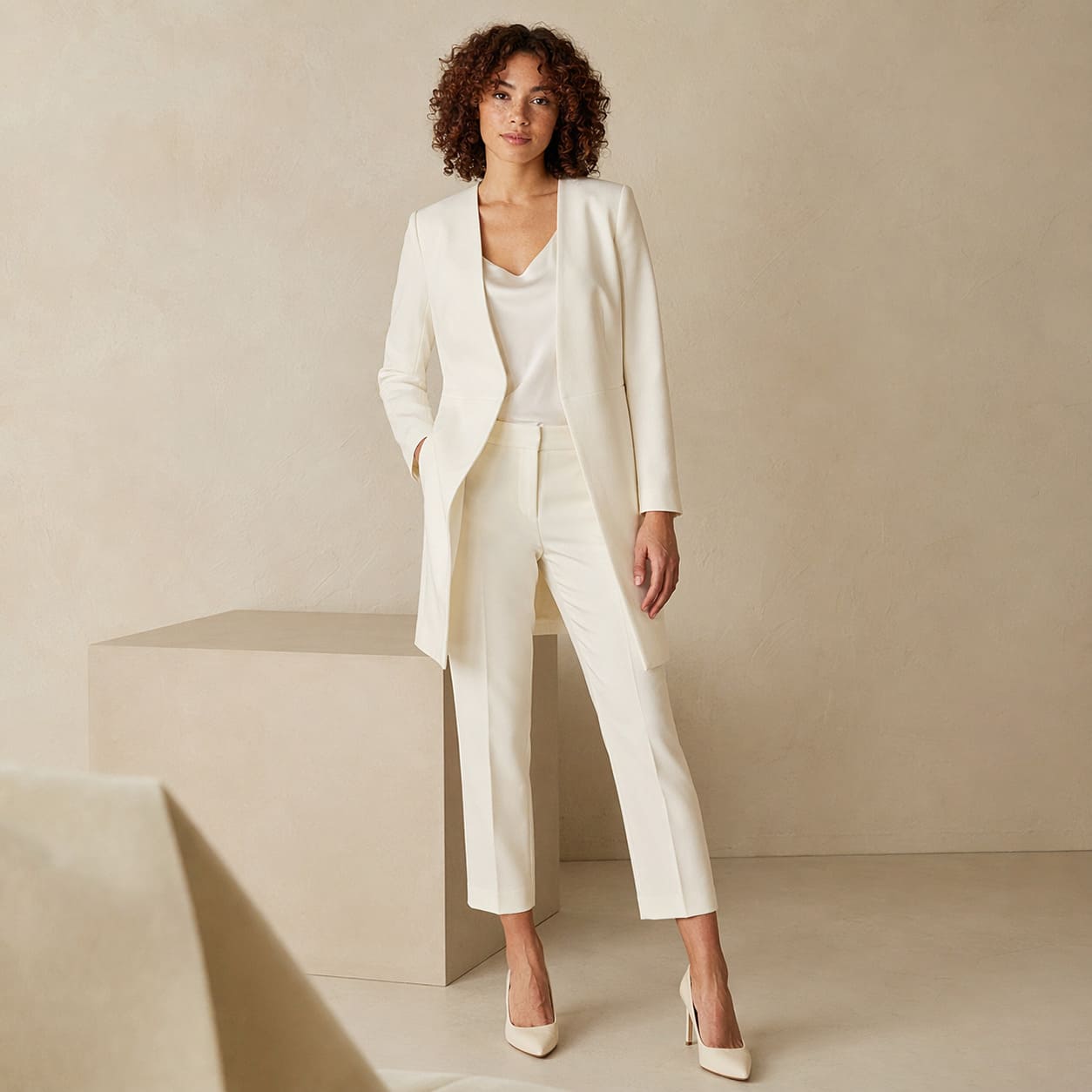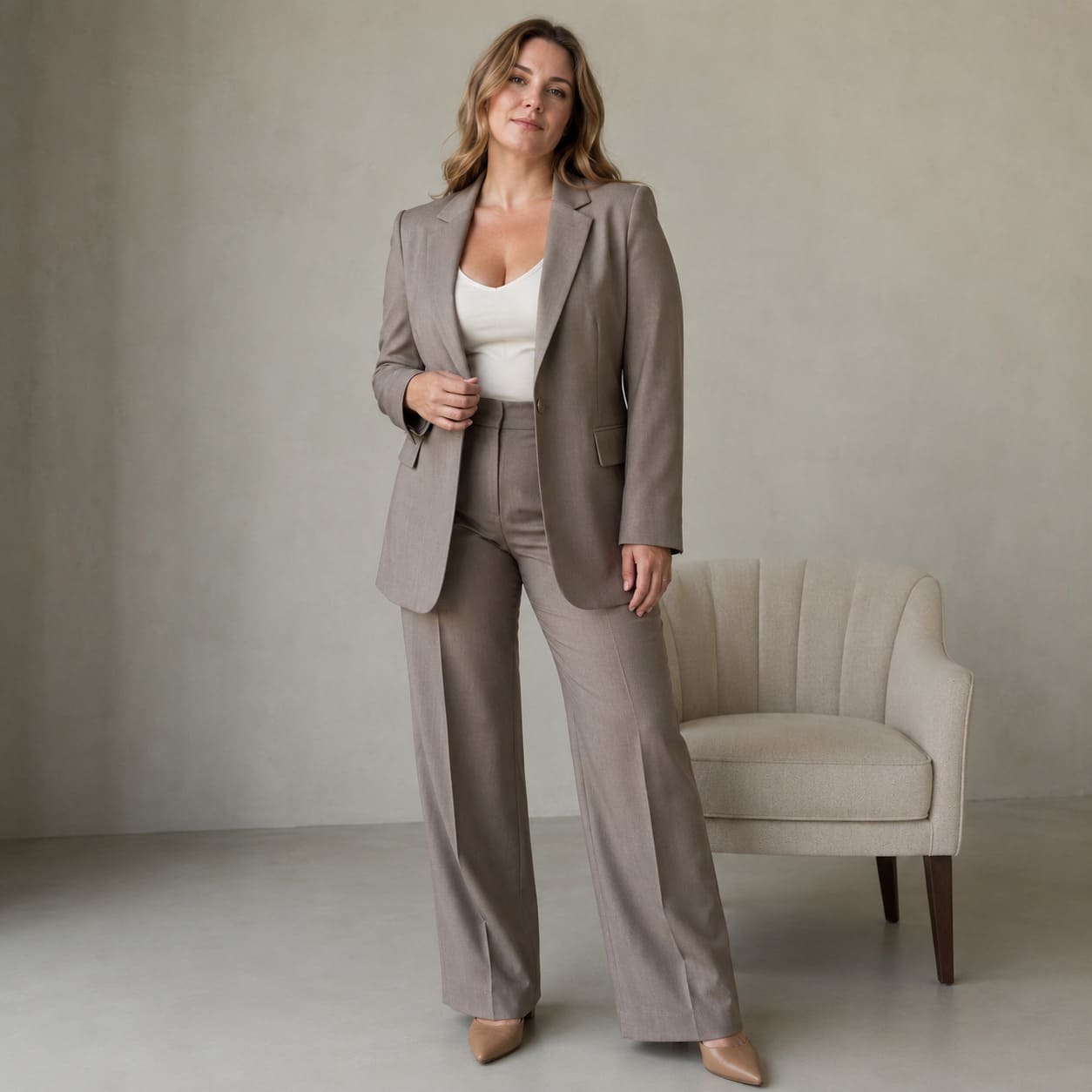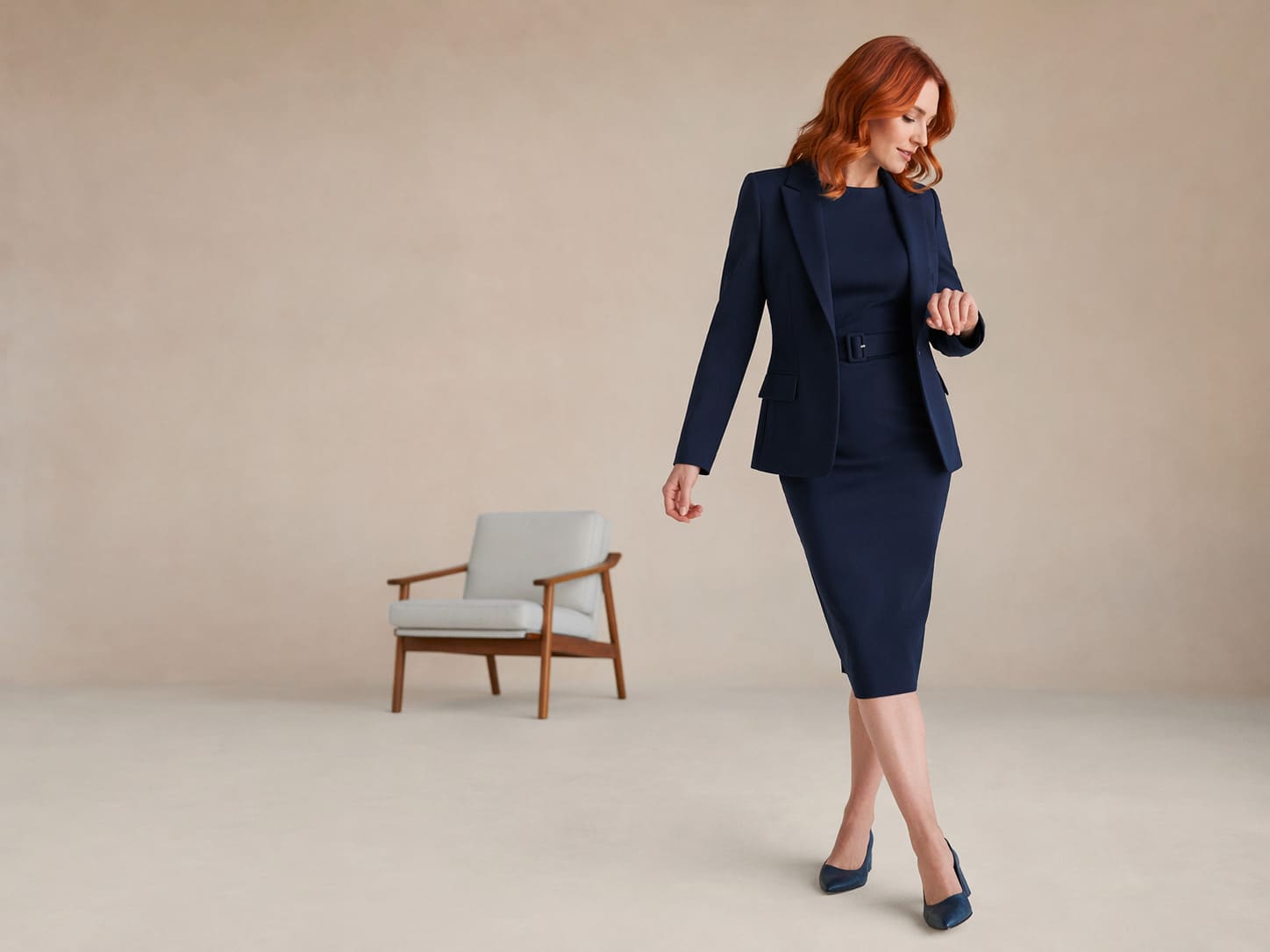
Women's coats and outerwear
Overcoats, trench coats, blazers and jackets. Made to your measurements in cloths that suit the season and your style.
Rated 5 stars on Google from over 150 reviews
Tell us what you're looking for
Replies within a couple of working hours. Prefer to talk? Call 020 7167 3490 or choose one of our five showrooms.
Overcoats and top coats
The coat that goes over your suits and workwear. Wool, cashmere or a blend of both, in any length you want.
What we make
An overcoat falls below the knee in a heavier cloth. A topcoat sits around mid-thigh in something lighter. Both are designed to go over tailored clothes without pulling at the shoulders or bunching around the arms. We make single-breasted, double-breasted, wrap-front and belted styles.
The right length depends on your height, what you wear underneath, and your preference. Some women want a coat that covers everything. Others prefer something shorter that shows more of the outfit. Your tailor will help you find the length that works.
Cloth
For winter, we use heavy wools, cashmere, and wool-cashmere blends. Pure cashmere is softer and lighter but less hard-wearing than wool. A blend gives you the best of each. For spring and autumn, lighter wools and gabardines travel well and keep their shape.
We source from Loro Piana, Holland and Sherry, Dormeuil and others. Your tailor will bring samples so you can see and feel the cloths before you choose.
Details
You choose the collar, the lapels, the buttons, the pockets, the lining (full, half or contrast), the back (belted, vented or plain), and the cuff finish. We can add a velvet collar, a throat latch, turn-back cuffs, or a waist tie. Every detail is yours.
Send us a photo, get a price
Send a picture of any garment and a tailor replies with a price to create it for you.
Or call 020 7167 3490

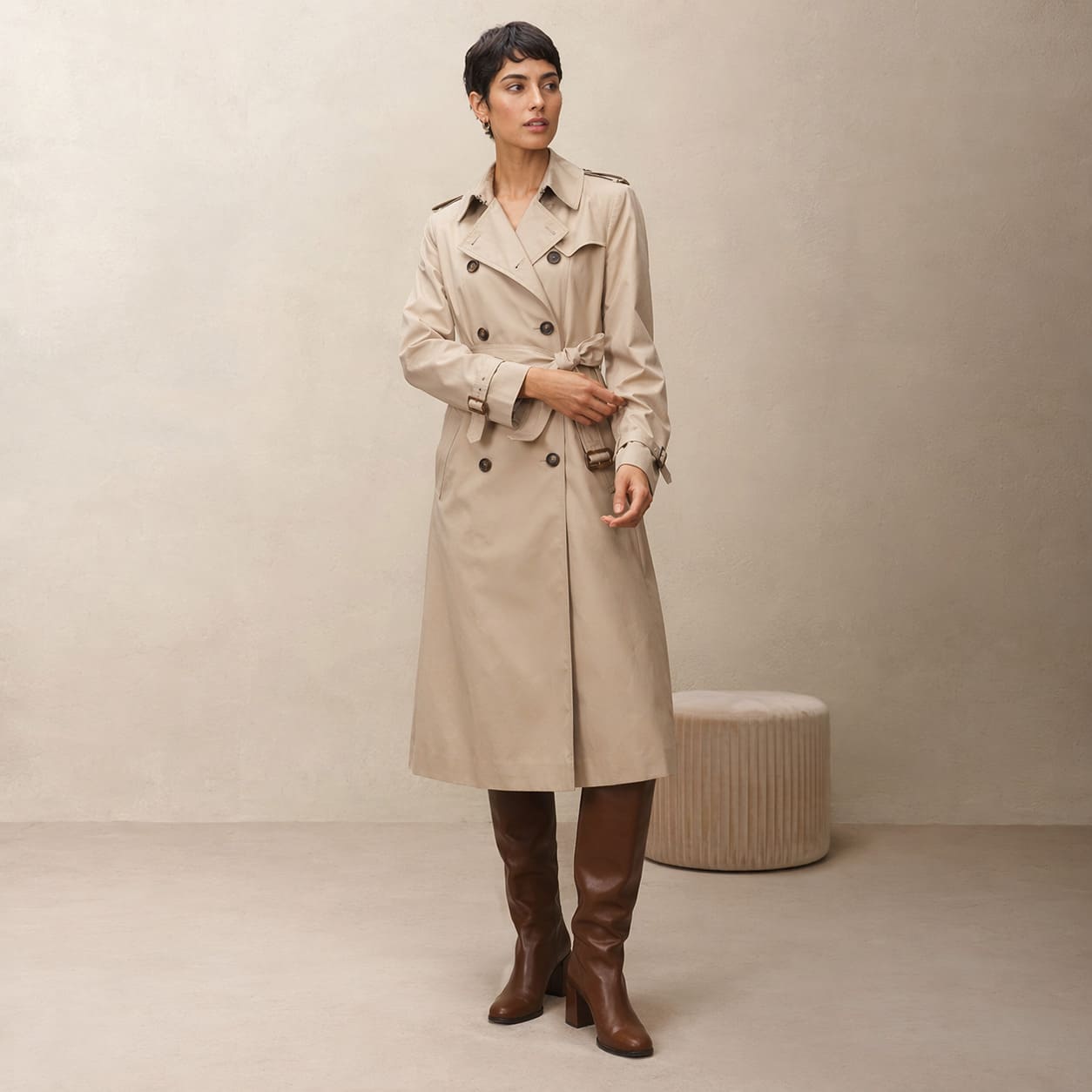
Trench coats and raincoats
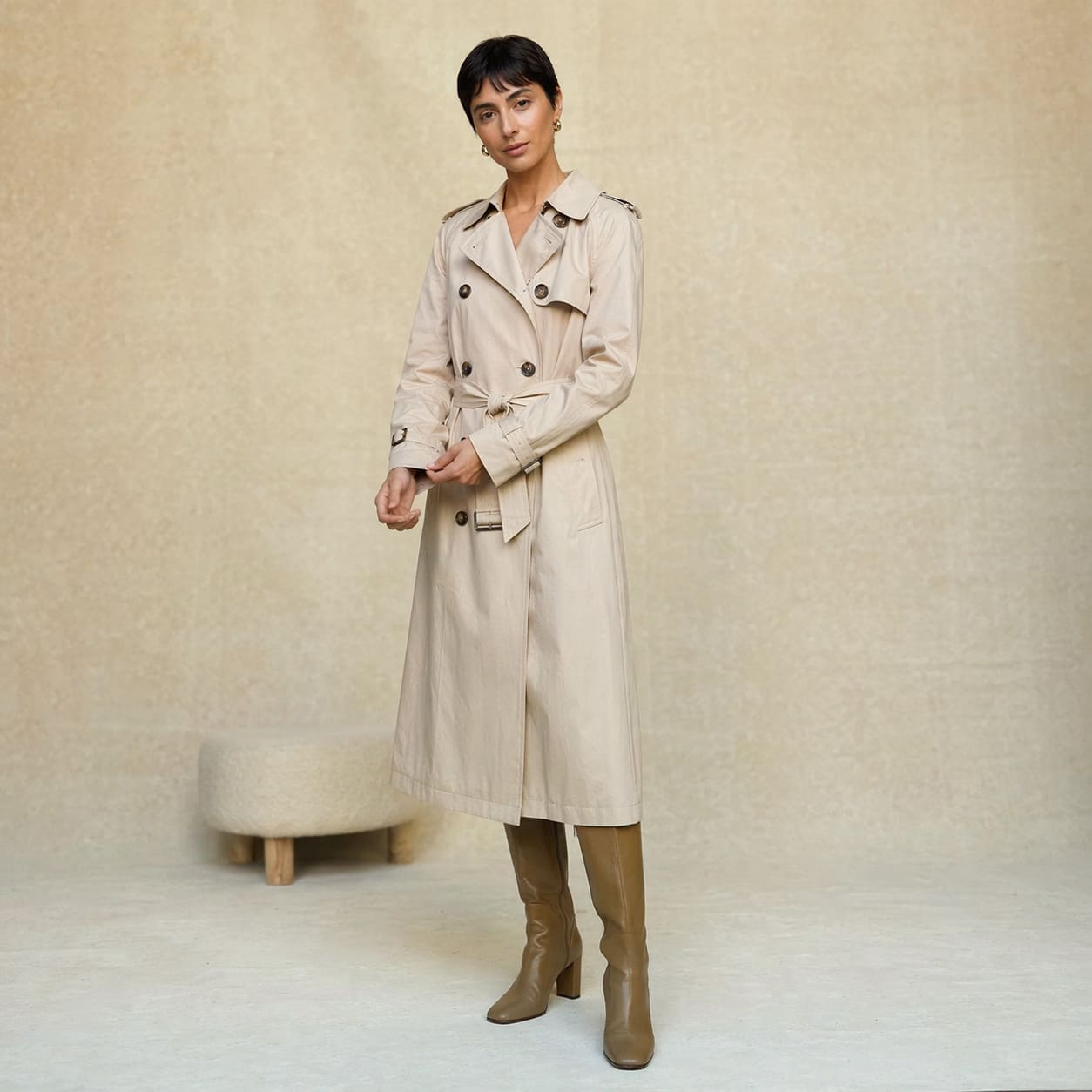
A proper coat for wet weather that actually keeps you dry. Fitted to your body, not borrowed from a men's block.
Why made-to-measure
Most women's trench coats are either too boxy or too tight through the bust. The belt hits the wrong point on the waist. The sleeves are too long. A made-to-measure trench solves all of that because it is cut to where your waist, bust and hips actually sit.
What we make
A classic trench is double-breasted, belted, and falls below the knee. We also build shorter single-breasted macs, raglan-sleeve raincoats, and lighter spring coats. You choose the cloth, the length, and every detail from shoulder tabs to cuff straps.
Cloth
We work with waxed cottons, waterproof tech cloths, and rubberised fabrics for proper rain. For lighter spring and autumn use, a cotton gabardine or a treated wool keeps things smart without the heavy feel. Your tailor will match the cloth to your climate and how often you plan to wear it.
Casual jackets and lighter layers
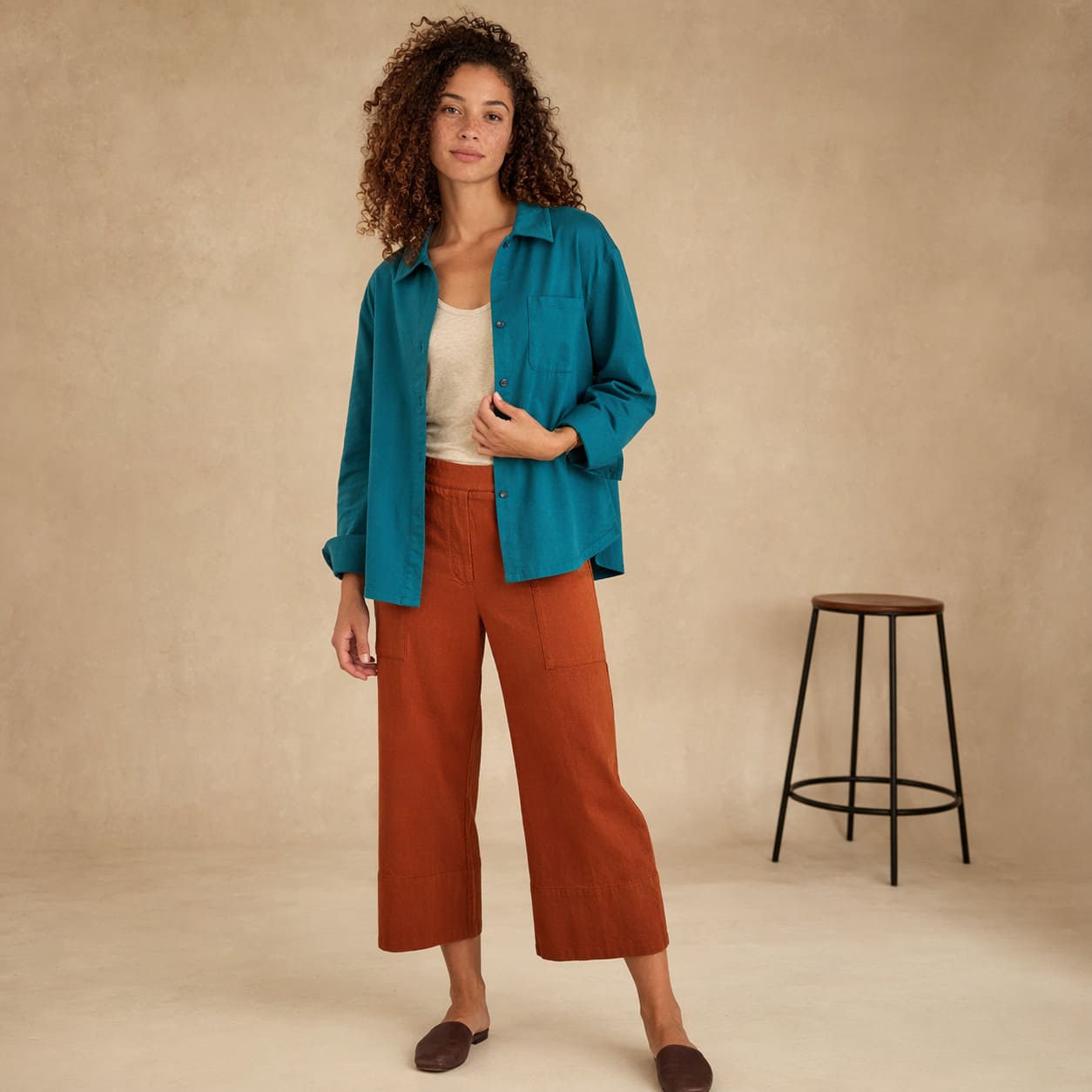
Blazers, field jackets, car coats and summer layers. Tailored to your frame for off-duty and weekend wear.
What we make
Not every coat needs to be formal. We make unstructured blazers, car coats, field jackets, gilets, and lightweight summer layers in linen, cotton, and lighter wools. These are the pieces you wear at weekends, for travel, and over casual clothes when you want to look pulled together without looking dressed up.
Why fit still matters
A blazer that fits your shoulders and nips at the waist looks intentional. One that hangs loose looks borrowed. Even casual pieces benefit from being cut to your body. The difference between off-the-peg and made-to-measure is just as big here as with a formal coat.
Cloth
For warmer months, linen, cotton, and linen-cotton blends keep the weight down. For autumn and transitional weather, lighter wools, moleskin, and cotton drills work well. We can line or half-line depending on how warm you want it. Unlined is also an option for a softer, more relaxed feel.
Fit and process
How we build a coat around your body, your wardrobe, and your timeline.
How a coat is fitted
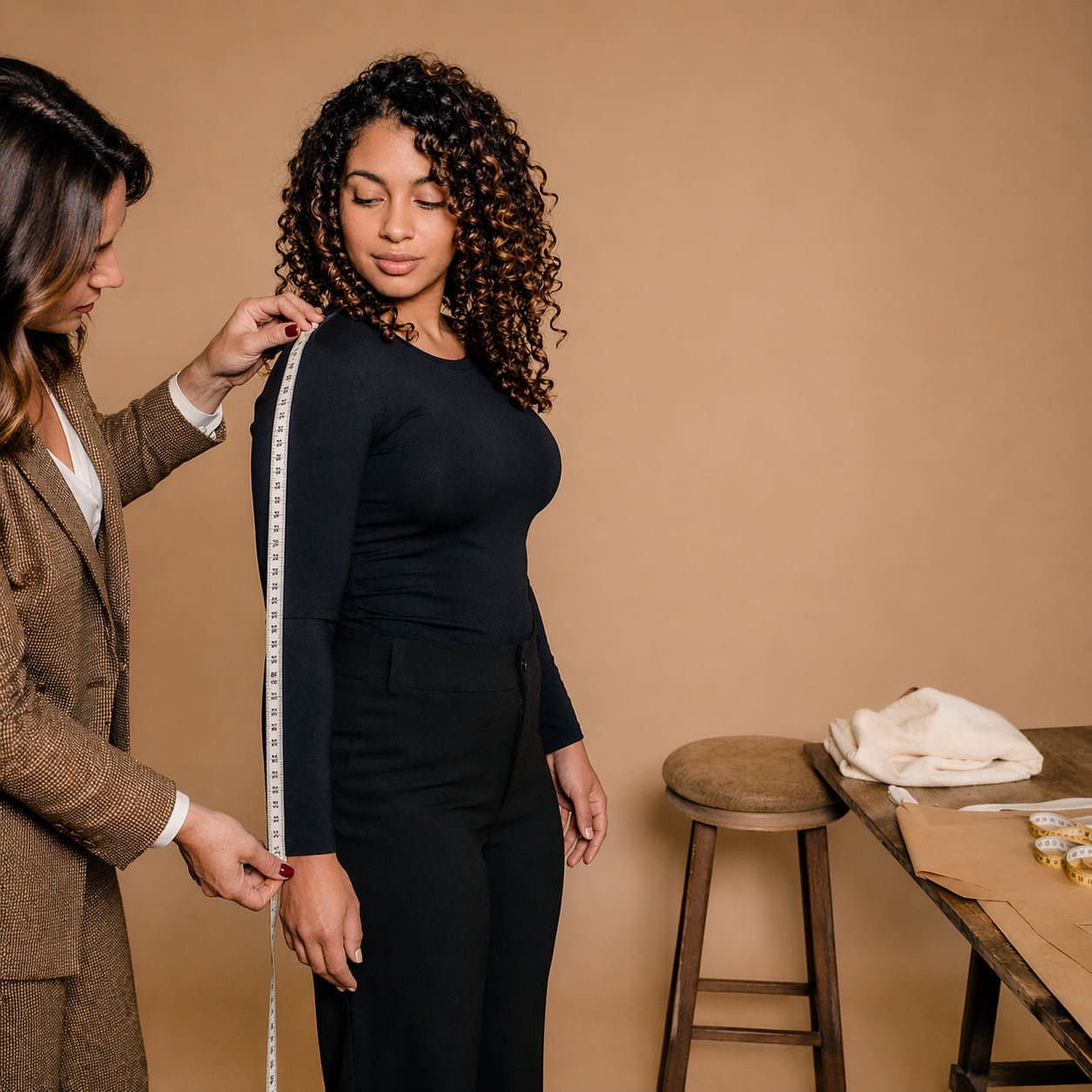
A coat is fitted over the clothes you wear under it, not over bare skin. At your first visit, we will ask you to wear or bring the kind of outfit you plan to wear with the coat. This helps us get the shoulder width, chest room, and arm movement right. We take detailed measurements and assess your posture before building the pattern.
Fittings
Two to three fittings are standard for a coat. At each one, we check the length, the shoulder line, the drape, and the way the cloth sits when the coat is buttoned and unbuttoned. A coat needs to look right open and closed, so we check both.
Timeline
We suggest booking at least 10 weeks before you need the coat. That gives us time for cloth, cutting, fittings and any adjustments. If your timeline is shorter, talk to us. We can often work faster.
Questions about coats?
Fill in the form and we will get back to you. Tell us where you will be wearing it and what your current coat gets wrong.
Ask about cloths that handle the weather, how a coat should sit over a jacket, how long it takes or what it costs. If it is easier to talk, leave your number and we will call.
We are in London (Mayfair), Manchester, Zurich and New York. We can also come to you, or start with a video call.

Over everything
Choosing one that works with the rest of your wardrobe, layers over your jacket, and lasts twenty years.
What coat length should I choose?
Length is about what you wear underneath, not just your height. A coat finishing above the knee works over trousers and short dresses but leaves a longer skirt hanging out below. Knee length is the safest all rounder. Below the knee or full length gives more warmth and a stronger line, though it can swamp a petite frame unless it is cut slim.
How many coats do I actually need?
Two will cover most of the year in the UK. One lighter coat for spring and autumn, and one heavier one for winter. If you commute or travel a lot, a third showerproof coat earns its place quickly.
What colour should my first coat be?
Something you can wear over everything you already own. Camel, navy, charcoal and dark green all sit happily over most wardrobes. Bring in the clothes and bags you wear most and we will match to them, because a coat that only works with half your wardrobe stays on the hook.
Belted or unbelted?
A belt defines the waist and lets you change the shape depending on what is underneath. Unbelted coats hang in a cleaner line and are easier to wear over bulky knitwear. If you like both, we can cut the coat with belt loops and a removable belt so you get the choice each morning.
Will the coat fit over a tailored jacket?
It will if we build it to. This is the single most important thing to tell us at your first appointment. A coat cut close to the body will pull across the back and pinch at the armhole the moment you add a jacket. Wear or bring the jacket you layer most and we will cut the shoulders, armholes and sleeves around it. See our workwear tailoring for women if the jackets underneath are ours too.
How should the shoulders fit?
The shoulder seam should sit where your shoulder ends, with just enough room for a layer underneath. Shoulders are the hardest part of a coat to alter afterwards, so this is what we spend the most time on at fitting.
How long should the sleeves be?
Slightly longer than a jacket sleeve, so it covers the cuff underneath and reaches the base of your hand. Too short and the jacket sleeve peeks out. We set the length with your usual layers on, not in shirtsleeves.
Can you make the pockets deep enough to be useful?
Yes. We cut coat pockets deep enough to hold a phone, gloves and keys without gaping, and we can add an inside pocket if you would rather keep valuables out of sight. Warmth matters too, so we can line the pockets in a soft cloth if you rarely carry gloves.
What cloth weight do I need for a British winter?
Around 500 to 700 grams for a proper winter coat. That is heavy enough to block wind and hold a strong shape. For spring and autumn, 300 to 400 grams is more comfortable and layers better indoors.
Is a cashmere coat warm enough for everyday wear?
Pure cashmere is beautifully soft and warm for its weight, but it marks and wears faster than wool, so it is best for coats worn a few times a week rather than daily. A wool and cashmere blend gives you most of the softness with far more durability, and it is what most clients choose for a coat they will wear hard.
Can a wool coat handle rain?
Tightly woven wools shed light rain well, and a good shake and a night on a hanger will dry them out. For heavy or frequent rain, we would use a closely woven cloth or a treated finish. No wool coat is fully waterproof, so if you need that, tell us and we will steer you to the right cloth from the start.
What difference does the lining make?
A lot. A smooth lining lets the coat slide over knitwear instead of dragging. A quilted lining adds real warmth without extra bulk in the cloth. We can also line just the body and leave the sleeves lighter, which keeps a spring coat comfortable indoors.
How often should a coat be dry cleaned?
Once a season at most, usually at the end of winter before it goes away. Cleaning is hard on wool. Brush the coat down after wear, hang it on a broad hanger, and spot clean marks as they happen. That will keep it looking better than repeated cleaning ever will.
How do I store a coat over summer?
Clean it first, because moths are drawn to the traces left by wear. Store it on a shaped hanger in a breathable cotton cover, never in plastic, somewhere dry and dark. Add cedar or lavender rather than mothballs.
How long should a bespoke coat last?
Ten to twenty years with sensible care. Coats outlive almost everything else in a wardrobe because they are worn over other clothes rather than against the skin. Cuffs and pocket edges show wear first, and both can be repaired long before the coat itself gives up.
Can you make a coat based on one I already love?
Yes. Bring it in. We can work out what you like about it, whether that is the length, the collar or the way it hangs, then correct the parts that never quite worked. It is often the quickest route to a coat you will wear for years.