Evening wear for women
Dinner suits, tuxedos and formal tailoring for black-tie events, galas and award nights. No gowns required.
Rated 5 stars on Google from over 150 reviews
Tell us what you're looking for
Replies within a couple of working hours. Prefer to talk? Call 020 7167 3490 or choose one of our five showrooms.
Women's evening wear
Dinner suits, tuxedos and formal tailoring for black-tie events, galas and award nights. No gown required.
How evening tailoring works
Consultations in our Mayfair showroom, at home or by video. Fittings are also available in Manchester, Zurich and New York.
What we make
Dinner suits, dinner jackets, evening trousers, and formal separates, designed exclusively for women. Every piece is cut for the female form, never adapted from menswear.
Dinner suits
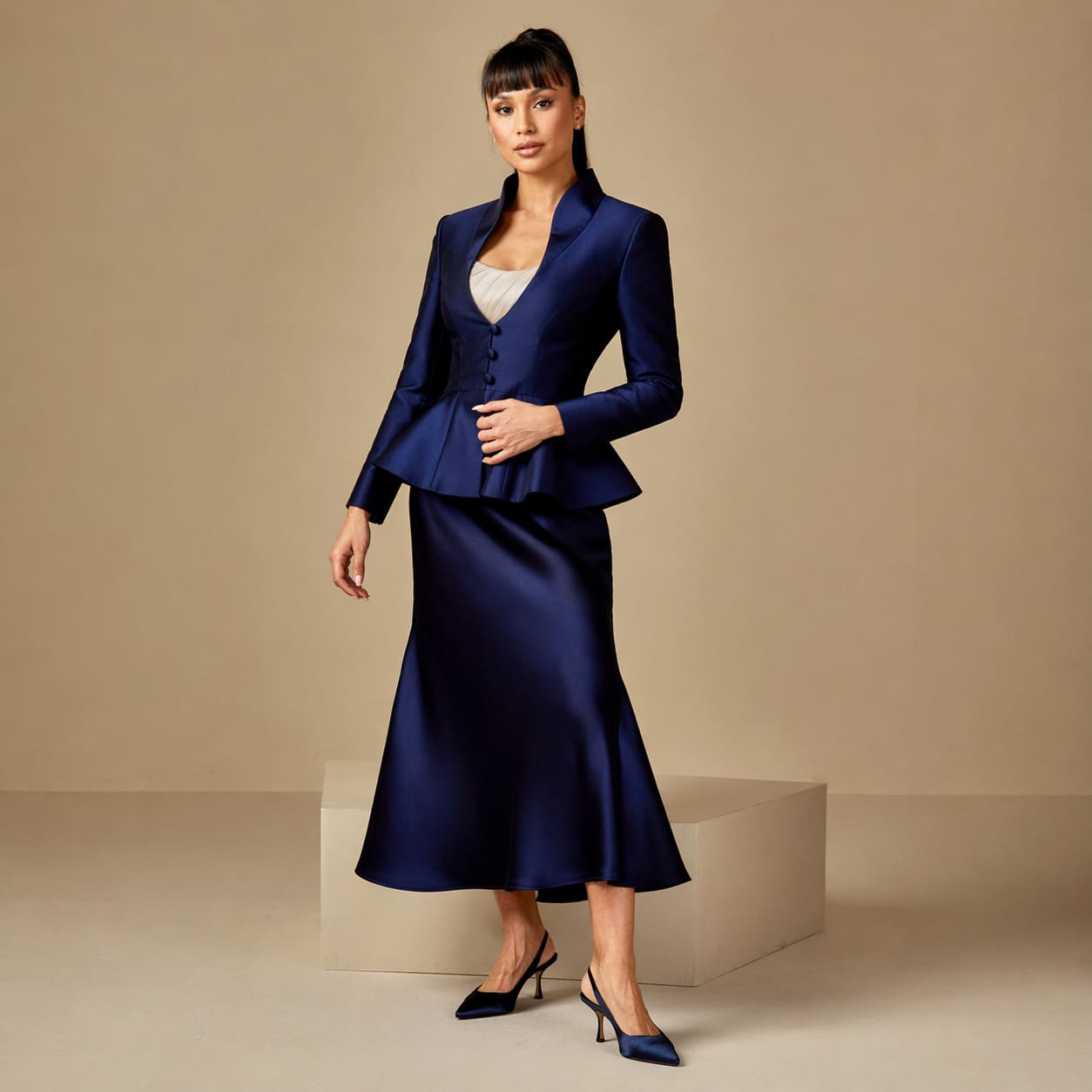
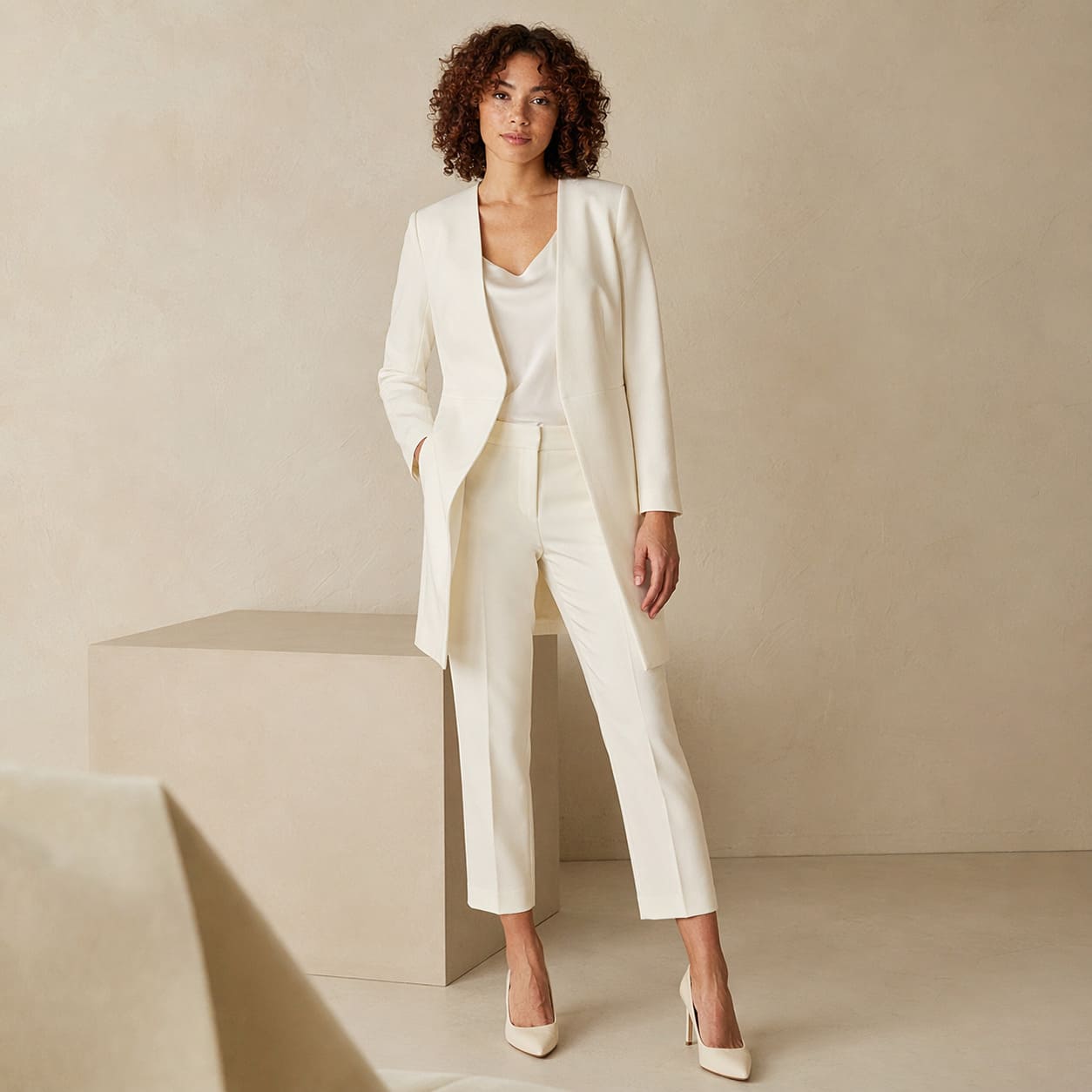
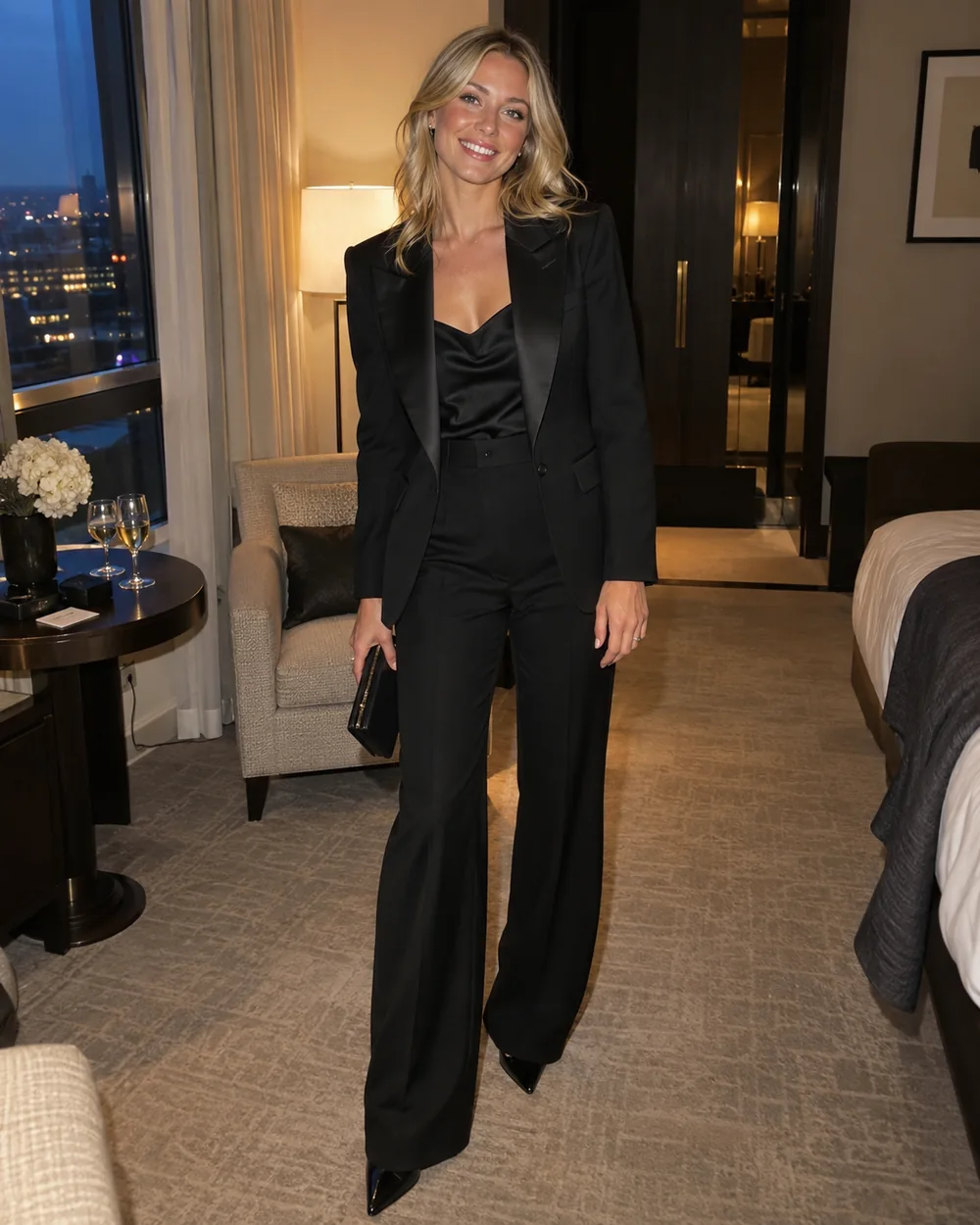
A women's dinner suit follows classic tailoring codes: satin lapels, covered buttons, and a silk braid along the trouser seam. Yet the cut is unmistakably feminine. Each jacket is shaped to flatter the bust, waist, and hips, structured, sleek, and precisely balanced. It delivers formality without compromise.
Choose between peak or shawl lapels, single or double-breasted design, and trouser cuts that range from slim to wide-leg. An added waistcoat can complete the look.
Dinner jackets
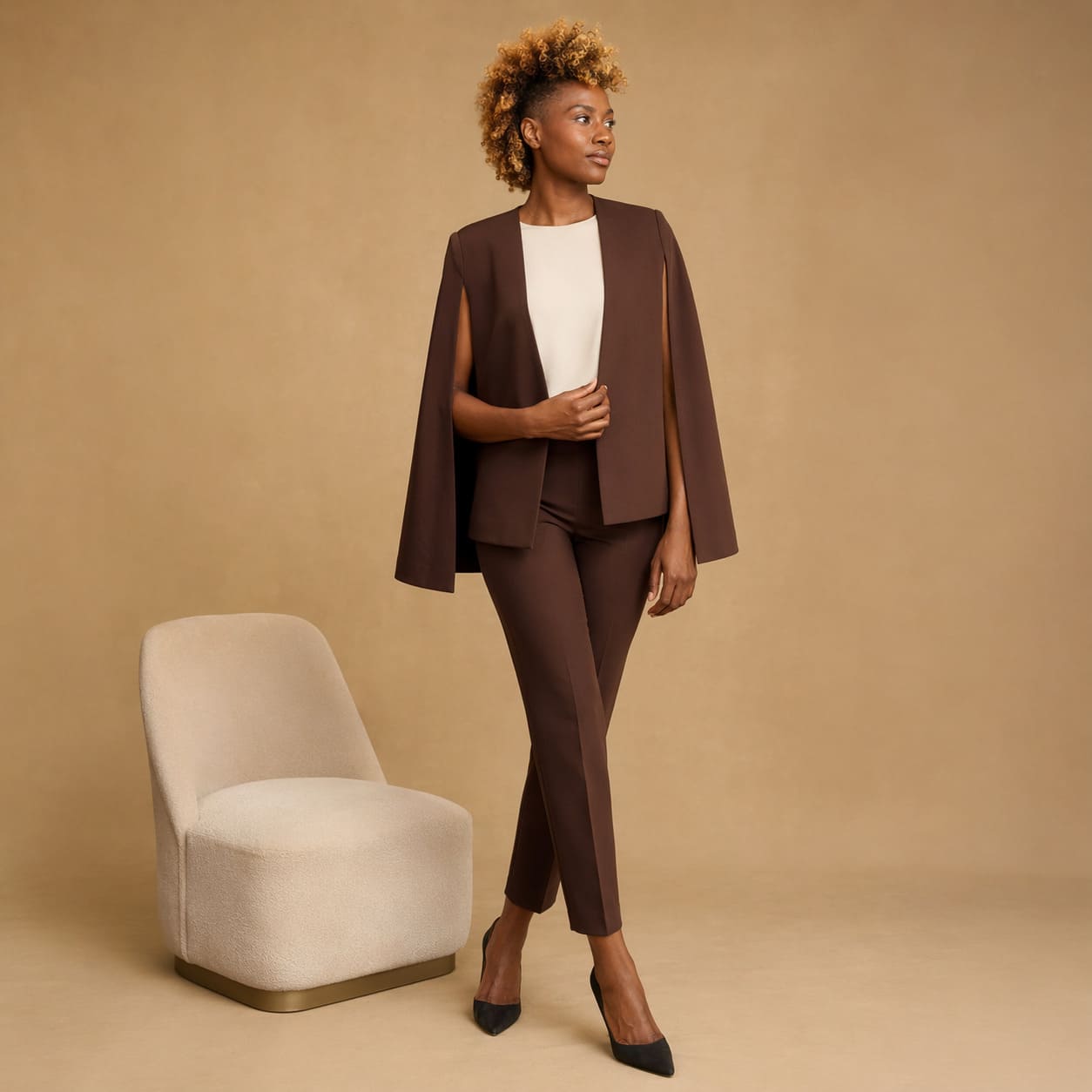
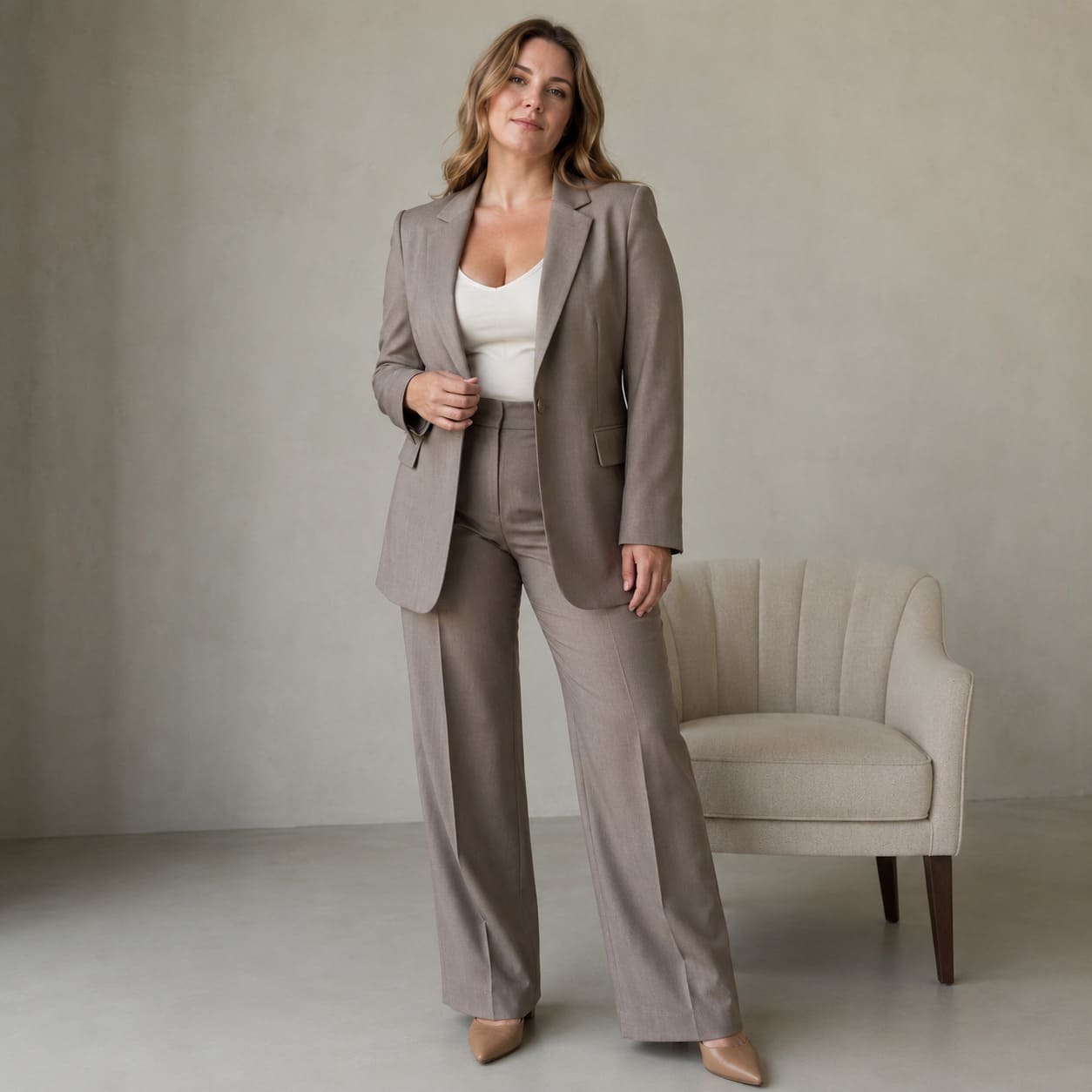
A dinner jacket worn on its own brings effortless evening polish. Pair it with a silk camisole or blouse, or with trousers in a contrasting cloth for a modern mood. Velvet in deep navy or black is timeless for winter, while fine wool with satin lapels offers a cleaner, contemporary line.
Evening trousers
Our evening trousers are cut as you wish. Fine crepes, silks, velvets and jacquards echoing the elegance of the jacket. You define the rise, leg shape, and waistband finish. The fit is designed to flow beautifully as you move.
Formal separates
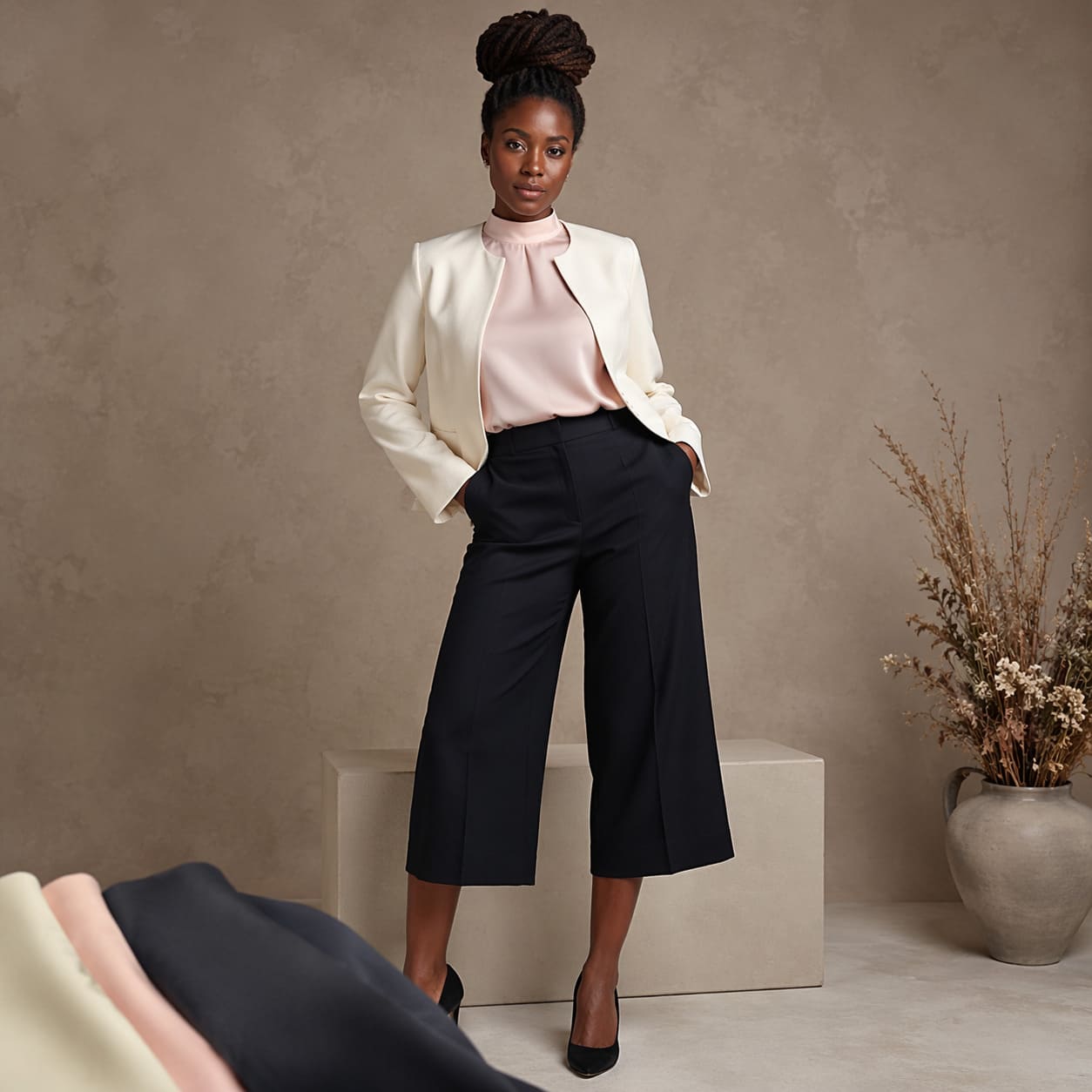
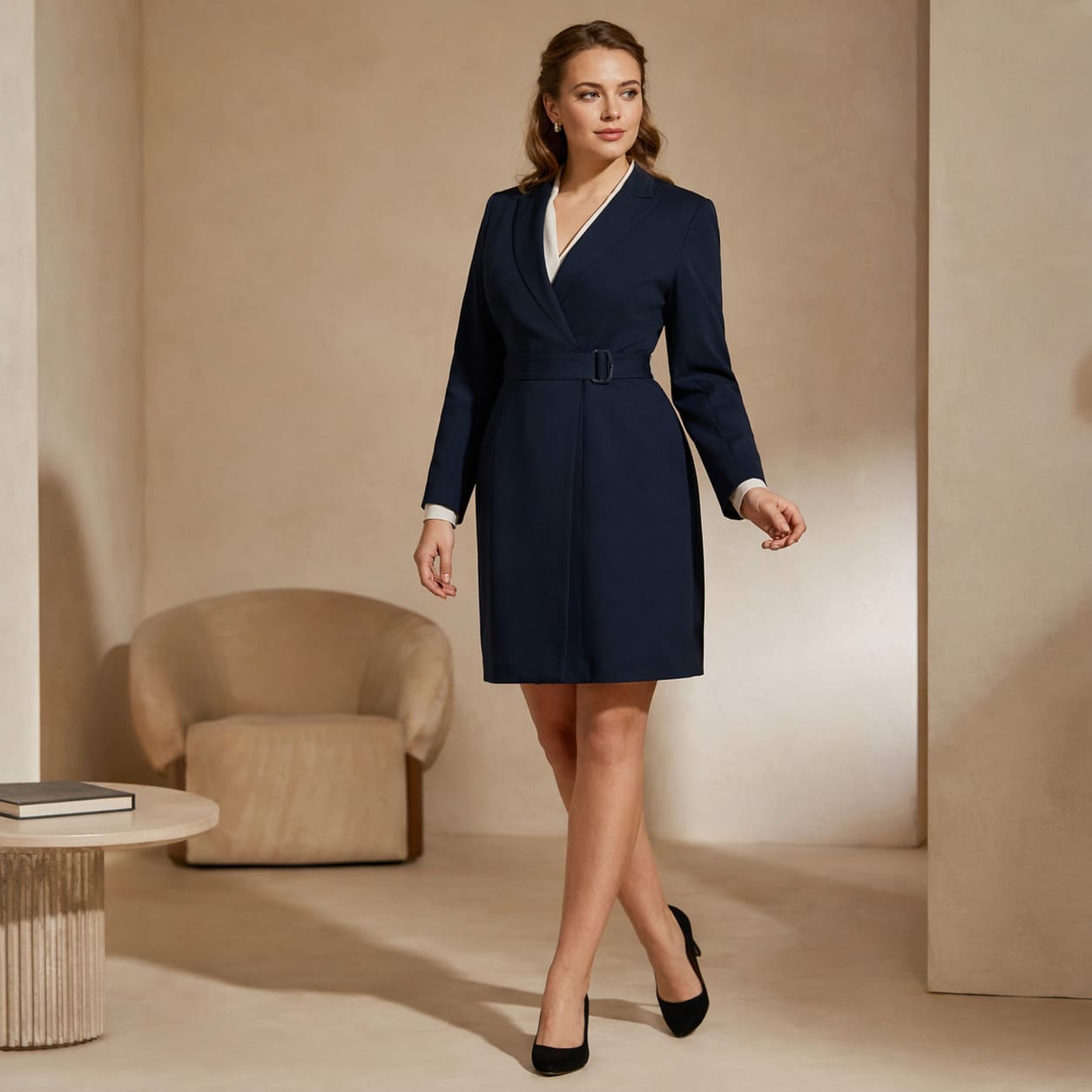
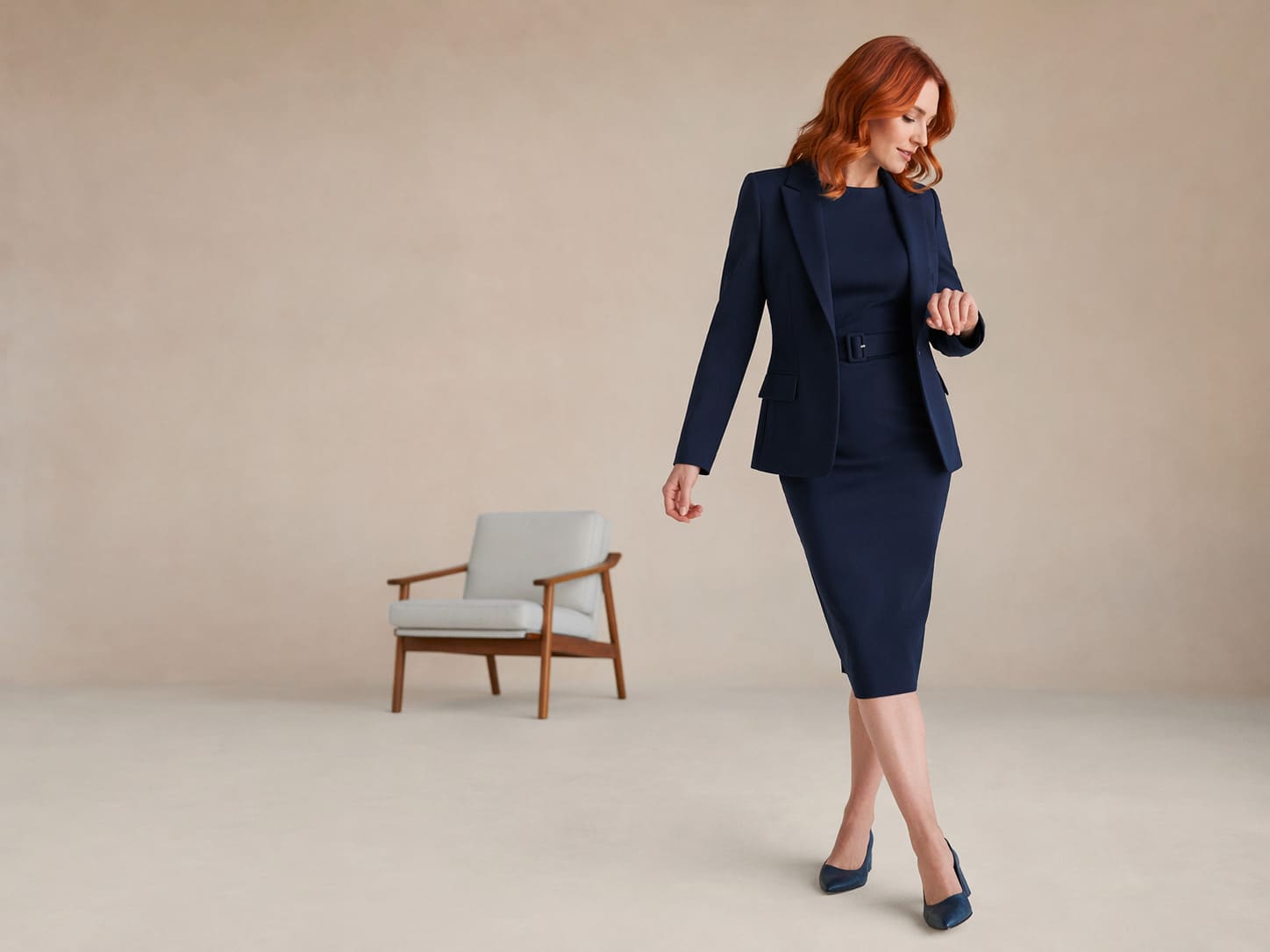
Not every occasion calls for a full dinner suit. A sharp blazer with satin detailing paired with tailored trousers or even a sleek dress or skirt evokes the spirit of black-tie without following its every rule. We are delighted to design beyond the expected when the evening calls for something different.
Send us a photo, get a price
Send a picture of any garment and a tailor replies with a price to create it for you.
Or call 020 7167 3490
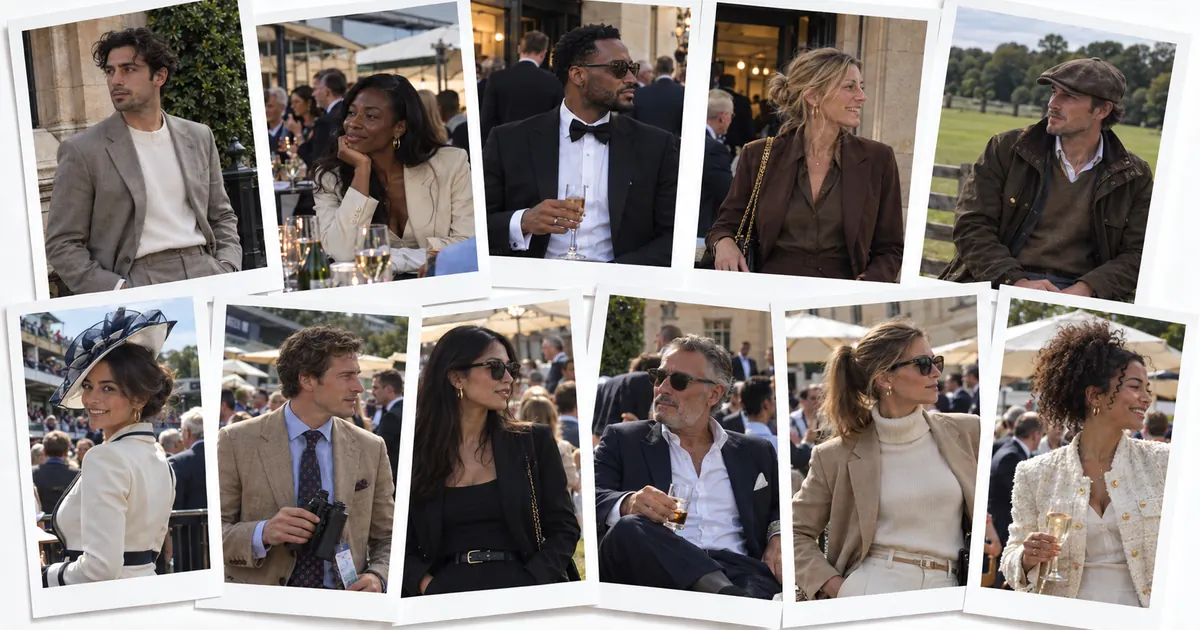
Cloth and details
Barathea wool, velvet, silk blends and more. Plus the lapels, buttons and linings that make it feel like evening wear.
Cloth
Most evening suits are cut in barathea wool. It has a tight weave and a soft sheen that looks great under warm light. We also work in velvet, silk-wool blends for a softer drape, and lighter crepes for summer galas.
Your tailor will show you how each cloth catches light and how it feels on the skin. Because evening wear sits close, the drape matters more than with a business suit.
Colour
Black is the classic. Midnight blue is the original and often looks richer under warm light. But you are not stuck with dark tones. Ivory, deep red, and emerald all work depending on the setting. Your tailor will help you pick based on the dress code and the mood.
Details
Satin or grosgrain lapels. Covered buttons. A silk lining or a bold pattern inside. Jetted pockets. A monogram. These small choices make the piece feel yours. Your tailor will walk you through each one.
Fit and process
How we build evening wear around your body, your event, and your timeline.
Why fit matters even more here
Evening wear lives in the light, under chandeliers, camera flashes, and the eyes of a crowd. Every line, every angle, is visible. That is why the fit must be exact: effortless through the shoulders, perfectly balanced across the bust, waist, and hips. A jacket that pulls or gaps changes the whole impression. We cut for your body alone, not for a standard block.
The process
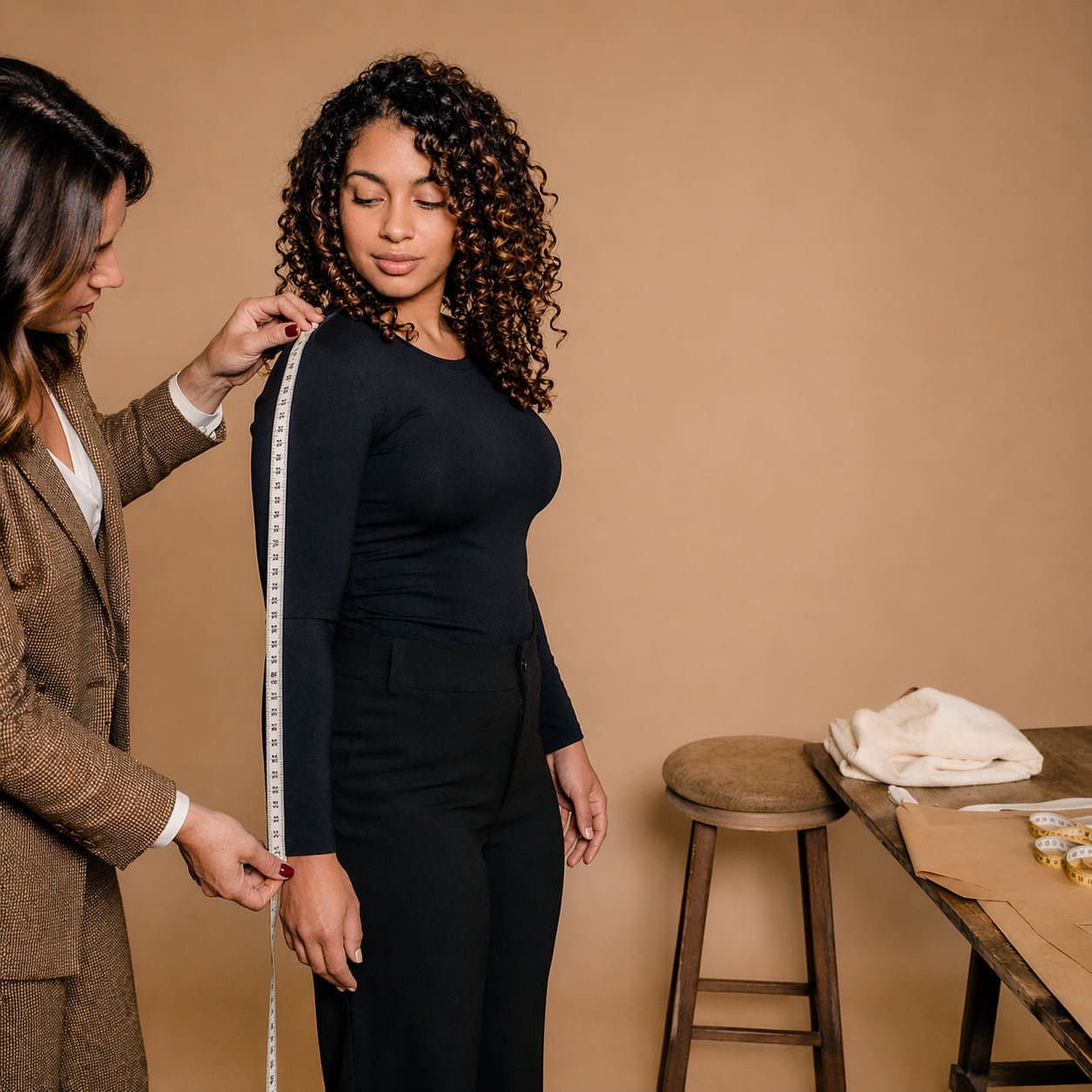
Your first consultation begins with conversation, understanding your event, your posture, and how you want to feel when you walk into the room. From there, we take a full set of measurements and draft your unique pattern.
The suit is refined over two to three fittings, with careful adjustments at each stage until the result moves beautifully with you. The process usually takes 8 to 12 weeks. For a fixed date, we recommend booking at least 12 weeks ahead. If your schedule is tighter, let us know, we can often tailor the timeline to fit.
If this is your first time
Many of our clients come to us for their first bespoke piece. You do not need to know the language of tailoring, shawl or peak, single or double-breasted, before you arrive. We will introduce you to every option and guide you through each decision at your own pace. The experience is meant to feel as elegant as the result.
Questions about casual pieces?
Fill in the form and we will get back to you. Tell us how you spend your time out of a suit and what you are looking for.
Ask about cloths, cuts, how relaxed it can go or what it costs. If it is easier to talk, leave your number and we will call.
We are in London (Mayfair), Manchester, Zurich and New York. We can also come to you, or start with a video call.
Off duty
How tailoring behaves away from the office, from a blazer with jeans to what actually packs well.
What does smart casual actually mean?
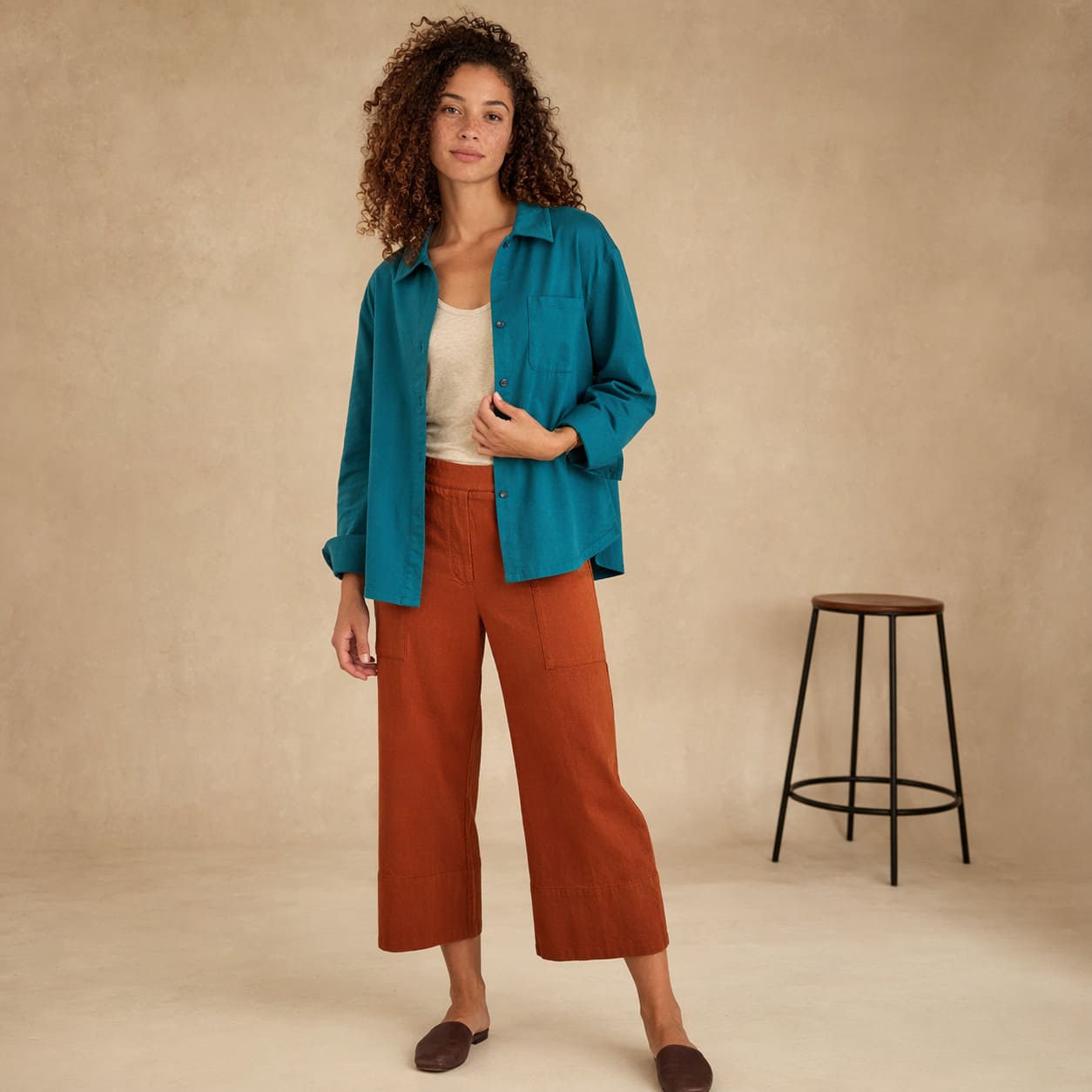
There is no fixed rule, which is why it is so hard to dress for. In practice it means one considered piece worn with relaxed ones. A tailored blazer over a knit and trousers reads smart casual. So does a shirt with cropped trousers and flats. The trick is one structured item, not three.
How do I stop tailored pieces looking like work clothes at the weekend?
Three things change it: structure, texture and colour. Soft shoulders instead of padded ones. Cotton, linen or a textured wool instead of a smooth worsted. Warmer or lighter shades instead of navy and charcoal. Patch pockets on a jacket also read casual straight away.
Can I wear a tailored blazer with jeans?
Yes, and it is the most common way our casual blazers get worn. It works best when the jacket is unstructured and cut in a textured cloth. A sharp worsted blazer over jeans tends to look like a suit jacket that has lost its trousers. Bring the jeans you wear most to your fitting so we can set the length and shape around them.
Should a casual jacket be lined?
Not always. A full lining gives a smoother finish and helps the jacket slide over knitwear. A half lining or no lining at all is lighter and cooler. We usually suggest half lined for spring and autumn, unlined for summer linen, and fully lined if you layer heavily in winter.
Cropped or longline blazer, which one suits me?
It depends on where you want the eye to land, not on your height alone. A cropped jacket finishing at the waist lifts the waistline and works well with a high rise trouser. A longline jacket finishing mid thigh lengthens the whole line and sits well over something slim. We put both shapes on you at the first fitting rather than guess.
Will cropped trousers work on me?
Cropped trousers finish above the ankle, so they shorten the leg a little. That is fine with a high rise and a slim shoe. If you are petite, or want more length, a full length trouser with a small break usually reads better. Again, we try both on your body.
High rise or mid rise?
High rise sits at your natural waist and defines it, which suits tucked in knits and shirts. Mid rise sits a couple of inches lower and feels more relaxed, which is easier if you wear tops loose over the waistband. Most clients end up with one of each.
Is linen worth it if it creases?
Yes, if you accept the creasing as part of the look. Linen is cool, gets softer with wear, and ages beautifully. If you want the feel without the deep creases, a linen and cotton or linen and wool blend holds its shape far better and is a good first step.
What is the difference between merino, cashmere and cotton knitwear?
Merino is fine, warm for its weight, and the easiest to wear under a jacket without bulk. Cashmere is softer and warmer but more delicate, so it is better in pieces worn on their own. Cotton is cooler and good for spring and summer, though it holds less shape over time.
How do I stop knitwear pilling?
Pilling comes from friction, usually under the arms and wherever a bag strap sits. Choose a longer staple yarn, rest the knit between wears, wash it by hand or on a wool cycle, and dry it flat. A comb or de-pilling stone once a season keeps it looking new.
Which pieces travel best?
High twist wool trousers, a soft unstructured jacket and fine merino knitwear. All three fold small, resist creasing and shake out overnight. Cotton shirts pack well too. Save linen for trips where you can hang things properly on arrival.
Can the same trousers work for the office and the weekend?
Often, yes. A mid grey or navy trouser in a smooth cloth leans formal. The same shape in cotton, olive or a soft check leans casual. Choose the cloth carefully and one trouser shape can cover both halves of your week. See our workwear tailoring for women for the other half.
Can you make pieces that work with clothes I already own?
Yes, and we encourage it. Bring in the coat, the jeans or the shoes you wear most, and we will match colour, length and proportion to them. It is one of the most useful things you can do at a first consultation, and it stops you commissioning something that sits awkwardly with everything else.
How often does casual tailoring need cleaning?
Less often than you would think. Brush a jacket after wear and hang it to air. Cotton and linen shirts wash normally. Wool trousers only need cleaning a few times a year if you rotate them. Over-cleaning is what wears these pieces out, not wearing them.