Which cuff should you choose for your shirt and occasion?
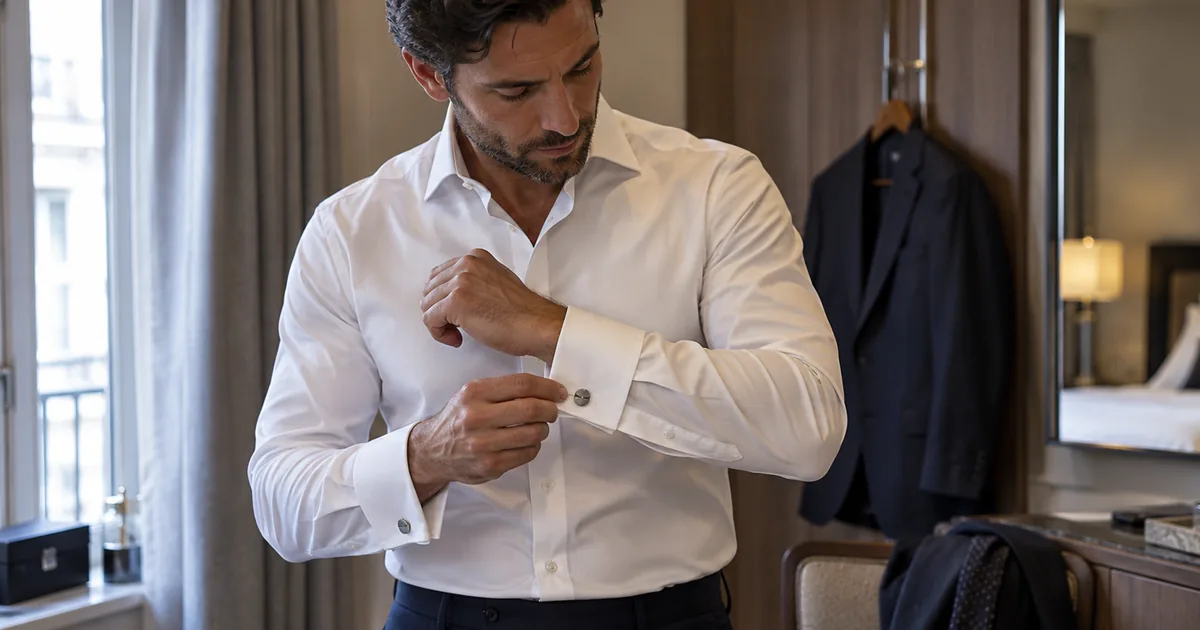
Choose the cuff that matches the dress code, jacket and way you use the shirt. Single button cuffs suit most daily wear. Double cuffs suit formal shirts, evening dress and polished professional settings where cufflinks have enough structure around them to look considered.
Plenty of people start with the cufflinks. We start with the shirt because the cuff is part of the garment’s design. A beautiful link still looks wrong if the cuff is too loose, the cloth is too casual or the jacket sleeve leaves it sitting badly.
Your real decision is practical. How often will you wear the shirt? Which events does it need to cover? Do you wear a watch with it? Those answers matter before metal, stone, silk knots or monograms enter the conversation.
Cufflinks can look restrained, expressive or overdone, depending on what surrounds them. That is why a bespoke shirt conversation should settle the cuff first and the ornament second.
Double cuff and single cuff shirt comparison - Illustrative Image
Single cuffs carry daily wear
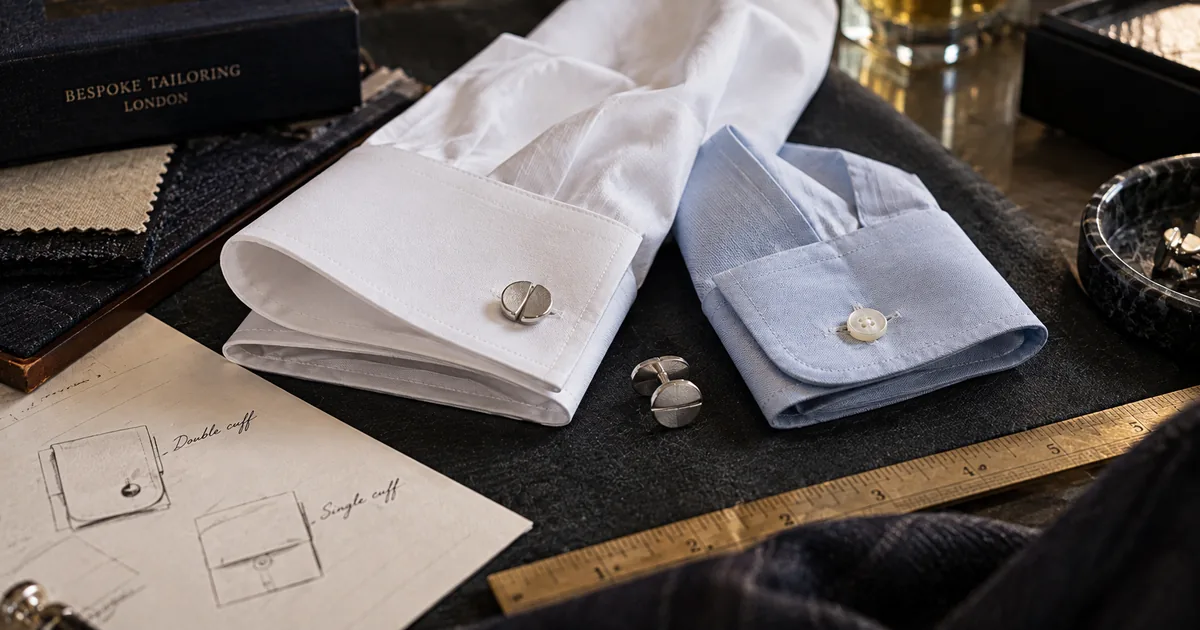
A single button cuff is the everyday default on most shirts. A double cuff, also called a French cuff in normal UK usage, folds back on itself and fastens with cufflinks. A single link cuff and a convertible cuff sit in the more specialised middle ground.
The table below compares single button cuffs, double cuffs, single link cuffs and convertible cuffs so you can see how each one fastens and where it works best.
| Cuff type | How it fastens | Where it works best |
|---|---|---|
| Single button cuff | Fastens with one or more buttons sewn to the cuff | Daily shirts, business shirts, smart casual wear and most travel wardrobes |
| Double cuff or French cuff | Folds back and fastens through buttonholes with cufflinks | Formal shirts, black tie, morning dress, weddings with a formal dress code and smarter business settings |
| Single link cuff | Fastens with a cufflink without folding back | Less common formal shirts where a cleaner, lighter cuff is wanted |
| Convertible cuff | Has a button that can be tucked inside so a cufflink can be used | Occasional cufflink wear where one shirt needs some flexibility |
Cufflinks with a normal shirt only work if the cuff has the right construction or buttonholes. Double cuffs make cufflinks sit as part of the shirt, not as an add-on to a normal button cuff. In Fielding & Nicholson’s shirt guidance, we describe a double cuff as long enough to fold back on itself, with buttonholes for cufflinks in place of button fastening.
That distinction matters when you are commissioning a shirt. Asking for a single cuff shirt, a double cuff shirt or a convertible cuff changes the way the sleeve is made, and that is decided long before the shirt is dressed at the end.
Formal dress codes give cufflinks their clearest role
An invitation that says black tie, white tie, morning dress or lounge suit gives you the best starting point. Dress code comes before preference, especially when the event has a formal host or ceremonial setting.
Debrett’s guidance is useful here because it gives a clear traditional framework: black tie, white tie and morning dress all place double cuffs and cufflinks firmly inside the formal shirt. We would use that framework as guidance, then adjust for the exact invitation, host and garment.
- Black tie: A black tie shirt is the clearest evening setting for double cuffs. A white evening shirt with cufflinks and studs keeps the outfit aligned with the dress code.
- White tie: White tie is the most formal evening code, so the shirt and cuff choice should stay highly controlled. Cufflinks belong with the formal shirt here.
- Morning dress: Morning dress proves that cufflinks are correct before evening, provided the event itself calls for formal day dress. Weddings, official functions and formal daytime ceremonies can all sit in this category.
- Weddings: Cufflinks for a wedding depend on the dress code. Morning dress and black tie support them easily; a lounge suit wedding gives you more room to choose.
- Business meetings: Cufflinks for business meetings work best with a proper jacket, a smart shirt cloth and a setting where polished dress feels natural. In a very relaxed office, single cuffs will usually look sharper.
- Smart professional use: Double cuffs for office wear make sense when the rest of the outfit carries similar formality. A dark suit, good shirt and discreet links read very differently from cufflinks worn with a loose open-neck shirt.
Once the invitation is vague, the jacket becomes the next clue. A structured suit gives cufflinks somewhere to belong; a relaxed shirt on its own asks much more of them.
Man fastening double cuff shirt with cufflinks - Illustrative Image
Pro Tip: Try silk knots before buying metal links. They cost very little and tell you within a few wears whether double cuffs suit your week, which is a cheaper answer than a drawer of unworn cufflinks.
Casual styling makes cufflinks work harder
Cufflinks need support from the rest of the outfit. A shirt with an open neck, casual linen cloth or a jacketless knitwear look gives them very little structure to answer to, so the links start to draw attention for the wrong reason.
Smart casual is the trickiest ground. Cufflinks smart casual can work with a neat jacket and a shirt that still has some form, but a soft holiday shirt or a loose weekend outfit will make a single cuff feel cleaner. The question is whether the cuff looks like it belongs to the shirt you are wearing.
Watch size also matters. A bulky sports watch can push against the cuff, especially where the sleeve is cut close to the wrist. If you wear that watch most days, we would rather plan the cuff around it than pretend it will disappear under the sleeve.
Personal style still has room. The decision follows the garment, the event and your expression, across menswear, womenswear and non-binary tailoring. Novelty cufflinks need particular care at solemn events, where restraint is usually the better judgement.
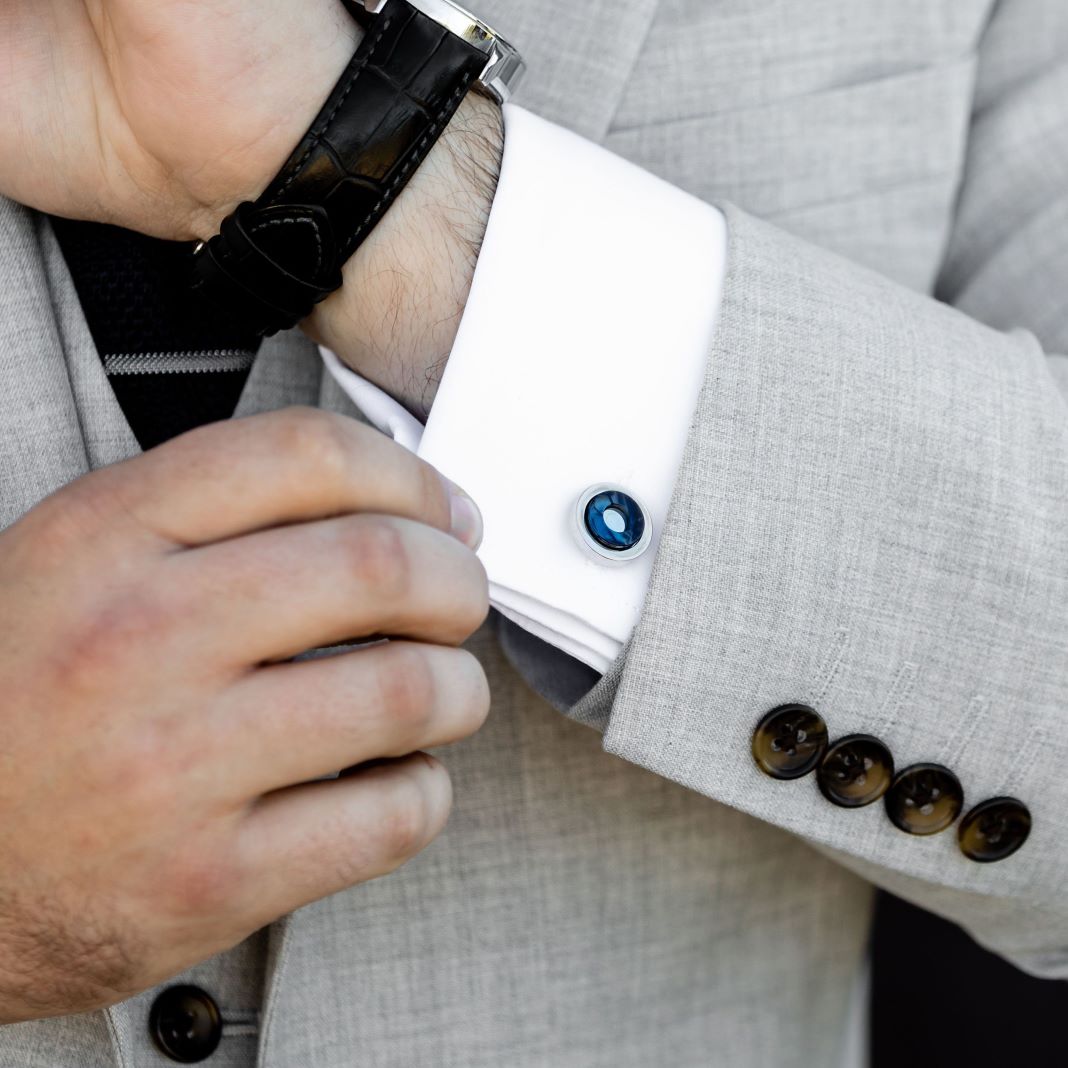
A statement cufflink with a white shirt and light grey suit
Bespoke cuff details decide the finish
A shirt can be formally correct and still sit awkwardly. The cuff may be too deep for the wearer’s wrist, the sleeve may fight the jacket, or the watch may push the fabric out of line. These are small details, but they decide whether cufflinks look settled.
During a Fielding & Nicholson bespoke shirt fitting, we treat cuff choice as part of the shirt specification. Sleeve length, jacket sleeve show, cuff depth and interlining all affect the result. The right cuff is specified with the shirt and jacket, not rescued by a more expensive cufflink.
Watch clearance deserves a plain conversation. A single cuff can be cut close enough to stop the sleeve sliding down the hand, although that same closeness can make a larger watch awkward. A double cuff often gives more room around a watch, but it still needs the right balance of cuff size and sleeve length.
Cloth changes the answer as well. A crisp formal shirt cloth can carry a double cuff cleanly, while a softer casual cloth may look better with a button cuff. Personal details, including a cuff monogram, work best after the cuff shape has earned its place in the wardrobe.

Pro Tip: Check that the links you own pass through the buttonholes before the shirt is finished. Stiffer formal cuffs and chunky link posts do not always agree, and the buttonhole is far easier to adjust than the cufflink.
Buying cufflinks first is the expensive mistake
The common misconception is simple: expensive or distinctive cufflinks turn any shirt into formalwear. They do no such thing. The wrong cuff, a relaxed cloth or a mismatched dress code will still show through.
Single cuffs are often the most useful choice for frequent wear. They move easily between professional days, travel, dinners and relaxed jackets. Double cuffs earn their place when your calendar includes formal events, ceremonial dress or business settings where a more polished shirt has genuine use.
Our tailoring judgement is to settle the shirt’s purpose before selecting the link. That prevents accessory-first buying, where the cufflinks are impressive in the box and awkward on the wrist. The safest assumption to drop is that cufflinks create formality on their own; the shirt has to do that work first.

Cufflinks to wear with a dinner suit at a gala
Questions clients ask us about shirt cuffs and cufflinks
Should cufflinks match my watch or other jewellery?
Cufflinks do not need to match every metal exactly, but they should sit comfortably with the rest of what you wear. If your watch is large or visually strong, keep the cufflinks quieter.
Are double cuffs becoming unusual?
Double cuffs are rarer than single cuffs on everyday shirts, and that scarcity is part of why they read as more formal. It works in your favour when the occasion calls for it, provided your calendar gives the shirt somewhere to go.
How many double-cuff shirts does a formal wardrobe need?
Your number depends on how often you attend black tie, formal weddings, dinners or polished business events. If those occasions are rare, one well-specified double-cuff shirt may serve you better than several shirts that see little wear.
What happens if a cufflink is lost before an event?
Keep a plain spare pair somewhere reliable. A double cuff cannot be fastened without a link, so a lost cufflink on the morning of a wedding leaves you with a shirt you cannot wear.
Do cufflinks suit womenswear and non-binary tailoring?
Yes, cufflinks can work across womenswear, menswear and non-binary tailoring when the shirt, jacket and occasion support them. The better question is whether the cuff choice fits the garment and the way you want to wear it.