How should your trousers meet your shoes?
Your trousers should meet your shoes with a clean, deliberate break that suits the trouser shape, shoe and way you move. For most bespoke suit trousers, we start by looking for a neat front line, controlled sock exposure and no heavy pooling over the shoe.
That sounds simple until you stand in front of a mirror and the trouser behaves differently from each angle. A pair can look sharp when you stand still, then appear too cropped as soon as you walk. Another pair can look generous from the front and untidy from the side.
The break gives you the language to describe that difference. Once you can name the fold at the bottom of the trouser, you can talk to a tailor about proportion, comfort and the line you want, without needing every technical term.
We use break as one part of the fitting conversation. The question is how the trouser works with your shoes, your waistband position and the occasions you dress for.
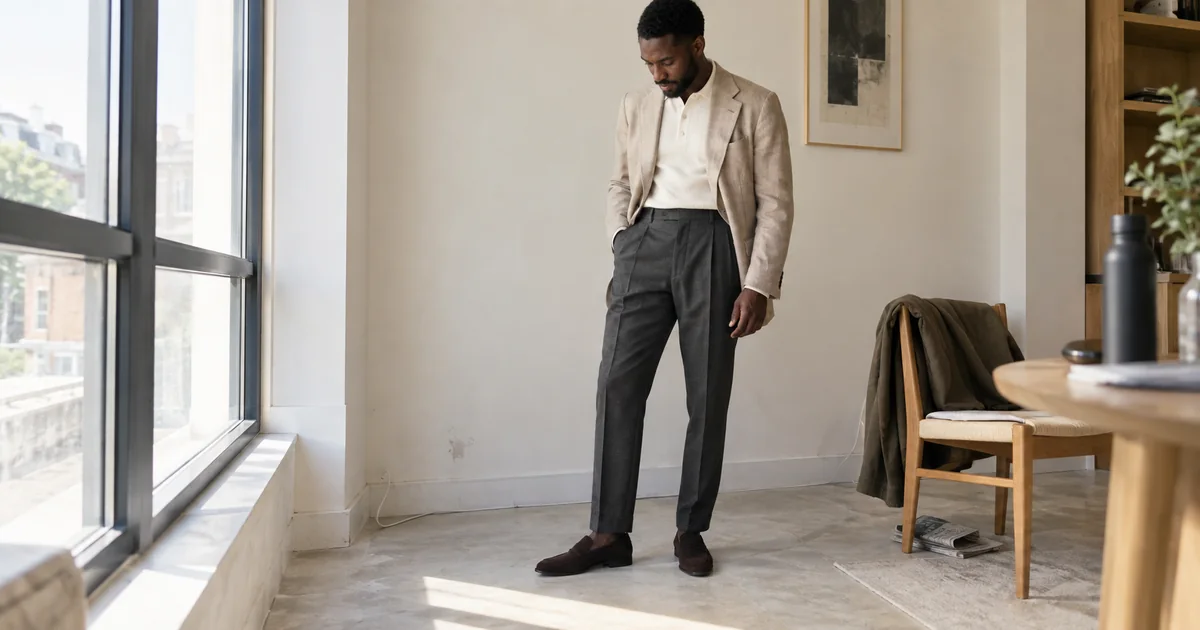
Modern no break tailored trousers - Illustrative Image
The break is where cloth meets shoe
Picture trousers that look well cut through the thigh and knee, then collapse into a soft heap over the shoe. Now picture the opposite: a clean leg with so much ankle showing that the trousers look as if they have shrunk. The break sits between those two mistakes.
If you have wondered what is a trouser break, the plain answer is this: it is the way the bottom of the trouser leg rests, folds or “breaks” against the top of the shoe. A trouser break is a proportion decision, not a fixed universal measurement. The same hem can behave differently with a loafer, a Chelsea boot or a derby because each shoe gives the cloth a different surface to meet.
Good fitting language helps here. You might ask for no break, a quarter break, a half break or a full break. Those terms describe how much fold you see at the front of the trouser leg and how the cloth sits over the shoe vamp.
Length also has limits. Dramatic sock exposure can make trousers too short for a formal suit, especially when you are standing still. Heavy pooling over the shoe usually points to too much length or too much volume at the hem. We want the crease to travel cleanly down the leg, reach the shoe, and stop with intent.
Each trouser break changes the line differently
Break names matter because they describe visible cloth behaviour. Once you can recognise the fold, you can judge whether the trouser length on shoes suits the cut of the leg.
The table below compares each trouser break type with what the eye sees at the shoe.
| Break type | What the eye sees |
|---|---|
| No break | The hem sits just above or just on the shoe, with a clean cropped finish and little visible fold. |
| Quarter or slight break | A small crease appears at the front, giving the trouser softness without much interruption to the line. |
| Half break | A clearer fold forms over the shoe, which can suit a classic suit trouser break and a slightly fuller leg. |
| Full break | Extra cloth rests over the shoe, creating a deeper fold that needs width, cloth weight and intent to look settled. |
No break trousers can look sharp, especially with a narrower leg opening. They also ask more from the cut, because excess width near the ankle can move loosely as you walk. Quarter break trousers are a useful middle ground for many wardrobes, particularly when the trouser needs to work for business, travel and evening wear.
Half break trousers give the eye a more traditional fold. Full break trousers create the most cloth over the shoe, so the trouser needs enough volume and substance for that choice to look deliberate.
The rear hem matters as much as the front. A classic guideline is one clean break at the front and a clean back line, because a dragging back hem can shorten the leg visually and make even good cloth look tired. From behind, the trouser should look settled, with the back line falling cleanly into the shoe.

Slight break tailored trousers - Illustrative Image

Pro Tip: Ask someone to photograph the back of the trousers at the fitting. The rear hem decides as much as the front, and it is the one part of the line you cannot see for yourself in a mirror.
The right break follows the whole trouser
Shoe choice starts the conversation, then the rest of the trouser takes over. A loafer exposes more of the foot, a boot changes the height the cloth meets, and a derby gives a sturdier surface under the hem. The cleanest length comes from the whole trouser, not the hem in isolation.
Rise changes the result as well. If you wear the waistband higher, the trouser hangs differently from the hip and the hem may lift. If you wear it lower, the same pair can gain extra cloth at the shoe. That is why we treat suit trouser length as part of the full silhouette, from waistband to hem.
Shape makes the biggest visual difference. Shorter trousers generally need a narrower leg, because a wide opening above the shoe can flap at the ankle. Wider trousers can take a little more break because the volume already belongs to the design. In our work at Fielding & Nicholson, we look at rise, taper and cloth together before settling the finished length, especially in softer modern tailoring.
Turn-ups and cuffs need particular care. A cuff gives the hem weight and structure, but it also limits how much the bottom can be angled to reduce the front fold. For that reason, cuffed trousers often sit best with a cleaner break and less heavy stacking over the shoe.
The same principle applies across menswear, womenswear and non-binary tailoring. Break is about proportion and movement on the person wearing the trousers. A slim evening trouser, a fuller pleated pair and a relaxed office trouser can all be correct, provided the hem, shoe and leg shape agree with one another.
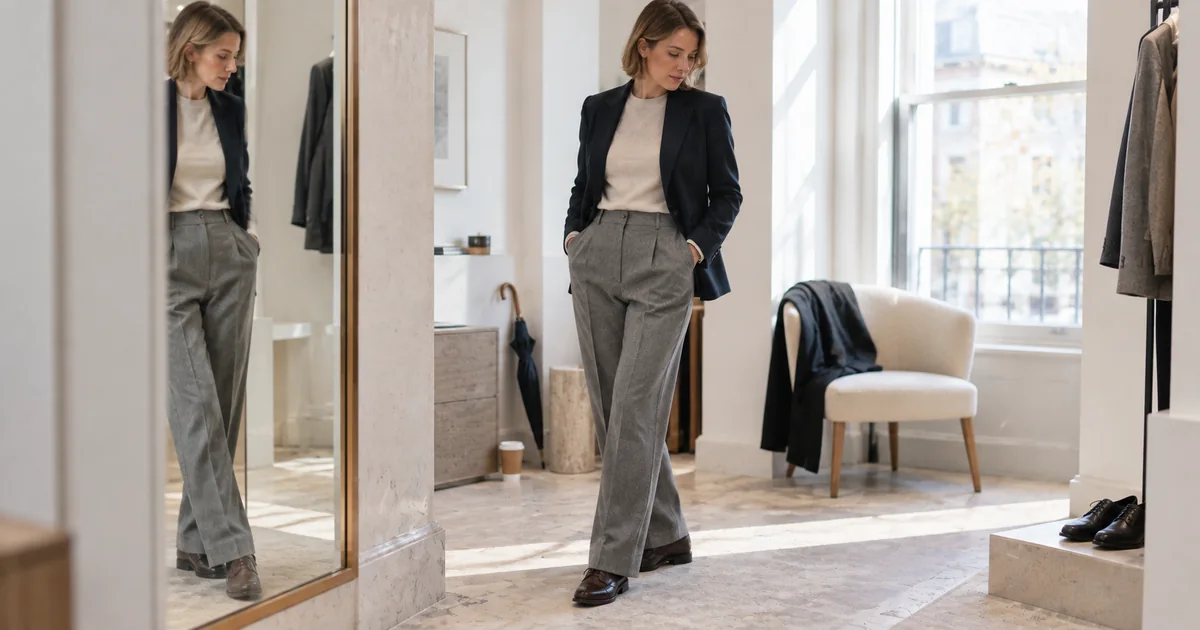
Half break tailored trousers - Illustrative Image

Pro Tip: Ask what hem allowance is being left inside. A little spare cloth means the length can move later if your usual shoes change, which is cheaper than living with a break set for shoes you no longer wear.
Fitting decides the finished length
The fitting room is where trouser break becomes real. A break judged in bare feet, with the waistband held in the wrong place, gives the tailor poor information and gives you a less reliable result.
Bring the shoes you plan to wear with the trousers and set the waistband where you intend to wear it. That point matters for new bespoke trousers and for trouser alterations length, because the cloth breaks against the shoe itself.
Use the fitting to check the trouser in real positions:
- Stand naturally. Let the trouser fall from the waistband without pulling at the cloth or adjusting the hem by hand.
- Look at the front crease. The line should travel cleanly down the leg and meet the shoe with the amount of break you asked for.
- Check the back hem. A clean rear line keeps the trouser from looking heavy behind the heel.
- Walk a few steps. Movement shows whether the hem lifts too much or whether excess cloth gathers over the shoe.
- Change shoes only with care. A trouser set for loafers can behave differently with boots or trainers, so your main shoe choice should lead the decision.
During fittings at Fielding & Nicholson, we settle break as part of wardrobe planning, because the most useful trouser is the one you keep reaching for. If your shoes, cloth choices and trouser shapes are becoming more varied, the smartest break is the one that keeps the line composed across the way you actually dress.

Full break tailored trousers - Illustrative Image
Questions clients ask us about trouser break
Can trouser break be changed after the trousers are made?
Yes, a tailor can alter trouser length if there is enough cloth available at the hem. The adjustment still needs to be judged with the right shoes, because a small change in length can alter the whole line.
Does a trouser break matter on casual trousers?
Yes, break still matters on casual trousers because the hem still meets a shoe. The finish can be more relaxed than formal suiting, but pooling or excessive sock exposure can still make the trouser look out of proportion.
Does cloth weight change the break you should choose?
Yes. A heavier winter cloth holds a fold and can carry more break cleanly, while a lighter summer trouser tends to crumple rather than drape. We would judge the same length differently in flannel and in fresco.
Are turn-ups better with no break?
Turn-ups usually need to sit a little higher than a plain hem, because the cuff limits how much the bottom can be angled. A sizeable break above a cuff tends to look ill-fitting, so a slight or minimal break is the safer finish.
Should both trouser legs break in exactly the same way?
The aim is a balanced pair, but many people stand with slight differences between left and right. A good fitting checks the trousers on your body, then refines the hem so the pair looks even when you stand and move naturally.