Does your polo work under your blazer?
Yes, a polo can work under a blazer when the outfit is treated as polished smart casual. The jacket needs to look relaxed by design, the polo collar needs to sit neatly, and the trousers and shoes need to support the same level of dress.
Many people get this pairing wrong by treating the polo as the main decision. We look at it the other way round. The blazer sets the tone first, then the polo either sits calmly inside that frame or makes the whole outfit feel accidental.
A good smart casual polo and blazer combination has control. It has the ease of casualwear, as well as the shape and finish of tailoring. That balance is exactly why it works for a dinner, travel day, client lunch or relaxed office, and why it can feel weak in a room that expects a proper shirt and suit.
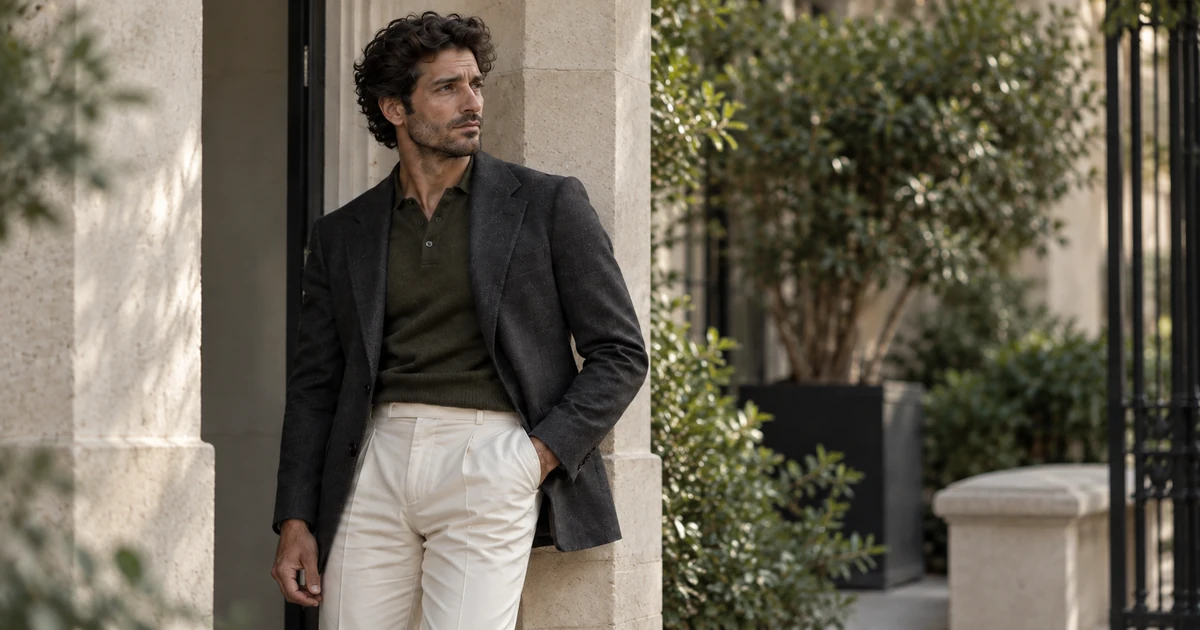
Man Wearing Dark Polo Shirt Under Charcoal Blazer - Illustrative Image
The polo belongs to smart casual
A polo shirt with a blazer sits in smart casual and some business casual settings. We use it when the brief asks for ease with polish, such as a relaxed dinner, a modern office day or a social event where a suit would feel too stiff.
UK opinion supports that judgement. YouGov found that 82% of Britons said a polo shirt can be worn as part of a man’s smart casual outfit, compared with 92% for a button-up collared shirt on its own. That gap matters because it tells you where the polo sits: acceptable, widely understood, and still one step below a shirt in formality.
Debretts also places polo shirts above collarless T-shirts for informal smart casual. For stricter invitations, we move the outfit up: a shirt, smarter trousers and proper shoes. Black tie, formal interviews, traditional wedding wording and high-stakes meetings are all moments where a blazer with polo shirt styling asks too much of the polo. Those occasions belong to bespoke formalwear instead.
Soft blazers make the pairing work
The jacket carries most of the risk in a blazer and polo outfit. A blazer works best here as a soft tailored separate, not as the stranded top half of a suit.
A true tailored separate has its own reason to exist. The cloth feels at home away from matching trousers, the shoulder sits with ease, and the buttons do not shout boardroom. Under that kind of jacket, a polo under blazer styling looks intentional because both pieces belong to the same relaxed level of dress.
A formal suit jacket is harder. Fine worsted cloth, sharp shoulders and very businesslike buttons can make the polo look like a last-minute substitute for a shirt. You can see it in the mirror: the top half looks dressed for one place and the layer underneath for another.
Fielding & Nicholson tailors often treat this as a wardrobe question before a garment question. We think about bespoke casual jackets, unstructured blazers and pieces that can move between lunches, travel and informal work settings. Breathable wool or cotton works especially well because the jacket still has shape, but the effect is softer than formal suiting.
If you are wondering what jacket goes with a polo shirt, start with the shoulder and cloth. A softer shoulder, separate cloth and easy drape give the polo room to look deliberate.
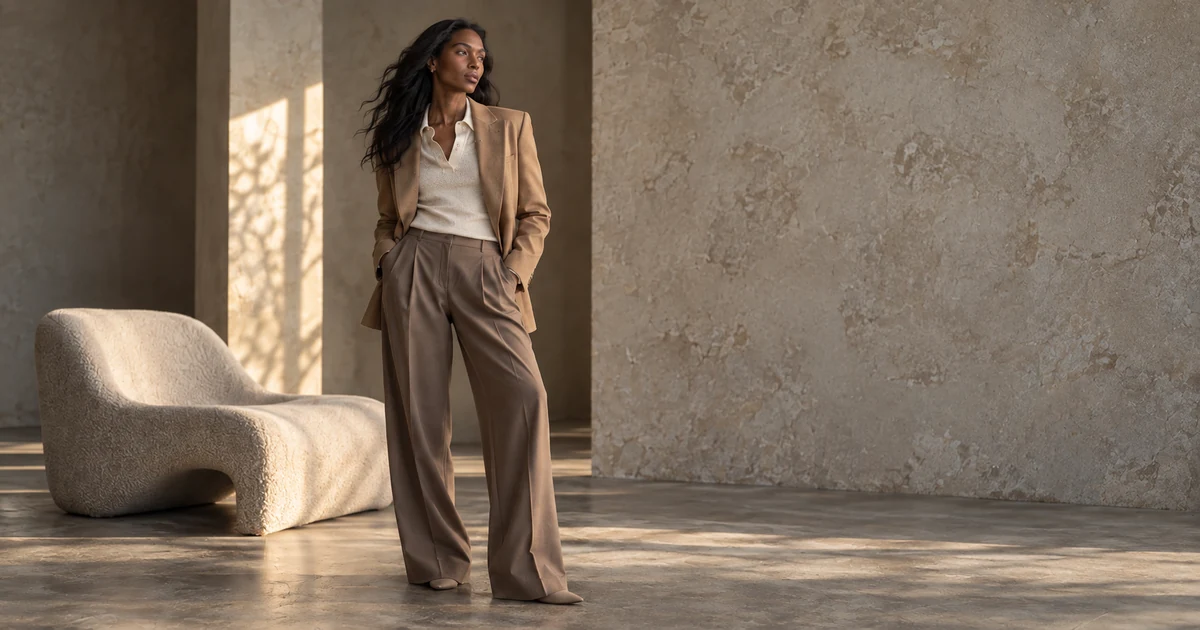
Woman Wearing White Polo Shirt Under Camel Blazer - Illustrative Image
Pro Tip: Buy a spare of any polo that works under your blazer. Collars soften with washing, and a polo that has lost its shape is the first thing to spoil the outfit.
Collar behaviour decides the polish
Picture a good blazer with a weak polo collar sitting underneath it. The jacket may fit well, but the collar curls, the placket bulges and the lapel frames the mess. That is the point where a smart polo with blazer styling loses its ease.
Collar and placket
The collar should support the lapel line, not collapse beneath it. A polo collar needs enough body to sit cleanly inside the jacket opening, especially when the blazer has a stronger lapel. Ribbed collars can work, but very soft ones often flatten under the cloth.
Placket bulk matters as well. A thick placket pushes against the jacket front and draws the eye to the wrong place. Smoother polos, fine knits and refined cotton piqué behave more like a soft shirt layer, which is why they dress up better under tailoring.
Fit and finish
Polo shirt fit becomes more visible under a blazer because the jacket frames the shoulder, chest and sleeve. We want the shoulder seam to sit at the edge of your shoulder, the chest to close without pulling at the buttons, and the sleeve to land around mid bicep.
Length needs judgement. A polo that is too short will pull free when tucked, while a long one can bunch under the waistband. Large logos, shiny sports fabrics and loud branding pull the outfit into leisurewear, so a dressy polo shirt usually looks cleaner in a darker shade or a smoother surface.

Woman Wearing Cream Polo Shirt Under Tailored Camel Blazer - Illustrative Image
Trousers and shoes set the level
When you are getting dressed for a smart casual setting, the lower half decides whether the polo and blazer feels composed or too relaxed. Chinos, tailored trousers and dress trousers give the combination a safer base than denim with a washed or distressed finish.
The table below compares safer trouser and shoe choices with choices that need more care.
| Safer choices | Choices that need more care |
|---|---|
| Chinos with loafers | Dark jeans with relaxed shoes |
| Tailored trousers with derbies | Trainers in a UK smart casual setting |
| Dress trousers with suede shoes | Ripped denim or sporty footwear |
| Chinos with desert boots | Untucked polo with a long hem |
YouGov found strong acceptance for chinos, dress trousers, classic smart shoes, loafers and desert boots as smart casual choices, while ripped jeans, sweatpants and tracksuit bottoms sat at the opposite end of public opinion. That fits what we see in the mirror: a polo blazer chinos outfit reads much cleaner than the same blazer with heavily casual trousers.
Tucking usually raises the formality. A tucked polo with blazer styling suits work, dinner and smarter events because the belt line looks deliberate. An untucked polo can work in a relaxed setting if the length is neat and the hem sits cleanly, but the half tuck rarely gives this outfit the precision it needs.

Pro Tip: Sit down and stand up in the full outfit before you commit to it. A polo can ride up and a jacket can pull at the button in ways you never see standing still at the mirror.
A reliable outfit earns repetition
Once the jacket, collar and lower half are working together, the outfit becomes useful in a way trend-led pieces rarely are. You can repeat a polished smart casual look because each piece has a role, and none of them needs novelty to justify itself.
Use this short check before you leave the mirror:
- Check the jacket. The blazer should look like a separate, with softer structure and cloth that does not rely on matching trousers.
- Check the collar. The polo collar should sit neatly under the lapel, with no curling, flattening or bulky placket fighting the jacket front.
- Check the fit. Shoulder, chest, sleeve and length should look calm under the blazer.
- Check the lower half. Chinos, tailored trousers and smart shoes make the outfit safer; dark jeans need a more relaxed setting.
- Check the setting. Smart casual offices, dinners and travel are natural homes for this pairing, while formal wording asks for a shirt.
Fielding & Nicholson’s own smart dress guidance uses a blazer over a crisp polo shirt with chinos and loafers as a modern smart dress example, and that is a useful benchmark. We would still refine it to the person: different bodies, proportions and style preferences need different jacket lengths, collar shapes and trouser lines. That is what personal styling work actually involves.
The shift is simple. Instead of wondering whether the polo and blazer outfit is allowed, you know what to inspect: the softness of the jacket, the behaviour of the collar, the finish of the trousers and the level of the shoes.
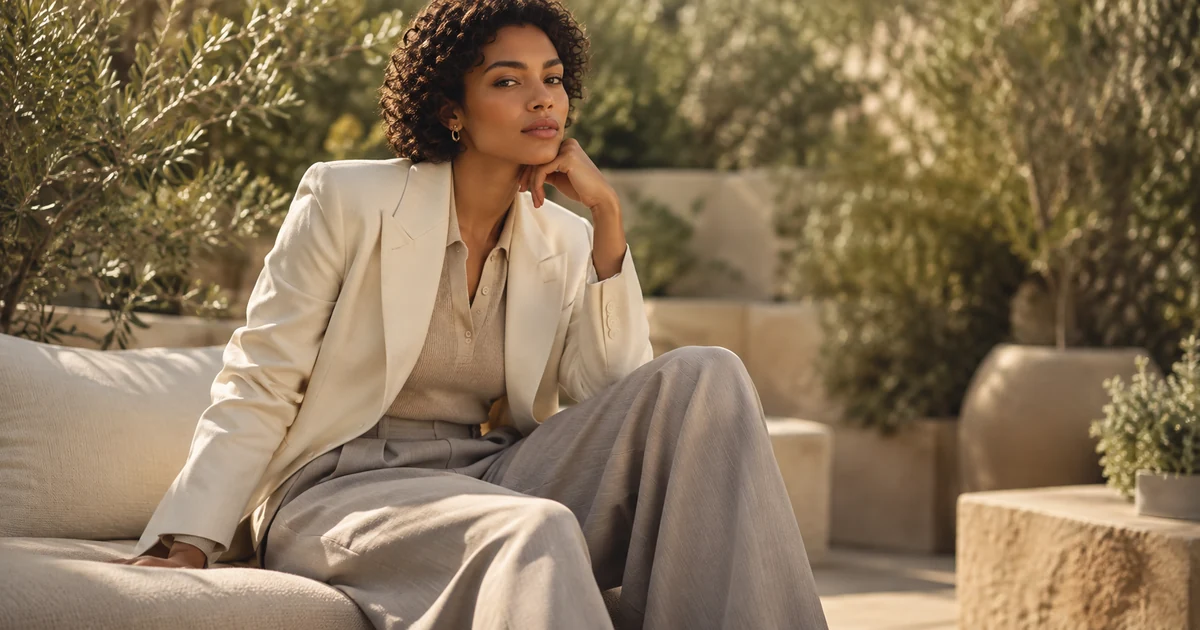
Woman Wearing Neutral Polo Shirt Under Cream Blazer - Illustrative Image
Questions we get asked about polo shirts and blazers
Can the polo and blazer look work for women and non-binary clients?
Yes, the same principles apply across body types and gender presentation. We focus on proportion, collar shape, jacket softness and how the outfit sits on the person wearing it.
What counts as the stricter version of smart casual?
Debretts describes formal smart casual for men as a jacket or blazer, smart trousers such as flannels, needlecord or chinos, a collared shirt and smart shoes, with trainers and sandals ruled out. If an invitation points that way, a shirt is the safer call than a polo.
Are bright polo colours a bad idea with tailoring?
Bright colours are harder to dress up, especially under a dark blazer. Softer neutrals, deep shades and clean whites give you a calmer base, then the blazer can do the smartening.
Can you wear a pocket square with a polo and blazer?
A pocket square can work if the rest of the outfit is restrained. We would keep it simple, because a polo already makes the jacket feel more relaxed.
Does the blazer need alterations for this look to work?
Professional alterations can make a big difference if the jacket is close but slightly off at the sleeve, waist or length. If the shoulder and overall structure are wrong, a different blazer is usually the better answer.