What is the right way to choose cloth for a bespoke overcoat?
The right bespoke overcoat cloth starts with your life, not the most luxurious fibre in the book. We look first at climate, travel, warmth tolerance, layering and wear frequency. A cloth that suits those points will look better, feel better and earn its place for longer.
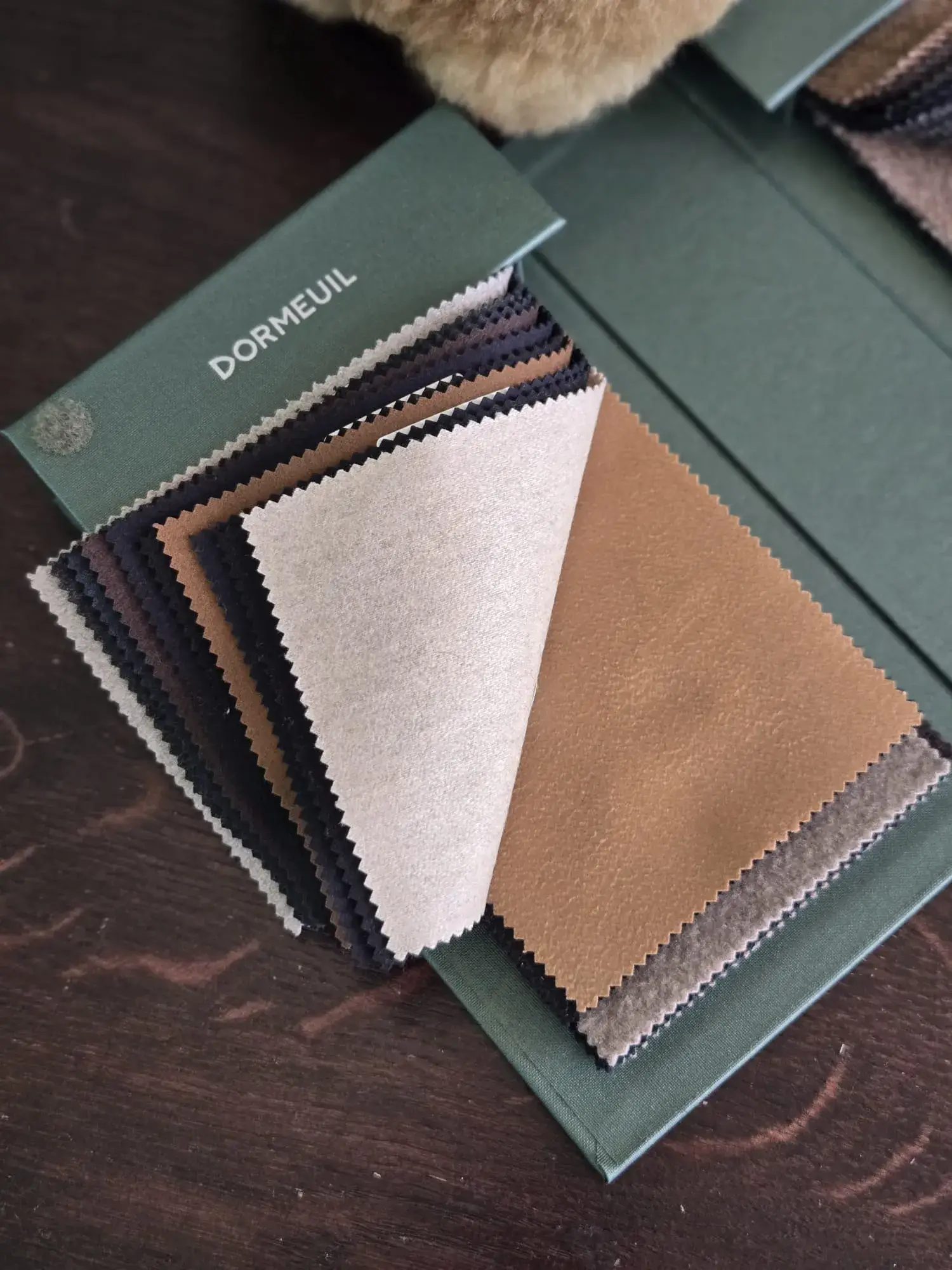
Open Dormeuil swatch book showing tan and cream overcoating cloths
Garment type comes before cloth preference
A topcoat and an overcoat ask different things from cloth, so we settle the garment first. Choose the shape, length and purpose before falling for a beautiful handle in a cloth bunch.
Fielding & Nicholson clients are usually choosing between several forms of bespoke outerwear, so we start by separating the roles. A topcoat is lighter, slimmer and usually finishes at or just above the knee. An overcoat is heavier, cut fuller for layering and goes below the knee. Peacoats and car coats sit in their own territory, because movement, length and structure matter in different ways.
Layering changes everything. A coat worn over a suit jacket needs room through the shoulder, chest and sleeve. One worn over a fine knit or shirt can be cleaner and closer. If you drive often, a long, heavy coat may look magnificent when standing but feel awkward behind the wheel. If you walk in winter weather, that same presence can be exactly what makes the coat feel settled and useful.
Cloth choice starts to make sense once the garment has a job.
Heavy wool, wool-cashmere and pure cashmere answer different lives
A daily city coat needs a different cloth from a formal evening coat or a refined travel topcoat. The common mistake is to treat softness as the whole answer, when the better question is how the cloth will behave after repeated wear.
| Cloth choice | Where it fits best | Watch point |
|---|---|---|
| Heavy wool | Regular winter wear, business dressing, structured coats worn over tailoring or knitwear | It can feel too substantial if most of your day is spent in heated rooms or cars |
| Wool-cashmere | A softer handle and richer drape with enough practicality for normal use | The blend needs to suit the whole brief, rather than impress through cashmere content alone |
| Pure cashmere | A luxurious coat for considered wear, where softness and lightness for warmth matter | It deserves care around abrasion and hard daily use |
Wool has a practical advantage that is easy to overlook. The International Wool Textile Organisation states that wool can absorb up to 35% of its own weight in moisture and release it as vapour. That is one reason a good wool overcoat can feel comfortable across changing conditions rather than clammy the moment you move indoors.
Wool-cashmere sits in a useful middle ground for many clients. It gives a softer touch and a more fluid drape without making the coat feel too precious for real life. Pure cashmere has its place as well, especially where the wearer values refinement, softness and a lighter feeling for warmth, but it should be chosen with the same care as any other cloth.
Dormeuil’s Luxury Overcoatings range shows how broad the category is, with natural fibres including cashmere, alpaca, camel and wool. That variety is exactly why we prefer a use-led conversation. A cloth name tells you what it is; your routine tells us whether it belongs on your shoulders.

Couple in tailored navy coats walking a London city street

Pro Tip: If you expect to wear the coat over tailoring, bring the jackets or suits you will wear most often to the consultation. That makes the cloth and cut easier to judge in context.
Cloth weight is about comfort in motion
Cloth weight is not a contest to find the heaviest option. Weight affects warmth, drape, structure and ease of movement, and the finished coat must work when you are walking, sitting, travelling and layering.
Dormeuil lists its Luxury Overcoatings range at 470g to 710g, which gives a useful sense of the span available in serious overcoating cloth. Current examples include a 480g wool-cashmere cloth and 470g pure cashmere cloths, which shows why numbers need context. Fibre, weave, lining, length and cut all change how a coat actually feels.
Within Fielding & Nicholson, we ask about the real pattern of wear before narrowing the cloth books. The order matters:
- Use first. We clarify whether the coat is for daily business wear, winter events, travel, weekend dressing or a mix of those.
- Climate and warmth tolerance. Some clients run warm and prefer a coat that breathes easily through a long day; others want maximum winter coverage.
- Layering. A suit jacket, jumper or shirt underneath changes the allowance needed in the cut and the comfort needed from the cloth.
- Movement. Driving, commuting and carrying bags all affect how much weight and fullness feel right.
- Structure and frequency. A coat worn constantly needs cloth that holds up to use; an occasion coat can prioritise a more indulgent handle.
A cloth can look superb on the table and still be wrong if it becomes the coat you avoid wearing.
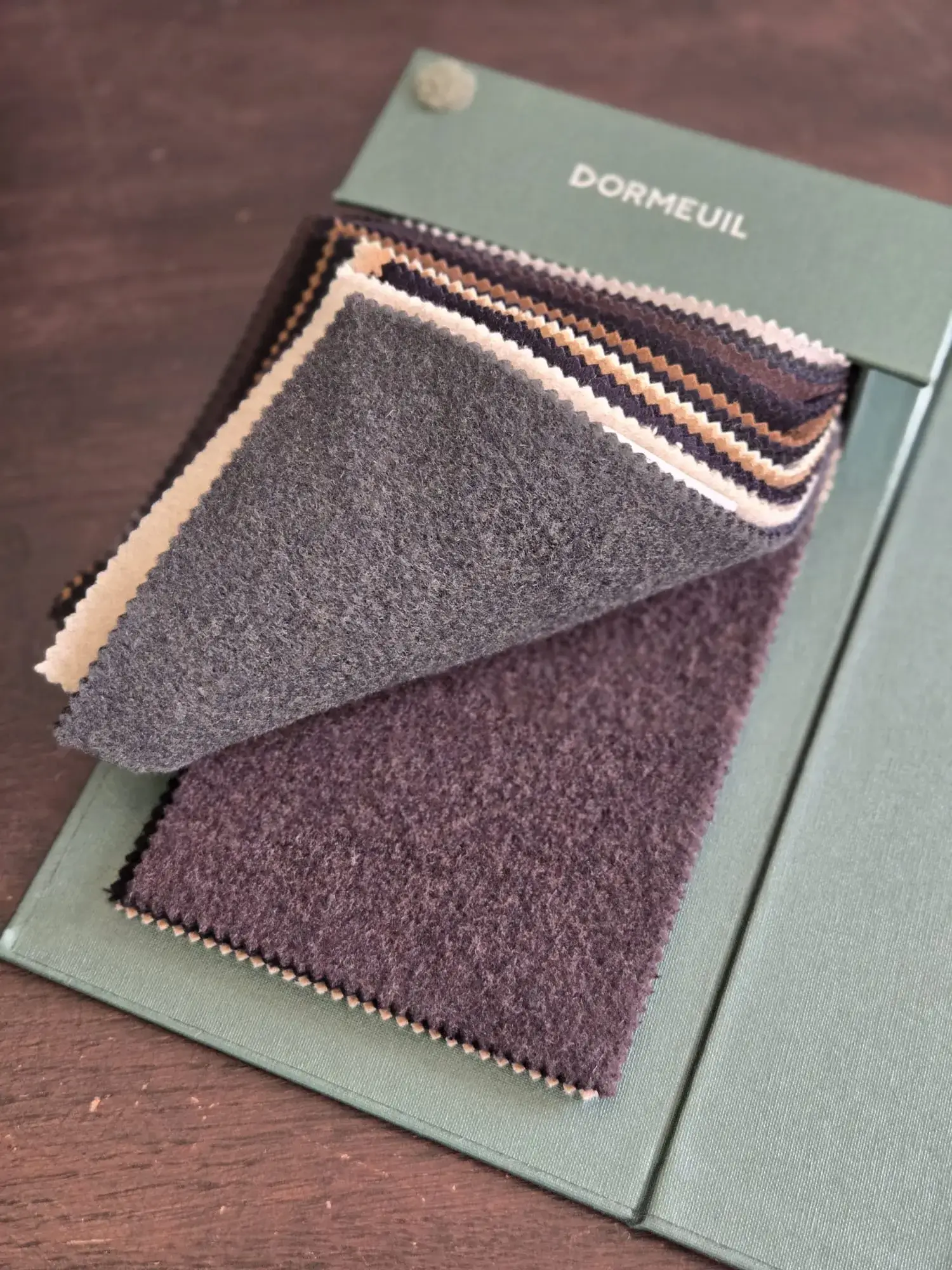
Heather purple and striped overcoating cloths on a Dormeuil swatch book
Colour and pattern decide how often the coat leaves the wardrobe
Colour earns its keep quietly. The most useful overcoat is usually the one that sits naturally beside your tailoring, knitwear, footwear and weekend clothes, because that is the coat you reach for without negotiating with the rest of your wardrobe.
Navy, charcoal, dark brown, camel tones and muted neutrals can all work, depending on what you already own and how formal the coat needs to feel. A dark plain cloth can look sharp over business clothing. A camel or soft brown can relax the coat without making it casual. Texture often gives more lasting interest than a loud pattern, because herringbone, a subtle check or a deep plain weave can create depth without demanding attention every time you wear it.
Cloth bunches matter here because a small online image rarely tells the whole story. In the hand, you can see how a surface catches light, how strong the pattern feels at coat scale and whether the colour flatters the clothes around it. A distinctive cloth can still be easy to wear if the contrast is controlled and the scale suits the coat’s length.
Personal style belongs in the decision, but the coat still has to live with the rest of your clothes.

Pro Tip: Compare cloth bunches in both natural light and indoor light. Some colours and textures hold together well on the page, yet look very different once they are seen at coat scale.
The final decision serves the life of the coat
The final cloth choice should serve the coat’s purpose before it serves the idea of luxury. Warmth, comfort, structure, softness and visual longevity all matter, but they do not matter equally for every client.
A bespoke overcoat becomes useful when the cloth, cut and wardrobe role agree with each other. A heavy wool can be the right answer for someone who needs a serious winter coat over tailoring. A wool-cashmere cloth can suit someone who wants softness with daily ease. Pure cashmere can be the right choice when the wear pattern supports that level of refinement.
Our role is to reduce the cloth books to the few options that make sense for you, then refine from there. The one thing to prioritise is purpose, because a cloth chosen for the life of the coat will keep looking intentional long after the first fitting excitement has passed.

Man in navy overcoat and woman with coffee on a pavement
Questions we get asked about bespoke overcoat cloth
Can one bespoke overcoat work for both business and weekend wear?
Yes, one overcoat can cover both if the cloth, colour and cut sit in the middle ground between formal and relaxed. We usually look for a versatile colour, restrained texture and enough room for different layers.
Will a softer cloth always feel better in wear?
Softness feels good at first touch, but comfort over a full day also comes from weight, breathability, cut and how the coat moves. A cloth can feel beautiful in the hand yet prove less useful if it does not suit your routine.
Should my overcoat fit over a suit jacket?
If you plan to wear tailoring underneath, the coat needs to be cut with that layer in mind. Trying to force a slim coat over a jacket usually spoils the line of both garments.
Does a cloth bunch tell the whole story?
A cloth bunch is the starting point, because it lets you feel handle, surface and weight in person. The tailor then has to judge how that cloth will behave once it becomes a full-length garment.
Is pure cashmere sensible for a bespoke overcoat?
Pure cashmere can be a superb choice when softness, refinement and lighter warmth are the priority. We would match it carefully to how often you will wear the coat and how hard you expect it to work.