What is a safari suit?
A safari suit is a safari jacket worn with matching trousers, usually with relaxed structure, visible pockets and a warm-weather feel. We see it as informal tailoring, rather than formal suiting. The jacket alone is easier to wear; the full matching suit needs careful cloth, proportion and restraint.
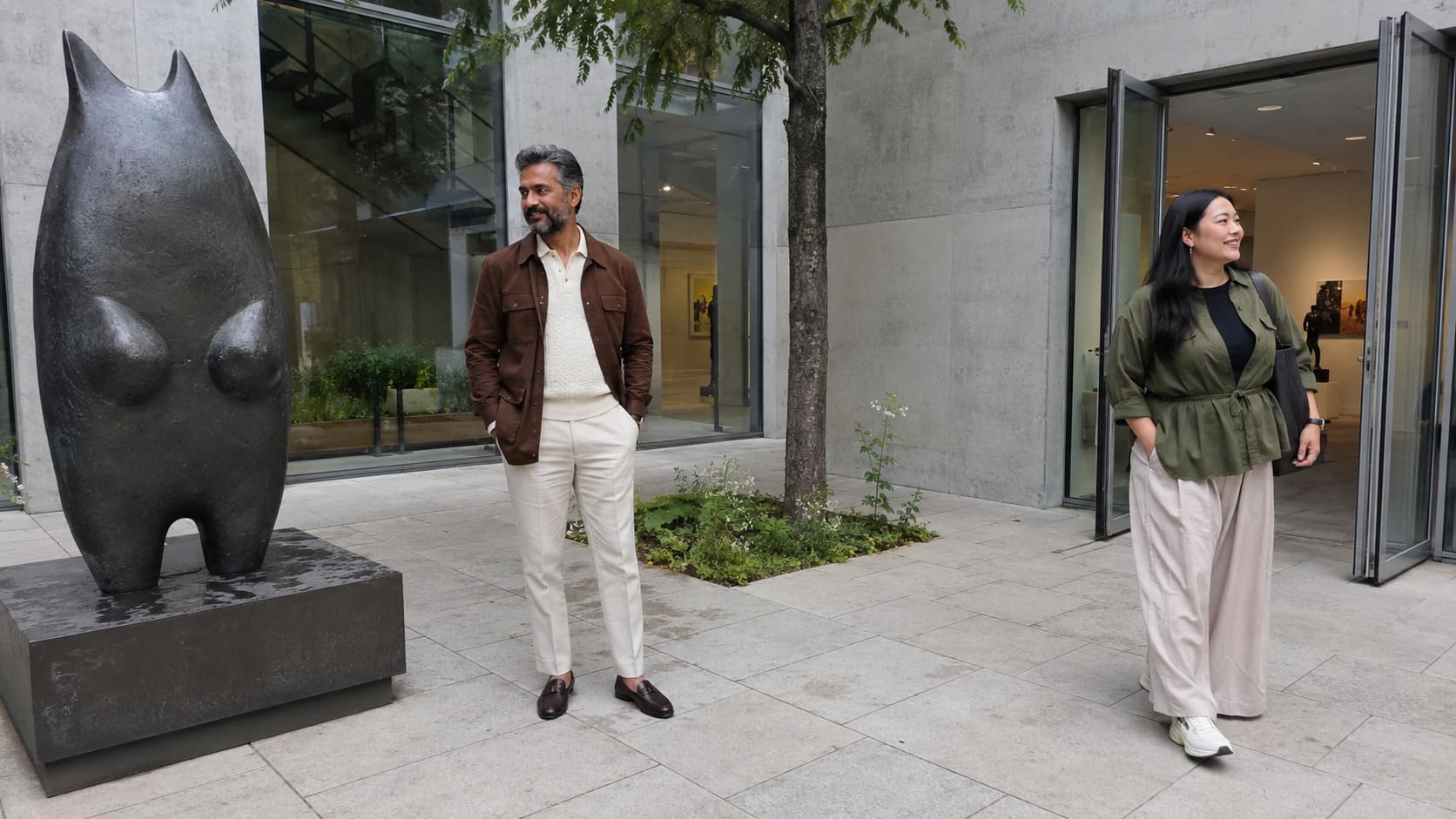
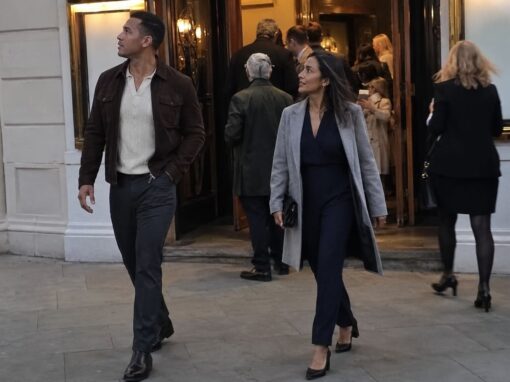
Women wearing cream and dark green tailored outfits attend London Fashion Week city events.
What Is In This Article
The safari suit is the jacket and trousers together
Merriam-Webster defines a safari suit as “a safari jacket with matching pants”, and that plain definition matters. The suit is the complete outfit: a safari jacket and trousers cut from the same cloth, intended to be read as one look.
A safari jacket by itself is different. It can sit over linen trousers, chinos or a simple shirt, and it behaves more like a relaxed alternative to a blazer. Once the trousers match, the outfit becomes far more deliberate. That is where the risk and the interest both begin.
People also confuse the safari jacket with a bush jacket, a shirt jacket or an overshirt. The edges overlap, because all can have patch pockets and a relaxed shape. The difference lies in intent. A safari suit belongs closer to warm-weather tailoring, with a casual suit silhouette, while an overshirt remains casual clothing with useful pockets.
Merriam-Webster records the first known use of “safari suit” as 1935, so the phrase has been around long enough to carry many associations. We treat the term with care because the garment is clear on paper, yet complicated on the body.
The safari suit carries history, image and baggage
A safari suit feels misunderstood because it has passed through practical clothing, expedition dress, fashion photography and period styling. Each layer has left something behind, and those traces can make the garment feel either refined or awkward depending on how literally it is worn.
Yves Saint Laurent introduced the safari jacket in his 1967 runway shows, and a 1968 Vogue Paris photo essay helped make that version famous. Ready-to-wear versions followed as early as 1969. Those dates matter because they show the safari jacket as a fashion object, rather than simply as field clothing.
The Museum at FIT has described safari clothing as influencing fashion designers for decades, which helps explain why the garment will not stay in one neat category. It has appeared as utility wear, designer statement and relaxed tailoring. That range is exactly why it needs judgement.
Colonial associations also sit around the safari suit, and ignoring that would be clumsy. Heavy epaulettes, oversized bellows pockets, harsh khaki, combat styling and theatrical accessories push the garment toward caricature. Utility is innocent enough; utility made too literal is where the trouble starts.
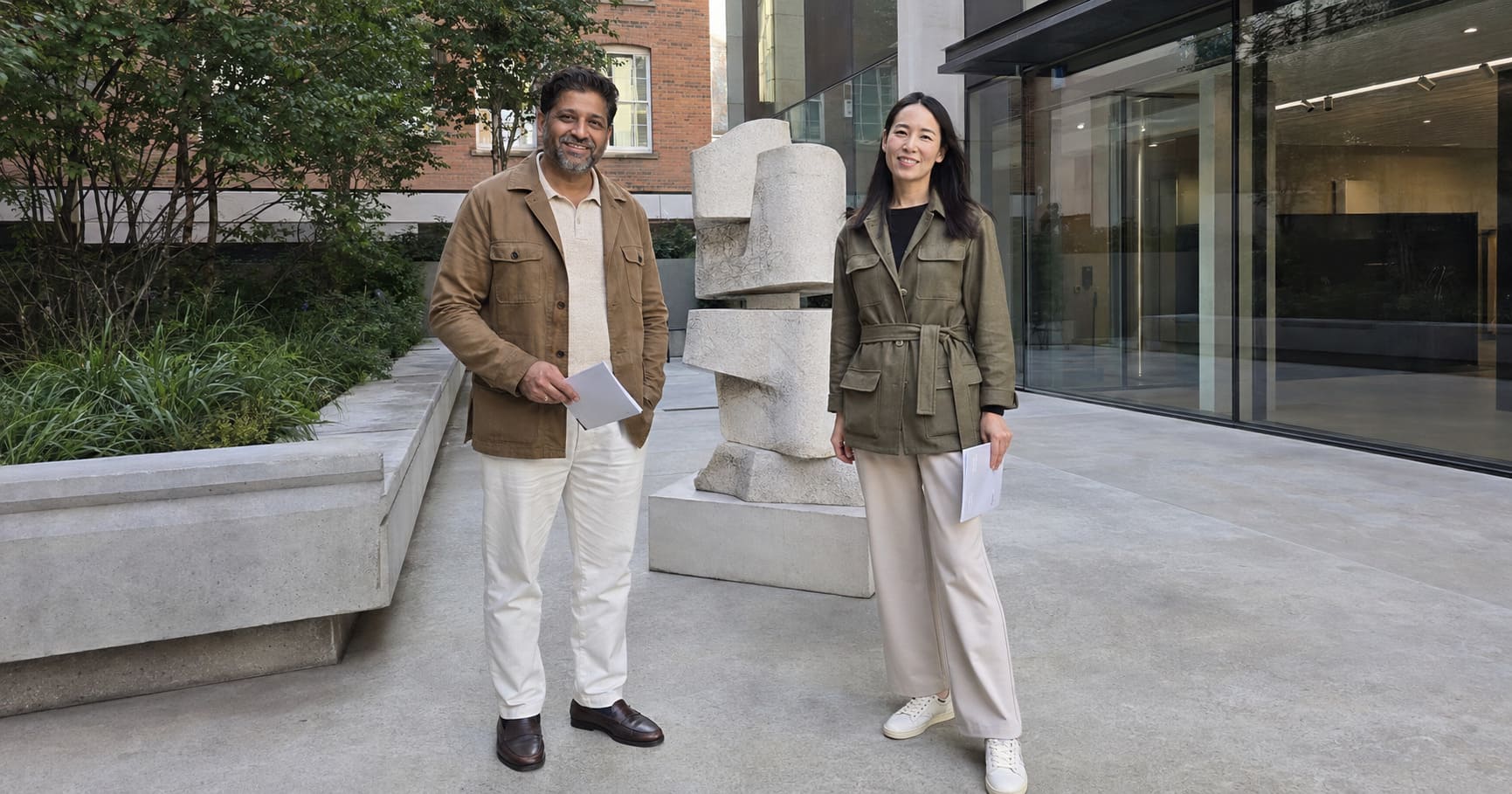
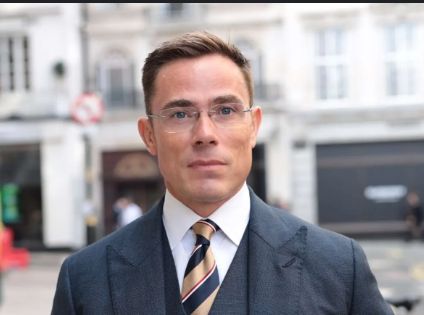
Man wearing navy suit and women wearing cream tailoring attend an outdoor autumn wedding.
Pro Tip: Choose a muted cloth with texture if you want the safari suit to feel current. Heavy khaki and oversized pockets tend to push the look towards costume.
A modern safari suit can work when it is quiet and well cut
Yes, you can still wear a safari suit today. The successful version looks considered, light and personal; the weak version looks as if it has been copied from a period image without asking whether it suits the wearer now.
The jacket alone remains the safer route for most wardrobes. A modern safari jacket over separate trousers gives you the useful shape without committing the whole outfit to one idea. The full matching safari suit asks more of the cloth, the fit and the setting because everyone sees it as a complete statement.
For a garment like this, at Fielding & Nicholson we start with proportion before we talk about pockets. Waist shaping, sleeve width, trouser line and cloth texture decide whether the suit looks relaxed or overdone. A belt can be elegant, but a belt placed badly can shorten the body or make the jacket look like costume.
Colour also needs restraint. Soft neutrals, muted tones and cloths with texture usually feel more current than hard, flat shades with military-adjacent details. The point is not to hide the safari reference. The point is to make it feel lived-in, adult and right for your life.
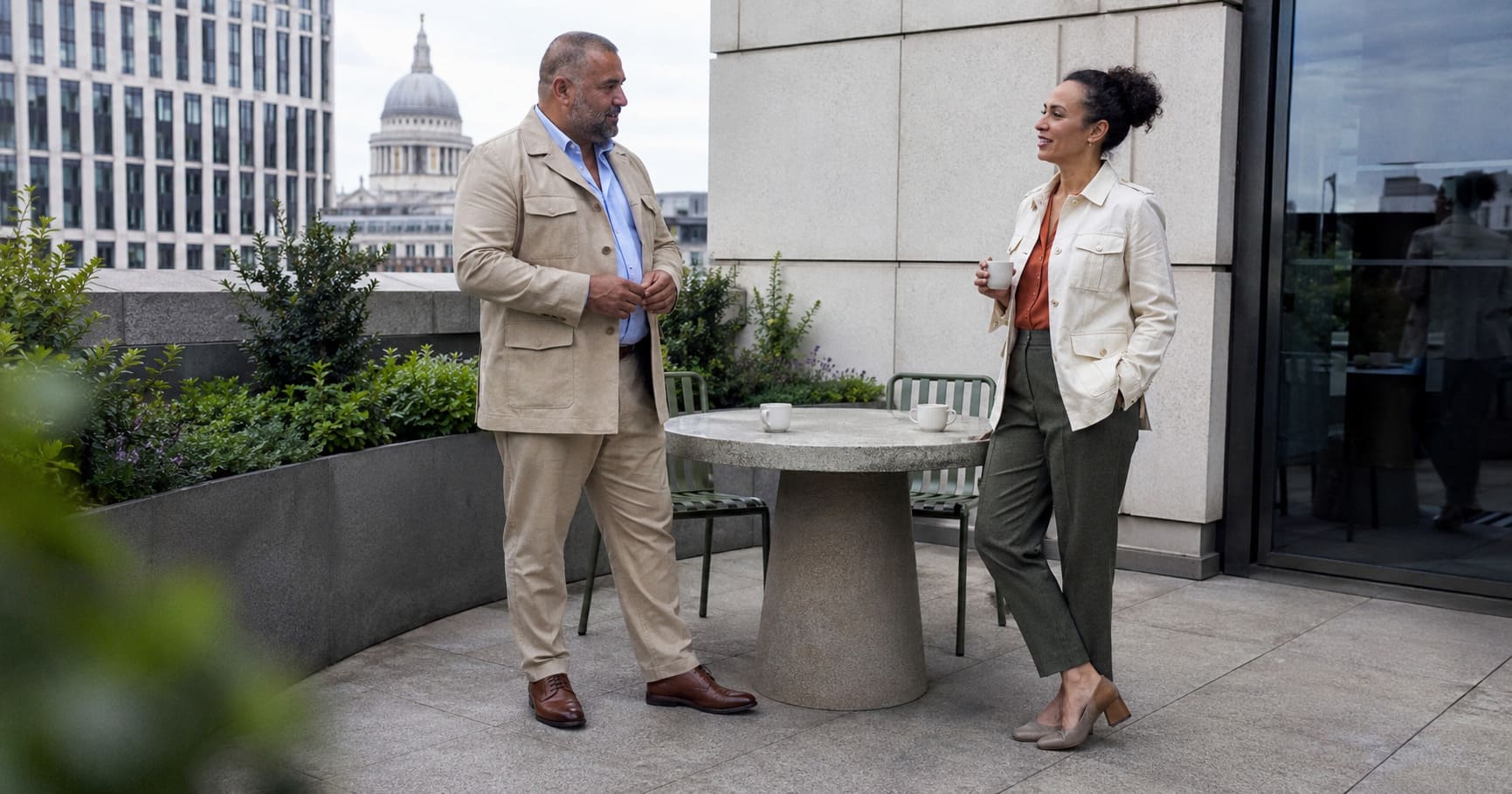
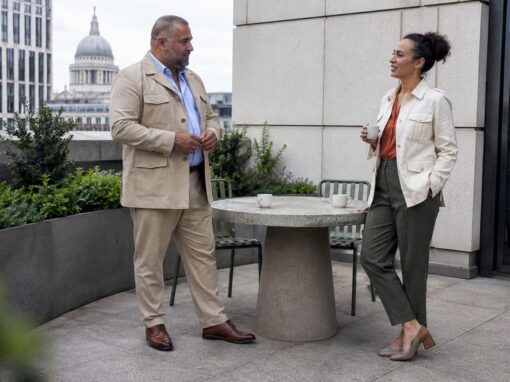
Man wearing safari jacket and woman wearing rust tailoring discuss modern safari suit styling.
Occasion decides whether the safari suit feels confident or misplaced
Picture a warm-weather lunch, a relaxed wedding weekend or an evening where a dark blazer feels too stiff. A safari suit can make sense in that space because it gives shape without the full weight of conventional suiting.
Dress codes still matter. A safari suit does not replace black tie, morning dress or business formal clothing. Used well, it sits among smart casual, resort wear and informal summer tailoring.
- Works well: relaxed summer events, private lunches, resort settings and style-led occasions where a conventional jacket feels too predictable.
- Needs caution: weddings. A safari suit can work for some informal or destination-style settings, but the host’s dress code should lead the decision.
- Usually avoid: black tie, formal business meetings and ceremonial dress codes. A safari jacket worn as a separate can sometimes go further than the full suit.
A useful test is whether the outfit feels like a natural extension of your normal wardrobe. If you already wear linen tailoring, unstructured jackets or considered casual clothing, the safari jacket has somewhere to belong. If every other garment you own is sharp worsted suiting, the full matching version will need a gentler bridge.

Pro Tip: Treat the jacket and trousers as a complete outfit before deciding on individual details. If the full suit feels too strong, a safari jacket with separate trousers often gives you the same ease with less risk.
The details decide whether a safari suit looks modern
A safari suit succeeds through subtraction: cleaner lines, better cloth, fewer loud signals and a fit that belongs to the wearer. The idea alone will not save it.
Cloth and colour set the tone
Cotton gabardine has a strong place in the safari jacket story; the Musée Yves Saint Laurent Paris describes Saint Laurent’s version as cotton gabardine and suitable for hot summers. That remains useful context because cloth affects the whole mood of the garment.
Linen gives a softer, more relaxed result, with natural creasing that suits warm-weather tailoring. Cotton drill can feel sturdier and more utilitarian. A refined cotton gabardine can sit between those moods, provided the cut has ease and the colour avoids shouting.
Muted colour is the cleaner modern choice. Khaki can work, but it asks for more restraint elsewhere. Stone, tobacco, olive, sand, soft brown and other quiet shades let the shape speak without turning every pocket and seam into a reference.
Fit and proportion remove the costume effect
Safari jackets are often judged by their pockets, yet we look first at the body line. Shoulder softness, waist suppression and sleeve width change the garment before a single pocket is added. Too much structure makes it look like a conventional jacket with extra parts; too little shape can look slack.
Pocket scale needs discipline. Patch pockets can be handsome when they suit the wearer’s frame, and bellows pockets can look useful without becoming bulky. Once the pockets dominate the front, the eye stops seeing a person and starts seeing equipment.
Belt treatment is another quiet test. Some bodies suit a clear belted waist; others look better with a half-belt, a self-belt worn loosely or no belt at all. For womenswear, menswear and non-binary tailoring, the best answer comes from the line you want to create, rather than from a fixed rule about who should wear what.
With Fielding & Nicholson, the bespoke discussion around a safari suit is usually about editing. We look at how the jacket and trousers work together, how they can be worn separately, and which detail belongs to your own style rather than to the garment’s past.
The best version is often the quietest one
The full safari suit is harder to wear than the jacket because it gives you less room to soften the reference. That is why the quiet version wins: a softer shoulder, a pocket that sits in scale, trousers with a clean break and a cloth that looks good in daylight.
Made-to-measure can work when your proportions are close to the base pattern and the design is restrained. Bespoke becomes more useful when the garment needs more control over balance, pocket placement, belt height and the relationship between jacket and trouser. The aim is not to make the safari suit louder. The aim is to make it unmistakably yours.
The one thing to prioritise is proportion, because proportion decides whether the safari suit reads as warm-weather tailoring or as a borrowed reference. Cloth and styling matter, but the cut is where the garment becomes believable.
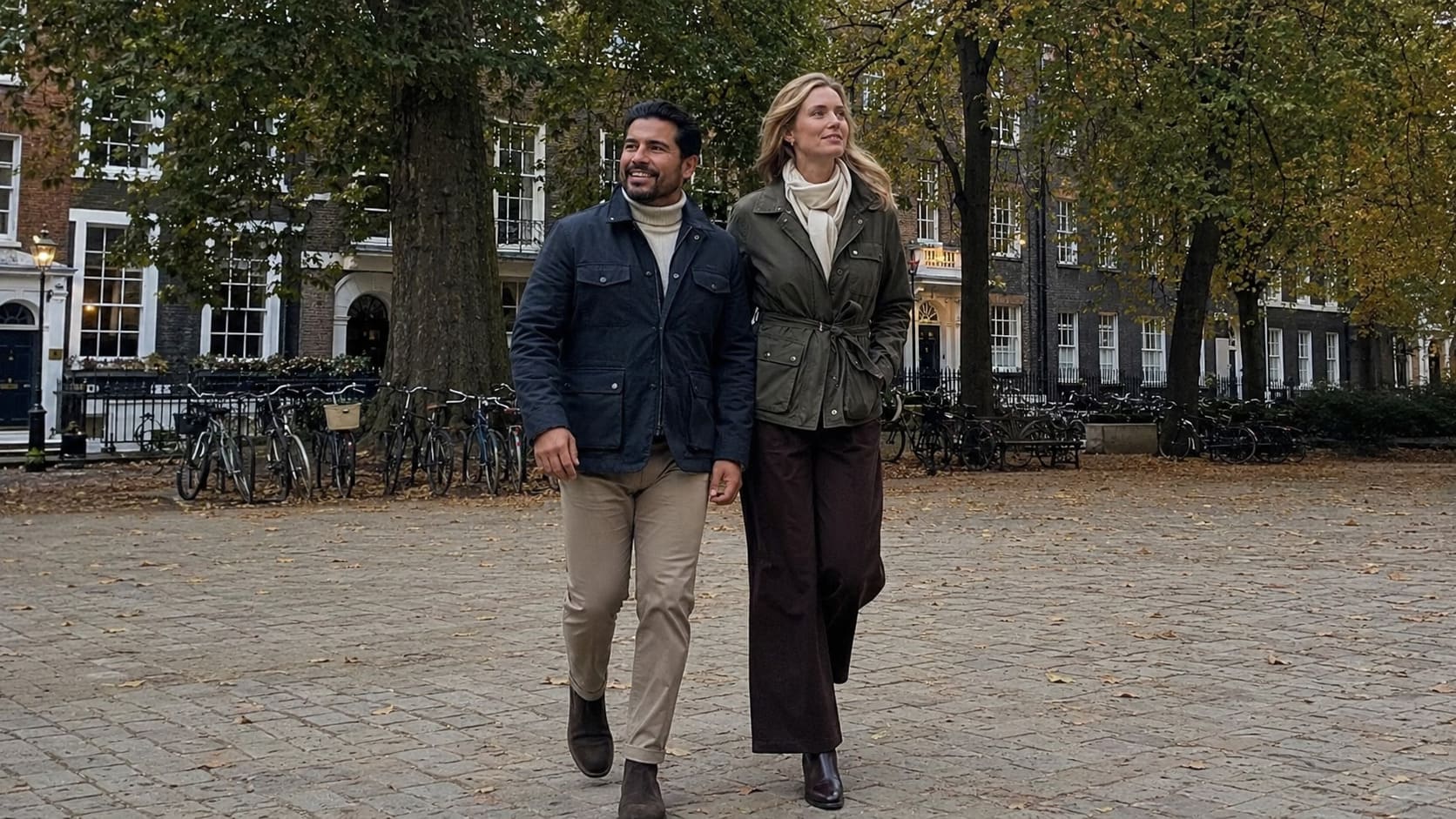
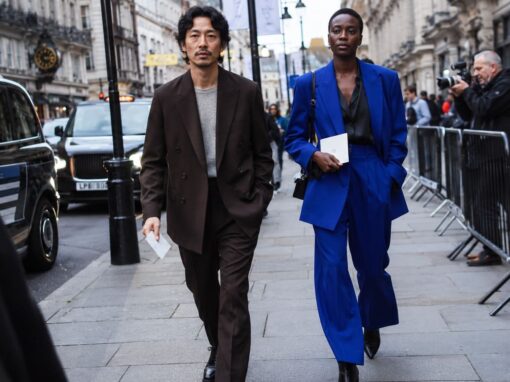
Men wearing navy tailored jackets walk through a city park in cool September weather.
Questions we get asked about safari suits
Is a safari jacket the same as a bush jacket?
A safari jacket and a bush jacket can share pockets, relaxed structure and a practical feel, but they are not always the same garment. We treat the safari jacket as the more style-led tailoring piece, especially when it is cut to sit with smart trousers.
Can a safari jacket replace a blazer?
A safari jacket can replace a blazer in relaxed smart casual settings, especially in warm weather. It does not replace a blazer for formal business dress or occasions where a conventional jacket is expected.
What trousers work with a safari jacket?
Linen trousers, chinos and soft cotton trousers work well with a safari jacket when the colours sit calmly together. Matching trousers create a full safari suit, which looks more deliberate and needs greater restraint.
Does a modern safari suit have to be khaki?
A modern safari suit does not have to be khaki. Muted neutrals and softer tones often feel more refined because they reduce the military-adjacent effect and keep attention on fit.
Is bespoke worth it for a safari suit?
Bespoke is worth considering when you want the safari suit to feel personal, balanced and wearable as separates. The value sits in controlling proportion, pocket scale, belt position and trouser shape.