
What should you wear as a woman this autumn?
Wear pieces that adjust cleanly through the day: a sharp blazer, fine knitwear, wool trousers, structured skirts, dresses that layer well, proper outerwear and polished shoes. Autumn dressing works best when each layer keeps its shape, so you stay warm without adding bulk.
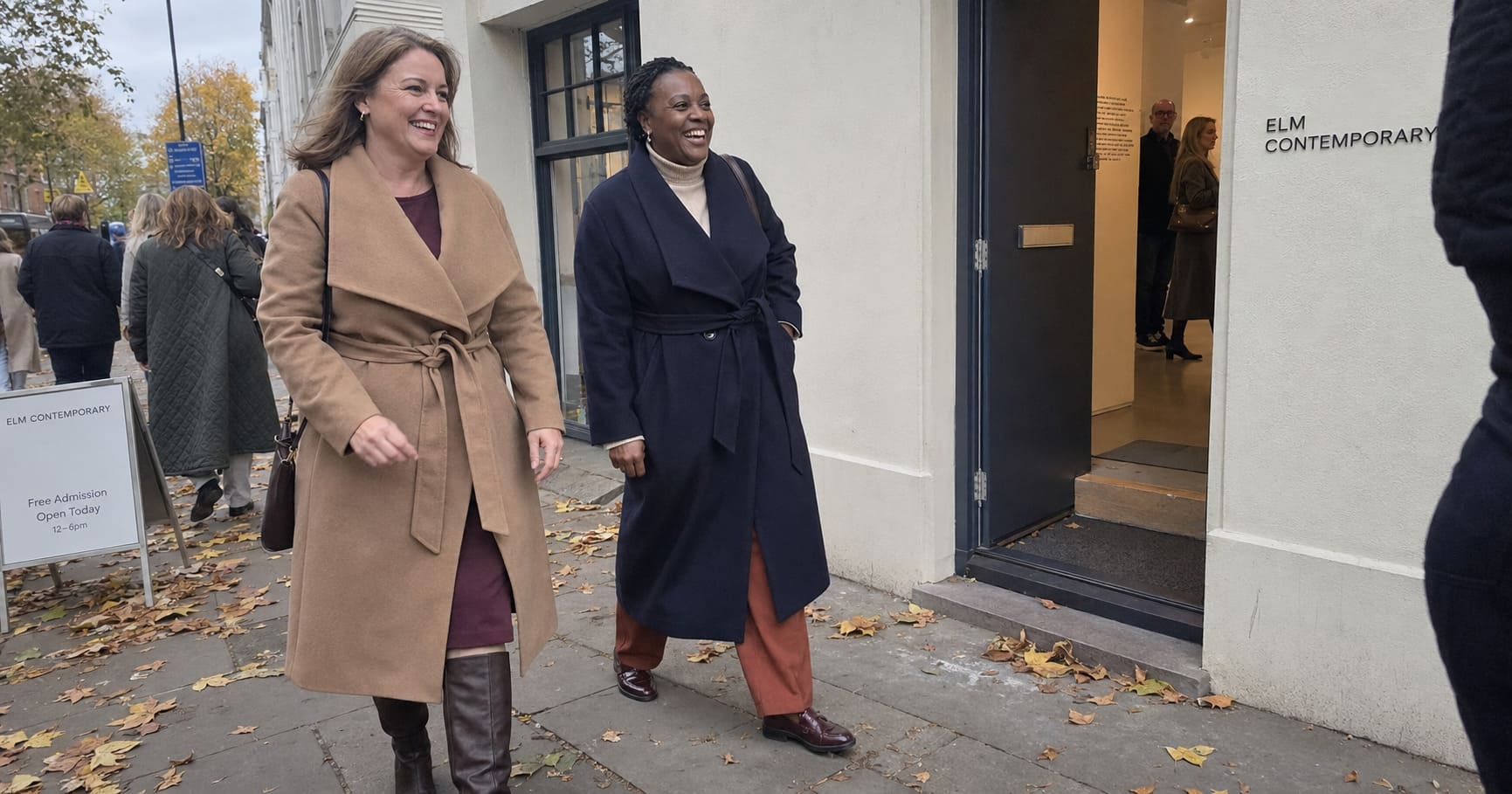
Women wearing camel and navy tailoring walk together in refined outfits.
What Is In This Article
The best autumn outfit is built in layers
Cool pavement, warm train, heated office, colder evening. Autumn rarely gives you one temperature to dress for, so a single heavy garment can feel wrong by mid-morning. We plan autumn outfits for women around layers that come off easily and still leave the outfit looking intentional.
Autumn clothes need adjustment built in such as:
- A blazer cut with enough room for fine knitwear, especially a roll neck or fine-gauge crew neck.
- Wool trousers worn with loafers on milder days, then ankle boots when the weather turns.
- A dress that sits cleanly under a jacket and coat, without the sleeves bunching.
- A midi skirt with opaque tights, structured outerwear and footwear that balances the hem.
- A scarf or light wrap that adds warmth without changing the fit of the jacket.
Warmth and bulk are different problems. Good layering clothes in autumn give you comfort, movement and clean lines, which is why we look at the whole outfit before judging any single piece.
Why tailored jackets need new ease in autumn
A jacket that feels perfect over a blouse can pull across the bust, lift at the shoulder or drag at the sleeve once you add knitwear. Sizing up rarely solves that neatly, because the extra room lands everywhere, including places where you still want shape.
The shoulder and armhole decide comfort
Shoulder width sets the frame of a women’s jacket. When that line is too narrow, the jacket feels tight before you even button it; when it is too wide, the whole upper body starts to look borrowed. Autumn makes this more obvious because a fine knit adds depth under the cloth.
The armhole matters just as much. A high, well-cut armhole gives movement without leaving loose fabric under the arm. Sleeve pitch, which means the angle of the sleeve as it follows your arm, affects whether the sleeve sits naturally or twists when you reach forward. You feel the error first when you hold a bag, sit at a desk or put a coat over the top.
In Fielding & Nicholson fittings for women, we look beyond basic size, including bust, natural waist, hips, shoulder-to-shoulder, arm length, back length and posture. Those checks matter because an autumn blazer for women has to be close enough to keep its line, yet generous enough to move over the layer you actually wear.
The waist and hip decide shape
Waist shaping gives a jacket its polish, but autumn knitwear changes the space inside the garment. Too much suppression at the waist can make the lapels gape or the hem kick away from the body. Too little shape can make a jacket feel square, especially over wide-leg trousers or a skirt.
Hip ease also changes the result. A jacket that catches at the hip will ride up when you sit, then settle badly when you stand. Back balance, torso length and shoulder slope all feed into the same question: does the jacket return to the right place after you move?
Close, not tight. Structured, not stiff. Those two tests tell us far more than the size on a label.
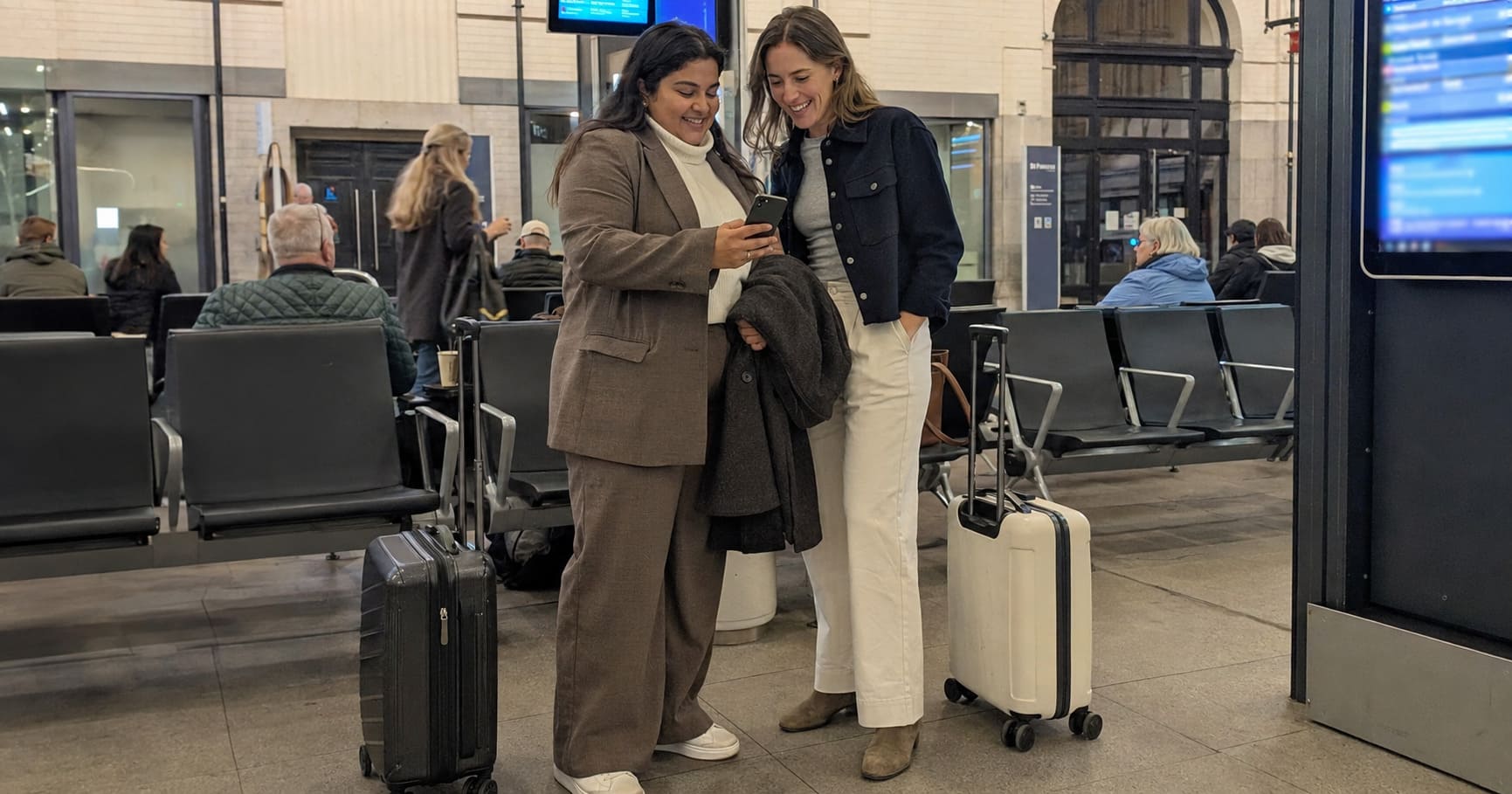
Travellers wearing layered neutral tailoring stand at station with luggage for September city journeys.

Pro Tip: If a blazer works over a blouse but feels tight over knitwear, test the shoulder, armhole and sleeve pitch before changing the size. Those three points decide whether the jacket will still move cleanly in colder weather.
The cloth and lining do the hidden work
Picture a jacket that feels perfect on the street, then turns hot and heavy as soon as you step inside. The cut may be sound, but the cloth and lining may be doing the wrong job for an autumn day. Heavier cloth is not always the better answer.
Here is a simple way to compare the main choices.
| Cloth or layer | Autumn role | What to watch |
|---|---|---|
| Fine Merino knitwear | Adds warmth under a jacket without much bulk | Neckline and sleeve depth need to sit smoothly under the blazer |
| Smooth wool cloth | Gives polish for workwear and moves well through the day | The lining and cut still decide comfort over layers |
| Textured wool cloth | Adds seasonal depth to jackets, skirts or trousers | Too much texture can feel less formal for certain work settings |
| Cashmere or heavier wool for coats | Works well where outerwear needs warmth and softness | The coat still needs room over a jacket or dress |
| Partial or lighter lining | Can make a garment feel easier in mild autumn weather | Movement and drape need checking in the fitting |
Wool earns its place in autumn because it deals well with changing conditions. The Woolmark Company describes Merino wool as an active fibre that reacts to body temperature, helping the wearer stay warm in cold weather and cool in hot weather. Wool fibres can also absorb moisture vapour and move it away so it can evaporate into the air.
Lining is the quieter decision. A lining changes how a jacket slides over knitwear, how a skirt moves over tights and how a coat settles over a blazer. We choose it for comfort and movement as much as finish, because the wrong lining makes even good cloth feel awkward by lunchtime.

Guests wearing tailored jackets and dresses gather indoors for a sophisticated autumn evening event.
Thinking about your own tailoring? We are always happy to help. Get in touch
The coat must protect the outfit beneath
A blazer may look clean indoors, then become tight and creased once a narrow coat goes over it. The shoulder gets compressed, the sleeve has nowhere to go and the lapel loses its shape. Outerwear has to be planned around the outfit beneath.
Coat allowance means the extra room needed over the real layers you wear. It affects shoulder room, sleeve clearance and the body of the coat. Too much allowance looks oversized in the wrong way; too little makes the coat fight the jacket underneath. We check this with the intended layer in place, because guessing from a shirt fitting gives a false answer.
Lower-body proportion needs the same attention. Well-cut trousers need the right hem with loafers or boots. Skirts and dresses change with tights, boot height and coat length. A longer coat can make a dress feel calmer and more complete, whereas a short coat may break the line in a way that feels accidental.
Occasionwear sharpens the issue. Evening clothes often have smoother cloth, cleaner shoulders or a dress line that needs protecting from rain and cold. The coat should carry the formality of the outfit, so it feels like part of the look after you arrive and take it off.

Pro Tip: When choosing a coat, fit it over the actual layers you plan to wear underneath. Coat allowance affects how the shoulders sit, how the sleeves move and whether the whole outfit keeps its line.
The fitting should test the life you actually wear
Can you sit, reach and remove your coat without adjusting everything? A mirror shows the first impression, but movement shows whether autumn tailoring will work once your day starts.
Before cutting or adjusting an autumn garment, we want to know what you plan to wear under it, what coat sits over it, which shoes set the hem and how warm your usual indoor setting feels. A blazer for a fine roll neck needs different ease from one worn over a silk shirt. Trousers that work with loafers may need a different finish if your colder-weather shoe is a boot.
Within Fielding & Nicholson’s women’s bespoke work, we make suits, blazers, trousers, waistcoats, coats, shirts and occasion pieces to the client’s measurements. Women’s bespoke garments usually move through two to three fittings before completion, and those fittings give us the chance to test posture, movement, layers and proportion in a way a static size never can.
Autumn dressing feels less uncertain once you stop asking whether an outfit is warm enough and start checking how it behaves. Look at what sits underneath, what sits over it, where the cloth moves, where the shoulder settles and whether the whole line still looks composed after the coat comes off.
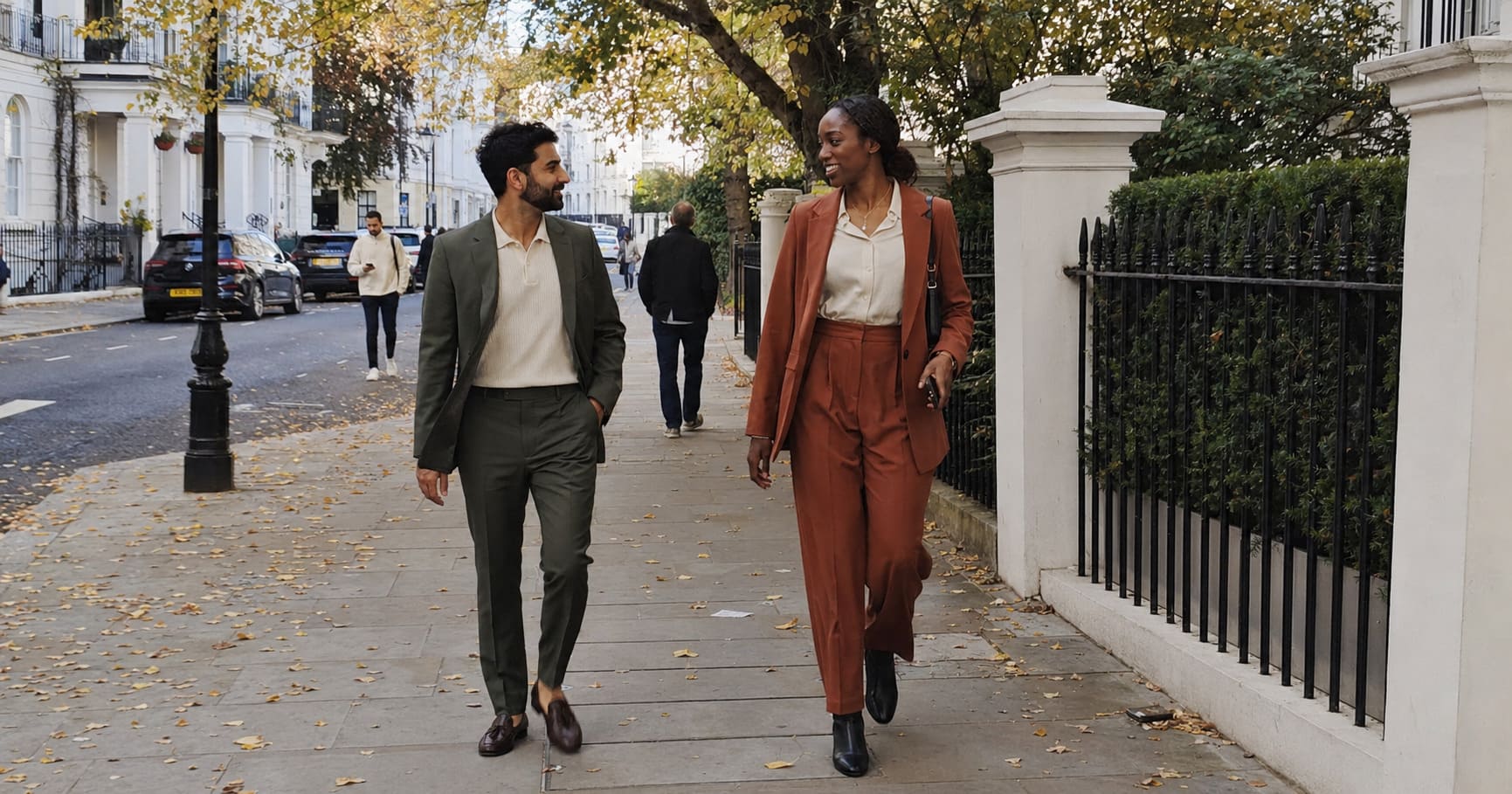
Woman wearing rust suit walk through London during September.
Questions we get asked about autumn tailoring
Can you wear a blazer as a jacket in autumn?
A blazer can work as an outer layer in mild autumn weather if it has enough room for fine knitwear and the cloth feels comfortable outside. Once rain, wind or colder evenings become part of the day, a coat that fits over the blazer gives a cleaner result.
What should you wear under a blazer when it gets cold?
Fine knitwear is usually the neatest answer, especially a slim roll neck, crew neck or fine cardigan. The layer needs to sit close to the body without creating ridges at the sleeve or bulk at the waist.
How do you make work outfits warmer without looking casual?
Use warmer cloth, fine knit layers, opaque tights where they suit the outfit and a coat cut to protect the clothes underneath. Keeping the shapes clean matters more than adding thick layers.
Are dresses and skirts practical for autumn workwear?
Dresses and skirts work well in autumn when the coat length, tights, boot height and jacket shape are planned together. The main test is whether the hemline and outerwear create one clean line.
Can alterations help an existing autumn wardrobe?
Alterations can improve sleeve length, trouser hems, waist fit and the way a garment sits over light layers. They cannot always create enough room where the original cut is too narrow through the shoulder, bust or hip.
Ready to talk it through with a tailor? Get in touch