What is the practical difference between bespoke and made-to-measure?
Bespoke is worth the extra money when an individual pattern and several fittings solve fit, posture, comfort or design problems that a base pattern cannot handle well. Made-to-measure is often better value when your body suits an adjusted block and you need a well-cut garment without full pattern control.
In plain terms, bespoke begins with a pattern made for one person. Made-to-measure begins with a base pattern or block that is adjusted to fit the client. Both can produce serious clothing, but the route to fit is different.
The Savile Row Bespoke Association defines a bespoke suit as one made to the customer’s specifications, cut by an individual, made by skilled individual makers, and based on a pattern made specifically for that customer. Its definition of made-to-measure refers to a garment made to individual requirements “to some extent”, but not necessarily by hand.
Here is the clearest way to compare the two processes before judging value.
| Area | Bespoke | Made-to-measure |
|---|---|---|
| Pattern | An individual paper pattern is made for the client | A base pattern is adjusted to the client’s measurements |
| Fittings | Several fittings allow shape, balance and comfort to be refined | Usually fewer fittings, focused on adjustment and finish |
| Handwork | More hand work may sit inside the making and finishing | Handwork varies by maker and by garment |
| Design control | Greater control where design affects fit and proportion | Strong choice on visible details within the limits of the block |
| Timing | Usually longer because the pattern and fittings add stages | Usually more efficient because the block gives a starting point |
| Adaptability | Better suited to posture, asymmetry and unusual proportions | Works well when the adjusted block suits the body |
| Best fit | Clients who need control, refinement or long-term pattern development | Clients who want a strong fit without the full bespoke process |
Proper made-to-measure should not be confused with buying from a rail and altering afterwards. In a well-run process, the garment is cut for the client from an adjusted block from the start. That distinction matters because the buyer is paying for a making route, rather than a label attached to the finished sleeve.
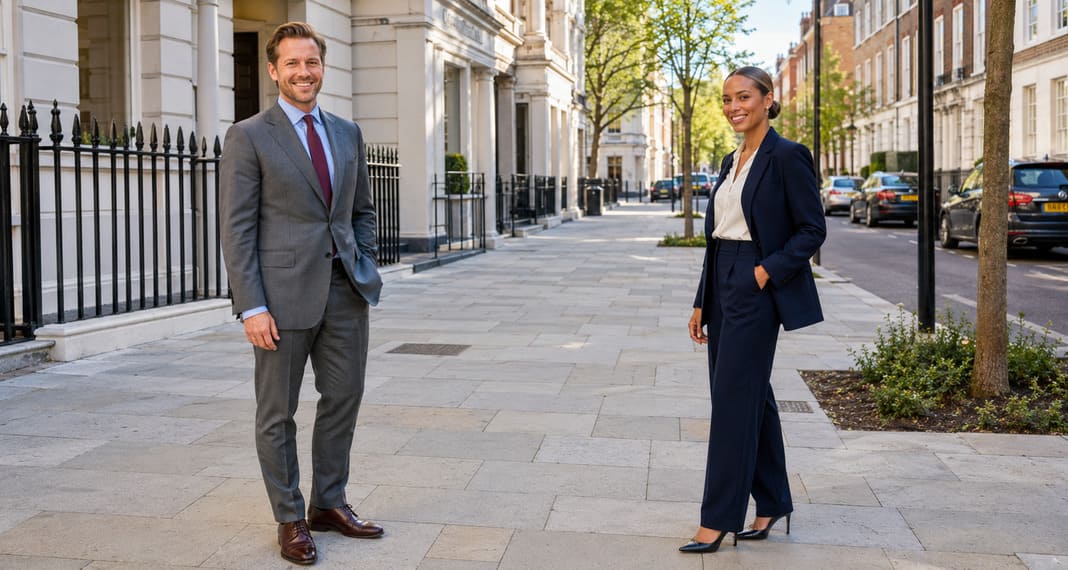
A man in a light grey tailored suit and a woman in a navy trouser suit showcase premium custom tailoring, illustrating the refined fit, craftsmanship and personalised styling associated with bespoke and made-to-measure clothing.
What Is In This Article
The main value difference sits beneath the finished garment
Two people can choose the same navy cloth and end up needing very different tailoring. One may stand evenly, fit a standard block well and want a clean business suit. Another may have a forward shoulder, a sloping shoulder line, a stronger seat or a stance that pulls the jacket out of balance.
Bespoke earns its price when those differences need to be solved before the garment is finished. A Master Cutter reads the body, drafts the pattern and uses fittings to test how cloth hangs in motion. The extra money pays for correction points, not theatre.
A typical bespoke route can be understood as a sequence:
- The tailor takes instructions on use, fit, comfort, cloth and style.
- The cutter drafts an individual pattern for the client’s body.
- Cloth is cut from that pattern, with enough allowance for fitting.
- A baste fitting tests the unfinished garment on the body.
- Further fittings refine balance, line, movement and comfort.
- Final finishing brings the garment to its completed state.
The baste fitting deserves special attention because it is often where bespoke becomes clear. The Savile Row Bespoke Association defines a baste as a garment roughly assembled for the first fitting. At that stage, the cloth is still open enough for meaningful change, so the tailor can correct how the jacket sits across the shoulders, how the chest closes, how the sleeve hangs, or how the trousers behave when the client moves.
Handwork sits in the same category of hidden value, although buyers should ask exactly what the maker means by it. The Savile Row Bespoke Association gives a minimum of 50 hours of hand work in its definition of a bespoke suit, alongside a series of fittings. Terms such as full canvas, half canvas and fused construction can also help a buyer discuss how the garment is built inside, but those words should never distract from the central question: does the process give enough control to solve the fit problem?
Cloth and styling choices do not prove the process
A better cloth does not automatically mean bespoke. Cloth quality, buttons, lining and lapel shape are visible choices, but the difference between bespoke and made-to-measure usually sits in the pattern method.
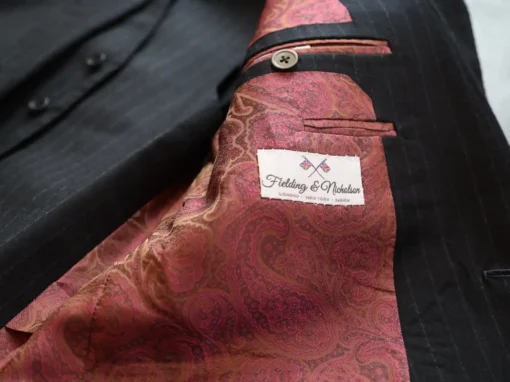
Fielding & Nicholson states that its made-to-measure and bespoke services use cloths from the same mills and allow detail choices such as lining, buttons, lapel style, pocket type and trouser finish. The stated divide is the pattern route: bespoke uses a unique pattern drawn from scratch, and made-to-measure starts with a proven base pattern adjusted to the client.
That distinction protects the buyer from a common mistake. A garment can feel luxurious to the hand, have a pleasing lining and use fine buttons, yet still be made through a made-to-measure process. Equally, good made-to-measure may be exactly right if the block suits the body and the styling advice is sound.
Design control becomes more valuable when the detail affects the way the garment sits. A wide trouser, a sharply shaped jacket, a ceremonial coat or a softer silhouette may all interact with posture and proportion. At that point, bespoke gives the cutter more room to make the design behave on the client, rather than asking the client to fit the design.
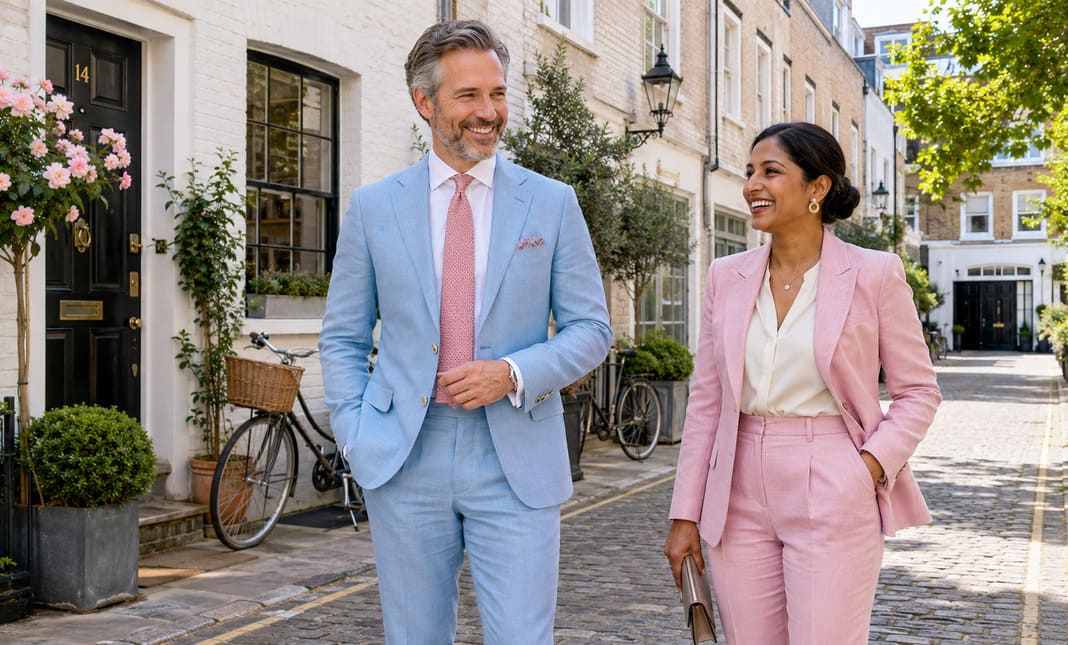
A light blue tailored suit and a blush pink trouser suit showcase luxury custom tailoring, demonstrating how bespoke and made-to-measure garments provide superior fit, refined craftsmanship and long-term wardrobe value.
Pro Tip: If your shoulders, posture or stance regularly affect how jackets sit, ask for a process explanation that includes the baste fitting and what can still change at that stage.
Value changes with the body, the occasion and the wardrobe
Two buyers with the same budget may make different good decisions. One may need an efficient work suit that looks sharp and wears comfortably through the week. Another may need a wedding outfit, a non-binary silhouette, or a jacket that works around shoulder imbalance and posture.
Standard proportions and first commissions suit a measured approach
Made-to-measure often gives strong value for people whose bodies sit comfortably within an adjusted block. A first serious suit, a work rotation or a neat occasion garment may not need the full control of bespoke if the fitting confirms that the block is behaving well.
Good advice matters here. The best made-to-measure outcome usually comes from sensible choices: a cloth suited to the garment’s purpose, proportions that suit the client, and enough restraint to avoid details that fight the block. Paying for bespoke may add less value if the main need is simply a well-cut garment and the first fitting already looks balanced.
Weddings and ceremonies raise the pressure on fit
Ceremonial clothing carries different pressure because the garment is looked at closely, worn for long stretches and often photographed from every angle. Small problems in collar position, trouser line or jacket balance can become more noticeable across a long day.
Bespoke can make sense when the garment has to carry strong styling, unusual colour, formal structure or a very exact silhouette. Made-to-measure can still work well for a wedding or occasion if the client’s proportions suit the block and the garment does not ask too much from it. The better choice depends on how much the outfit must do.
Posture, asymmetry and inclusive tailoring change the calculation
Bodies rarely match neat diagrams. Some clients have shoulder differences, spinal posture, a fuller bust, a flatter seat, a prominent hip, limited mobility or comfort needs that do not show up in a simple chest and waist measure. Non-binary clients may also want a silhouette that does not follow standard menswear or womenswear assumptions.
Bespoke becomes more compelling in those cases because the pattern can be built around the body and the desired expression together. Fielding & Nicholson notes that bespoke is especially useful for unusual proportions, strong posture features and very specific requirements, and that the bespoke pattern stays on file. That retained pattern can matter when future garments need to respect the same fit logic.
Inclusive tailoring should never be treated as a styling extra. A garment that lets someone sit, stand, move and feel like themselves is doing practical work. Bespoke gives more room to solve that work at pattern level.
Future wardrobe planning gives the pattern more value
A single garment can justify made-to-measure. A long-term wardrobe may shift the balance.
Once a bespoke pattern has been refined and kept, later garments can build from accumulated knowledge about the client’s body, preferences and comfort. A jacket can change cloth and purpose without beginning the fit conversation from zero. Trousers can be developed across different weights and uses. Outerwear can follow the same shoulder and posture logic as a suit.
That value is greatest when the client expects repeat garments and has a consistent need for fit control. For a one-off piece with straightforward requirements, made-to-measure may leave more budget for cloth, accessories or another useful garment.
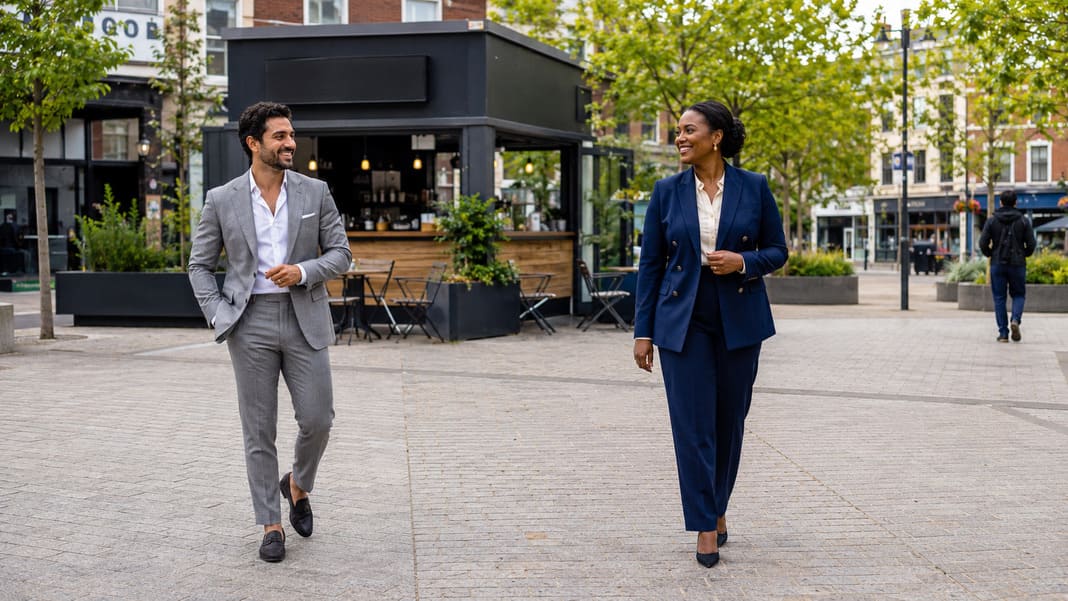
A light grey suit paired with a navy trouser suit highlights the benefits of investing in bespoke or made-to-measure tailoring, combining personalised fit, premium fabrics and versatile business styling.
Genuine bespoke service can be tested with precise questions
Premium language can blur the difference between service levels, so buyers should ask about the process before paying. The answer should be specific enough to show whether the garment starts from an individual paper pattern or an adjusted base pattern.
The Advertising Standards Authority and Committee of Advertising Practice say marketing communications must not materially mislead, omit material information or lack evidence for objective claims under CAP Code Section 3. For a buyer, the practical lesson is simple: a clear service should be able to explain its own method in plain language.
Ask questions that reveal the making route:
- Pattern route. Will my pattern be drafted from scratch, or will a base pattern be adjusted?
- Cutter involvement. Who cuts the pattern, and will that person see me during the fitting process?
- Fitting purpose. How many fittings are included, and what can still be changed at each stage?
- Baste stage. Will there be a baste fitting, and what will be assessed at that point?
- Alteration scope. Which refinements are included after fitting, and which changes would cost extra?
- Pattern retention. Will my pattern be kept for future garments?
Strong answers usually sound calm and practical. A tailor should be able to explain where the cloth is cut, how the pattern is made, what happens at each fitting, and how the final garment will be judged. Vague assurances about luxury or exclusivity are less useful than a clear account of who does what, and when.
Pro Tip: If you expect repeat garments, keep the focus on pattern retention as well as fit. A refined pattern can make future suits and jackets more consistent.
The most expensive misconception is that higher status always means better value
The costly misconception is that bespoke is always the better purchase and made-to-measure is always the compromise. That belief can lead one buyer to overbuy a process they do not need, and another to underbuy when their body, occasion or wardrobe really does call for more control.
Made-to-measure can be excellent value when the block fits well, the cloth is chosen intelligently and the garment’s job is clear. Bespoke earns the higher spend when the pattern, fittings and future refinement solve a real problem: posture, asymmetry, comfort, a demanding silhouette or a wardrobe that will grow over time.
Prestige is a poor measuring stick. The sharper question is whether the process matches the garment’s job. The common misconception to leave behind is this: paying more always buys a better result. Paying for the right level of control is what buys a better result.
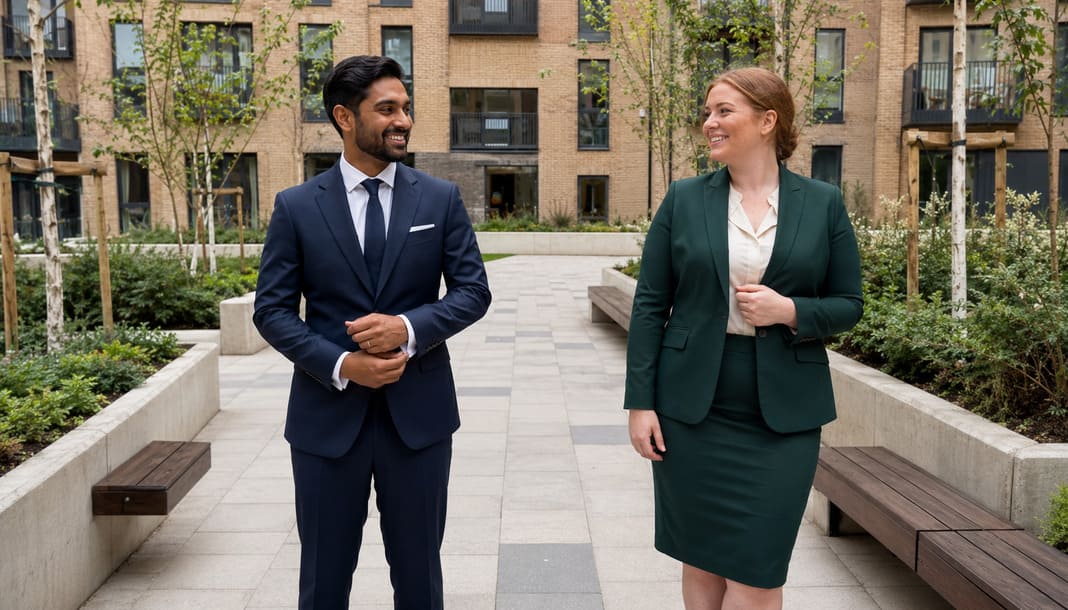
A navy tailored suit and a forest-green skirt suit demonstrate the quality, structure and individual fit that distinguish bespoke tailoring from made-to-measure garments for professional wardrobes.
Frequently asked questions
Does bespoke mean handmade?
Bespoke does not automatically mean that every part of a garment is made by hand. The safer question is how much hand work sits in the making, who performs it, and how that work affects fit, structure and finish.
Is made-to-measure just an altered off-the-rack suit?
Proper made-to-measure is not simply a stock garment altered after purchase. It starts with a base pattern that is adjusted before the garment is cut for the client.
Is made-to-measure good enough for a wedding suit?
Made-to-measure can be good enough for a wedding suit when the client’s proportions suit the block and the design is not asking for heavy pattern control. Bespoke becomes more persuasive when the outfit needs a very exact silhouette, stronger structure or comfort across a demanding day.
How many fittings should a bespoke suit need?
A bespoke suit should involve a series of fittings, but the exact number varies by garment, client and tailor. The better question is what each fitting is meant to correct, because useful fittings refine balance, comfort and movement.
Is a higher price always proof that a garment is genuinely bespoke?
A higher price is not proof of a bespoke process. The common misconception is that cost alone confirms quality, but the real evidence sits in the pattern route, the fitting structure and the clarity of the tailor’s explanation.