What happens to a bespoke suit if your weight changes?
A bespoke suit is cut to your measurements at a specific point in time, so even modest weight change can affect comfort, balance, and shape. Small alterations are often possible, but the outcome depends on where your body has changed, how the suit was made, and how much fabric is available for adjustment.
A familiar worry often starts with one moment in front of the mirror. The jacket that once sat cleanly across the chest now pulls at the button, or the trousers feel looser through the seat than they used to. For anyone who has invested in bespoke tailoring, that shift can feel disappointing as well as inconvenient.
Ready-to-wear clothing usually has a broader fit tolerance because it starts from standard sizing. A bespoke suit works differently. It follows your body measurements, posture, proportions, and style preferences much more closely, which means that body changes and tailoring are linked in a very direct way.
That does not mean a suit becomes unwearable the moment the scale moves. It does mean that weight fluctuation and suits are more closely connected than many people expect, especially when the garment was made to sit neatly through the shoulders, waist, hips, and leg line.
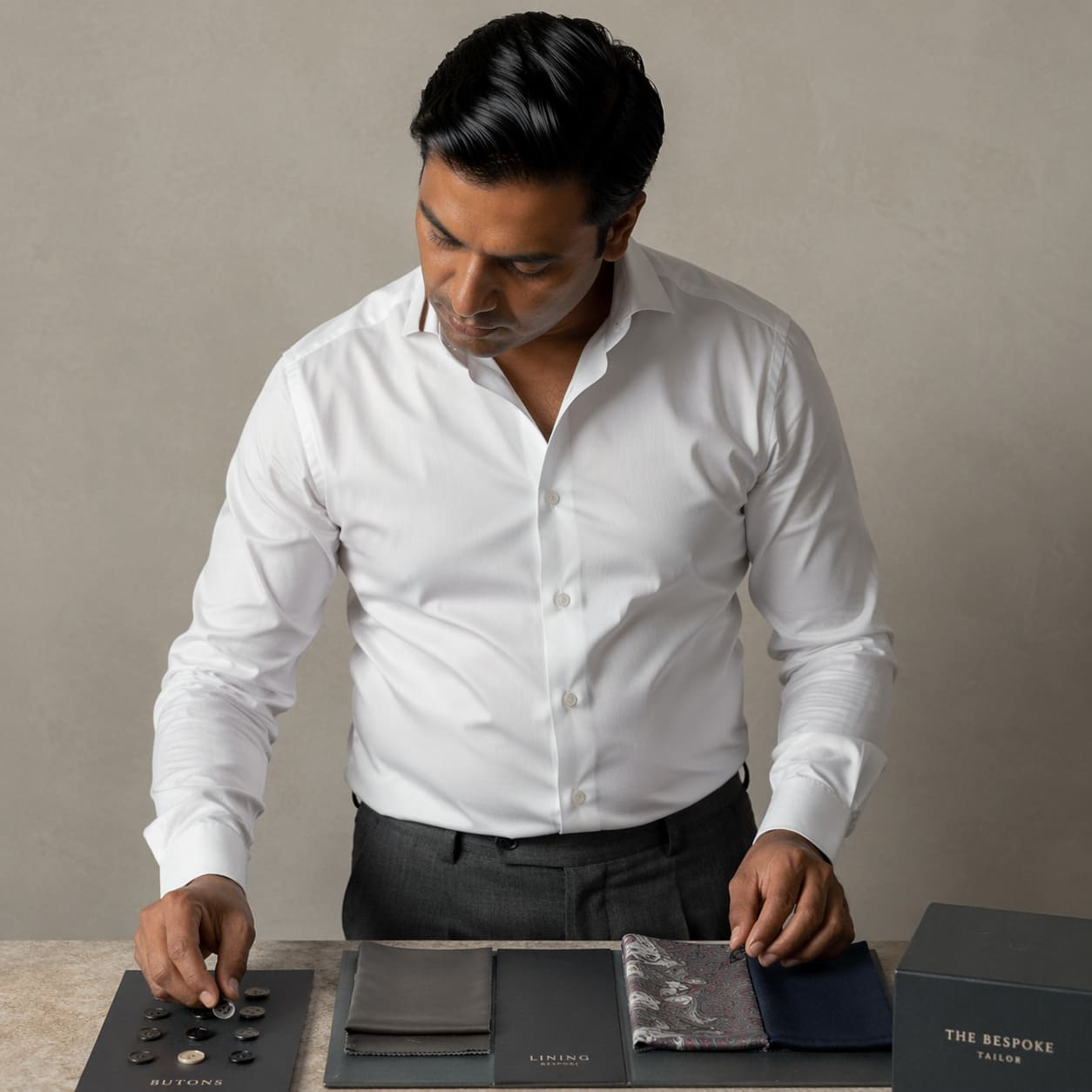
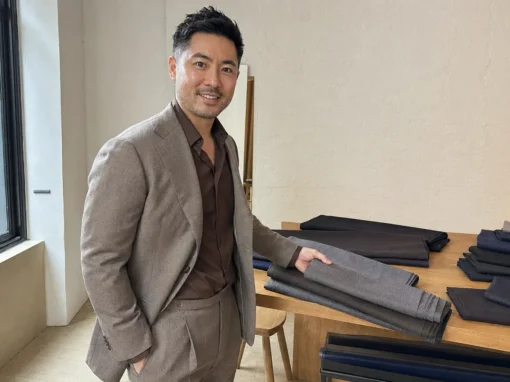
Men's Bespoke – Fabric selection with tailored shirt and styling tools – Sample Image
What Is In This Article
Immediate effects on fit, comfort, and silhouette
A suit can feel different after a fairly small weight change. In many cases, the first signs appear in movement rather than appearance. You may notice resistance when reaching forward in the jacket, pressure at the waistband when sitting, or extra cloth shifting around the back of the trousers.
Several areas usually show the change first:
- Jackets may pull at the front button, sit wider at the collar, or lose clean waist suppression.
- Trousers may feel tight through the seat and thigh, or too loose at the waist and rise.
- Sleeves and overall balance may look slightly off if the body’s posture or distribution has changed.
Tight does not always mean the same thing as ill-fitting. A garment can feel closer than before and still sit properly. By contrast, once the fronts strain, the lapels no longer lie cleanly, or the side seams begin to swing out of line, the bespoke suit fit has moved away from its original intention.
Weight loss creates a different set of issues. Excess fabric can gather at the lower back, the jacket may look hollow through the chest, and trousers can drop in a way that spoils the drape. A suit that is technically wearable may still stop feeling like your suit, which is often the point at which people seek expert advice.
What can be altered, and what usually cannot?
Most bespoke suits allow for some adjustment, but no garment is infinitely flexible. Whether a suit alterations after weight change can succeed depends on the original cut, the seam allowance left inside, the cloth itself, and how much the body shape has shifted.
Trousers usually offer the most room for practical alteration. A tailor can often take in or let out the waist to a degree, refine the seat, or adjust the leg line if the overall structure still works. Waistcoats can also be relatively straightforward if the change is modest and the proportions remain balanced.
Jackets are more complicated. Suppression through the waist can often be refined, and sleeve length or jacket length may sometimes be adjusted within reason. Once major work is needed across the chest, shoulder, armhole, or overall balance, the question changes from can a suit be resized to whether the garment would need partial rebuilding.
Some limits are structural rather than cosmetic:
- If there is little seam allowance, letting a garment out may be impossible.
- If the cloth has been under strain, marks from previous stitching can remain visible.
- If body changes affect several points at once, recutting one area may distort another.
That is why tailoring limits matter. A small change in one place is very different from a broad change across chest, waist, hips, and posture. Master tailors look at the whole garment rather than one isolated measurement, because a suit has to hang and move as one piece.
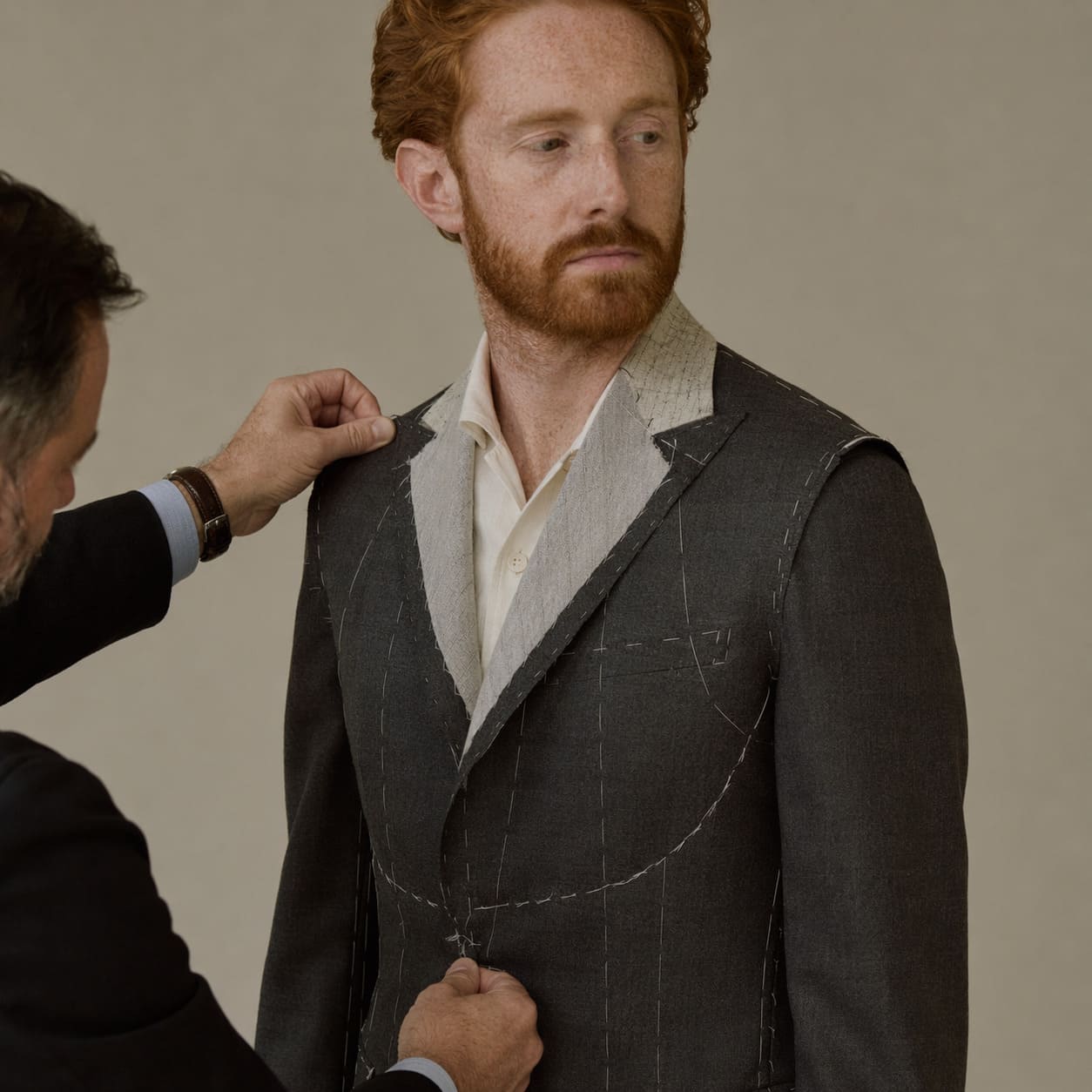
Men's Bespoke – Grey waistcoat with white shirt and tailoring adjustment – Sample Image
The role of your tailor
A good tailor does more than measure what has changed. They assess how the suit behaves on your body now, listen to what feels wrong, and explain what is realistically possible without making the conversation awkward or overly technical.
In practice, a tailor consultation usually follows a simple path. The suit is tried on, pressure points and loose areas are identified, and the tailor decides whether the issue sits in the cloth, the structure, or both. From there, the discussion turns to priorities. One person may want the suit wearable again for work, while another may care most about recovering the original line.
Experienced fitting specialists also know that weight change can be sensitive. Some clients speak about fitness goals, medication, pregnancy, menopause, training cycles, or recovery from illness. Others simply want the suit to feel right again without discussing the reason. A thoughtful tailor reads that situation carefully.
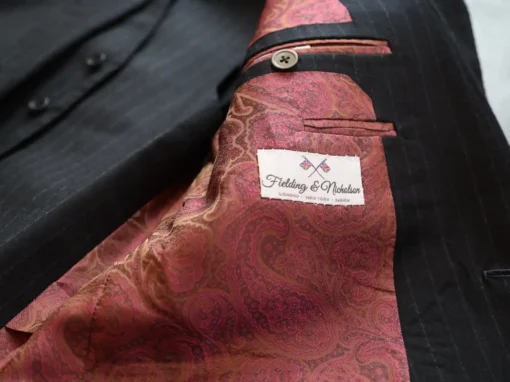
That human element is one reason long-term tailoring relationships matter. Houses such as Fielding & Nicholson often build knowledge over time, which means that fit assessment is informed by previous garments, earlier measurements, and the client’s personal style instead of one isolated fitting on one day.
Inclusive tailoring matters here as well. Changes in body shape do not affect everyone in the same way, and the language around fit should never assume one standard body or one standard silhouette. A skilled consultant focuses on proportion, comfort, and confidence on the wearer in front of them.
Pro Tip: Keep a small log of your measurements every six months to anticipate potential fit adjustments before they become urgent.
When is a new suit the better option?
Sometimes alteration stops being the sensible answer. If the suit needs extensive work in several areas, the cost and effort can begin to approach the value of making a new garment, especially if the original line can no longer be recovered.
A fresh commission may be the better route in a few common situations:
- The weight change is substantial enough that jacket balance, chest shape, and trouser proportions have all shifted.
- The cloth has very limited reserve, which leaves little room for letting out key areas.
- The wearer’s style has changed alongside their body, so the old cut no longer reflects how they want to dress.
This choice should not be framed as failure. Bodies change, and wardrobes change with them. If a suit was made for one stage of life and your measurements now sit in a different place, a new suit after weight loss or gain may simply be the more honest and comfortable answer.
There can also be an upside. Starting again gives space to rethink lapel shape, trouser rise, jacket length, cloth weight, or overall formality. Someone who once preferred a very close cut may now favour more ease and softer structure, especially if comfort has become part of their style priorities.
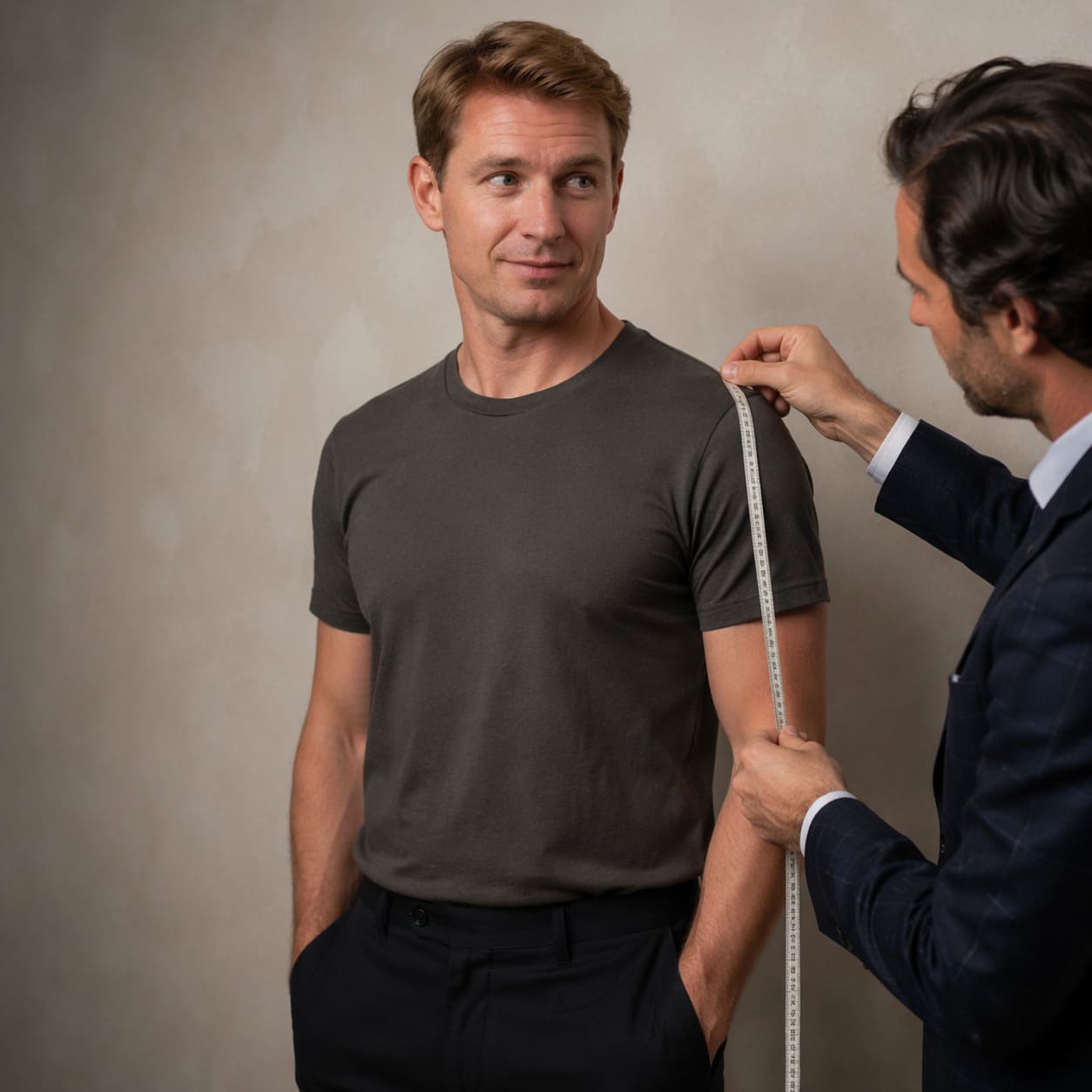
Men's Bespoke – Tailor measuring client – Sample Image
Pro Tip: Ask your tailor about available seam reserves when commissioning a suit to ensure flexibility for minor future alterations.
Planning ahead for a longer-lasting bespoke wardrobe
Future-proofing a suit does not mean trying to predict every body change. It means making sensible choices at the fitting stage so that minor movement in measurements is easier to handle later.
One practical step is to talk openly about lifestyle. If your weight tends to move between seasons, if you train regularly, or if your work requires long periods of sitting and travel, that context helps a tailoring consultant judge how much flexibility to build into the garment.
Fabric and style also matter. A very lean, sharply suppressed silhouette can look impressive, but it leaves less visual margin if the body changes. A slightly softer cut, a cloth with forgiving character, and sensible seam reserves can give a suit more useful life without making it look oversized.
For a long-term wardrobe, a few habits help:
- Keep occasional records of your measurements if your body changes noticeably.
- Rotate suits instead of wearing one garment constantly under strain.
- Bring a suit back for review early, before minor fit issues become harder to correct.
Bespoke tailoring standards have always involved planning as well as precision. The most wearable wardrobes are usually built over time, with garments that reflect real life rather than one snapshot of it.
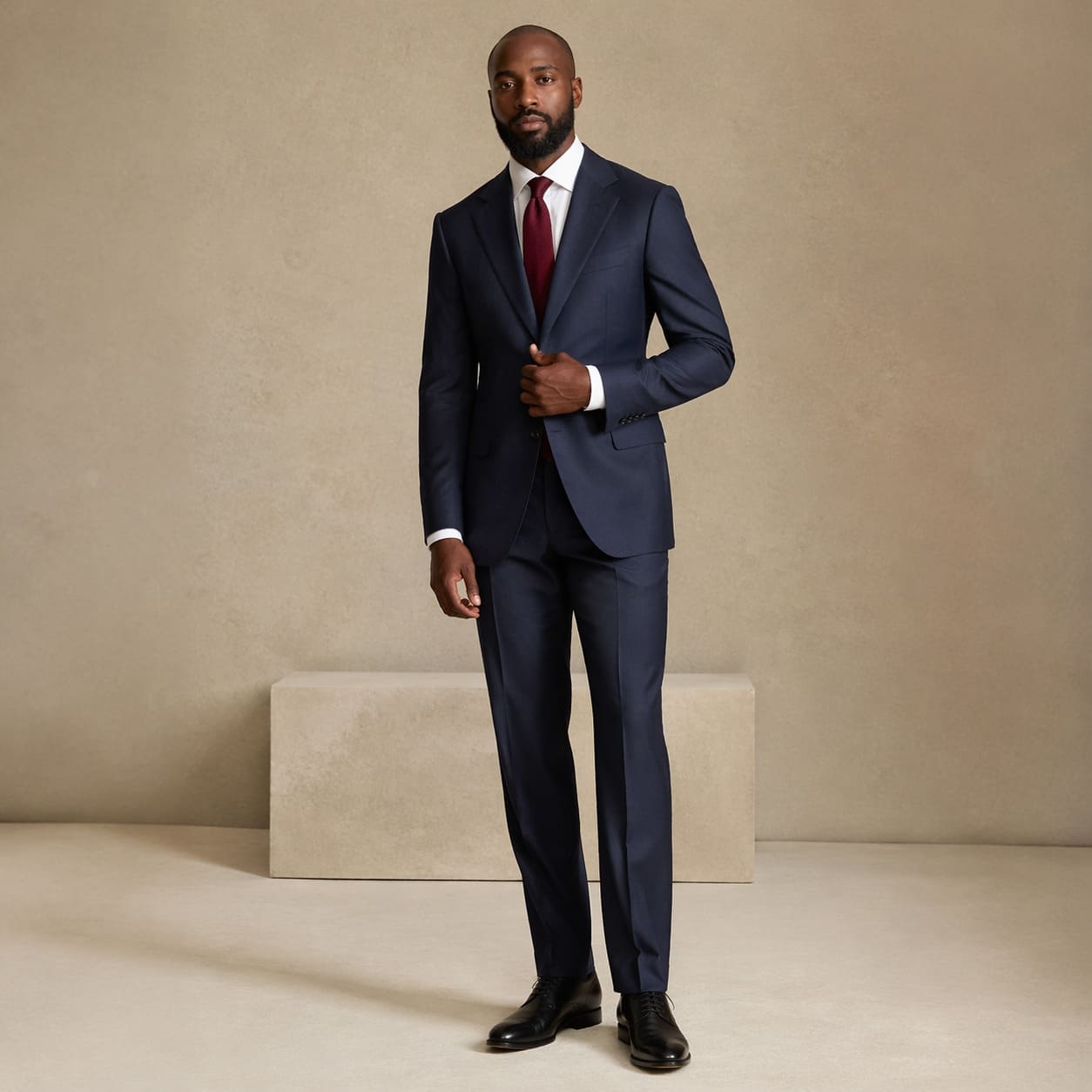
Men's Bespoke Suits – Navy tailored suit with white shirt and tie – Sample Image
Common misconceptions about weight and bespoke suits
Plenty of anxiety around bespoke suit myths comes from two opposite assumptions. Some people believe a bespoke suit can be altered forever. Others assume that any change at all means the suit is ruined.
Neither view is accurate. A well-made suit may have room for adjustment, but suit adjustment facts are shaped by structure, cloth, and proportion. Unlimited resizing is not part of bespoke tailoring. Incidentally, tiny changes can matter more than expected if they affect the waist, seat, or chest where the eye notices fit immediately.
Another misconception is that alterations are always simple if the tailor is skilled enough. Skill matters, certainly, but skill cannot create cloth where none exists or preserve perfect balance after very large changes. Even the best alteration specialists work within the garment’s physical limits.
Cost is often misunderstood too. A small trouser waist adjustment is one thing. Complex jacket work involving lining, suppression, sleeve balance, and multiple fittings is quite another. Once the labour becomes extensive, the comparison between suit replacement vs. Alteration becomes less emotional and more practical.
Confidence is part of the picture as well. People sometimes keep wearing a suit that no longer fits because they assume nobody notices. In reality, the wearer usually feels the difference first, whether that shows up as self-consciousness in meetings, discomfort at events, or reluctance to wear a once-favourite piece.
Embracing change with confidence
Weight changes are part of ordinary life, and a bespoke wardrobe has to live in the real world with the person wearing it. Seen in that light, tailoring is not about freezing the body in one fixed form. It is about responding thoughtfully when your shape, preferences, or routine shift over time.
A suit that needs adjustment has not failed you. It has reached a point where the relationship between body and cloth needs attention again. Sometimes that means a modest alteration. Sometimes it means accepting that a garment belonged to an earlier chapter and that your current shape deserves the same care.
The best approach is calm and realistic. Know the signs of changing fit, ask for skilled assessment, and treat your wardrobe as something that can evolve with you. Personal style tends to look strongest when the clothes support the life being lived now, not the measurements taken years ago.