What should you wear to London Fashion Week as an attendee?
Wear a polished outfit that feels personal and can cope with a full London day: strong fit, balanced proportion, walkable shoes, useful layers and one distinctive detail. We treat the London Fashion Week dress code as event-led, so your invitation, schedule, weather and evening plans shape the final look.
What Is In This Article
A good London Fashion Week outfit starts with intention
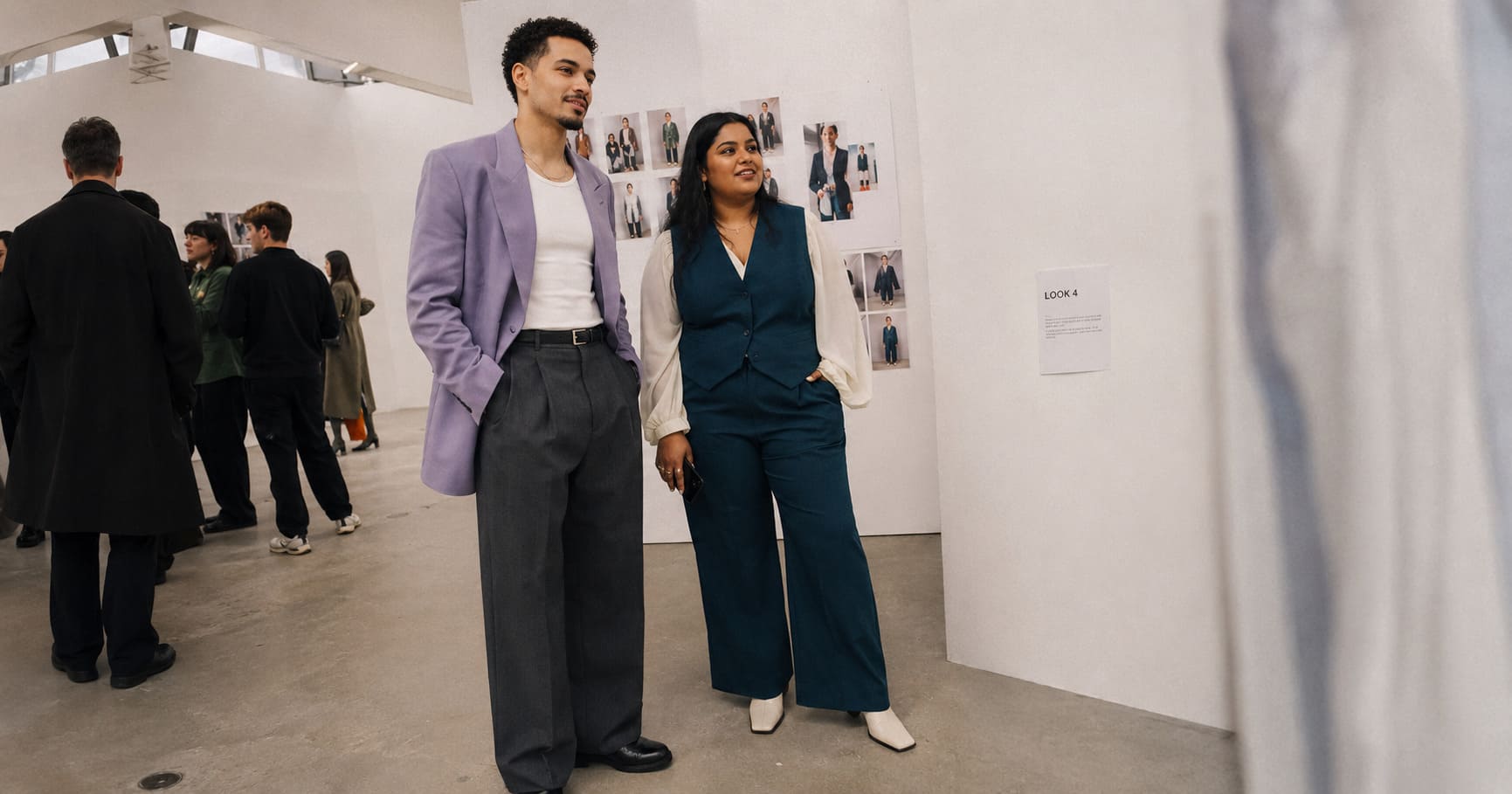
An invite lands in your calendar, the day already looks busy, and you can picture the awkward middle ground: too plain for the room, too dressed-up for the pavement outside. That is the real pressure of London Fashion Week. The clothes need to hold their own in a photograph, but they also need to work when you are sitting, waiting, walking and moving between events.
We start with the basics that people notice before any trend: proportion, fit, shoes, layers, outerwear and one distinctive detail. A sharp shoulder, an unusual shirt, a strong coat or a beautifully cut trouser will usually do more for you than a crowded outfit trying to announce every idea at once.
Street style can make fashion week look theatrical, but most guests are better served by clothes that look intentional, not theatrical. The outfit should feel like your own style with a firmer edit. Once that is clear, the next question is what kind of event you are actually dressing for.
Event format changes the outfit more than most guests expect
London Fashion Week is not one room with one mood. British Fashion Council information for February 2026 listed catwalk shows, presentations, appointments, events and digital activations, alongside city retail and cultural activity, so a fashion week attendee outfit has to respond to more than the runway.
| Event type | What the outfit needs to do | Useful styling cue |
|---|---|---|
| Runway show | Look sharp seated and in photographs | Choose a clean line, then add one visible detail near the face or shoulder |
| Presentation | Allow movement and closer viewing | Softer tailoring, refined knitwear or a fluid dress works well |
| Appointment | Feel polished without looking staged | Keep the outfit quieter and let fit do the work |
| Panel or talk | Sit neatly and read well from the front | Avoid fussy hems, tight jackets or anything that needs constant adjusting |
| Retail activation or pop-up | Cope with walking, browsing and standing | Wear smart shoes you can actually spend time in |
| Dinner | Shift into a richer evening mood | Use texture, darker colour or a sharper trouser |
| Evening event | Carry more presence without losing ease | A coat, jacket or accessory can add the change in tone |
Wearing a designer’s clothes to their show can be a thoughtful nod if you already own the piece and it feels natural on you. It is not a rule. We read the invitation, the venue style and the latest programme on the official digital platform before deciding how much formality the day needs.
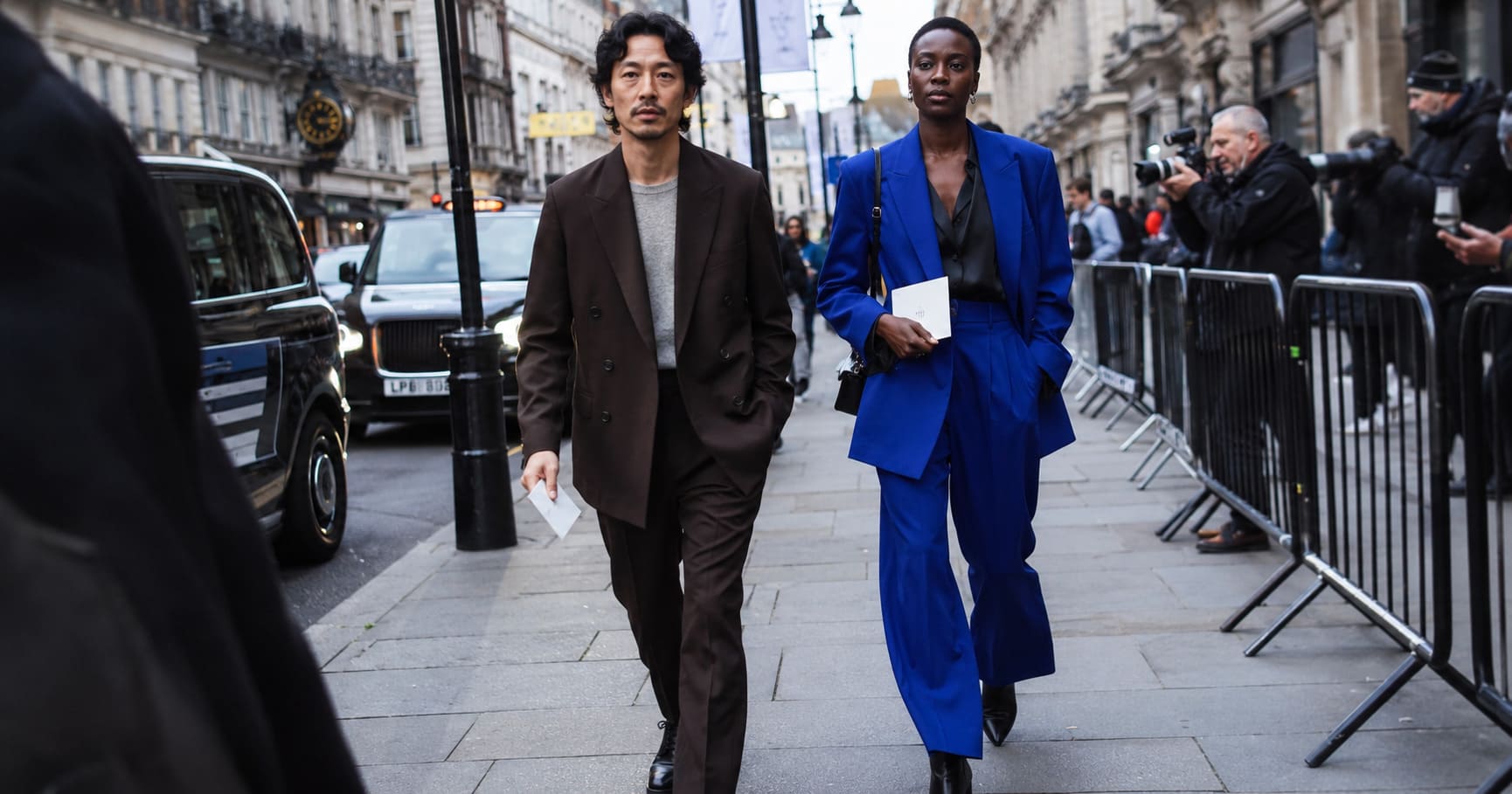
Fashion Week attendees wear black tailoring and vivid blue suiting outside a London show.
London weather and city movement belong in the outfit plan
When you are moving across London, weather and transport become part of the dress code. A day can take you from Mayfair to Strand, Soho or Shoreditch, with taxis, pavements, door queues and overheated interiors all playing their part.
September dressing calls for light layers that still respect rain and cooler evenings. Met Office climate data for Heathrow from 1991 to 2020 puts the average September maximum at about 20°C, while February sits around 9°C, so the February version needs warmer outerwear and a more serious coat. Those figures are climate averages, not a live forecast, so we check the current Met Office forecast close to the event before settling on cloth, shoes and outerwear.
Shoes matter more than people admit. A beautiful shoe that fails after the first venue changes the way you stand, walk and carry yourself. Loafers, polished boots, low heels and well-made flats can all work, provided they suit the silhouette and do not make the outfit look like two separate thoughts.
Outerwear deserves equal care. A good coat is not an afterthought at London Fashion Week, because it may be the first thing people see and the piece you wear for most of the day. Dress for the whole day, not just the room you hope to be photographed in.

Pro Tip: Choose the outer layer first if you expect to spend time between venues. London weather and transport can change how a coat or jacket reads more quickly than the rest of the outfit.
A polished outfit comes from editing the look in the right order
How much is too much? We get the best results by building the outfit in order, so the interesting parts have space to register.
- Start with the silhouette. Decide the shape before the colour. A long coat, cropped jacket, wide trouser, defined waist or relaxed suit all send different messages before anyone notices the detail.
- Choose the base piece that will carry the day. This might be a jacket, dress, coat, trouser or shirt, but it needs to sit well when you move. If you have to keep pulling it back into place, the outfit is already working against you.
- Add one focal point. Colour, texture, jewellery, print, a strong shoe or an unusual collar can all be enough. Several focal points can fight each other, especially in daylight.
- Put the shoes in early, not at the end. The wrong shoe changes trouser length, posture and the whole mood of the look.
- Test the outer layer. A coat or jacket needs to improve the outfit when worn, because London will make you wear it.
- Make the final edit in a mirror and in motion. Sit down, walk, turn and check the sleeve length, trouser break and waist shape. Photographs catch movement as much as pose.
With bespoke tailoring, this order becomes easier because the garment is built around your body, your posture and the way you live. At Fielding & Nicholson, we think about cloth, movement and re-wear value when shaping jackets, trousers, shirts, coats and separates for event dressing. The strongest fashion week piece is the one you still want to wear after the week is over.
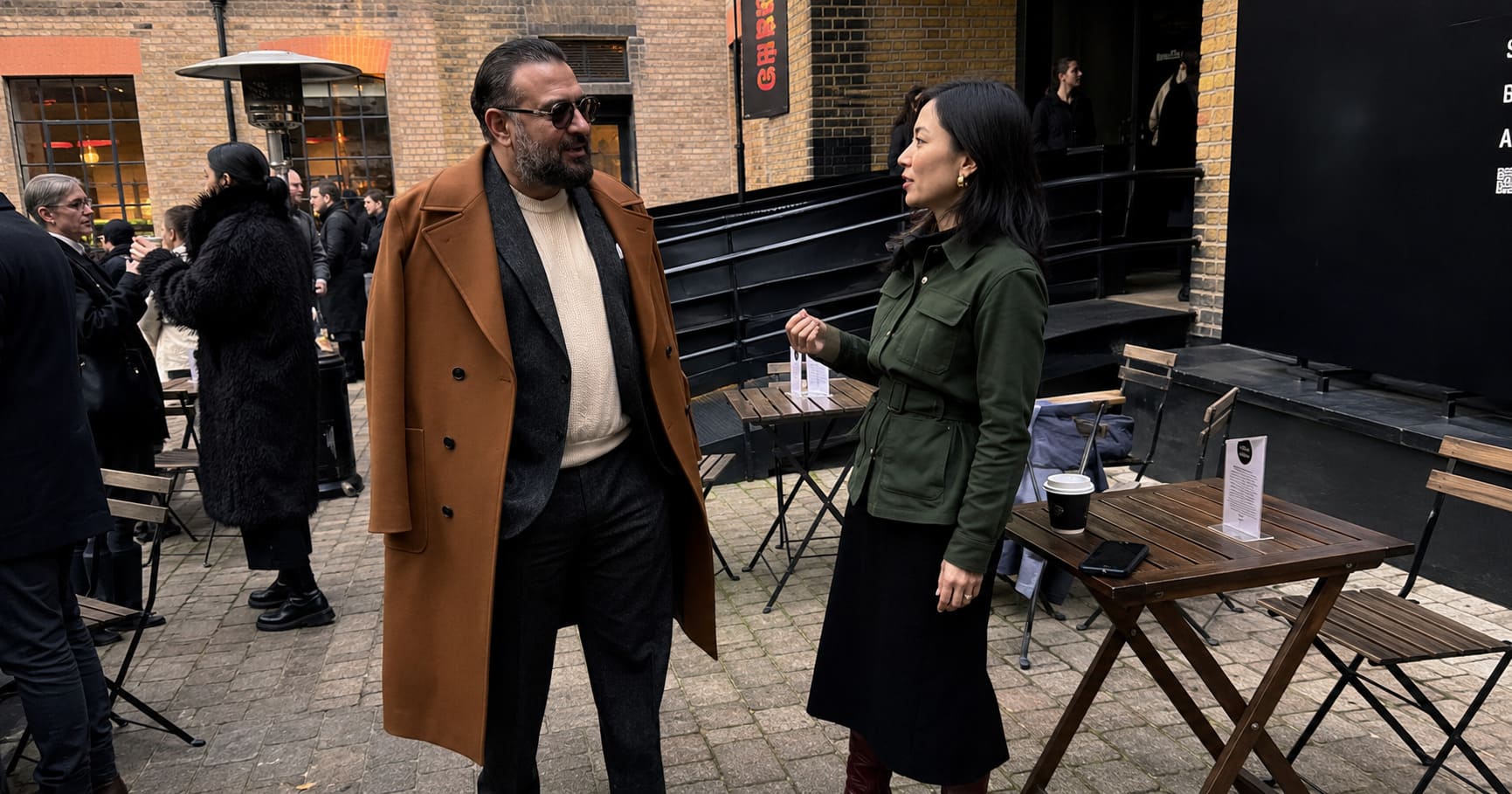
Man wearing black suit and woman wearing brown tailoring attend London Fashion Week events.

Pro Tip: Test the outfit in motion before the event. Sit, walk and turn in front of a mirror so you can see whether the silhouette still feels balanced once you start moving.
Body, proportion and ease matter more than gendered outfit rules
Rigid menswear and womenswear formulas do not help much at London Fashion Week. Your body, proportions, comfort and preferred presentation are more useful guides than a category label.
Menswear gains interest through cloth and proportion
A plain suit can feel flat if the cut and cloth have no point of view. Menswear looks sharper when the jacket line, trouser shape, shirt choice and shoes feel deliberate. A double-breasted jacket, relaxed trouser, fine knit or open-neck shirt can shift the mood without making the outfit look forced.
Colour does not have to be loud to be distinctive. A richer cloth, a softer shoulder or a cleaner trouser line can bring enough interest, especially for a guest moving between shows and dinner.
Womenswear has strong options beyond dresses
A dress can work beautifully, but it is not the only route. A structured jacket over a dress, a suit with a silk shirt, wide trousers with a fine knit, or a coat cut with real shape can feel modern and wearable.
Length, shoulder balance and waist shape matter here. If the proportions are right, a quieter outfit can still look highly considered. If they are wrong, even an expensive piece can look uneasy.
Non-binary dressing works best through line and ease
Non-binary fashion week dressing should begin with the line you want: sharper, softer, longer, more fluid or more structured. From there, cloth and cut can support how you want to be seen without forcing the outfit into a fixed category.
Fielding & Nicholson works across bespoke menswear, womenswear and inclusive tailoring, so our view is practical: the cut should serve the person in front of us. A jacket, trouser, shirt or coat can change the whole balance of an outfit when it is shaped with care. Choose the cut that lets you move naturally.
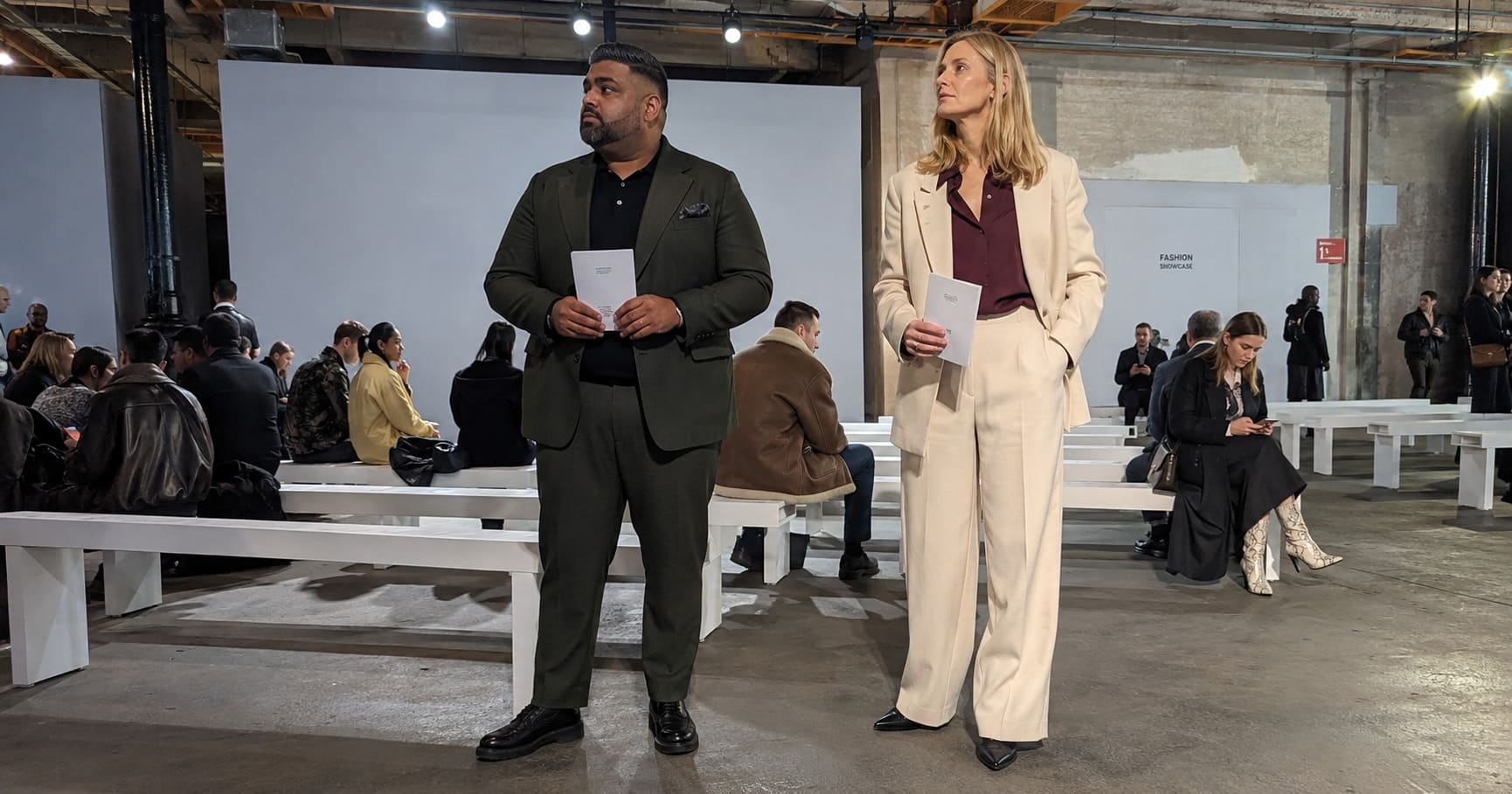
Man wearing charcoal overshirt and woman wearing cream tailoring prepare seasonal wardrobes in studio.
The boldest outfit is rarely the strongest choice
The common misconception is that London Fashion Week requires the boldest possible outfit. It does not. Boldness without fit can look accidental, and a trend-heavy outfit can date before it has earned a place in your wardrobe.
A better test is simple: does the outfit hold up in person, in motion and in photographs? If one strong detail sits on a well-cut base, the result reads as confidence rather than effort. Restraint can be a fashion choice, and at London Fashion Week it is often the choice people are glad they did not overlook.
Questions we get asked about London Fashion Week dressing
Should I wear the designer’s clothes to their show?
You can wear the designer’s clothes if you own them and they feel like you, but you do not need to treat it as compulsory. A respectful, polished outfit that suits the event is a safer choice than wearing something that feels borrowed in spirit.
Can I wear trainers to London Fashion Week?
Trainers can work if they are clean, deliberate and in keeping with the rest of the outfit. The issue is not the category of shoe, but whether it looks considered with the trouser, dress, coat or jacket.
How far ahead should I plan a bespoke fashion week outfit?
Plan early enough for cloth choice, cutting, fittings and final refinement to happen without pressure. Bespoke clothing should never feel rushed, especially if the piece needs to work across several events.
What bag works best for a full fashion week day?
A compact, structured bag usually works best because it carries what you need without dragging the outfit down. The bag should look like part of the silhouette, not an emergency storage solution.
Does a quieter outfit look underdressed at London Fashion Week?
A quieter outfit looks underdressed only when the fit, cloth or styling feel careless. The common misconception is that volume equals impact, but a precise jacket, strong coat or beautifully cut trouser can carry more authority than noise.