Which shirt collar should you choose for your face, tie and event?
Choose a shirt collar by proportion first: how wide the collar opens, how long the points are, how high the band sits and how you wear the shirt. Face shape sits alongside your tie, jacket, dress code and open-neck use, because the collar has to work with the whole outfit.
A familiar collar name gives you a starting point, yet it rarely gives you the whole answer. One spread collar can sit neatly under a business suit; another can open too far for the same jacket and leave the tie looking exposed.
In a fitting, we look at how the collar sits with your neck, shoulders, shirt front and jacket lapel. We also ask how you will wear the shirt most of the time. A shirt for boardroom wear, a wedding shirt and an open-neck shirt all ask different things from the collar.
Most people arrive expecting a rule about face shape. A better decision starts with proportion, then brings in the occasion.
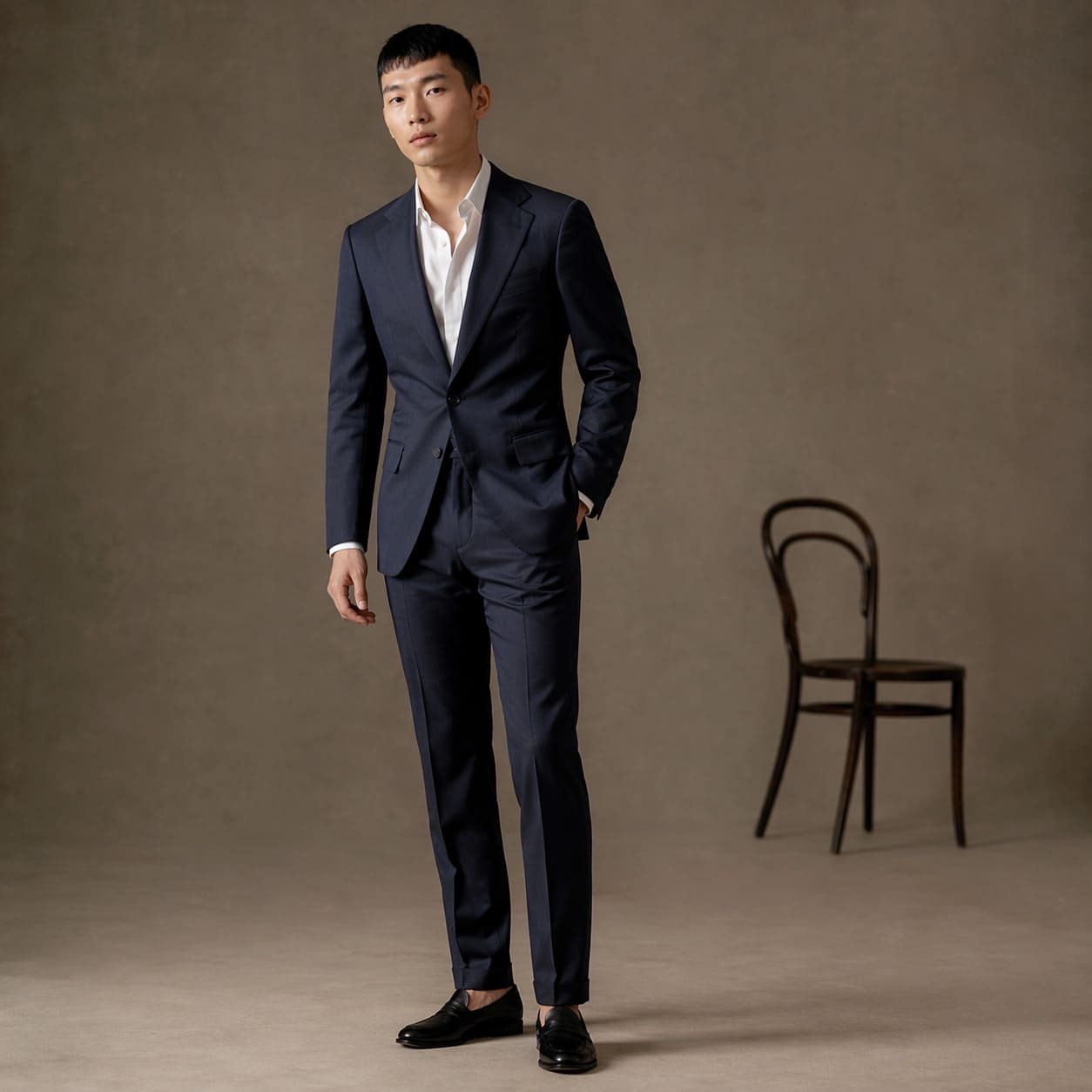
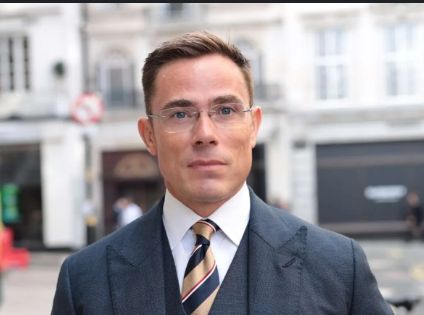
Men’s Business Attire – Navy tailored suit with open-collar shirt – Sample Image
Collar proportion decides the result
Two shirts can both be called spread collars and still look quite different. One may have shorter points and a modest opening; another may have a wider gap between the points and a stronger collar band.
A good collar works through proportion, not fixed face-shape rules. Collar points are the distance from the neckband to the collar tip. Collar spread is the distance between those two points. Those two measurements change how the collar frames your face and how much room it gives a tie knot.
Collar band height matters just as much. The band is the part that wraps around the neck and sets how high the collar sits. A higher band can look composed under a jacket, although it has to feel comfortable when you turn your head or sit for a long day.
Structure also matters. Interlining, the layer inside the collar, affects whether the collar stands cleanly or folds when the top button is open. In our work at Fielding & Nicholson, we treat the collar as part of the shirt’s construction, so spread, point length, band height and collar roll are considered together.
Collar styles suit different occasions
Which collar belongs with which outfit? The table below compares collar styles with the outfits they work with and the situations that need care.
| Collar style | Works best with | Use with care when |
|---|---|---|
| Point collar | Business shirts, suits, smaller tie knots | The jacket lapel is very broad |
| Spread collar | Suits, ties, weddings, business dress | The shirt will often be worn open-necked |
| Cutaway collar | Wider tie knots, sharper tailoring | The setting is very conservative |
| Button-down collar | Casual shirts, relaxed workwear, open-neck wear | The event is formal |
| Tab collar | A neat tie knot and structured business dress | The shirt will be worn without a tie |
| Wing collar | White tie and formal eveningwear where specified | The dress code calls for a turn-down collar |
| Club collar | Softer tailoring and characterful business shirts | The rest of the outfit is already busy |
| Band collar | Casual or minimal shirts without a tie | A traditional suit and tie is expected |
Point collars are the quietest choice for many business shirts. Their narrower opening works with smaller tie knots and classic suit shapes, especially where the outfit needs to look settled.
Spread collars are widely used because they give a tie knot more space. The spread collar meaning is simple: the collar points sit farther apart, which opens the front of the shirt. A wider spread can look smart with tailoring, provided the jacket lapel and tie knot have enough weight to balance it.
Cutaway collars open farther again. A cutaway collar shirt can look sharp with a suit, especially with a wider knot, although very formal or traditional settings call for care. Button-down collars sit more relaxed because the collar points fasten to the shirt front, so a button-down collar wedding choice suits informal celebrations more than strict dress codes.
Our own shirt work includes spread, cutaway, button-down and tab collar choices. We judge them through face shape, tie width and workplace use, because the best collar for a suit is the one that behaves properly with the rest of the outfit.
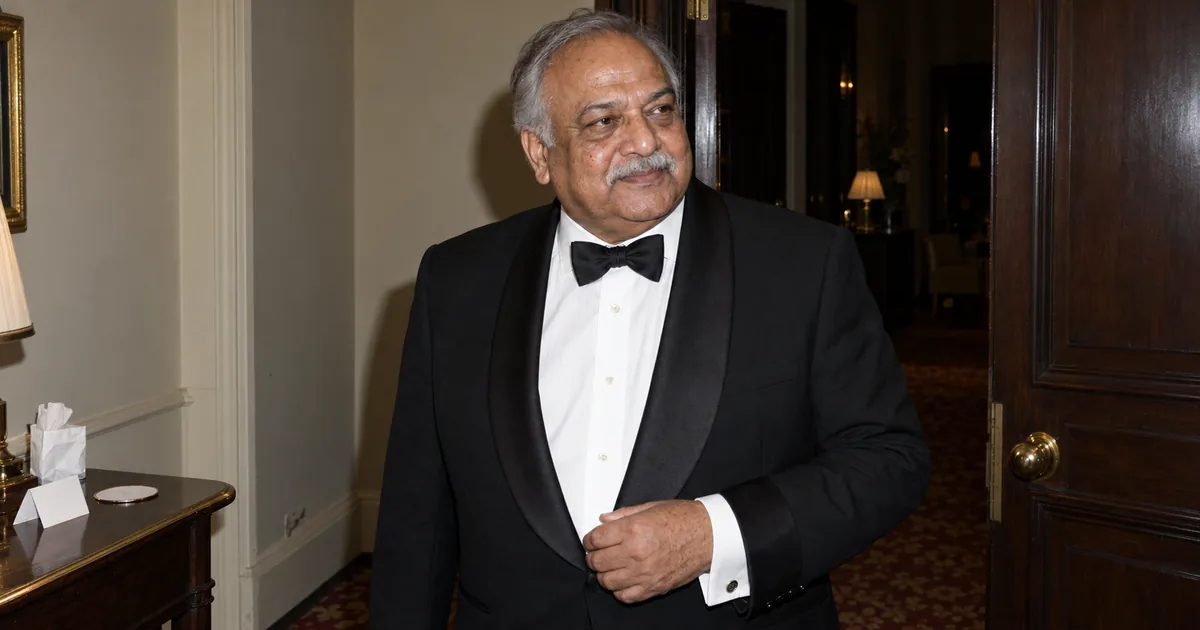
Men's Black Tie Wing Collar Evening Shirt - Illustrative Image
Pro Tip: Bring the tie you wear most often to the fitting, along with the jacket you pair it with. The collar opening should be judged against both, because tie knot size and lapel width change the result.
Face shape works with tie, jacket and open neck
Face shape alone is too narrow as a method. We use it as one part of the decision, then test the collar against the tie, jacket and the way the shirt will actually be worn.
- Start with the face and neck. A narrower collar opening can lengthen the line through the front of the shirt. A wider spread can give broader balance. Neck length then decides how much collar band height feels natural through the day.
- Choose the tie knot before the collar. A Windsor knot needs more tie space than a smaller knot. If the collar opening is too tight, the knot looks cramped; if it is too wide, the tie can lose shape.
- Check the jacket lapel. A broad lapel asks for a collar with enough presence. A fine, narrow lapel can make a large cutaway look out of scale.
- Decide how often the shirt will be worn open-necked. Open-neck wear needs a collar with enough structure to sit cleanly. A soft collar can collapse at the front, which is why shirt collar proportions matter even on casual shirts.
- Think about photographs. Weddings, presentations and public events expose small fit issues. A collar that sits cleanly against the jacket reads better in photographs than one that lifts, gaps or folds.
For made shirts, we take a full set of upper body measurements: neck, shoulders, chest, waist, hips, arm length and back length. That matters because collar choice is connected to posture, shoulder line and how the shirt sits across the chest. A collar chosen in isolation can look right on the hanger and wrong under a jacket.
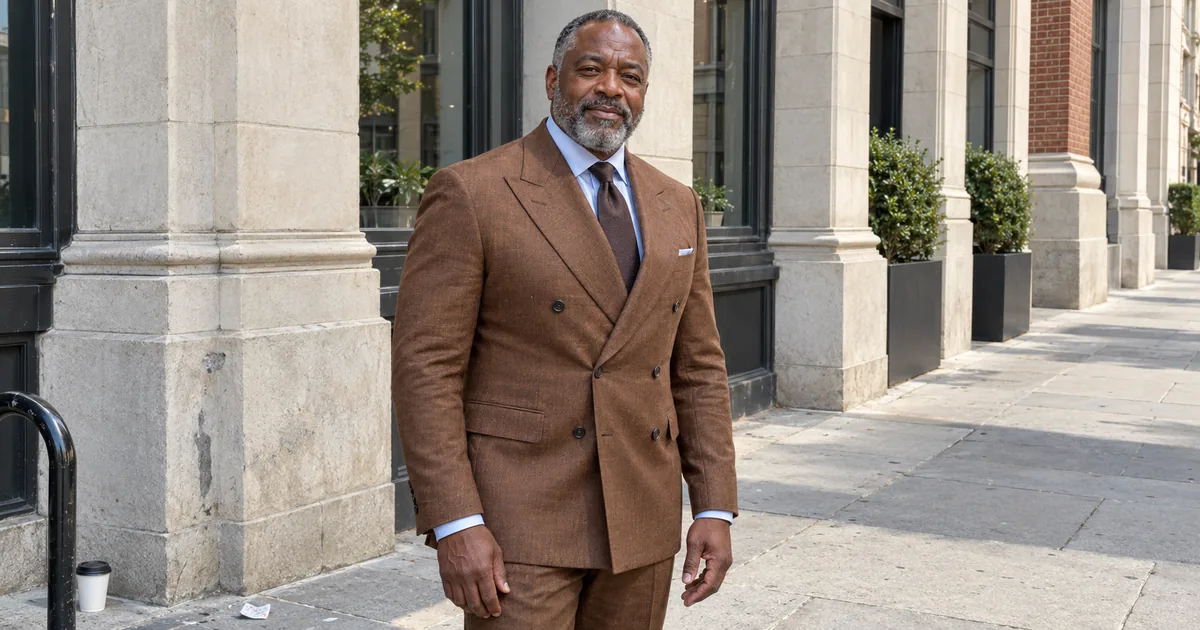
Men's Spread Collar Business Shirt and Suit - Illustrative Image
Formal dress codes make collar choice simpler
Formalwear gets easier once black tie, white tie, morning dress and lounge suit are separated properly. The strictest dress codes often give the clearest collar answer.
Black tie uses a turn-down collar, not a wing collar. Debrett’s gives black tie as a white evening shirt with a turn-down collar. For most black tie events, we would keep the shirt clean, formal and settled under the dinner jacket.
White tie is different. It calls for a white marcella shirt with a starched detachable wing collar and double cuffs. That is the setting where a wing collar belongs, and it should be treated as part of a very specific evening dress code.
Morning dress uses a white or light-coloured shirt with a white turned-down collar, double cuffs and cufflinks. For formal daytime weddings, race-day dressing and ceremonial events, that answer removes a lot of guesswork. If an event sets its own dress code, follow the event wording closely.
Lounge suit dress code means a suit worn with a shirt and tie, with a turndown collar in place of a button-down collar. For weddings, that usually points you back to a point, spread or modest cutaway collar, depending on the tie and jacket. A clean collar line matters in wedding photographs because it holds the shirt, tie and lapel together in the frame.

Pro Tip: Ask for a quick photo in profile with the shirt buttoned and the top button open. That side view shows collar roll and band height better than a mirror front-on.
The best collar is specified around you
A useful collar choice starts with the life of the shirt. Work shirts need reliability with suits and ties. Wedding shirts need a collar that stays composed through photographs. Casual shirts need structure at the open neck without looking stiff.
Bespoke and made to measure shirts give us room to adjust that choice. We can refine collar spread, point length, band height and interlining, then set those decisions alongside the shirt fit. The made to measure shirt collar and the bespoke shirt collar both become clearer once the outfit is part of the discussion.
For Fielding & Nicholson, we see shirtmaking as a whole garment decision. Each shirt takes over 9 hours to make, which is why the collar is specified with the same care as the body, sleeves and cuffs.
The real question is less about the name of the collar than the job you need the shirt to do. Choose the collar for the way you wear it, and the style follows more naturally.
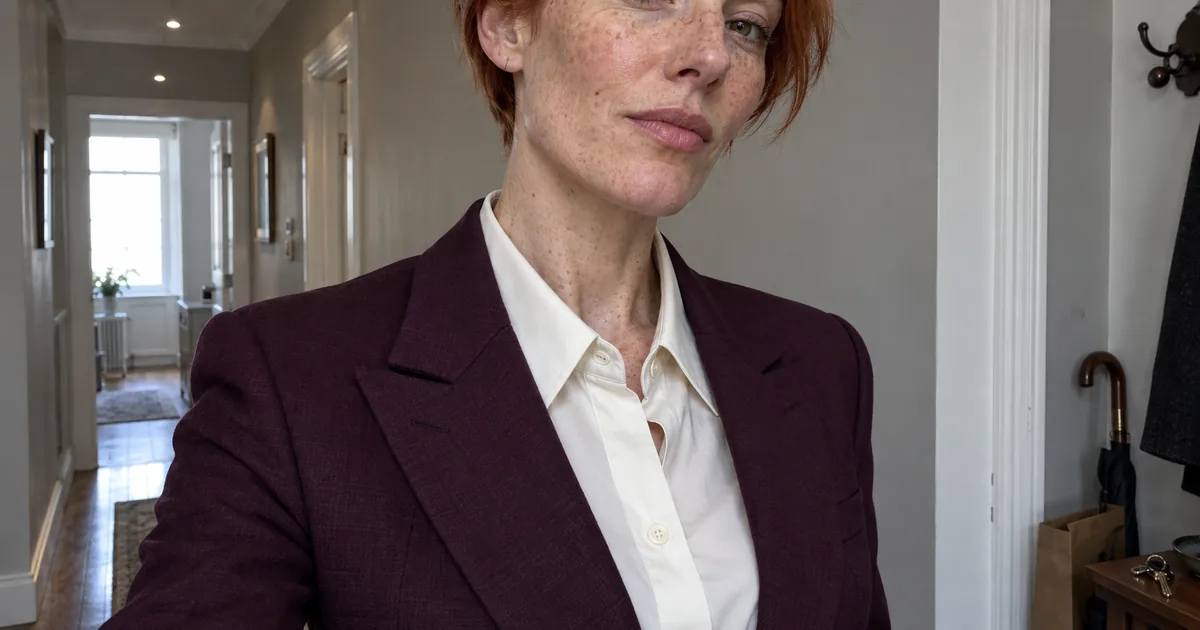
Women's Point Collar Close Up in Plum Jacket - Illustrative Image
Questions clients ask us about shirt collars
Should you choose one collar for every shirt?
One collar can work across a work wardrobe if your suit style, tie knots and shirt use stay consistent. If you wear some shirts open-necked and others with formal tailoring, we prefer to vary the collar structure and spread.
Can the collar be changed after a shirt is made?
Small changes depend on how the shirt was made and how much cloth is available in the collar area. In practice, choosing the right collar at the start gives a cleaner result than trying to alter the shape later.
Do collar stays matter on an open-neck shirt?
Collar stays can support the points, but they do not replace good collar structure. Open-neck shirts need the right interlining and collar roll, otherwise the front can fold even with stays in place.
Are taller collars less comfortable?
A taller collar can feel comfortable when the band height suits your neck and posture. If the band is too high for you, it can press when you sit, turn or wear the shirt through a long day.
Should collar choice change under knitwear?
Knitwear changes how much of the collar is visible and how firmly the collar needs to sit. A softer collar can work well with relaxed knitwear, while a sharper collar suits a jacket or smarter layer.