
How can you tell if your shirt fits properly?
Check the shirt in movement: fasten the collar, sit down, reach forward, raise your arms and try it under a jacket. A good shirt sits flat where it meets the body, gives enough room to move cleanly and avoids pulling, gaping, twisting, billowing or riding up.
Most people judge a shirt too quickly in the mirror. Standing still tells you whether the shirt looks neat for a moment, yet work, weddings and long days ask more of it. You need to know how the shirt behaves when your body changes position.
We look at shirt fit as a chain. Collar tension affects comfort, shoulder placement affects sleeve fall, and cuff position affects how the shirt looks under a jacket. A single neat measurement rarely tells the whole story.
The checks below follow the same order we use in a fitting room: collar, shoulders, chest or bust, waist and back, sleeves, cuffs and hem. That order stops you blaming the wrong part of the shirt.

Men's white shirt with cream trousers
Good shirt fit starts with movement
A mirror gives you the first impression, and movement gives you the answer. A shirt that fits properly should stay calm on the body when you sit, reach and turn, with no obvious pulling or loose cloth fighting the line of the garment.
Use this shirt fit guide in order:
- Collar. Fasten the top button if the shirt is meant to take a tie, then turn your head. The collar should stay flat and let your neck move naturally.
- Shoulders. Check where the seam lands. The sleeve should fall from the edge of your shoulder without dropping down the arm.
- Chest or bust. Reach forward as if you are taking something from a desk. Buttons should stay settled, with no strain or gaping.
- Waist and back. Sit down and breathe normally. The shirt should follow the body without clinging or ballooning.
- Sleeves. Bend your arm and reach forward. The sleeve needs enough length to move without dragging the cuff up the wrist.
- Cuffs. Button the cuff and check how it sits at the wrist area, especially under a jacket.
- Hem. Raise your arms if you plan to wear the shirt tucked. The shirt needs enough body length to stay in place.
Those dress shirt fit checks work just as well for business shirts, blouses, wedding shirts and smart casual shirts. The styling may change, but the signs a shirt fits properly stay grounded in comfort, clean lines and movement.
A collar should sit flat and let you turn
A shirt collar should sit close enough to look clean when fastened, with enough ease for your neck to move. If it digs in, collapses, lifts away at the back or stands off the neck, the shirt is already giving you useful information.
In a Fielding & Nicholson shirt fitting, we use the two-finger collar test as a practical check. The finger test is a comfort guide, not a universal shirtmaking law. Some style advice uses a one-finger check, which shows why you should treat the test as a feel check rather than a rule carved into stone.
Fasten the collar and turn your head as you would in conversation. A collar that feels fine for five seconds in a mirror may start to bite when you sit at a desk or wear a tie for an event. An open-neck shirt can allow a softer feel, yet the collar should still sit flat and keep its shape.
Collar issues can come from neck size, posture or the cut of the shirt. Changing the collar size alone may disturb the shoulder or body fit, so we always read the collar alongside the rest of the shirt.
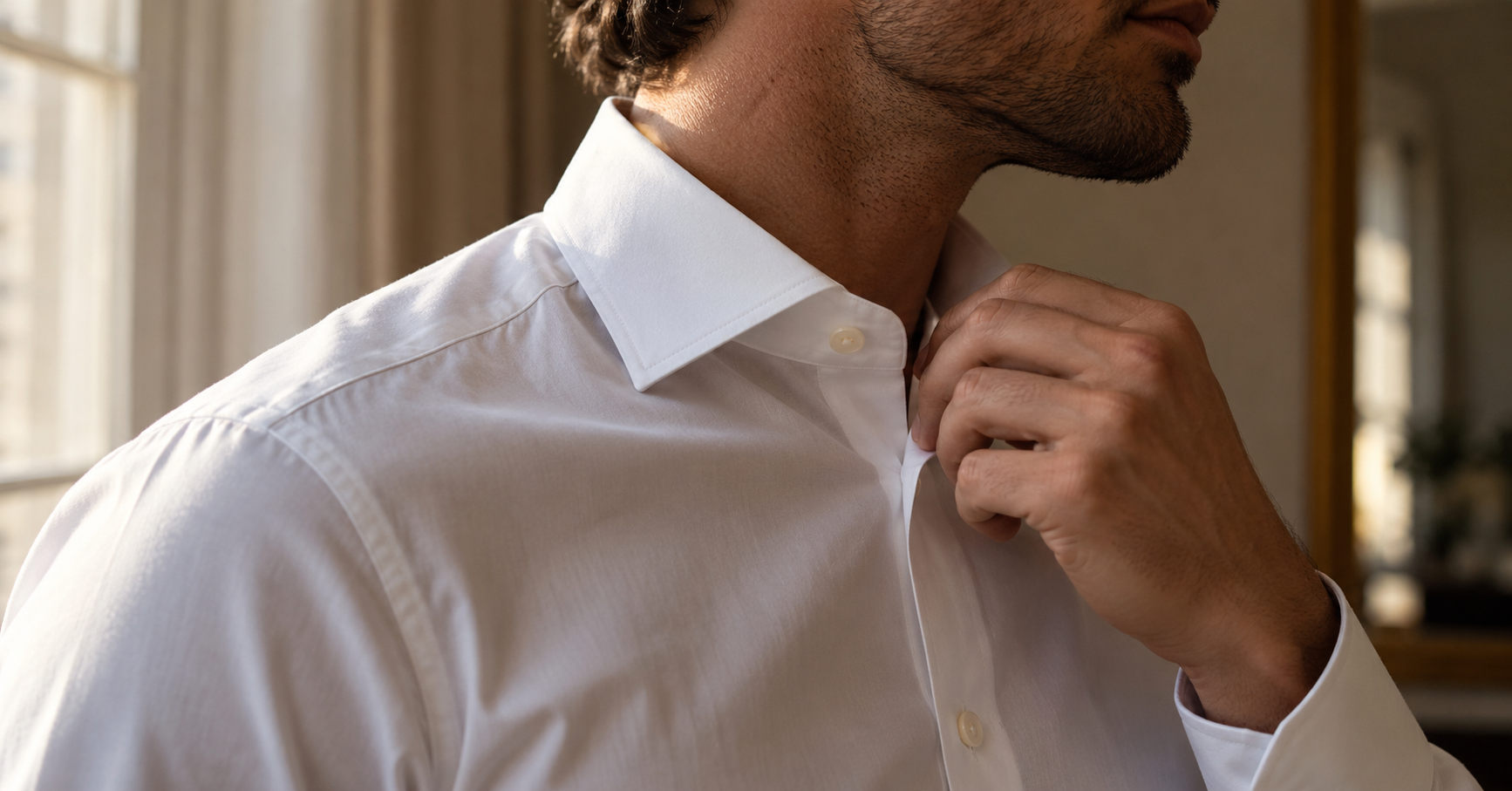
Adjusting the White Shirt Collar

Pro Tip: Wear the jacket, tie or waistcoat you plan to use most often, then take a photo from the side and back. Shirt problems around the collar and shoulder are easier to spot in a picture than in a mirror.
Shoulder and body fit decide the whole shirt
Picture a shirt that feels acceptable at the neck, then pulls hard across the front when you reach for a laptop. The collar was never the full answer. The shoulder line, chest or bust room and body shape decide whether the shirt works in real use.
A shoulder seam should finish where your shoulder finishes. When the seam drops too far down the arm, the sleeve starts from the wrong place and the cuff can sit badly. When the seam sits too high, the upper sleeve may feel tight and the front of the shirt can pull.
Chest, bust and button pull
Button pull is one of the clearest signs that the shirt needs attention. Across the chest or bust, the front should sit smoothly when you stand and when you reach forward. Small diagonal lines are normal in movement, but strained buttons or a visible gap tell us the shirt lacks the right room through the front.
For men’s shirts, we measure beyond collar and sleeve: neck, shoulders, chest, waist, hips, arm length, back length, posture and how the shoulders are carried. Those details matter because a shirt bought only by collar and sleeve size asks two numbers to do far too much work.
Women’s shirts and blouses need the same level of attention, with measurements through the neck, shoulders, bust, waist, arm length and back length. Bust gaping is handled by giving the shirt enough room across the chest, shaping the waist separately and setting button positions to the wearer’s body. A larger size may add cloth everywhere, which can spoil the areas that already fit.
Waist, back and posture
Waist shape should clean the line of the shirt while leaving space to sit, breathe and reach. If the shirt clings through the waist when you sit down, it will feel fussy all day. If the back billows heavily under a jacket, the shirt may feel untidy even when the front looks reasonable.
Posture changes how cloth travels across the body. Rounded shoulders, a straighter stance or one shoulder carried differently can affect how the shirt hangs. That is why a fitting needs you to move, because the shirt is being asked to work on a person, not on a hanger.
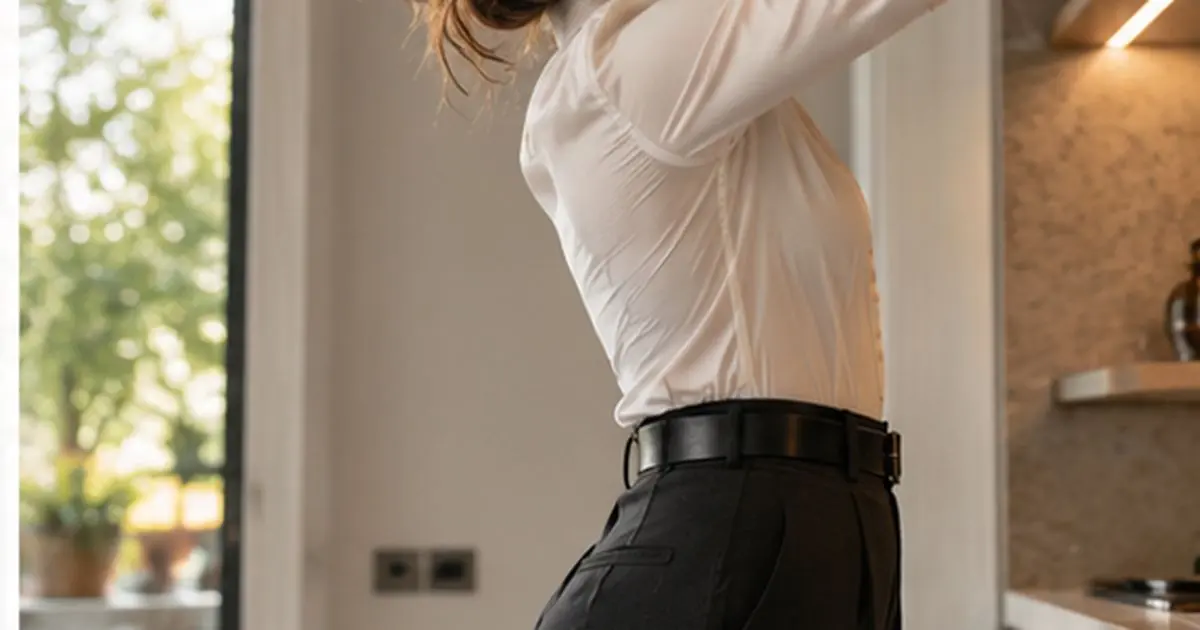
Women's Tucked Shirt Waist Fit and Movement - Illustrative Image
Cuffs and hems finish the fit test
Sleeves, cuffs and hem are the details you notice once the shirt is in use. A shirt can look smart across the body, then lose its shape when the cuff catches on the hand or the hem escapes the waistband during a meeting.
Our shirt checklist puts the cuff at the base of the thumb. The cuff should sit neatly there without sliding far over the hand. If the cuff is too tight, it can catch as you bend your arm and make the sleeve appear shorter than it is.
Under a jacket, cuff reveal depends on the jacket sleeve, the shirt cuff and personal preference. British GQ gives around half an inch of cuff as a rough guide. Cuff show is a convention with room for preference, not a fixed measurement that suits every shirt.
Length matters as soon as you raise your arms. A tucked shirt should stay in the waistband when both arms go up, because a shirt that keeps working loose will never feel settled. For an untucked shirt, the hem still needs enough length and shape for the way you plan to wear it.
A cuff that behaves and a hem that stays put make the shirt feel intentional.

Pro Tip: Check how the shirt feels after ten minutes of sitting, not just in the fitting room. Collar pressure and button pull often show up once your posture settles.
Some shirt problems need a new pattern
The decision point is simple: some shirts are worth altering, and some are the wrong base fit for your body. We look first at whether the main structure is sound, then judge whether a small alteration would solve the issue cleanly.
The table below compares shirt alteration issues with fit problems that usually point to a better base pattern.
| Fit issue | Likely route |
|---|---|
| Sleeves slightly long | Alteration may help |
| Body too full through the sides | Alteration may help |
| Shoulder seam sits well past the shoulder | Better base fit or new pattern |
| Collar digs in or stands away after sizing changes | Better base fit or new pattern |
| Bust gaping repeats across several shirts | Better cut and button placement |
Made to measure shirts use an existing base pattern adjusted to your measurements. Fully bespoke shirts use a pattern built for you alone. Both routes can help when the same shirt fit problem keeps appearing across off-the-peg sizes, especially around the collar, shoulder, chest or bust.
Across Fielding & Nicholson, we see these questions through the Mayfair showroom on Sackville Street, just off Savile Row, as well as in Knutsford, Zurich, New York and through our mobile tailor service across the UK. The first consultation is free with no obligation, which keeps the first conversation focused on diagnosis: what fits, what can be altered and what needs a better starting point.
Once you know where the fault begins, the shirt stops feeling mysteriously wrong. You can check the collar, watch the shoulder, test the front in movement, then decide whether the answer is a small alteration or a shirt cut more closely to how you actually wear it.
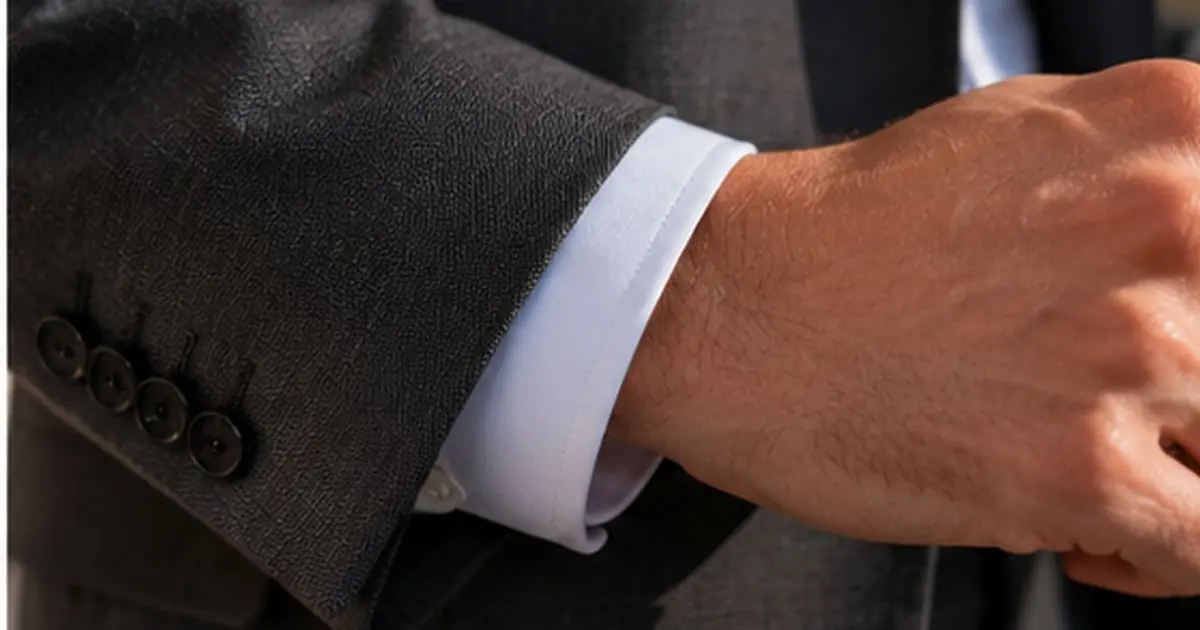
Men's Shirt Cuff Length Under Suit Jacket - Illustrative Image
Questions we get asked about shirt fit
Should you try a shirt on with the jacket you plan to wear?
Yes, if the shirt is for work, a wedding or any event where a jacket matters. The jacket shows whether the collar sits cleanly, whether the sleeve has enough length and whether the cuff appears as you want it to.
Can a slim fit shirt still feel comfortable at a desk?
Yes. A slim fit shirt should follow your body neatly while still letting you sit, type and reach without strain across the buttons or back.
Does a wedding shirt need a different fit from a work shirt?
A wedding shirt follows the same fit checks as a work shirt, but the collar, cuff and hem need to suit the outfit it sits under. If you are wearing a tie, waistcoat or formal jacket, test the shirt with those pieces before judging it.
What should you bring to a shirt fitting?
Bring the jacket, trousers or skirt you plan to wear with the shirt if the outfit matters. Shoes can also affect posture, so wear the kind of footwear you expect to use with the finished look.
Can a shirt fit well open-neck but feel wrong with a tie?
Yes. A collar that feels easy when open can feel tight, high or awkward once fastened with a tie, so test the shirt in the way you will wear it. The useful check is whether the collar stays flat and lets you turn your head without pressure.