Is navy or dark grey the safer first serious suit for you?
Navy is the safer first serious suit for most people because it covers work, interviews, weddings, dinners and travel with fewer awkward gaps. Dark grey, especially charcoal, becomes the stronger choice when your professional life is more formal, your shoes are mainly black, or your calendar leans sober.
For a first bespoke suit, the colour has to do more than look good on a hanger. You are buying a garment that has to earn repeat wear, sit well with your shirts and shoes, and still feel right when the invitation wording changes.
Safe often gets mistaken for bland. We see it differently. A strong first suit colour gives you room: room to dress it up, relax it slightly, wear it again, and build the next suit around it.
Our advice starts with use. Once we know where the suit has to go, the question of navy or charcoal becomes much easier.

Woman in navy tailored suit fitting
Navy gives the broadest first-suit range
Navy solves the most everyday first-suit problems with the fewest compromises. If you need one suit for professional life and social events, a navy first suit usually gives you the widest range.
The table below compares a navy first suit with a charcoal first suit for the situations most buyers need to cover.
| Decision point | Navy first suit | Charcoal first suit |
|---|---|---|
| Work and interviews | Polished without feeling severe | Strong in formal or conservative settings |
| Weddings and receptions | Easy to soften with shirt, tie and shoe choices | Works best when cloth and styling lighten the mood |
| Shoes | Sits well with brown or black shoes | Strongest with black shoes |
| Wardrobe growth | A natural base for a second grey suit | A natural base for a second navy suit |
Debrett’s describes a lounge suit as the smartest informal dress code, meaning a suit worn with a shirt and tie. The same family of dress is also called a dark suit, business suit, business dress or business attire. That explains why navy works so well as a first business suit colour.
Navy also has a useful social ease. A blue suit can look sharp for an interview, composed at a dinner, and still suitable for many weddings once the shirt, tie and shoes are adjusted. Brown shoes move it into a warmer register; black shoes keep it sharper.
Fully bespoke menswear and womenswear follow the same logic, and so does non-binary tailoring. The best colour for a first suit is the one that leaves you feeling correctly dressed in the greatest number of real settings.
Charcoal suits a more formal first wardrobe
Charcoal becomes the stronger first choice when your working life asks for a more formal tone. If your calendar is heavy with interviews, boardroom meetings, conservative offices or solemn occasions, a charcoal first suit has real authority.
Picture someone starting a role where most clothes around them are dark, plain and restrained. A dark grey first suit can sit comfortably in that room from day one. It also pairs cleanly with black shoes, white or pale blue shirts, and quiet ties, which gives the outfit a clear professional line.
For weddings, charcoal needs a little judgement. A smooth, very dark charcoal suit with black shoes can feel sombre, especially in daytime. A softer cloth, a lighter shirt, or a warmer tie can make the same colour feel more social. The colour is strong. The styling decides how it lands.
We treat charcoal as a deliberate foundation, especially for clients who already know their suit will do serious work. Navy may win on breadth, but charcoal wins when formality is the main brief.

Tailors comparing navy and charcoal suit fabrics

Pro Tip: Ask about a spare pair of trousers when you order. Trousers wear out well before the jacket does, and matching the cloth later is often impossible once the batch has gone.
Choose depth, cloth and cut before shade labels
Two dark navy suits can sit on the same rail and behave like different garments. One might be smooth, crisp and businesslike; another might have texture, movement and a more relaxed surface. The label says navy, but the suit tells a different story once you touch the cloth and see it in natural light. A first-suit decision lives in the exact cloth, depth and cut, not in the colour name alone.
Cloth changes the same colour
Cloth changes how formal, comfortable and repeatable a suit feels. A smooth worsted navy has a cleaner business finish, while a textured navy hopsack can feel easier for travel and social use. Deep charcoal flannel brings softness and weight, giving the colour a richer, more traditional feel.
Woolmark describes Merino wool as combining softness, breathability, elasticity, moisture management and durability. Those are practical matters for a bespoke first suit, because colour cannot carry the garment if the cloth feels hot, creases poorly or looks tired after repeated wear.
Good wool suiting also recovers well from wrinkles when it is given time on a hanger after wear. That matters when your first suit is doing regular service, especially if it is moving between work, events and travel.
Fielding & Nicholson’s bespoke process usually runs for 6 to 8 weeks from first consultation to finished suit, which gives the colour and cloth decision proper space. We start with more than 30 measurements and usually work through 2 to 3 fittings, because posture, balance and cloth behaviour are part of the answer.
Cut changes the message
Cut decides how loudly the suit speaks. A single-breasted first suit is the safest route for most people because it works across the broadest set of rooms and is easy to style simply. A double-breasted first suit can look excellent, but it asks for more commitment from the wearer.
Depth matters here as well. A very dark navy double-breasted suit can look formal and architectural, while a mid-navy single-breasted suit in a cloth with texture can feel more relaxed. Charcoal follows the same pattern: cloth and cut can make it stern, soft or quietly modern.
Bespoke suits are chosen by use, body and cloth together. Shade comes into focus once those pieces are clear.
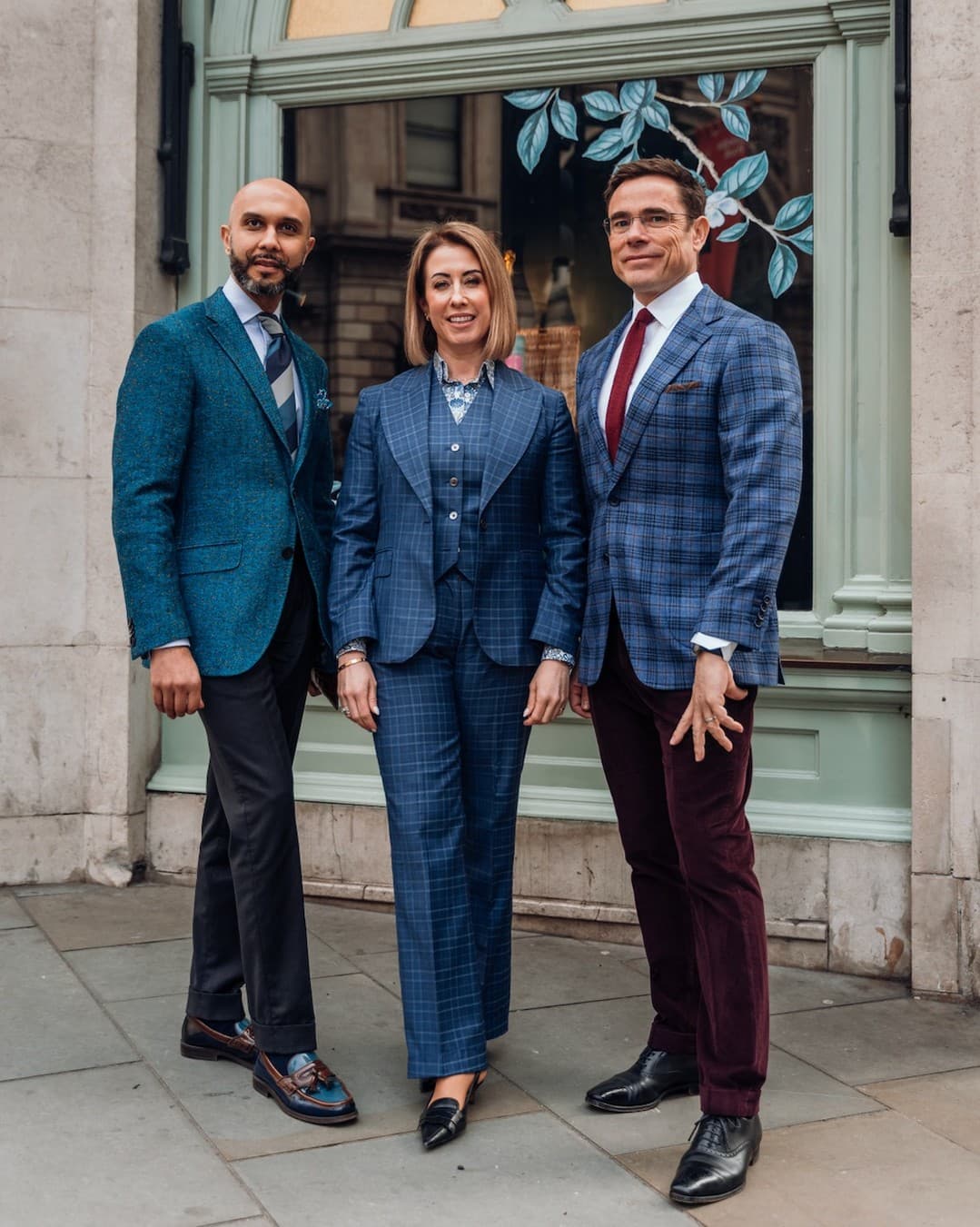
Fielding and Nicholson Tailoring Male and Female Tailoring Team
Black, light grey and fashion colours solve fewer first-suit problems
Why does black feel like the obvious formal answer? Many people link black with dressed-up occasions, then assume it must be the safest first suit colour. That assumption causes expensive misfires.
Black tie is a separate evening dress code, not a black business suit with smarter intentions. A dinner jacket belongs to a different category of eveningwear, so a black suit will not solve every formal invitation. For a first serious suit, black also gives you fewer daytime options than navy or charcoal.
Light grey has its place. It can look crisp, fresh and very well judged in the right cloth, but it asks more from the wearer as an all-purpose first suit. It shows wear more readily, feels less formal in many business settings, and can look out of place at sombre events.
Fashion colours are similar. Burgundy, green, cream or a strong seasonal shade can be superb later, once the foundation is already there. As a first purchase, those colours narrow the number of settings where the suit feels natural.
Wardrobe order matters. Build the useful base first, then add the expressive pieces with confidence.

Pro Tip: Sit down in the cloth before you commit to it. A suiting that looks crisp at the mirror can crease heavily across the lap, which matters if the suit will spend its life in meetings or on trains.
Your first suit colour should match your actual calendar
Before choosing between navy and charcoal, look at the rooms you expect the suit to enter. A first suit has to live in your week, your invitations and your existing wardrobe. Colour only becomes clear once those facts are on the table.
Use this decision filter before you commit:
- Choose navy first if the suit must cover the widest mix of work, interviews, weddings, dinners and travel.
- Choose charcoal first if your professional life is formal, your shoes are mainly black, or you want a sober foundation from the start.
- Look at your shirts and shoes because the suit has to work with what you already wear, especially if you need it soon.
- Check the colour against your face since a very deep navy or charcoal can sharpen some complexions and flatten others.
- Plan the second suit now because navy and charcoal work best as a pair over time, with seasonal or more personal colours coming after.
With Fielding & Nicholson, we treat the first bespoke suit as the start of a wardrobe, so personal styling and wardrobe guidance sit alongside the fitting itself. We look at how you work, how you dress outside work, and how formal the suit has to feel when the day asks more of it.
Once you judge the choice that way, navy and charcoal stop feeling like two safe guesses. One becomes the suit that fits your actual life first, and the other becomes the next smart move.

woman comparing navy and charcoal suit fabrics
Questions we get asked about first suits
Should a first suit include a waistcoat?
A waistcoat can be useful if the suit has to cover weddings or formal daytime events, but it is a personal choice. We usually make sure the jacket and trousers work beautifully on their own first, then decide whether a waistcoat adds real value.
Are patterned fabrics sensible for a first suit?
A subtle pattern can work for a first suit if it reads as plain from a few steps away. Strong checks or bold stripes narrow the suit’s use, so we would usually save those for a later garment.
Can the same advice apply if you do not wear ties?
Yes, but the cloth and cut need extra care. Without a tie, the shirt collar, lapel shape and suit texture do more visible work, so a navy or charcoal suit has to look intentional in a simpler outfit.
Does lining colour matter on a first suit?
Lining colour matters less than the main cloth, but it can still affect how personal the suit feels. A restrained lining keeps the garment more versatile, while a stronger lining is best when you are comfortable with that detail being seen occasionally.
Should alterations come before buying a second suit?
Professional alterations to your first suit teach you things the second order should inherit. Once you know how the jacket sits, how the trousers wear, and what you actually reach for, the next colour choice becomes much more precise.