
What is the difference between cheap lining and good lining in a tailored garment?
Cheap lining often feels slick, clammy or stiff because it is commonly made from lower-grade synthetic fibres and fitted with speed in mind. Good lining usually feels smoother, cooler and easier to move in because the cloth and the way it is put into the garment are chosen to support comfort, drape and wear over time.
A jacket lining is easy to ignore on the hanger, yet it is one of the first things your body notices once the garment is on. That hidden layer sits against your shirt, your skin and the inside of the cloth, so it plays a direct part in how the jacket slips on, how warm it feels and how freely it moves.
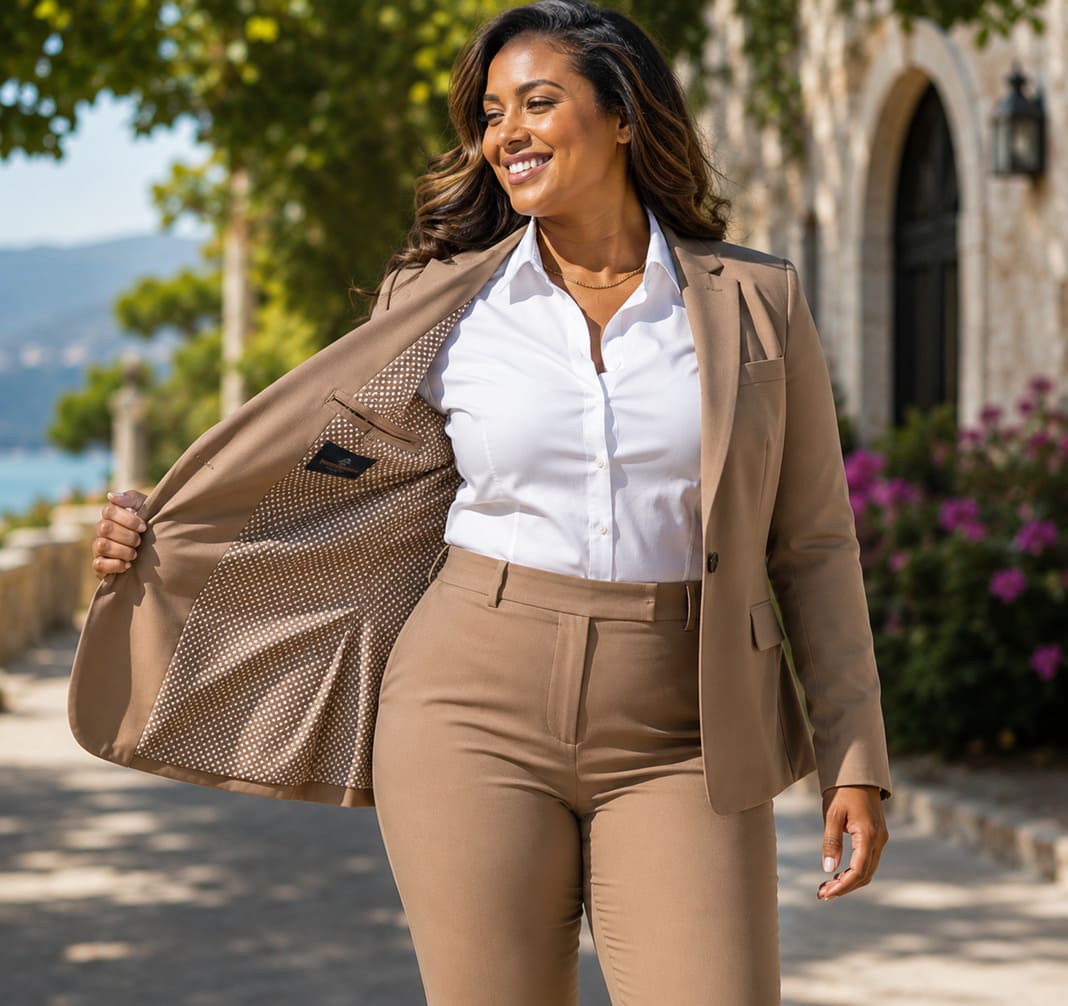
A woman showing the inside lining of her made to measure suit
What Is In This Article
What lining really does
Many people think lining is there to make the inside of a jacket look neat. That is part of the story, but only part. In suit construction, lining also supports shape, reduces friction, protects the outer cloth from strain and influences how the garment settles on the body.
An easy way to think about it is to compare it with the hidden mechanical parts of a car. Paint and upholstery matter, but they do not determine how the car actually drives. In much the same way, the garment interior affects the wearing experience more than most people expect.
Lining usually helps with:
- ease of movement through the sleeves and body
- comfort against the skin or shirt
- support for the garment structure
- wear in high-friction areas
- the overall drape of the jacket
British tailoring tradition has long treated the interior of a garment as part of its character, not an afterthought. Better tailoring houses pay close attention to what sits beneath the visible cloth because that hidden construction shapes the feel from the first wear.
Cheap lining: what it is made from and how it feels
Low-cost linings are often made from polyester or acetate blends. Those materials can be useful in some contexts, but cheaper versions tend to feel overly shiny, slightly papery or oddly sticky once body heat builds.
Mass-market tailoring often relies on these fabrics because they are widely available, inexpensive and easy to handle in garment factories. That commercial logic makes sense at volume, although the wearer often notices the compromise quite quickly.
You can usually spot a low quality lining by the way it behaves:
- It feels hot after a short period indoors.
- It creates static, especially in dry weather.
- It catches on shirts instead of gliding smoothly.
- It sounds faintly crisp or rustly when the jacket moves.
- It shows wear early at stress points such as underarms, side seams and pocket areas.
Texture tells its own story. A cheap suit lining can feel slippery in a way that seems artificial rather than smooth. After a few hours, the same jacket may start to feel stuffy, particularly on a commute, in an office with heating, or during an event where the jacket stays on for most of the day.
None of that means an affordable garment is worthless. It simply means the lining discomfort many people accept as normal is often a material issue, not an unavoidable feature of tailoring.

A man showing the inside lining of his bespoke suit
Good lining: materials, craft, and the difference you can feel
Put on a jacket with a well-chosen lining and the change is immediate. The sleeve accepts the arm cleanly, the body settles faster and the whole garment feels calmer on the move.
Higher quality suit lining is often made from cupro, viscose, Bemberg or silk, depending on the garment and its purpose. These fabrics are valued because they tend to feel smoother, breathe better and respond more naturally to movement than lower-grade synthetics.
Material matters, yet installation matters too. A fine lining badly inserted can still pull, twist or bunch. In bespoke tailoring, the lining is chosen as part of the wider balance of cloth weight, intended use and the wearer’s habits. Fielding & Nicholson, for example, treats lining as part of the full conversation about comfort and longevity rather than a decorative extra.
Good lining often brings several small improvements that add up over a full day:
- better breathability
- easier movement through the sleeve
- less cling and less static
- a cleaner drape through the chest and skirt
- a more refined feel when putting the jacket on and taking it off
Savile Row tradition has long respected that quiet relationship between hidden work and visible result. The best garments do not announce their quality with noise. They feel settled, balanced and easy, whether the jacket is worn for a boardroom meeting or a long wedding reception.

Pro Tip: Always run the lining fabric between your fingers under natural light to check both smoothness and breathability before choosing.
Why you can feel the difference
Anyone who has shrugged on a jacket in warm weather knows the sensation within seconds. One lining feels cool and smooth. Another feels airless almost at once.
Textile science gives a clear explanation. Different fibres handle heat, moisture and friction in different ways. When the lining does not breathe well, warmth stays trapped between your body and the garment interior. When the surface creates drag, the jacket resists movement instead of moving with you.
Skin sensitivity plays a part as well. Even over a shirt, your body picks up signals from the suit interior sensation through pressure, temperature and friction. That feedback is fast and largely subconscious, which means that people often judge a jacket as comfortable or uncomfortable before they have found the words to explain why.
Think about three common sensations:
- Overheating comes from poor airflow and weaker moisture management.
- Clinging comes from static and surface friction.
- Stiffness comes from a lining that does not flex well with the outer cloth.
Tailoring consultants sometimes see clients blame fit when the real issue sits in the lining. A jacket can be cut well and still feel wrong if the interior fights the body at every movement. Once that point becomes clear, the purpose of lining stops feeling abstract.
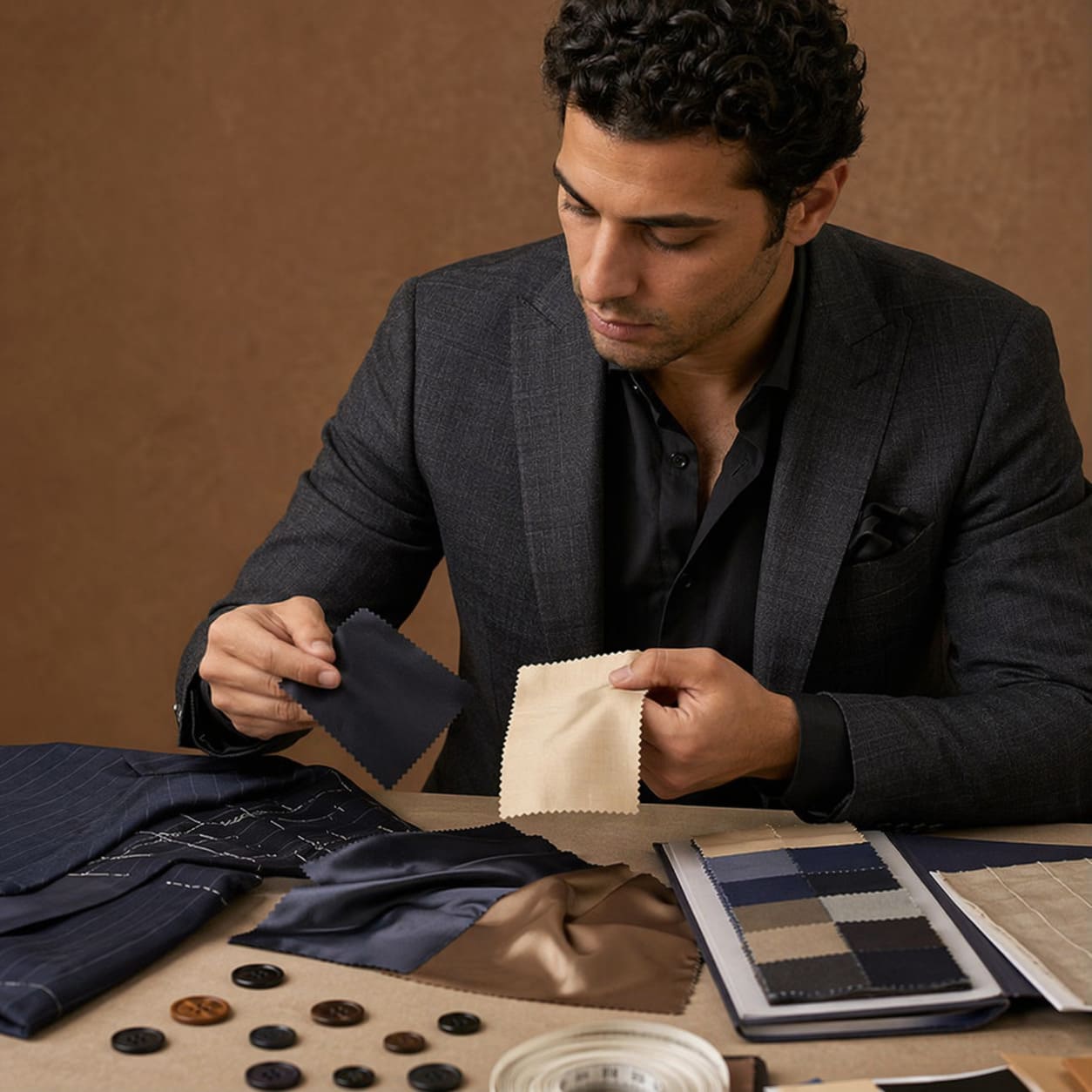
Men's Bespoke – Dark tailored blazer with fabric swatches and styling details – Sample Image
The long-term impact on your wardrobe
A jacket is rarely judged on day one alone. Its real value appears after repeated wear, dry cleaning, pressing, travel and occasional alteration.
Lower-grade lining tends to break down first in places where the garment works hardest. Underarms, seat areas, inside pockets and side seams can show thinning, abrasion or seam stress before the outer cloth has finished its life. Repair is sometimes possible, but relining a garment is a larger job than many people expect.
Better lining usually supports suit longevity in quieter ways. It can reduce strain where the jacket rubs against shirts, move more cleanly with the outer fabric and hold up better under regular use. Alteration specialists also tend to prefer working with interiors that have been set in with care because the garment is easier to open, adjust and close neatly.
Wardrobe consultants often talk about value in terms of cost per wear. Lining deserves a place in that conversation. A garment that feels good is more likely to be worn often, maintained properly and kept in rotation for years, which means that lining quality can shape the life of the wardrobe as much as the look of the cloth.

Pro Tip: Ask your tailor to explain how the lining choice will impact both ease of future alterations and daily comfort.
Common myths about lining quality
Misconceptions about lining are common because most people see very little of it before they buy. A few ideas come up again and again.
Myth: If the suit looks good, the lining does not matter
The outer cloth creates the first impression, but the lining affects comfort, movement and wear. A handsome jacket can still spend most of its life unworn if the interior feels unpleasant after an hour.
Myth: All linings feel the same once the jacket is broken in
Some fabrics soften with use, but poor breathability, static and friction do not usually disappear through wishful thinking. If a jacket feels clammy or catches badly from the start, the issue is often built into the material.
Myth: Synthetic lining is always equal to natural fibre lining
Quality varies across all categories. Some synthetic-based options perform better than others, yet fibre type still influences heat, moisture and feel. Material choice should suit the garment, the climate and the wearer, instead of being treated as interchangeable.
Myth: Lining is only about colour or pattern
Decorative lining can be enjoyable, and personal taste has its place. Still, visual flair does not replace comfort or durability. A striking pattern on a poor base cloth remains a poor lining.

A woman showing the inside lining of her bespoke suit
Choosing the right lining: what to look for and ask your tailor
Selecting lining is partly practical and partly personal. Climate, frequency of wear, skin sensitivity and the weight of the outer cloth all matter.
If you are commissioning a jacket or suit, pay attention to the way the sample lining feels between finger and thumb. Smoothness is useful, but avoid confusing shine with quality. Ask how the cloth behaves in warm rooms, whether it builds static and how it performs with regular wear.
A helpful conversation with a tailor might include these points:
- Which lining fibres suit the outer cloth I have chosen?
- Will this lining feel warm, cool or neutral in daily wear?
- How will it behave in the sleeves and across the back?
- Is this garment better fully lined, half lined or less structured?
- How easy will future repairs or alterations be?
Signs of good lining installation are often subtle. Look for a clean set through the sleeve, no unnecessary pulling around the armhole, and an interior that sits flat without strain. In a bespoke process, those details are adjusted in fittings instead of being forced into place at the end.
Personal style still matters. Some people want a flash of colour inside a sober suit. Others prefer a restrained interior that keeps the focus on cloth and cut. The best lining choice supports both taste and use, which means that practical needs and visual preference can work together without compromise.
Beyond the surface: why lining quality reflects true craftsmanship
The inside of a garment says a great deal about the standards behind it. Anyone can admire a lapel or a buttonhole, yet the suit interior often reveals whether care was applied consistently or only where the eye lands first.
Master tailors have always known that hidden workmanship shapes visible ease. A jacket hangs better when the unseen parts are chosen and fitted with intelligence. It also feels better, and that feeling is often the truest measure of quality because the body notices what the mirror cannot show.
Good lining reflects respect for the wearer. It suggests that comfort, movement and long use were considered from the start, instead of being left to chance. Once you have felt that difference, the interior of a jacket stops being a secret detail and becomes part of how you judge true tailoring.