Country wear for men
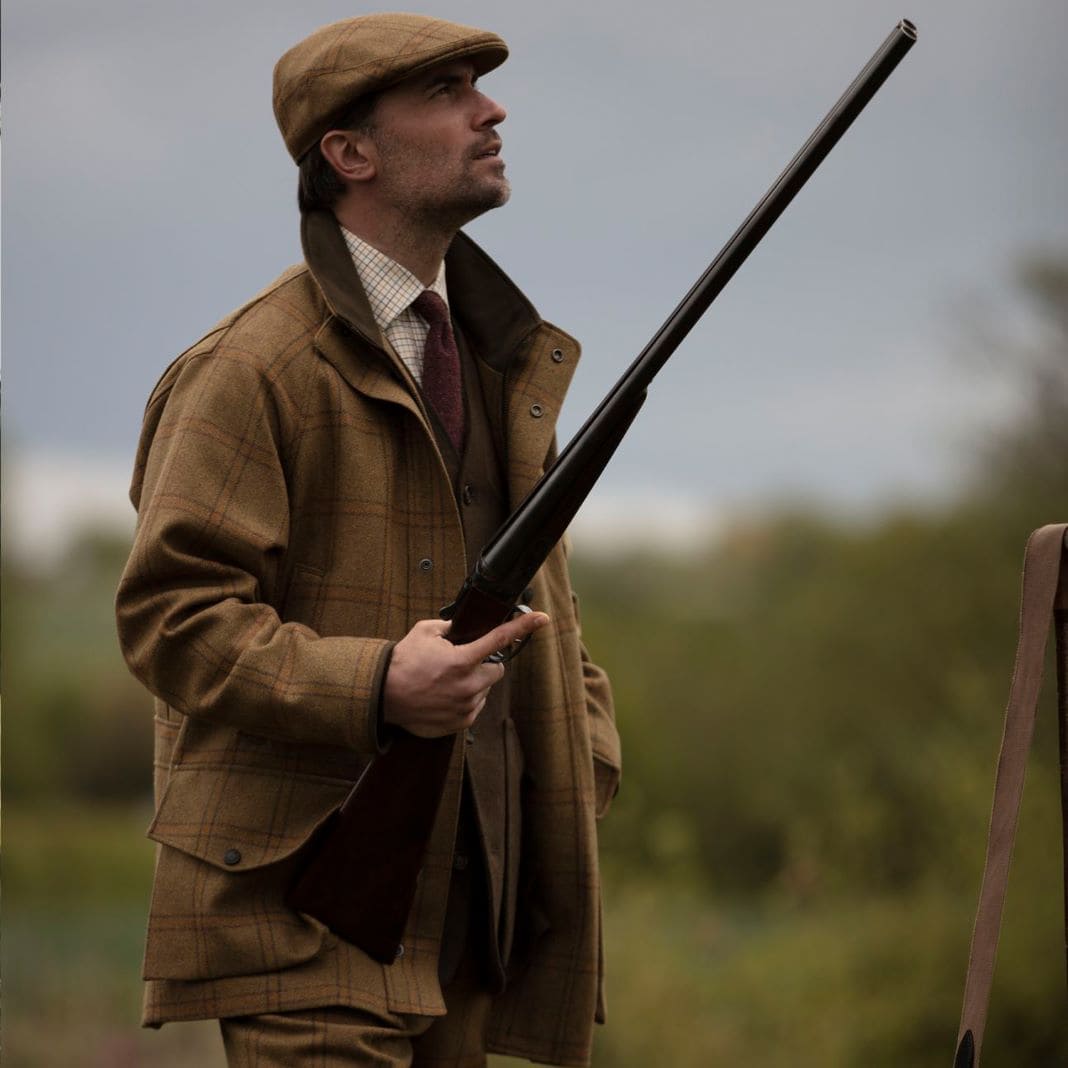
Tweed suits, shooting jackets, breeks and field clothing. Built for the outdoors, fitted to your body, and just as at home in town.
Rated 5 stars on Google from over 150 reviews
Tell us what you're looking for
Replies within a couple of working hours. Prefer to talk? Call 020 7167 3490 or choose one of our five showrooms.
Classic tweed suits
A full tweed suit for the field, the races, country weddings or town wear. Cut for movement as well as looks.
Where tweed works
A tweed suit is one of the most useful things you can own. It works at a winter wedding, a day at the races, a country house weekend, or just worn as separates through the colder months. It is warmer than a worsted suit, tougher wearing, and only gets better with age. A well-made tweed suit will last years and look better every season.
Cloth
We carry tweeds ranging from around 10oz for lighter city-weight wear up to heavier 16oz and beyond for proper outdoor use. The choice depends on where and how you plan to wear it. A lighter tweed in a herringbone or windowpane works well as a town suit or wedding suit. A heavier estate tweed in a country check is built for the field.
We source from mills across the UK and Ireland, including Harris Tweed, Lovat, Porter and Harding, and Johnstons of Elgin. Your tailor will talk you through the weights and weaves and help match the cloth to the job.
Cut and construction
A country tweed suit is not cut the same way as a business suit. The shoulders are a touch wider. The chest has more room. The sleeves allow for layering underneath. The jacket is often slightly longer and the pockets are deeper. We can add action backs, bellows pockets, throat latches and ticket pockets depending on what you need.
If you want the suit to work in town as well as the country, we adjust the cut to sit a bit cleaner. It is all about what you plan to do in it. See our bespoke tailoring for men for how the process runs.
Send us a photo, get a price
Send a picture of any garment and a tailor replies with a price to create it for you.
Or call 020 7167 3490
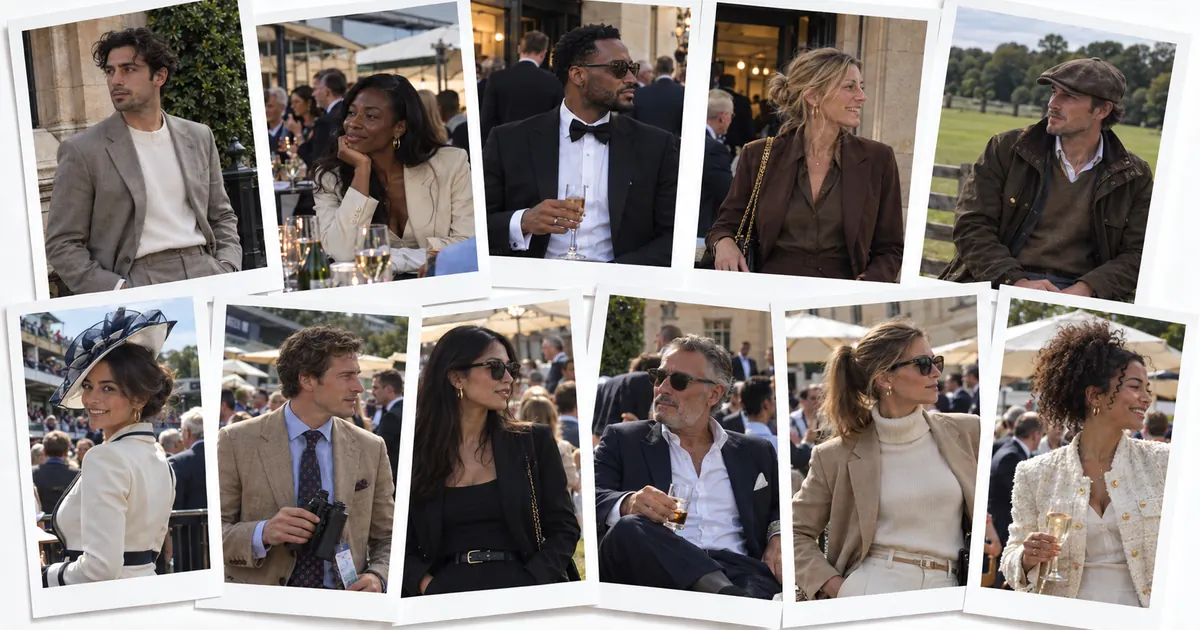
Shooting jackets
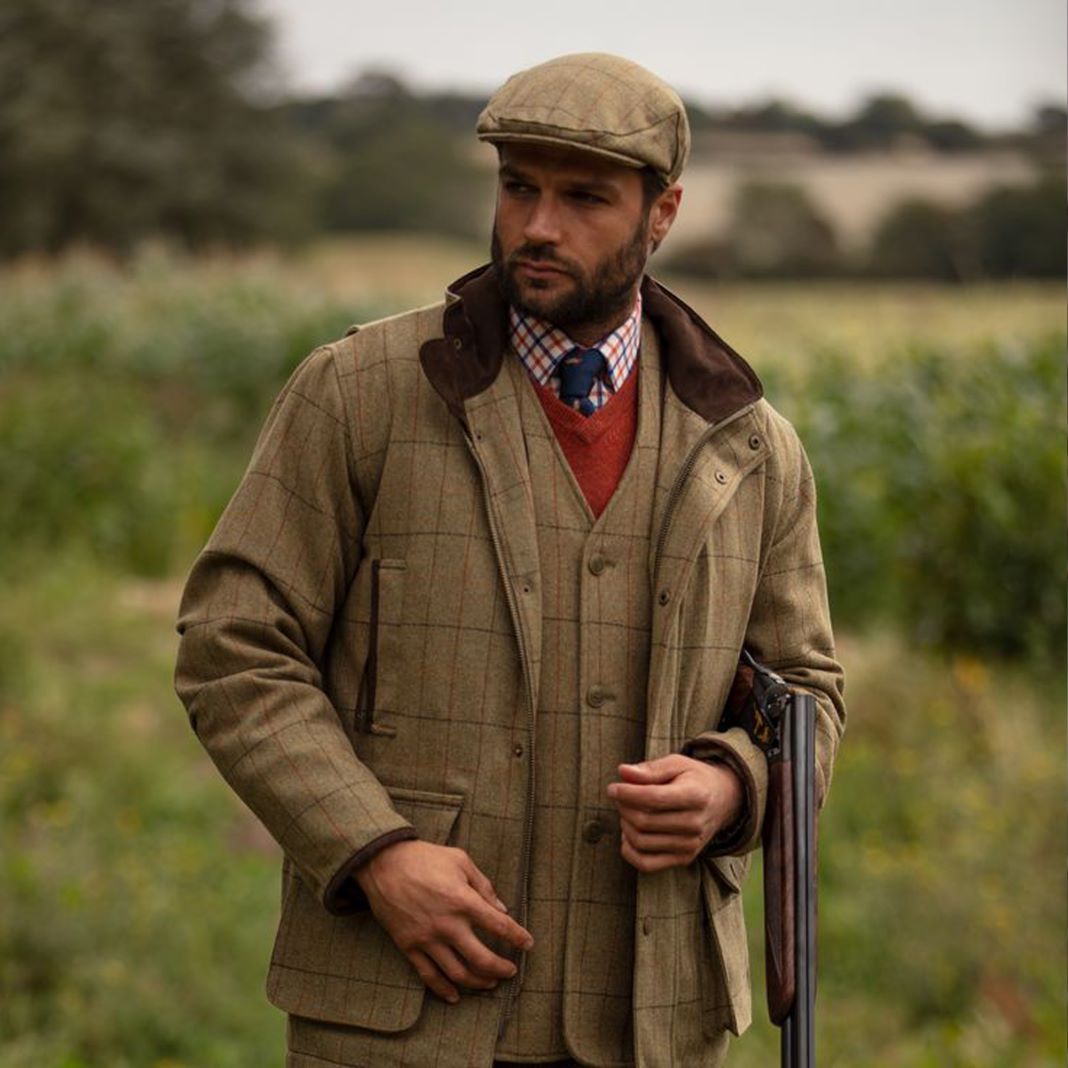
Purpose-built for the field. Action backs, reinforced shoulders, deep pockets and room to move and mount.
What makes a shooting jacket different
A shooting jacket is not just a tweed jacket with a country pattern. It is built around function. The back has an action pleat or bellows to allow full range of movement when you mount a gun. The right shoulder, or the left for left-handed shots, has a reinforced patch to absorb recoil. Pockets are large enough for cartridges, deep enough to stay closed, and placed where your hands fall. The whole thing is cut to sit properly over layers without pulling or riding up.
Cloth and weather
For wet days, we use heavier tweeds that have natural water resistance, or we add a waterproof membrane lining behind the outer cloth. For drier conditions, a mid-weight tweed with a standard lining is plenty. We can also work in moleskin and heavier cotton drills for a different look and feel.
If you shoot regularly, we will talk through what conditions you face most often and set the jacket up for that. One client might need a fully lined, heavier build for driven days in January. Another might want something lighter for walked-up shooting in early autumn. We build for the reality, not the brochure.
Details you can choose
Action back or bellows back. Shoulder patch in suede or self-cloth. Storm cuffs or standard. Throat latch or not. Patch pockets, flap pockets, or a mix. Hand-warmer pockets. Cartridge loops inside. Every detail is set to your shooting style and your preferences. For heavier weather layers worn over the top, see our outerwear for men.
Breeks and trousers
Plus-twos, plus-fours and country trousers. Reinforced where it matters, fitted to how you move.
Why fit matters more here
Breeks and country trousers take more punishment than anything else in your wardrobe. You walk in them, climb in them, kneel in them, and sit in them for hours. A bad fit is not just uncomfortable, it wears the cloth out faster in the wrong places. Bespoke breeks are cut to your waist, seat, thigh and leg length, so the weight of the fabric sits where it should and does not bunch or pull.
Plus-twos and plus-fours
Plus-twos finish just below the knee with a slight overhang. Plus-fours are fuller and fall a few inches further. The choice is mostly one of preference and tradition. Plus-fours give more room for movement and a more classic silhouette. Plus-twos are a bit neater and more common today. Both are worn with long socks and secured below the knee with a buckle or button tab.
Country trousers
If breeks are not your thing, a full-length country trouser in tweed, moleskin or corduroy does the same job. We cut them with a higher rise than a business trouser, more room through the seat and thigh, and a wider leg for comfort over boots. Reinforced knees and seat panels are available for harder use.
Cloth
We match the cloth to the jacket when building a full suit, or we can cut breeks and trousers as stand-alone pieces in any cloth you like. Heavier tweeds for cold weather. Moleskin for a softer hand. Corduroy for something different. Your tailor will guide you. If you would rather start with an adjusted pattern than a fresh one, see our made-to-measure for men.
Questions about country clothing?
Fill in the form and we will get back to you. Tell us what you will be doing in it, whether that is shooting, walking or weekends away.
Ask about tweeds, how it should move when you do, how long it takes or what it costs. If it is easier to talk, leave your number and we will call.
We are in London (Mayfair), Manchester, Zurich and New York. We can also come to you, or start with a video call.
New to country dressing?
The questions we are asked most by men buying country clothes for the first time.
What is the dress code for a driven shoot?
On a formal driven day the convention is a tweed jacket, breeks or country trousers, a checked shirt and a tie, with knee-length shooting socks, sturdy boots or wellingtons, and usually a flat cap. Colours stay muted and natural, because the point of the cloth is to sit quietly against the landscape rather than stand out from it. Ties are expected on the smartest days and optional on many others. Walked-up and rough days are looser: tweed still works, but a shirt without a tie is normal and moleskin or cotton is perfectly acceptable. If in any doubt, ask your host what the day calls for. Nobody minds the question, and every shoot has its own habits.
What is an estate tweed?
An estate tweed is a cloth woven in a pattern tied to one particular Scottish estate. The tradition began in the 1830s, when families taking on Highland estates wanted a way to clothe and identify their keepers and ghillies but had no clan tartan to draw on, so they commissioned checks of their own. Glenfeshie is usually named as the first, around 1835. The colours were chosen from the ground itself, the heather, bracken, stone and birch of that particular place, so the cloth worked as camouflage as well as a uniform. Almost every country check worn today descends from those patterns. Some estate tweeds are still reserved for the estate that owns them, and many others are freely available.
What is the difference between a shooting jacket and a field coat?
A shooting jacket is a tailored jacket, cut roughly to the length of a suit jacket and built to be worn as the main layer. A field coat is longer, looser and worn over the top, usually with a waterproof outer, and is closer to outerwear than tailoring. Many men own both and choose by the day: the jacket for a dry autumn morning or a smart driven day, the coat for January rain. If you are buying one first, the jacket is the more useful and the more versatile, because it also works away from the field.
What is worn with breeks?
Knee-length shooting socks, held up with a garter tied just below the knee. The usual method is to pull the sock up over the bottom of the breek, tie the garter firmly over the join, then fold the top of the sock back down to hide it. Done properly the two meet cleanly and neither slips through the day. Socks are one of the few places where colour is welcome, so a burgundy or mustard against a green tweed is entirely normal. Below that, walking boots on dry ground or wellingtons in wet.
How do I look after tweed, and what if it gets soaked?
Brush it after every wear with a soft clothes brush, working in the direction of the nap. That lifts off mud and dust before either has a chance to settle into the weave, and it does more for the life of the cloth than anything else you can do.
If it gets soaked, hang it on a broad hanger and let it dry at room temperature, well away from a radiator or direct sun. Never tumble dry it. Wool shrinks and turns brittle under direct heat, and a tailored jacket has canvas and padding inside that will pucker if it dries unevenly. Once dry, brush it again and it will come back. Beyond that, dry clean sparingly rather than often, and store it over summer on a wide hanger in a breathable bag with cedar. Our garment care guide goes into more detail.
Do I need to shoot to wear country tailoring?
No. A good deal of what we make in tweed never goes near a field. A tweed jacket worn with flannels or cords is one of the most useful things in a wardrobe from October through to spring, and a country suit is at home at a winter wedding, at the races, or at a weekend in the country. If you want the look without the field detailing, we simply leave the action back and the shoulder patch off and cut it a little cleaner. See our casual wear for how tweed sits alongside the rest of a wardrobe.
How far ahead should I order for the season?
Earlier than you think. In the UK the grouse season opens on 12 August, partridge on 1 September and pheasant on 1 October, and orders bunch up in the weeks before each of those. A country order also has fittings in the middle of it, and those have to suit your diary as well as ours. Leaving a clear run means an adjustment at the fitting stage is a small thing rather than a scramble. If you have a specific date in mind, tell us at the consultation and we will be straight with you about whether it is achievable.
Do you make country wear for women?
Yes. Tweed jackets, breeks, country trousers and full tweed suits are all made for women, cut to a women's pattern rather than adapted from a man's, and in the same cloths. See our bespoke tailoring for women, or mention it when you book and we will set the consultation up accordingly.
How much does country wear cost?
It depends on the garment and, more than anything, on the cloth. A hard-wearing everyday tweed and a fine, rarer estate cloth are two different orders even when the garment is identical, and a shooting jacket with a full waterproof membrane sits differently again from a plain one. Your tailor will go through numbers with you at the consultation, before anything is committed to. Our suit packages set out the options.