Outerwear for men
Overcoats, topcoats, peacoats, raincoats and casual jackets. Cut to your measurements, in cloths chosen for the weather you actually live in.
Rated 5 stars on Google from over 150 reviews
Tell us what you're looking for
Replies within a couple of working hours. Prefer to talk? Call 020 7167 3490 or choose one of our five showrooms.
Overcoats and topcoats
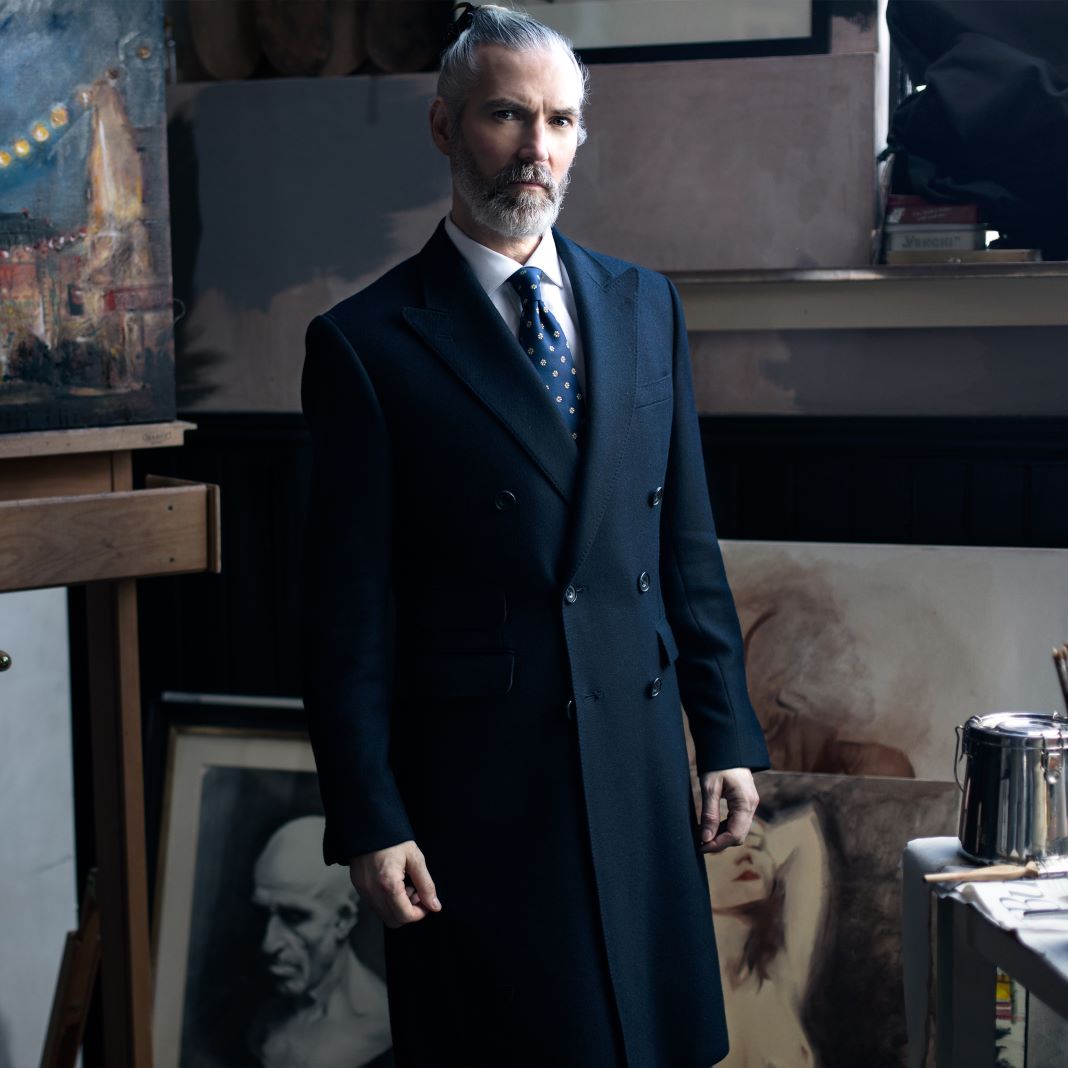
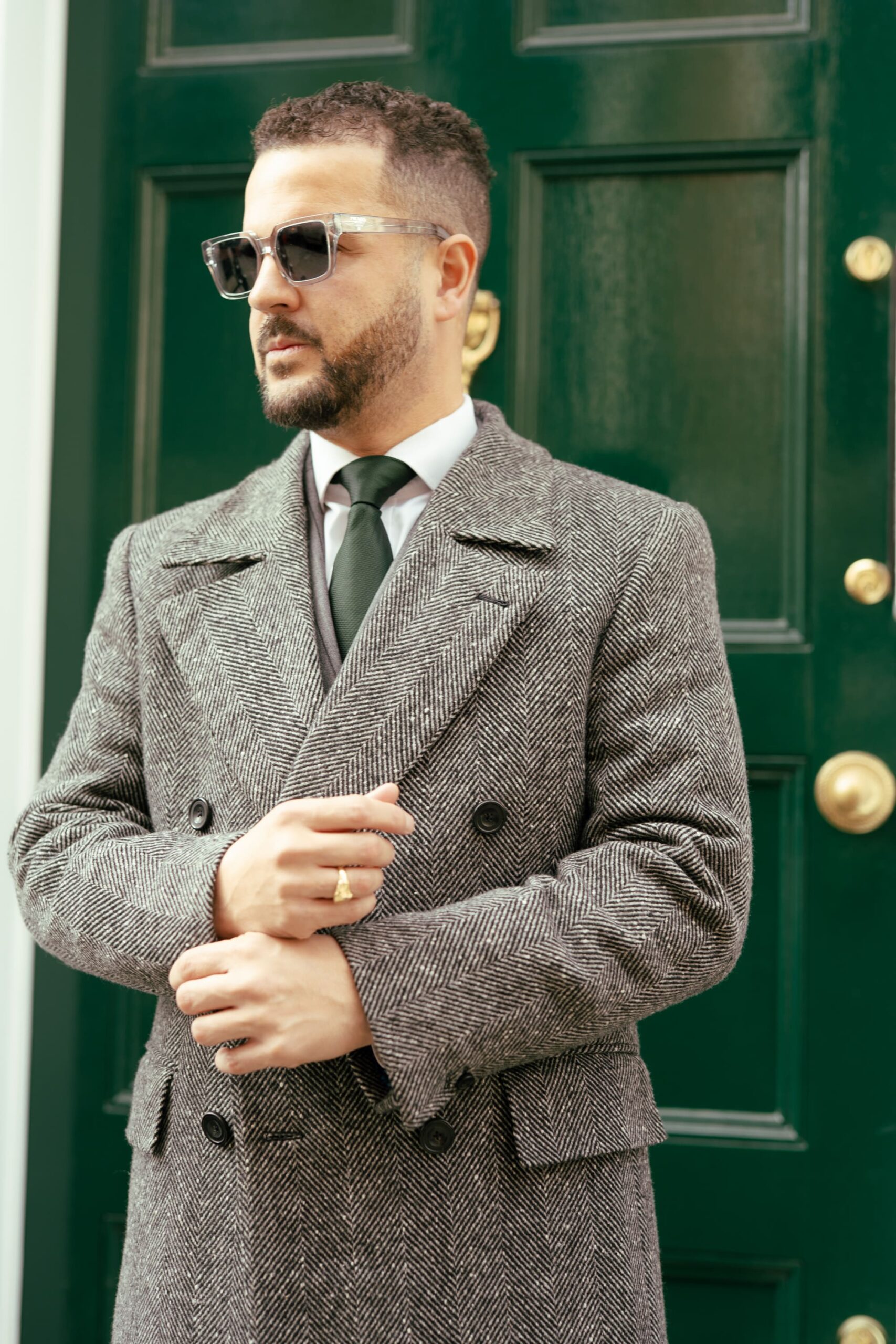
The coat you wear over a suit. Single-breasted or double-breasted, in wool, cashmere, or a blend of both.
What the difference is
A topcoat is lighter in weight and cut a bit slimmer. It sits over a suit without adding bulk and usually finishes at or just above the knee. It works well from autumn through to early spring.
An overcoat is heavier. It uses a thicker cloth with a fuller cut for layering. It goes below the knee and is built for deep winter. If you walk to work or spend time outside in the cold, this is the one.
Cloth
For topcoats, we use mid-weight wools and blends that drape well and keep the weight down. For full overcoats, we use denser wools, pure cashmere, and coatings from Loro Piana and Holland and Sherry. Cashmere is softer and lighter for its warmth. Wool is tougher and holds up better to daily wear. A blend gives you the best of both.
Colour matters here. Navy, charcoal and black are the classic choices for wear over business suits. Camel and grey work well for a more relaxed look or for weekends.
Style choices
Single-breasted is clean and works in most settings. Double-breasted adds warmth and a bolder shape. Peak lapels add form. Notch lapels keep things simple. You also choose the vent (single, double, or none), the pocket style (flap, jetted, or patch), and the lining (full, half, or quarter). A fly front hides the buttons for a sleek finish. Shown buttons are more classic.
Length
We set the length based on your height and what you plan to wear it over. A coat that finishes mid-thigh works as a car coat or a shorter topcoat. At the knee is the most common for business wear. Below the knee is the classic overcoat length and gives the most cover.
Send us a photo, get a price
Send a picture of any garment and a tailor replies with a price to create it for you.
Or call 020 7167 3490

Peacoats and car coats
Shorter, more casual coats for weekends, travel, and days where a full overcoat is too much.
Peacoats
The peacoat is double-breasted with a wide collar and large lapels. It finishes at the hip or just below. It started as naval wear and still has that broad, clean shape. We cut ours in heavy wool or wool-cashmere with a full lining, and they layer well over knitwear, shirts, and casual jackets. It is one of the easiest coats to wear and goes with nearly anything.
Car coats
A car coat is shorter again, finishing around the seat. It is made for driving, travel, and everyday use where a longer coat would get in the way. We build car coats in a range of cloths: wool for warmth, cotton drill for spring and autumn, and technical fabrics for rain. They tend to have a simpler build than an overcoat, with less structure in the shoulder and a more relaxed fit.
Both are good options if you already own a longer overcoat and want something for the days between seasons or for more casual settings.
Raincoats and trench coats
Waterproof and shower-resistant options for the reality of the British climate.
Why bespoke matters for a raincoat
Most off-the-peg raincoats are cut wide and shapeless to fit the largest possible range of bodies. The result is a coat that keeps you dry but makes you look like you are wearing a tent. A bespoke one is cut to your body. It sits clean over a suit without the billow.
Trench coats
The trench is double-breasted with a belt, epaulettes, and storm flaps. It goes below the knee and has been around since the early 1900s. We cut ours in water-resistant cotton or cotton-blend fabrics, fully lined or half-lined depending on the season. Fit is key. It should sit flat on the shoulders. The belt should sit at your natural waist. The sleeves should clear the shirt cuff.
Lighter raincoats
For something less formal, we make single-breasted raincoats in waterproof cotton, Ventile, and technical fabrics. These are lighter, simpler, and easy to throw on over anything. They pack well for travel and handle a London drizzle as well as a full downpour.
Casual jackets
Bomber jackets, field jackets, safari jackets and gilets. Tailored to your frame for a fit you will not find on a rail.
What we make
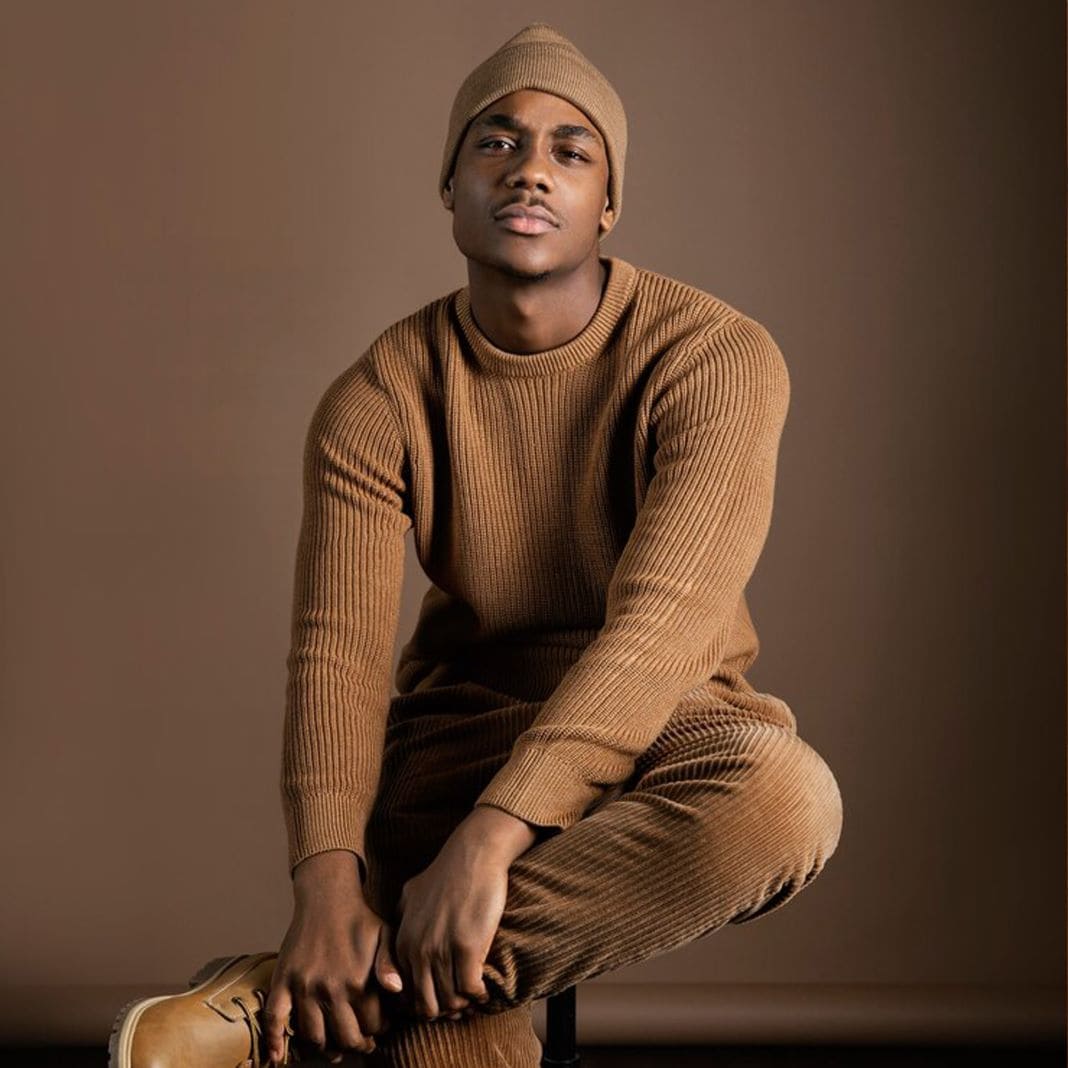
We build bomber jackets, field jackets, safari jackets, gilets, overshirts and unstructured casual blazers. These fill the gap between a coat and a shirt. Good for weekends, travel, nights out, and offices where a suit is too much but looking sharp still matters.
Cloth and weight
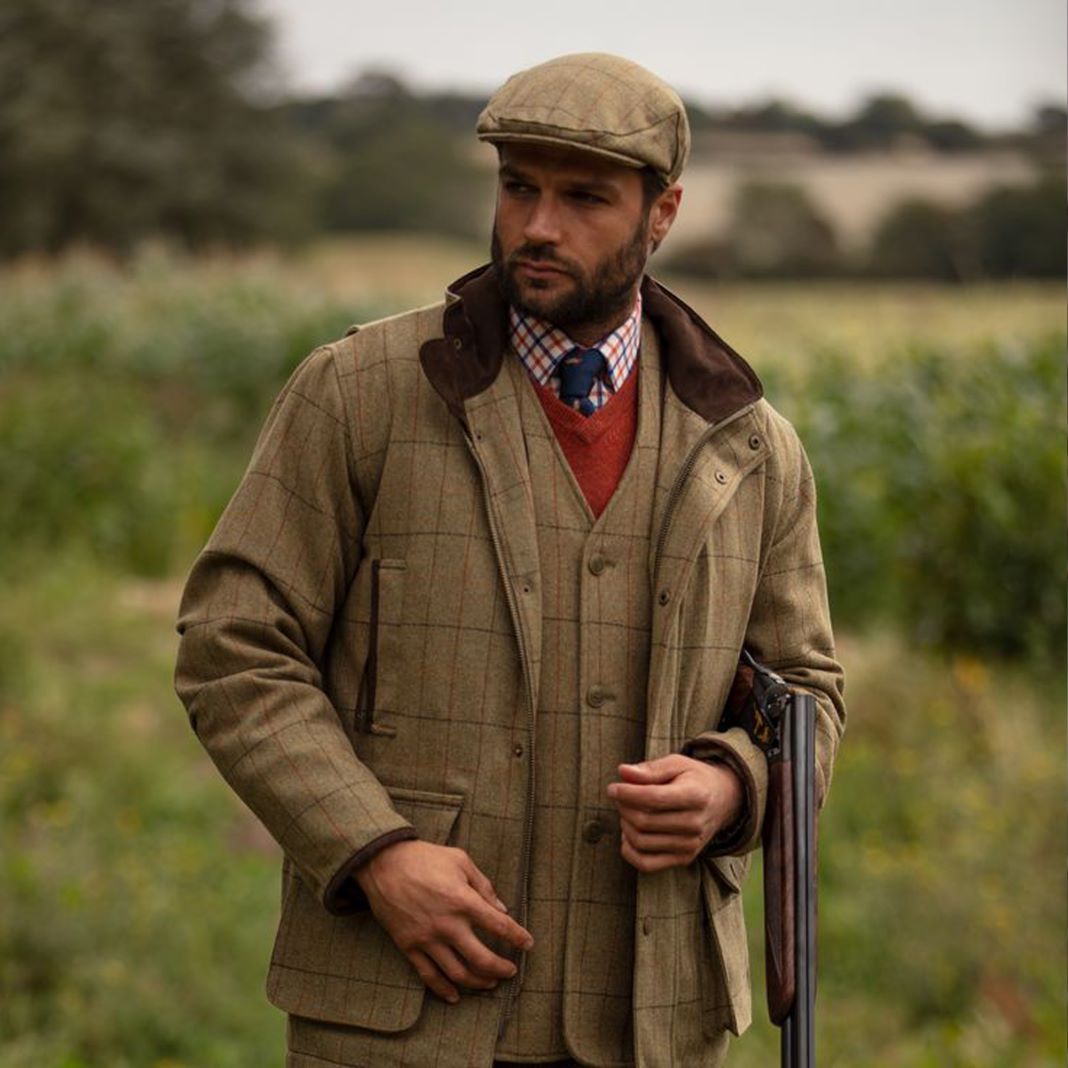
For bombers, we work in suede, leather, wool, and technical fabrics. Field jackets and safari jackets are usually built in cotton drill, moleskin, or lightweight wool. Gilets come in wool, quilted cotton, or tweed. Weight and cloth depend on the season and how you will use it. Your tailor will help match the build to the job.
Fit
Casual jackets should fit closer than a coat but leave room for a shirt or jumper underneath. We cut them to sit flat across the back and shoulders without pulling at the chest or riding up at the hem. The fit is what makes the difference between looking sharp and looking sloppy.
Questions about coats?
Fill in the form and we will get back to you. Tell us where you will be wearing it and what your current coat gets wrong.
Ask about cloths that handle the weather, how a coat should sit over a suit, how long it takes or what it costs. If it is easier to talk, leave your number and we will call.
We are in London (Mayfair), Manchester, Zurich and New York. We can also come to you, or start with a video call.

New to tailored outerwear?
The questions we are asked most by men ordering their first coat.
How should a coat fit over a suit jacket?
Start at the shoulder. A coat's shoulder seam has to sit slightly wider than your jacket's, because it is carrying the jacket underneath it. Then fasten the front and check you can still slide a flat hand inside without the cloth straining across the chest. The coat sleeve should cover both the jacket sleeve and the shirt cuff, and the hem should finish below the jacket rather than level with it. If a coat fits beautifully over a shirt but pulls the moment you put a jacket on, it was measured on the wrong version of you.
What is the difference between waterproof, water-resistant and shower-resistant?
Water-resistant and shower-resistant mean the same thing in practice. The cloth carries a repellent finish so rain beads and rolls off, which is enough for a shower or a walk from the car to the door. Waterproof is a higher standard: as well as a coating or a membrane, the seams are sealed so water cannot creep through the stitching, and the fabric is usually given a rating for the conditions it will handle. A tailored coat in a treated cotton will keep a British drizzle off you very comfortably. Standing in a downpour for an hour is a job for a technical shell.
What cloth weight do I need for a British winter?
Cloth weight is measured in grams per square metre. As a rough guide, anything under about 350g is jacket weight rather than coat weight. Coating cloths tend to start around 400g, a proper winter overcoat sits comfortably from about 500g upward, and the heaviest coatings run past 600g. For most British winters you do not need the top of that range, especially if you are mainly moving between buildings. Weight is not the whole story either. The weave, the lining and how the coat is built all change how warm it actually feels.
What is the difference between a raglan and a set-in sleeve?
A set-in sleeve joins the body at a seam running round the shoulder, the same way a suit jacket does. It gives a defined shoulder line and sits neatly over tailoring. A raglan sleeve runs in one piece from the collar down to the underarm, with no shoulder seam at all. It gives a softer, rounder shoulder and noticeably more room to move, which is why it turns up so often on raincoats and casual coats. If the coat is mainly going over suits, set-in usually looks sharper. If it is going over knitwear and you want to move in it, raglan is worth a look.
Can you work from a coat I already own, or a picture?
Bring it in. If there is a coat whose shape you love, or a picture of one, that is far more useful than trying to describe it from memory. Your tailor can look at how it is cut, work out what is doing the work and what is letting it down, and talk through what can carry over into a coat made for you. You will get a straight answer about which parts are achievable in the cloth and the budget you have in mind.
How do I look after a wool or cashmere coat?
Three habits do most of the work. Hang it on a wide wooden hanger so the shoulders hold their shape, because the thin wire one the cleaner sends it home on will deform them inside a season. Brush it with a soft clothes brush after wearing, which lifts the surface dirt and means it needs cleaning far less often. And resist over-cleaning it. Once or twice a season is plenty, because dry cleaning strips the natural oils out of the wool. If it gets soaked, let it dry naturally and keep it away from the radiator. Our garment care guide goes into more detail.
Do you make outerwear for women?
Yes. The same service runs for women, across coats, jackets and lighter outerwear. See our women's coats and outerwear.
How much does a tailored coat cost?
It depends on the garment and the cloth, so there is no single figure. A short car coat in cotton drill and a full-length overcoat in pure cashmere are two very different orders, and the construction inside the coat moves the number as much as the cloth on the outside. Your tailor will go through the numbers with you at the consultation, before anything is committed to. Our suit packages set out the options.