What should you wear to an autumn wedding as a guest?
Start with the dress code, venue and time of day, then choose richer colours, cloth with enough weight, and layers that suit the outfit. We look for a guest outfit that feels correct first, seasonal second, and useful beyond one wedding.
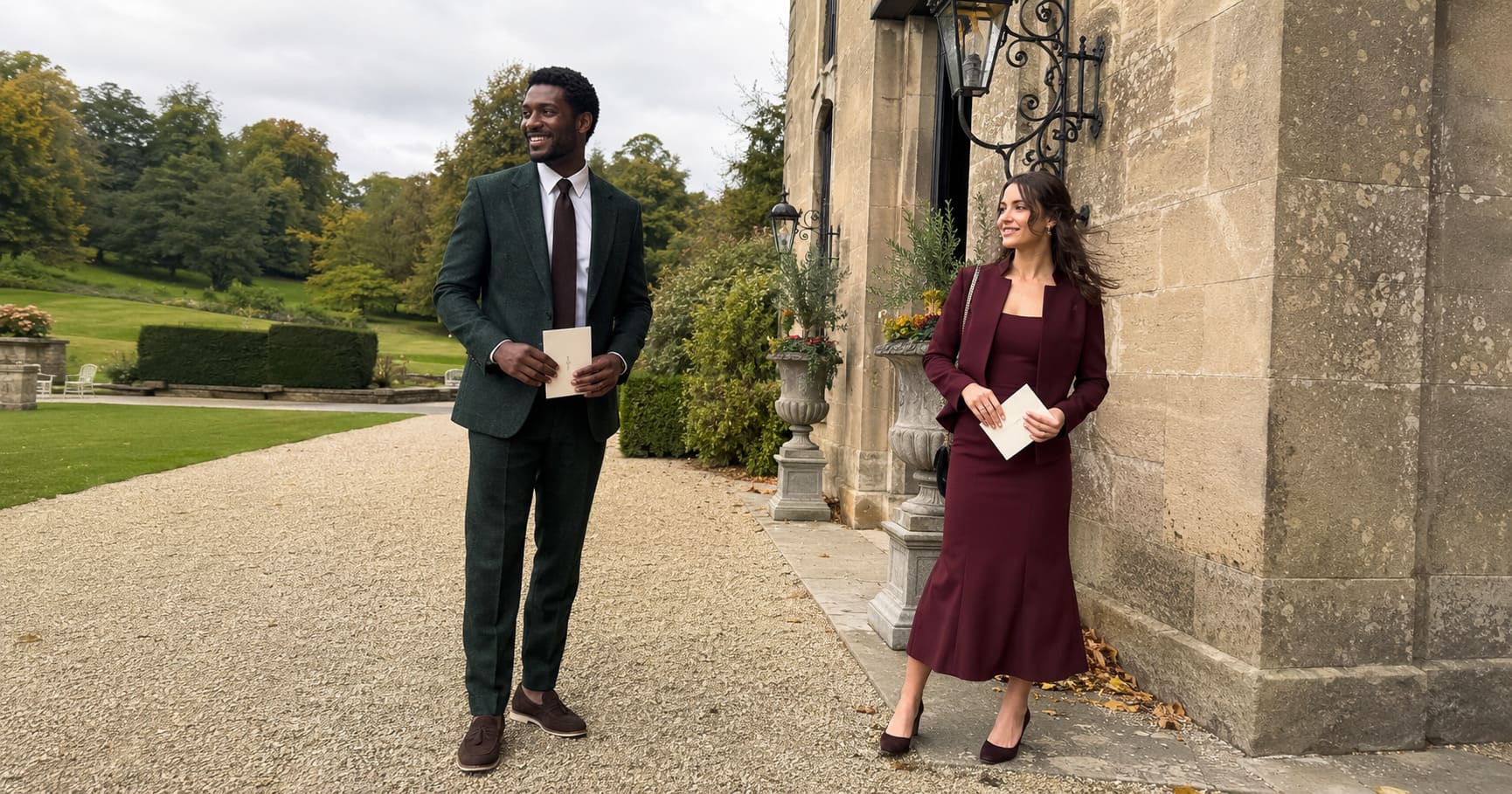
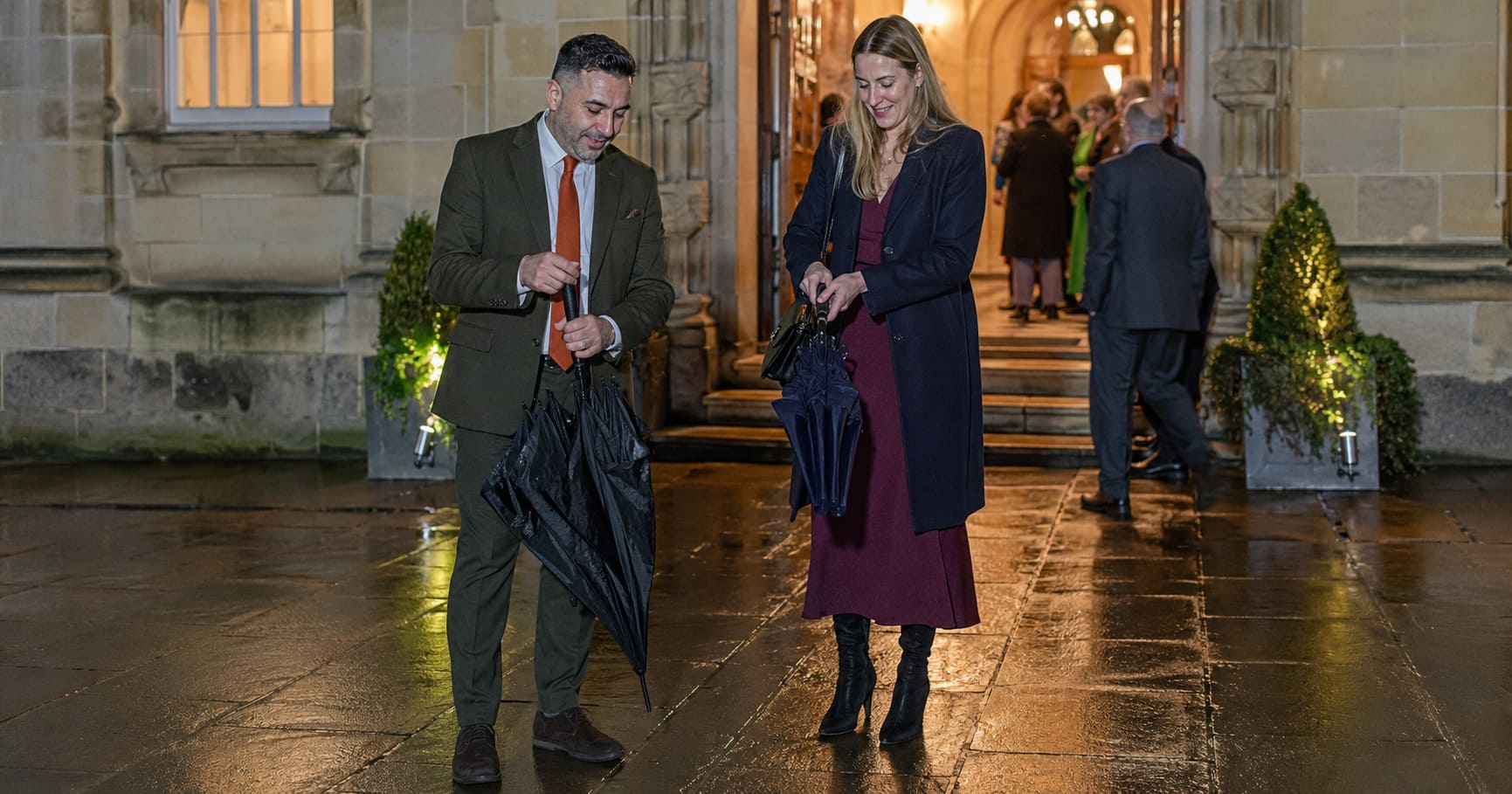
Man wearing dark suit and woman wearing burgundy tailoring stand outside grand country house.
What Is In This Article
Start with the invitation, not the season
Starting with colour is the common mistake. We start with the invitation, because an autumn wedding dress code decides the level of formality before burgundy, velvet, tweed or any other seasonal idea earns its place.
Black tie, morning dress and lounge suit mean different things in UK wedding guest attire. Debrett’s describes black tie as formal evening wear, with the men’s version built around a dinner jacket, black trousers, evening shirt, black bow tie and polished or patent black shoes. Morning dress is formal day dress and should not be specified for an event starting after 6pm. Lounge suit sits at a different level again, with Debrett’s calling it the smartest informal dress code.
For your own outfit, the useful order is simple:
- Read the dress code first, including any wording about black tie, formal, semi-formal, lounge suit or smart casual.
- Judge the venue and time of day, since a city hotel evening reception asks for a different tone from a country ceremony in daylight.
- Account for autumn weather, especially outdoor photographs, church settings or time spent on lawns.
- Choose colour depth, moving richer or softer according to the formality.
- Pick fabric by how it sits, warms and moves.
- Finish with shoes, outerwear and accessories that match the level of dress.
Suits, dresses, jackets, separates and occasionwear can all work well when the line, cloth and finish match the invitation. Autumn style refines the dress code; it does not replace it.
Choose autumn colours with depth and contrast
Two navy outfits can tell very different stories. A clean navy suit in fine wool with a pale shirt can look sharp enough for a formal autumn wedding, while the same navy in a flat, heavy texture with casual shoes can feel too relaxed.
Autumn wedding colours work best when we think about depth and contrast. Burgundy, forest green, charcoal, chocolate, plum, rust and navy are useful options, but none of them is a rule. A deep shade usually reads more formal than a bright one, and a little contrast around the face keeps the look alive in photographs. Low contrast can be softer and quieter, which suits some guests and venues beautifully, but it needs good fabric to avoid looking dull.
Black deserves calm judgement. Black can be right in the correct evening context, and Debrett’s is clear that black tie for women does not have to mean a black dress. A cocktail dress just below the knee can also work for black tie if the fabric suits evening wear, such as silk, crepe or chiffon. The point is that black alone does not create formality; cut, cloth and styling carry the work.
Here is the simple way we compare autumn colour families with clients who want polish without looking themed.
| Colour family | Best use | Watch the balance |
|---|---|---|
| Navy and charcoal | Formal, semi-formal and lounge suit settings where you want restraint | Use a fine wool or smooth crepe so the outfit feels crisp rather than flat |
| Burgundy, plum and forest green | Autumn colour without shouting, especially in evening or softer venue light | Keep accessories restrained so the colour remains refined |
| Chocolate and rust | Country houses, textured interiors and relaxed formal settings | Pair with cloth that has structure, since these shades can look casual in the wrong fabric |
| Black | Evening wear, black tie and polished cocktail dressing | Let the fabric and cut carry the formality, because black is not a dress code by itself |
Fielding & Nicholson often approach colour by asking where the garment will live after the wedding. A plum jacket, charcoal trouser, navy dress or dark green suit has more value when it can return for dinners, work events or other formal moments. Seasonal colour should feel like good judgement, not evidence that the calendar dressed you.
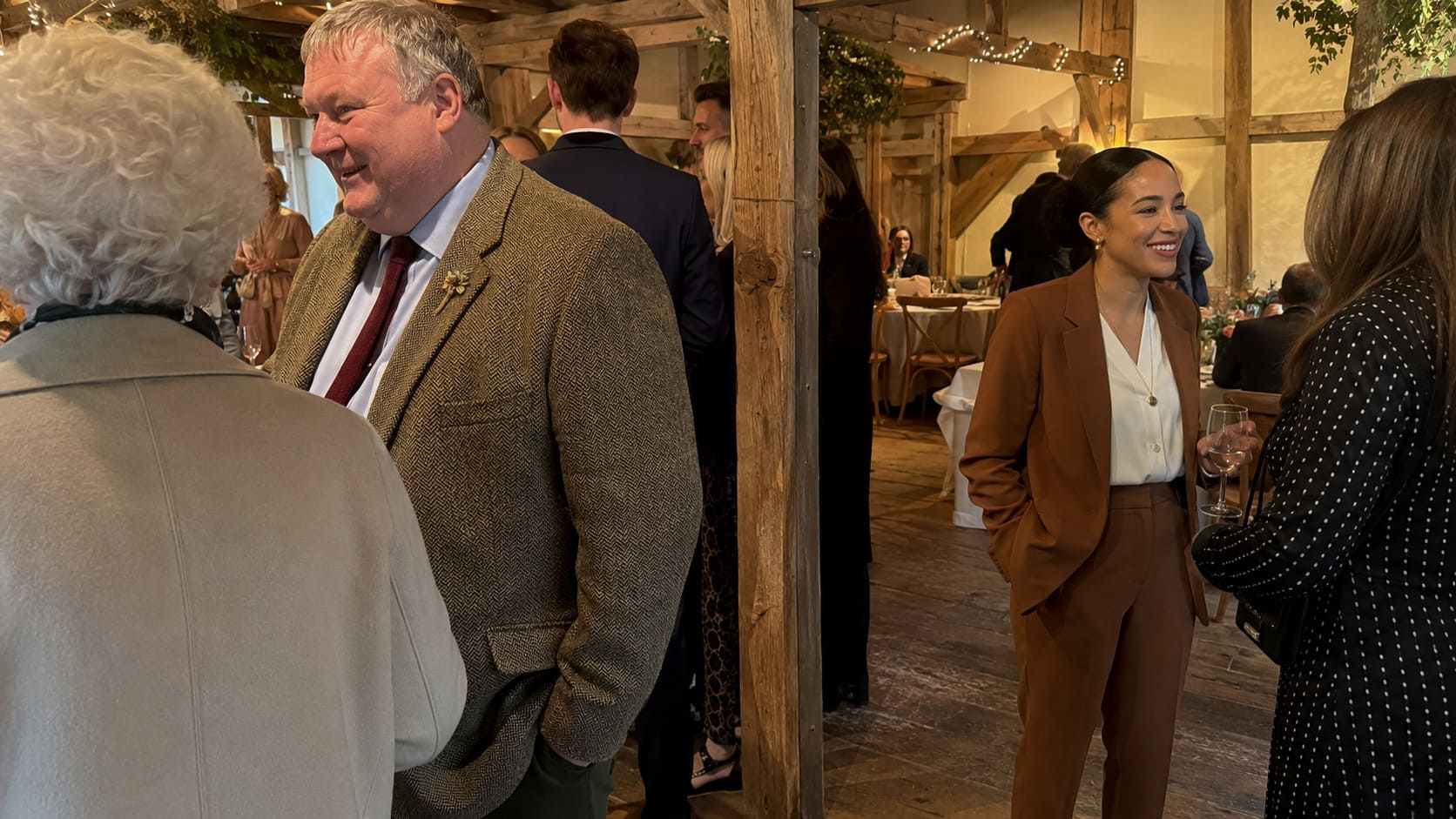
Men wearing brown and camel tailoring compare autumn fabrics inside a bespoke clothing studio.
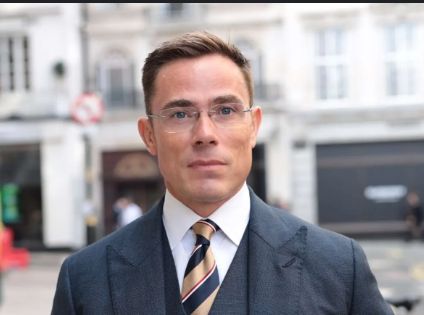
Pro Tip: If the invitation gives a formal dress code, choose cloth with enough structure to hold its shape indoors and outdoors. A fabric that looks elegant in the ceremony can fail later if it creases or droops easily.
Pick fabrics that handle warmth, rain and formality
A navy outfit changes completely when the cloth changes. Smooth worsted wool gives a suit or dress a clean formal surface, heavy tweed makes the same colour feel rural and textured, and velvet pushes it into evening richness.
Fabric matters more in autumn because you are dressing for movement between cool air, indoor warmth and possibly damp ground. Wool earns its place here because it is breathable as well as warm. The Woolmark Company says wool can absorb up to 35% of its weight before feeling wet and clinging to the skin, which is one reason it performs so well in changeable conditions.
Match cloth weight to the day
Cloth weight is one of the quiet decisions people notice without knowing why. Too light, and the garment can look borrowed from summer. Too heavy, and it can feel stiff once you are seated indoors for the meal.
For many autumn wedding guest outfits, we look for enough body in the cloth to hold a clean shape. Flannel gives softness and warmth, especially in trousers or relaxed suiting. Barathea suits evening wear because its surface feels formal and controlled. Crepe and silk can drape beautifully in dresses, jumpsuits or separates, provided the cut has enough structure for the dress code.
Moleskin and tweed have a stronger country note. We like them when the venue, invitation and cut support that texture. A tweed jacket can look considered at a rural wedding, yet the same cloth can feel too informal in a black tie room.
Use texture without losing formality
Texture is where autumn clothing can go wrong quickly. Velvet, tweed, brushed wool and flannel all bring depth, but each one changes the mood of the outfit. Velvet works best when the occasion has enough evening formality to support its richness. In a casual daytime setting, a full velvet look can feel too theatrical.
At Fielding & Nicholson, cloth selection is rarely about choosing the most seasonal fabric in the room. We look at how the fabric hangs from the shoulder, how it behaves when you sit, and how it works with the pieces you already own. That is where bespoke tailoring earns its place for occasion wear: the garment is made for the wedding, but it is not trapped there.
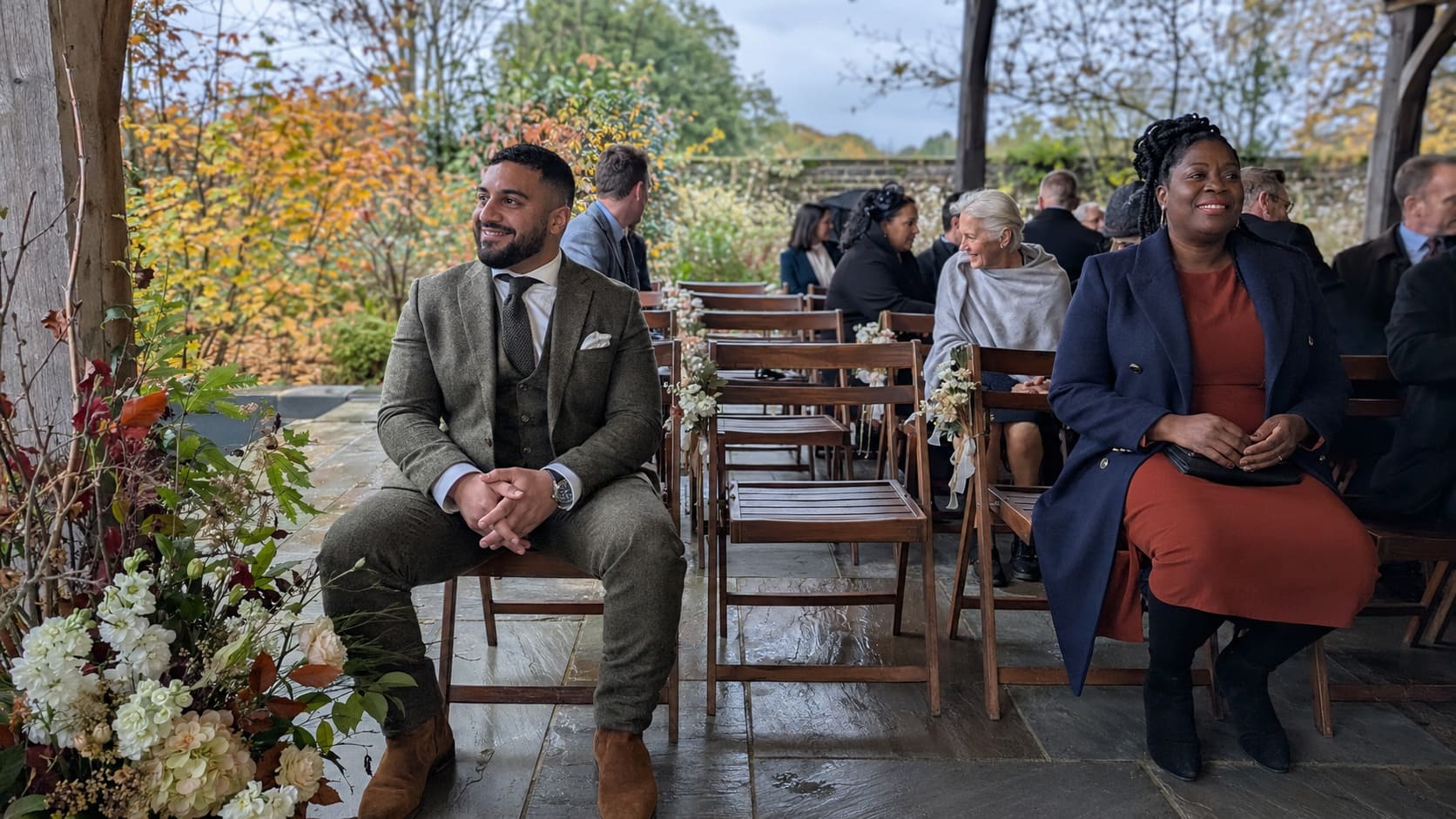
Guests wearing layered autumn tailoring sit outdoors together during a relaxed seasonal social event.
Layer for the setting without looking bulky
When the ceremony moves outside or photographs happen on damp grass, the outer layer suddenly becomes part of the outfit. Intentional layering looks composed; last-minute warmth looks like the coat was grabbed from the hallway on the way out.
UK autumn is not a single weather pattern. Met Office averages for 1991 to 2020 show the UK average maximum temperature falling from 16.85°C in September to 9.41°C in November, with average rainfall rising from 90.88 mm to 123.34 mm across the same period. That does not tell you the weather on the day, but it explains why an autumn wedding guest coat or jacket needs thought.
An overcoat is often cleaner than a bulky padded coat because the length and shoulder line sit with formal clothing. A waistcoat can add warmth without adding bulk at the arms. For dresses and separates, a structured jacket, refined wrap or coat in a related tone usually looks calmer than a practical layer in a clashing fabric.
Shoes need the same restraint. Polished shoes, closed-toe shoes and refined boots can all work, depending on the venue and dress code. Trainers and heavy casual boots pull even a good outfit down, especially near formal tailoring or evening fabrics. If the ground is likely to be wet, choose footwear that still belongs with the outfit rather than treating it as a separate problem.
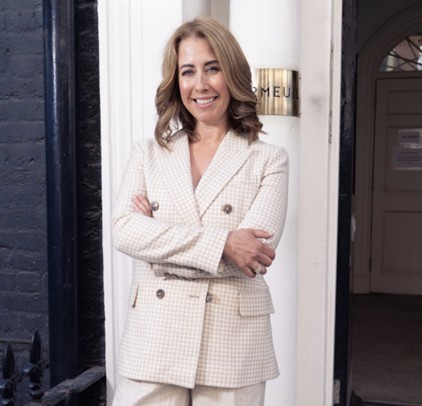
Pro Tip: When you are choosing autumn colour, check it against the venue light as well as the shade itself. Burgundy, navy and forest green can read very differently in a country house, a hotel ballroom or a church interior.
Avoid the mistakes that make autumn outfits look wrong
Good autumn wedding dressing rarely fails through one dramatic error. Most of the time, the outfit is slightly too summery, too heavy, too casual or too themed. A pale linen suit can look thin under autumn light, a heavy country jacket can feel wrong in a formal room, and an outfit built around every autumn shade at once starts to look like scenery.
White still needs care at weddings, especially in dresses and pale occasionwear. The issue is guest appropriateness, so we steer clients toward colour and texture that support the event without drawing attention from it. Very light, holiday-like linen is usually a poor match for many autumn wedding settings.
Fit also decides whether the outfit feels intentional. A jacket that pulls, trousers with the wrong break, sleeves that swallow the wrist or a dress that needs constant adjusting will be noticed before anyone appreciates the cloth. Professional alterations can rescue many good garments, and bespoke tailoring goes further by setting the balance from the start.
The useful question is no longer whether burgundy, velvet or tweed is allowed. You can now check the whole outfit in one pass: does it match the invitation, suit the venue, carry the right colour depth, use cloth that behaves well, and keep its line once the coat goes on? Once you can answer that, the decision feels much less like guesswork and much more like a wardrobe choice you can stand behind.
Women wearing navy, burgundy and mustard tailoring attend a colourful autumn city event together.
Questions we get asked about autumn wedding guest outfits
Can you wear black to an autumn wedding?
Yes, black can work for an autumn wedding, especially in an evening or black tie setting. The outfit still needs the right fabric, cut and styling, because black on its own does not make clothing formal.
Is tweed suitable for a wedding guest outfit?
Tweed can be suitable for a country or textured autumn setting when the cut is refined and the dress code allows it. It is less suited to strict evening formality, where smoother cloths usually look more correct.
What colours look best for an autumn wedding guest suit?
Navy, charcoal, deep green, burgundy, plum and chocolate can all work well. We choose between them by looking at the dress code, venue, skin tone and whether the garment needs to serve your wider wardrobe.
Do you need a coat for an autumn wedding?
A coat is wise if any part of the day is outdoors, especially for photographs or travel between venues. A proper overcoat, structured jacket or refined wrap keeps the outfit formal while adding warmth.
Can autumn wedding guest outfits be made for women and non-binary clients too?
Yes, bespoke occasion wear can include suits, dresses, jackets, trousers, shirts and separates across menswear, womenswear and non-binary tailoring. The same principles apply: fit, cloth, colour depth and formality need to work together.
How much to give as a wedding gift in the UK
Once the outfit is sorted, the other question every guest has is the envelope. Here is a straightforward guide to how much to give as a wedding gift in the UK