Does hiring or owning make better financial sense for your event?
Hiring makes most sense for a genuine one-off, especially morning dress or a matching wedding party outfit. Buying makes sense when the suit has a clear future in your wardrobe. The honest test is cost per wear, plus whether the dress code calls for a garment you will use again.
Most people start with the visible price. That is understandable, because hire gives you a smaller first payment and solves an immediate problem quickly. Yet a wedding or black tie event also leaves you with photographs, a long day in the garment and the question of whether the same need will come back.
We treat the decision as a practical comparison. The answer changes when the invitation says black tie, morning dress or lounge suit, and it changes again when you are dressing a whole wedding party. Good maths starts with the second wear, then fit and dress code decide whether ownership has real value.
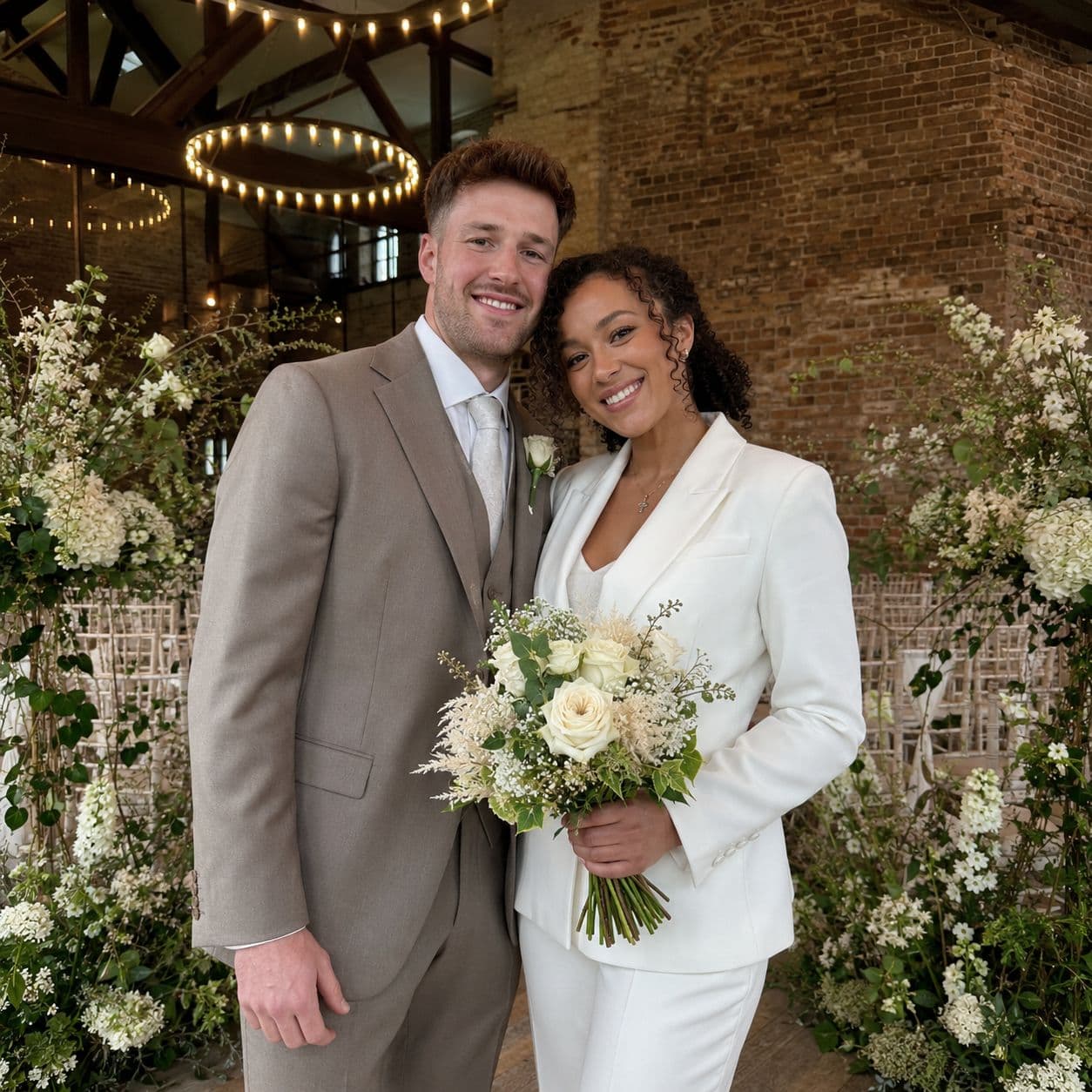
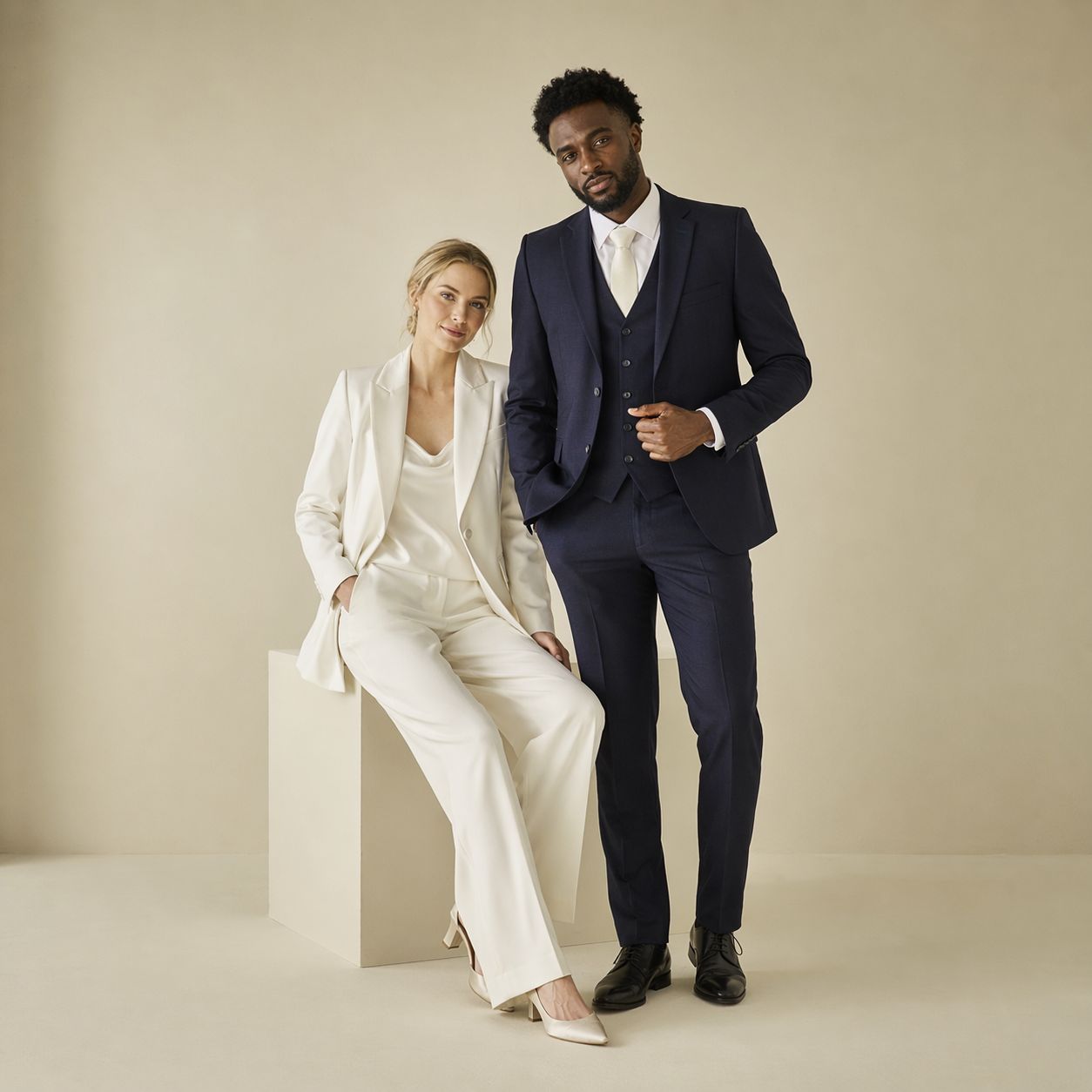
A photo of a newly married couple both wearing wedding suits - Illustrative Image
Hire versus buy starts with the second wear
Cost per wear is the clearest calculation: divide the cost of the garment by the number of times you will realistically wear it. A £1,600 made to measure suit worn once is a very different decision from the same suit worn across weddings, dinners and formal work events over several years.
When clients ask us at Fielding & Nicholson whether to hire or buy a suit, we start with how often the garment will honestly come out of the wardrobe. Buying earns its keep through repeated use, not through the pleasure of paying more on day one. A hire package can be the right answer where the outfit has no clear second outing.
The table below compares hire, off-the-peg purchase, made to measure and fully bespoke by their best financial use.
| Option | Best financial use |
|---|---|
| Hire | A one-off outfit, matching group wear, or a dress code with no clear repeat use |
| Off-the-peg purchase | A quick buy where standard sizing works well enough |
| Made to measure | Repeat wear where better fit and a shorter tailoring timeline matter |
| Fully bespoke | Long-term formalwear where cut, cloth and repeated use carry the value |
Off-the-peg works when the standard size is close enough and time is short. Made to measure moves the decision up a level: our Icon Collection starts from £1,600, is cut from your measurements, has a half canvas chest piece, is made in Portugal and carries a five year guarantee.
Fully bespoke sits in a different category. Our Gallery Collection starts from £2,500, uses a full canvas chest piece from shoulder to hem, includes up to three fittings and involves over 75 hours of hand detailing in a two-piece garment. That figure only makes financial sense when you are buying for repeated use, better fit and long-term wardrobe value.
Dress code changes the calculation
The invitation decides the garment before the budget does. A lounge suit, dinner suit and morning suit answer different dress-code questions, so the first saving is avoiding the wrong purchase or hire.
Black tie is evening formalwear
Black tie means formal evening wear. Debrett’s describes it as a black dinner jacket, black trousers with braid, a white evening shirt, a black hand-tied bow tie and black polished or patent lace-up shoes.
Some readers search for a tuxedo, which is the American word many people use for a dinner suit. In UK terms, dinner suit and black tie are the more precise phrases. If you expect to attend several evening weddings, galas or formal dinners, owning a dinner suit can make sense because the dress code is likely to repeat.
Morning dress belongs to formal daytime weddings
Morning dress is formal day dress and remains traditional for weddings and formal daytime events. Debrett’s guidance also says morning dress should not be specified for events starting after 18:00.
For many people, morning dress is the strongest hire candidate. A morning coat, striped trousers and waistcoat may be exactly right for one wedding and then sit unused for years. If a daytime wedding invitation says black tie, ask the couple or host whether they mean true black tie all day or black tie for the evening reception.
Lounge suits cover a different level of formality
A lounge suit is the familiar suit shape most people already understand: jacket and trousers, with a shirt and tie or an open-neck shirt depending on the invitation. For many wedding guests, a well-cut lounge suit has the broadest future use because it can move into work, dinners and other formal events.
Women, non-binary clients and anyone choosing a bridal suit or formal separates should use the same dress-code logic. The question is still what the invitation asks for, how the outfit will be worn on the day and whether it earns a place in the wardrobe afterwards.
Pro Tip: Keep the hire quote in writing with every included item listed, then compare it with the replacement cost of a shirt, bow tie and cufflinks if any part goes missing.
The quoted hire price is only part of the cash commitment
You may see a low hire price and compare it straight against buying. The hire price is one part of the cash commitment, not the whole comparison. Before you decide, look at the package, the return terms and the money held against the outfit.
Check these points before comparing wedding suit hire cost with buying:
- You need to know what the package includes.
- A shirt, bow tie, cummerbund or waistcoat may be included, or it may sit outside the main price.
- A security deposit can mean you need more money available than the headline hire price suggests.
- Damage assurance can add a smaller extra charge.
- The return window matters if the event involves travel or a late finish.
- Fit expectations should be realistic because hire starts from available standard sizes.
One checked UK hire example starts adult weekend hire from £69.95, adds £9.95 for Peace of Mind Assurance and requires a £450 security deposit against each outfit hired. Those numbers do not make hire poor value. They show why the available cash and the final cost are separate things.
A black tie hire package can also include more than a jacket and trousers. One checked package includes the dinner suit, shirt, bow tie and matching cummerbund, with a waistcoat available for an extra £5. Compare that with the full cost of buying every item you need, because a half comparison will mislead you.
Fit carries value beyond the receipt
A formal event tests fit over hours, not minutes. You sit, stand, raise a glass, move through photographs and keep the jacket on longer than you would in a fitting room.
Hire starts from standard sizing and available stock. A good hire outfit can look perfectly respectable, especially for a short one-off event. The trade-off is that the garment was made for a size range, so the shoulder line, collar and sleeve pitch may be close rather than exact.
Made to measure uses an existing base pattern adjusted to your measurements, and one fitting is standard. Fully bespoke uses a pattern drawn from scratch for you, with a try-on garment and up to three fittings. That is why, at Fielding & Nicholson, we separate made to measure from fully bespoke as materially different products.
The value shows in small, practical ways. A jacket collar should stay against your neck when you turn. The shoulder should sit still when you move your arm. Room through the back should let you move without the chest collapsing. Fit belongs in the maths because a garment you keep wearing has to work beyond the first photograph.
Pro Tip: Try the full outfit at home with the shoes you plan to wear, then sit, reach and turn in front of a mirror before you commit.
Wedding parties often need a split answer
A wedding party decision rarely belongs to one wardrobe. The groom, bride or key wearer may want a garment with a future, while attendants may need a consistent look for one day. Group dress brings etiquette, budget and practicality into the same conversation.
If a specific outfit is required for groomsmen or a wider party, payment becomes a budget choice rather than a fixed rule. Some couples cover the required look; other parties agree a shared approach. The cleanest plan is the one that respects the people wearing the clothes and the role each outfit plays after the wedding.
Buying the key outfit and hiring the matching group pieces is often the cleaner choice, not a compromise. A groom might buy a dinner suit for future black tie events while the party hires matching outfits. A bride might commission a bridal suit with long-term value while attendants hire formalwear chosen for consistency on the day.
One common approach makes everyone buy the same outfit for a single use. Another puts ownership where the garment has a future and uses hire where uniformity matters most. The second approach usually gives better long-term value because each pound follows the life of the garment.
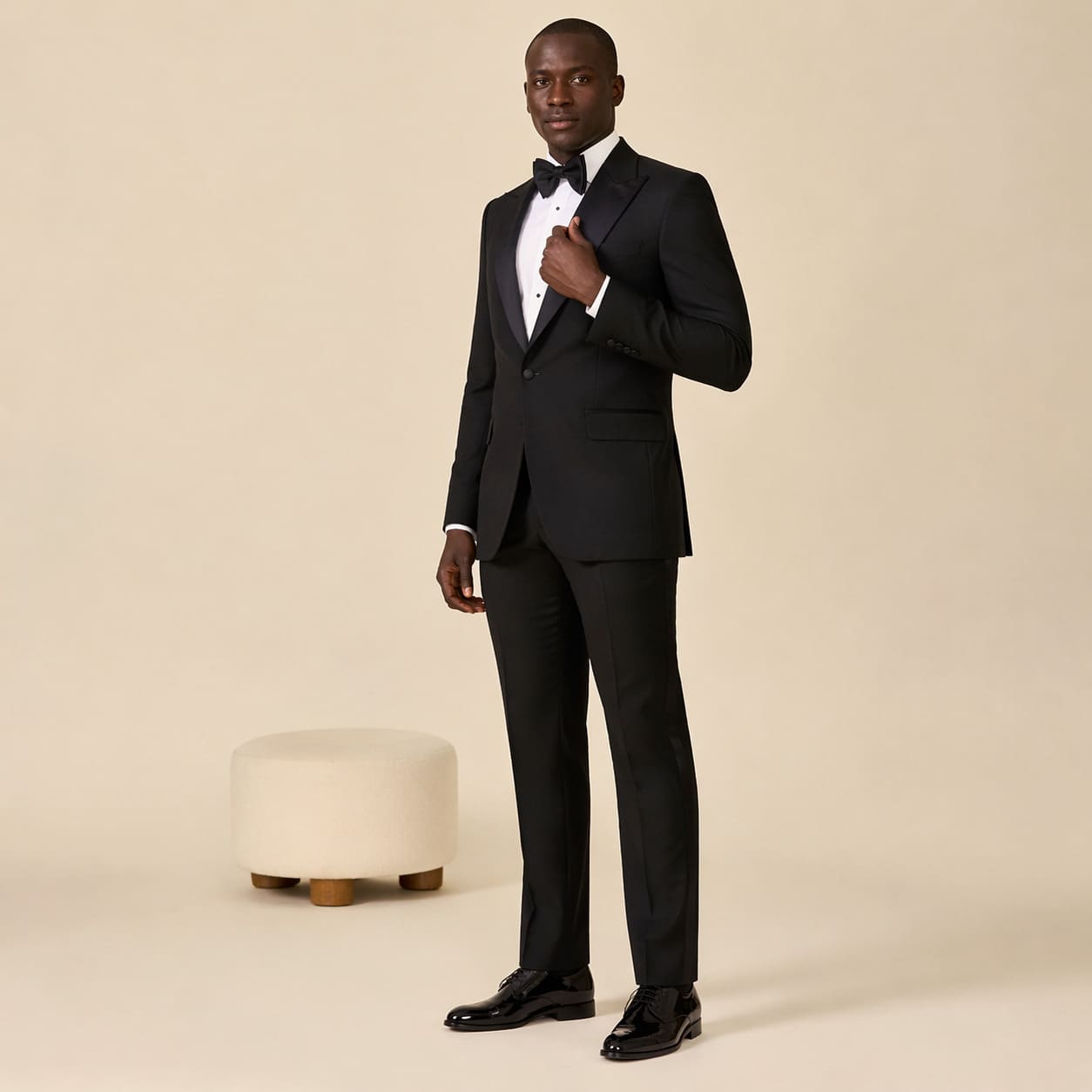
Men’s Dinner Jackets – Black tuxedo jacket with bow tie and formal styling – Sample Image
Questions clients ask us about hiring and buying formalwear
What does tuxedo mean in the UK?
Tuxedo is commonly used as a synonym for dinner suit, especially in online searches. For a UK black tie invitation, we would use dinner suit or dinner jacket as the clearer term.
Can a bridal suit follow the same dress-code rules as a lounge suit or black tie outfit?
Yes, the invitation still leads the decision. A bridal suit, formal separates or a dinner jacket can be cut for the person wearing it while still respecting the level of formality the event asks for.
Can a bought suit be adjusted for later events?
A bought garment can often be altered for future use if the cloth and construction allow it. That future flexibility is one reason ownership can make sense when the suit will be worn beyond one event.
Should accessories change the hire versus buy decision?
Accessories matter because a formal outfit can need more than the jacket and trousers. Compare the full outfit you will actually wear, including shirt, bow tie, cummerbund, waistcoat and shoes where relevant.
How far in advance should you sort wedding suits?
Made to measure takes about 3 to 4 weeks, with one fitting as standard. Fully bespoke usually takes 6 to 8 weeks, starts with over 30 measurements and is followed by 2 to 3 fittings, so earlier planning gives the better route.