How should your fitting work if the tailor comes to you?
We treat a mobile appointment as the same serious fitting conversation you would have in a fitting room. The tailor brings cloth samples, style ideas and garment details, then works through purpose, measurements and fit so your home or office visit supports a proper commission.
Many people arrive at this question with a simple worry: will the appointment feel private and properly measured, or will it feel like a convenient shortcut? That is the right concern. Good mobile tailoring depends on the quality of the decisions made during the appointment.
Your setting changes the practical details. A home appointment gives space for wardrobe context. An office appointment needs focus and privacy. In both cases, the aim is to give us enough information to cut and refine the garment properly.
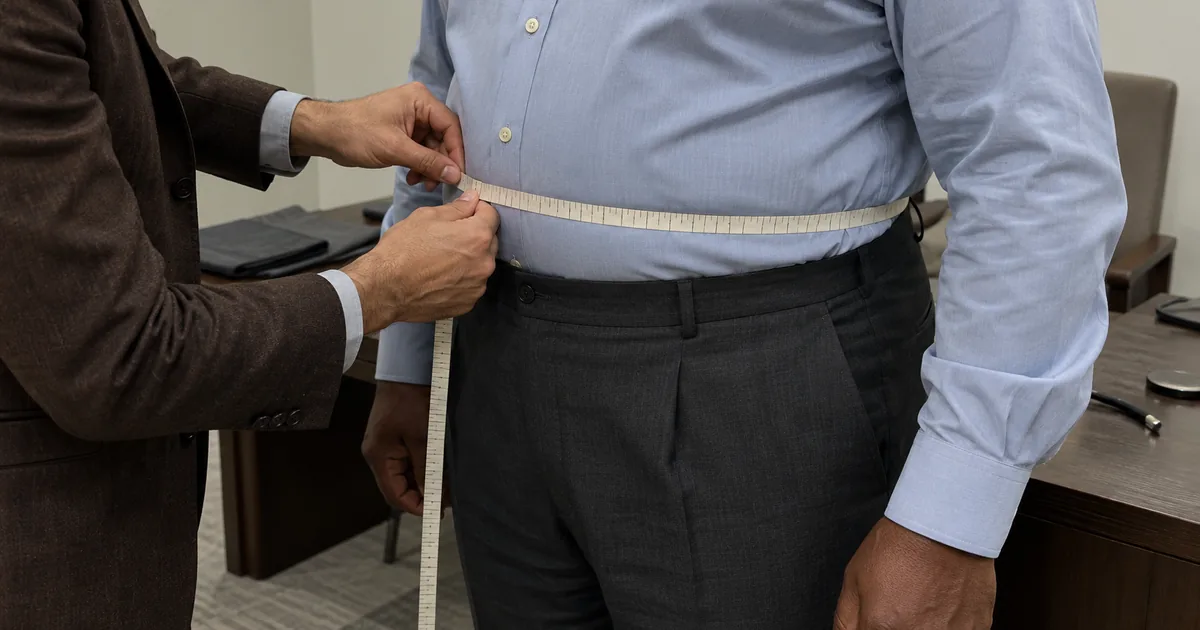
Mobile Tailor Taking Body Measurements - Illustrative Image
A mobile fitting is a full tailoring conversation
People often imagine a tailor arriving with a tape measure, taking a few numbers and leaving. A mobile appointment is a full tailoring consultation, not a quick measuring call. The useful work starts before the tape comes out, because we need to know what the garment has to do for you.
For Fielding & Nicholson, we treat the mobile appointment as the same tailoring discussion we would have in a fitting room. We talk through whether the garment is for business wear, wedding clothing, occasion wear or a longer-term wardrobe need. That conversation affects cloth choice, cut, structure and the level of formality.
Cloth samples, style ideas and garment details can be brought to the appointment, so you can make decisions with the material in front of you. We also assess how a garment sits and moves, especially where posture, seated comfort or an adaptive fit changes the brief.
A mobile tailor service can include the first consultation, cloth discussion, measurements, try-on assessment, a final fitting and aftercare. The first visit sets the direction, then the later stages refine the fit.
Prepare the few things that shape the fitting
Good preparation gives the appointment sharper information. You do not need to have every answer ready, but a few practical items help us make better decisions about cut, length and use.
- Know the purpose of the garment. Tell us whether it is for work, a wedding, travel, speaking, evening wear or regular use. A jacket for long seated days asks different questions from one made for a formal event.
- Have the right shoes nearby. Shoe height changes trouser length and the break over the shoe. For a home tailoring appointment preparation point, this is one of the simplest things that makes the fitting more accurate.
- Wear or bring a relevant shirt or top. Collar height, cuff length and shoulder line all affect how a jacket is read. If the garment will be worn with a particular shirt, blouse or knit, have it available.
- Show an existing garment if it teaches us something. A jacket you wear constantly, or a pair of trousers that never feels right, gives us useful information. We look at what works and what needs changing.
- Share dress code details and movement needs. Wedding dates, office dress rules and travel demands all help. So do details about how you sit, stand and move through the day.
If you are unsure what to bring to a tailor fitting, we can guide the appointment from the purpose of the garment and work from there.
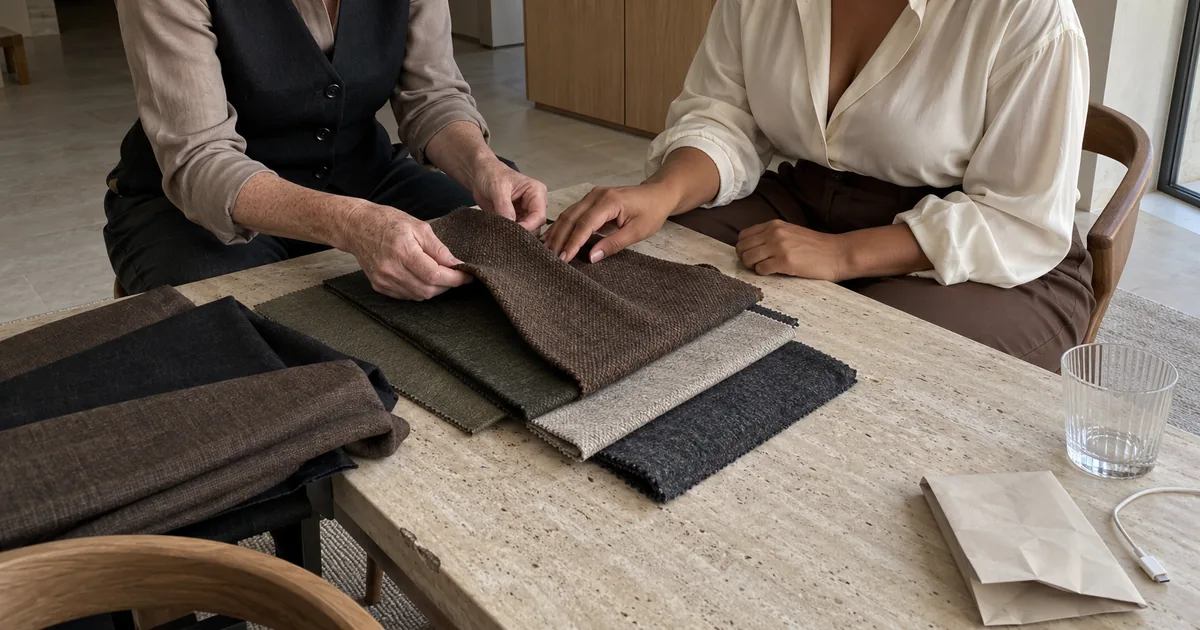
Home Tailoring Fabric Consultation - Illustrative Image
Home and office fittings suit different pressures
A busy professional choosing between a home tailoring appointment and an office tailoring appointment is really choosing the setting that gives the fitting the best conditions. Both can work well, provided the room gives enough privacy and space to move.
The table below compares a home fitting with an office fitting in practical appointment terms.
| Home fitting | Office fitting |
|---|---|
| Often better for longer wardrobe discussions and trying existing garments. | Often better for fitting around a working day with a private meeting room. |
| Useful when family members or wedding decision makers are involved. | Useful when time is limited and decisions need to stay focused. |
| Mirror space, lighting and room to move should be checked beforehand. | Privacy, interruptions and access should be planned before the appointment. |
An office tailor fitting works best when the meeting room is genuinely private and you have enough time to avoid rushing decisions. A home tailor fitting can be better when existing garments, shoes or other decision makers are part of the conversation.
We guide the practical set-up before and during the visit, so the appointment stays orderly. The room only needs to support measuring, movement and a clear conversation.
Pro Tip: Keep a note of where you wore the last jacket or trousers that fit well, then tell the tailor what felt right about them. That gives a clearer starting point than measurements alone.
Gallery and Icon follow different fitting routes
Once the first consultation has set the brief, the route matters. Fully bespoke and made to measure both start from your measurements, but they use different methods and have different fitting expectations.
Gallery Collection is our fully bespoke service. A pattern is built for you as an individual, with a full canvas chest piece and a try-on garment before later fittings. The try-on stage lets us assess the garment in an unfinished form, then refine the cut through up to three fittings.
Icon Collection is made to measure, not fully bespoke. It uses your measurements through an adjusted pattern route, with a half canvas chest piece. Icon is laser cut and made in Portugal, and it begins with a free no obligation consultation.
With Fielding & Nicholson, we keep those routes separate because the appointment should give you clear expectations. A made to measure mobile fitting normally moves through one standard fitting and takes about three to four weeks. A fully bespoke Gallery piece is usually six to eight weeks because the pattern and fitting stages are more involved.
Both routes use in-person fitting judgement. The difference is the level of pattern work, the number of fitting stages and the degree of refinement built into the process. We explain that route before you commit to cloth, style and timing decisions.
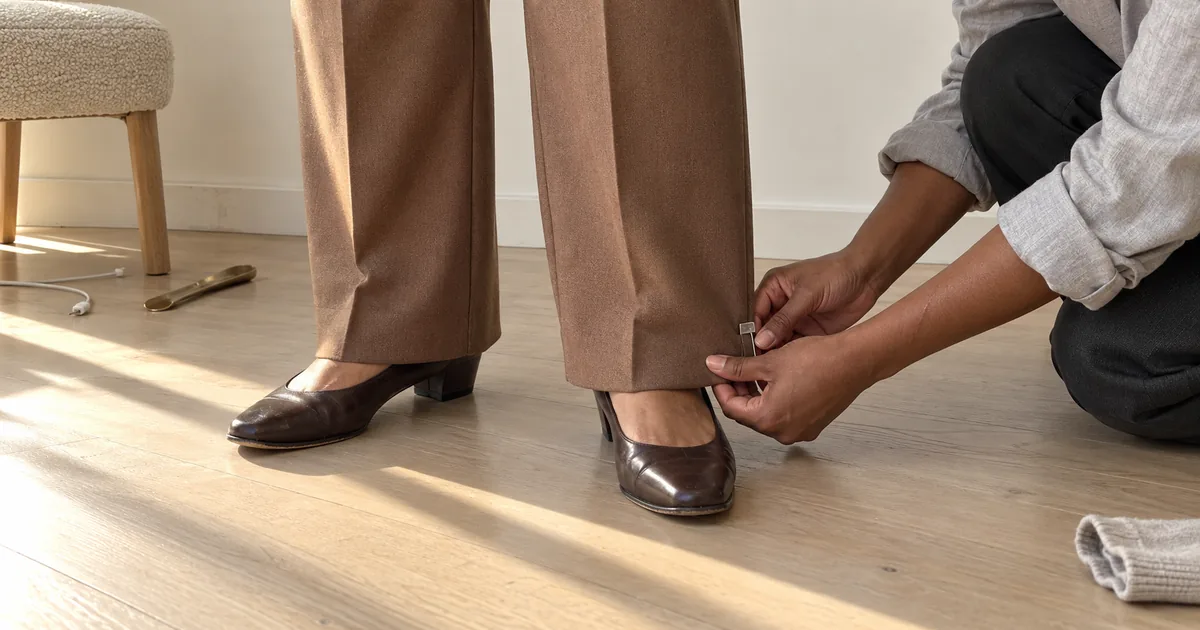
Tailor Measuring Trouser Hem at Home Fitting - Illustrative Image
Pro Tip: Take a quick photo of the room where the fitting will happen, including mirror space and where you plan to stand. It helps you spot light, clutter and movement issues before the appointment.
Keep aftercare in the plan
When the first appointment is finished, the work moves into fitting and refinement. A good commission has room for assessment after the garment has been made, because sleeve pitch, jacket balance and trouser fit are best judged on the body.
Adjustments are normal tailoring language. During a final tailoring fitting, we look at how the garment sits, how it moves and whether any small alteration is needed before handover. Mobile tailoring follow-up can cover some of this discussion, depending on the garment and the stage.
Aftercare also has practical boundaries. Our five year guarantee covers general wear and tear, tears to cloth and client weight changes, with exclusions. It does not cover relining, some replacement collars and cuffs where cloth is unavailable, or replacement of whole panels such as new sleeves or a new trouser fork.
For guarantee amendments or alterations, garments must be dry cleaned before handover and delivered to the showroom. That keeps tailored clothes aftercare clear, managed and realistic.
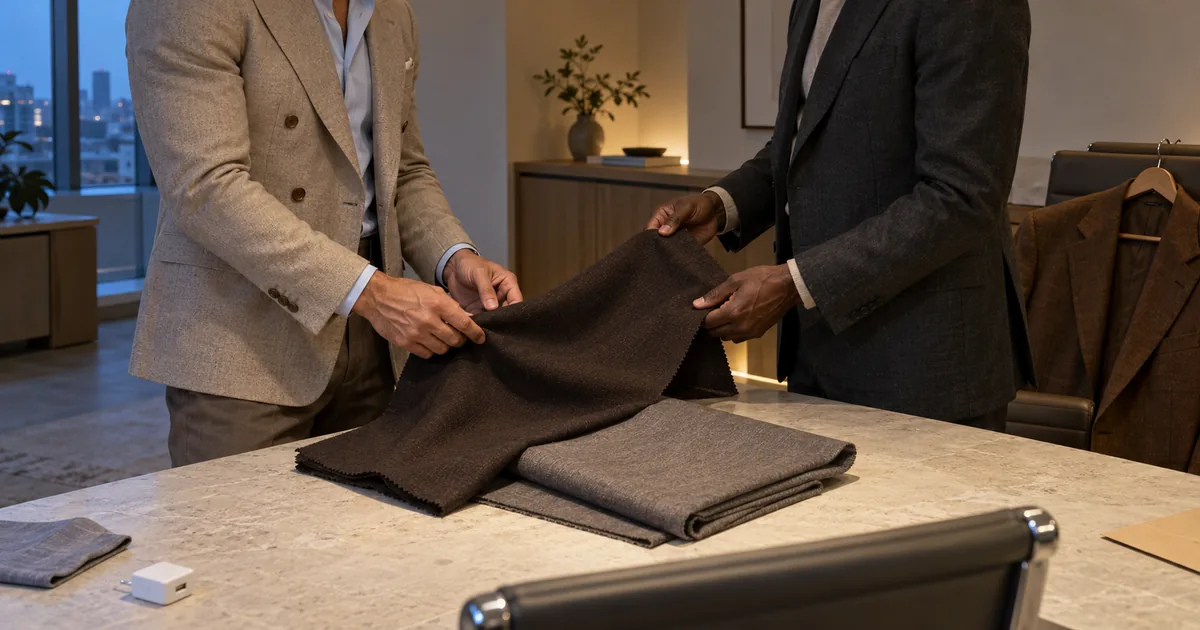
Mobile Tailor Reviewing Suit Cloth Options - Illustrative Image
The best setting gives the right fitting decisions
A mobile appointment works well when it gives us privacy, time and the right information. The setting is a means to that end. Your home, office or another private room can all support proper tailoring decisions if the garment purpose, cloth choice and fitting route are handled clearly.
What matters most is whether the appointment lets us judge the garment in relation to your real life. Workwear has to cope with the way you sit and travel. Wedding clothing has to serve the formality of the day. Adaptive and inclusive tailoring has to start from how the garment must work for you.
That is the sharper way to think about mobile tailoring. Choose the setting that lets the fitting be done properly, and the appointment starts with the right kind of clarity.
Questions we get asked about mobile tailoring appointments
Will I see cloth samples during the appointment?
Yes. We can bring cloth samples, style ideas and garment details to the appointment, so you can compare options during the consultation.
Is there an extra charge for a mobile tailor visit?
Consultations are free with no obligation. We keep the conversation focused on the garment, the route and the decisions you need to make.
Can someone else be present during the appointment?
Yes, if their input is useful. Wedding decision makers, family members or a colleague can be present, provided the appointment still has enough privacy and focus.
What if I am unsure between Gallery Collection and Icon Collection?
We explain both routes during the consultation. Gallery Collection is fully bespoke with a pattern built for you, while Icon Collection is made to measure and follows a different fitting path.
What should I wear to a tailoring appointment?
Wear normal clothing that lets us measure accurately, and have the shoes, shirt or existing garment available if they affect the fit. Those details help us judge length, balance and movement.