
How can your suit be cut to sit well and still look formal?
By starting from your seated posture, arm movement, chair contact and dressing routine before we choose the cut. A good adaptive bespoke suit controls the lap, back, trouser rise, pockets and fastenings, so the garment looks formal while giving you room to sit and move.
The common mistake is treating wheelchair user suit tailoring as a few visible adjustments after the suit has already been designed. We look at it differently. The cut has to begin with your real position through the day because that is where the garment has to behave.
If you use a chair part time, stand for parts of an event, transfer often, or have limited movement in your shoulders, hands, hips or legs, the answer changes again. That is why adaptive bespoke tailoring works best as a conversation before it becomes a pattern.
We are still talking about personal tailoring, with line, proportion and style. The difference is that comfort and access are part of the design from the first decision, so the finished suit feels intentional from the start.
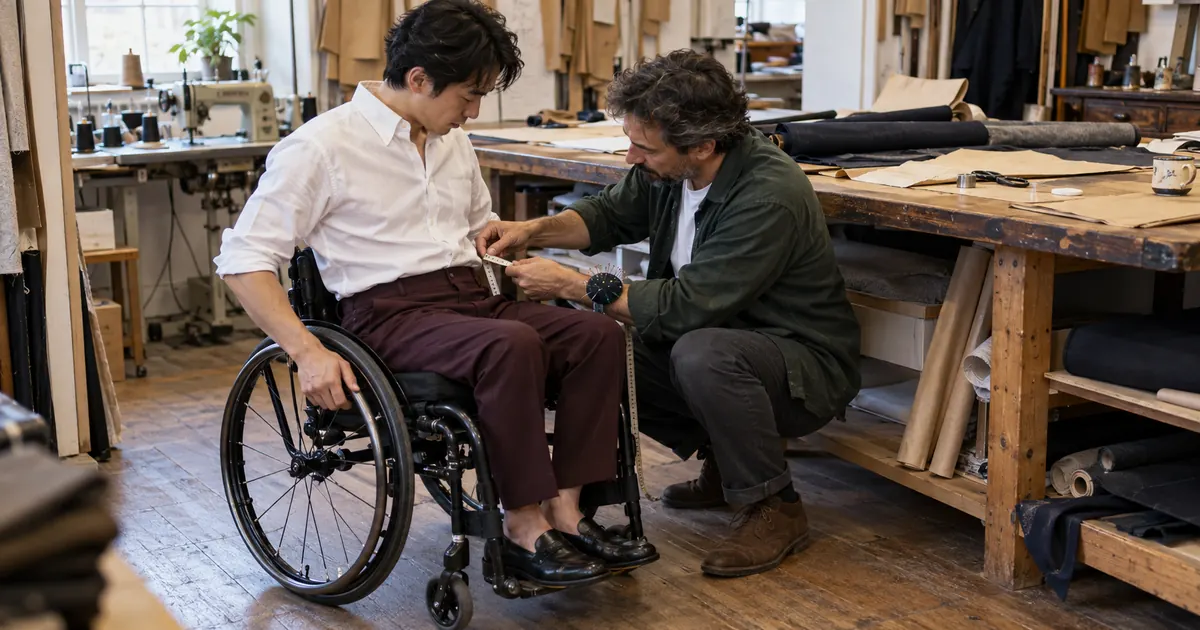
Seated bespoke trouser fitting - Illustrative Image
Seated posture changes the whole suit
A suit cut around standing posture assumes the body is upright, the hips are open and the jacket can hang away from the chair. Once you sit, the hips bend, the lap becomes visible, the back stretches and the garment meets the chair at points a standing fitting may barely show.
Across the jacket, that change can pull the cloth tight between the shoulders, push the fronts into the lap or make the button sit in the wrong place. Around the trousers, the waistband can gape at the back, press at the front or create bulk where you want a clean seated line. These are not small matters of tidying. They affect how the garment feels after minutes and how it looks after hours.
Movement adds the next layer. Reaching forward, propelling a manual chair, crossing your arms or dressing with limited hand movement all change what the cloth must allow. A seated suit fit works only when those actions are allowed for in the pattern, the fitting and the final checks.
Good suits for limited mobility start by accepting the wearer’s real posture as the main position. From there, the cut can support dignity, presentation and comfort through the day.
What do we ask before cutting cloth?
Your first consultation should make the tailoring feel more precise, never intrusive. We need enough detail to cut intelligently: how you sit, how you dress, what you need to reach and how formal the garment needs to look.
At Fielding & Nicholson, we treat this conversation as part of the cut because mobility aids, braces, seated posture, arm movement and daily routines all affect the way cloth behaves. A good adaptive tailoring consultation should also respect privacy, tiredness during a fitting and the practical accessibility of the fitting space.
A clear sequence keeps that discussion useful:
- Start with your routine. We ask how you move through a normal day, including sitting, standing, transfers and dressing, so the garment is cut around the positions you actually use.
- Look at the chair or mobility aid. Chair shape, arm position, braces or supports can affect jacket length, trouser rise and where seams feel comfortable.
- Discuss dexterity and access. If buttons, cuffs, zips or pockets are difficult, we can consider discreet alternatives that suit your hand movement and the garment’s formality.
- Set the occasion. A working suit, ceremonial outfit or evening garment places different demands on cloth, structure and visual sharpness.
- Plan the fitting checks. During fitting, we need to see how the garment sits, moves, fastens and feels, including whether pockets and closures are easy to use.
Many of the most useful answers come from ordinary details: where your phone sits, whether you prefer help with dressing, which arm reaches more freely, or whether a seam irritates after sitting. Those details quietly shape the garment before cloth is cut.
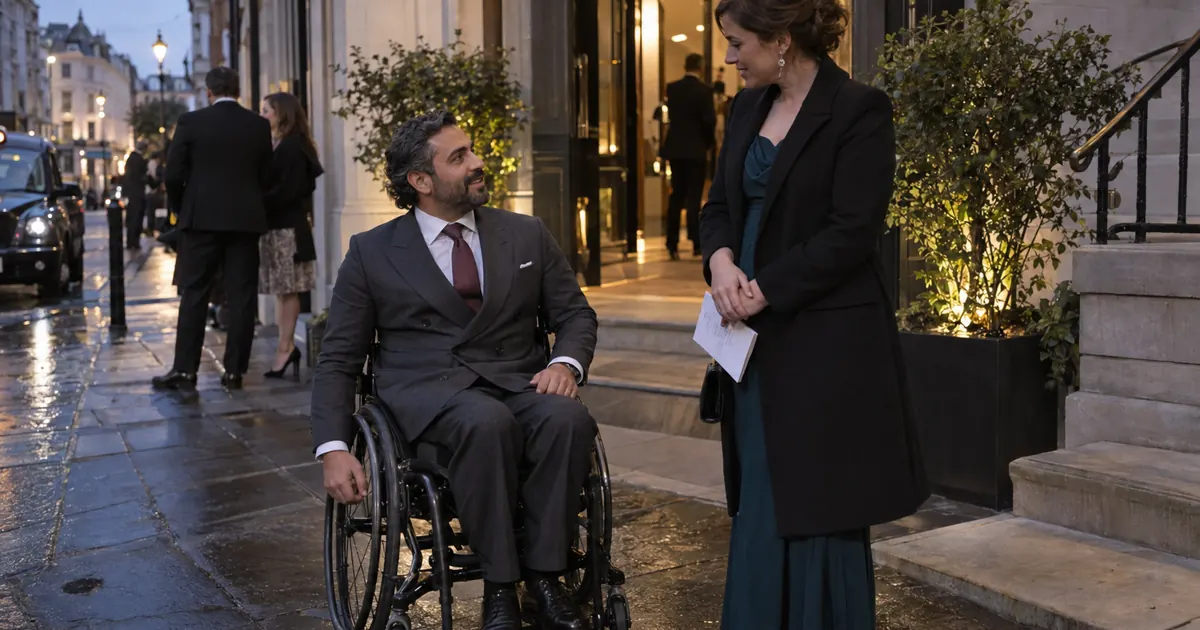
Finished bespoke wheelchair suit - Illustrative Image
Pro Tip: Ask for the toile to be tested in your own chair, not a fitting room chair. Seat height, cushion depth and back angle change the lap line, and a borrowed chair can flatter a cut that will not hold up at home.
Jacket balance controls lap, shoulders and wheels
The common shortcut is to shorten the jacket; the better work is to rebalance it. A wheelchair suit jacket has to clear the chair, sit cleanly across the lap and still read as a proper jacket when viewed from the front.
Jacket length matters because it affects balance, wheel clearance and the line of the lap, not because shortness is the whole solution. The front length, back length, button stance and lapel roll all work together. If the button sits too low for your seated hip angle, the fronts can buckle even if the hem clears the wheels. If the back lacks enough ease, the jacket can feel tight when your arms come forward.
Picture a jacket that has been made shorter at the back to avoid the chair. From behind, it may look practical. From the front, it can still form a ridge across the lap if the fronts and button position were left as they would be for a standing wearer. That is the detail a seated jacket fit must solve.
Shoulders need equal care. Propelling, reaching or crossing the arms asks more of the upper back than a still standing pose, so we look for room without making the jacket look oversized. Sleeve fullness also has to be controlled, because spare cloth near wheels and spokes creates fuss where a formal jacket should look clean.
A bespoke jacket for limited mobility succeeds when the seated line, shoulder movement and chair clearance are judged together at fitting.
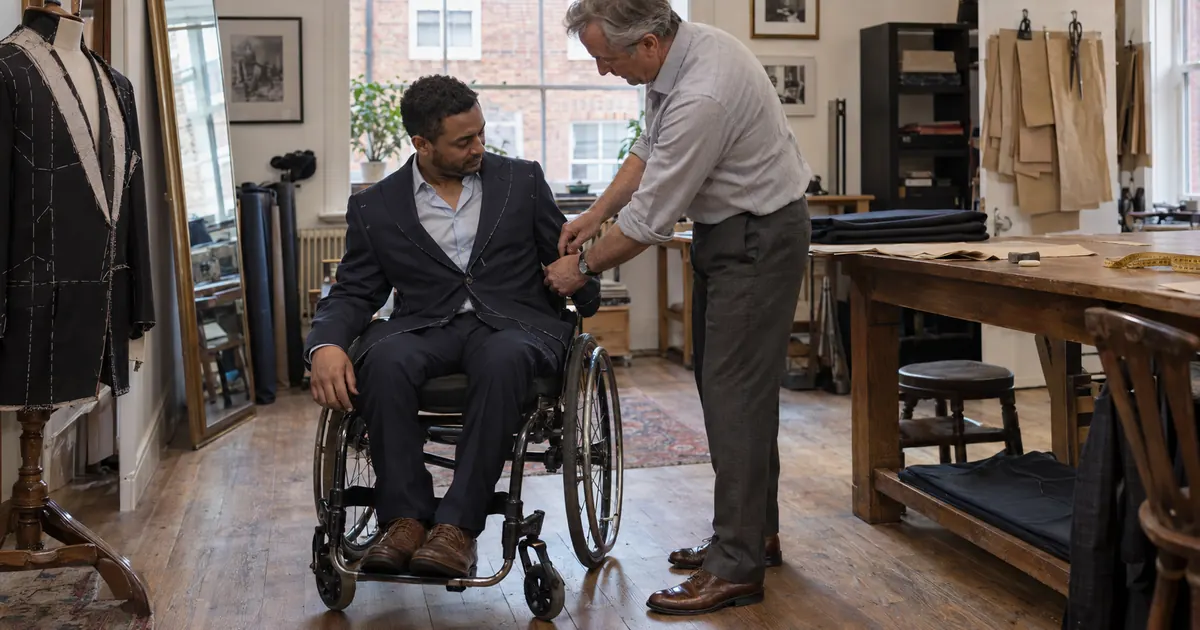
Adaptive bespoke suit fitting for wheelchair user - Illustrative Image
Trousers need a seated block
Trousers can look acceptable when you stand, then gape at the back or press across the front once you sit. Seated trouser fit starts with that problem, because the body is held at a different angle and the ordinary trouser block no longer places cloth in the right places.
The table below compares standing-led trouser habits with seated bespoke decisions.
| Standing-led trouser habit | Seated bespoke decision |
|---|---|
| Waistband follows a standing balance | Back rise is increased so the waist sits cleanly when seated |
| Front is cut with ordinary standing depth | Front bulk is reduced so the lap looks cleaner |
| Seat shape allows mainly for standing and walking | Seat and crotch length are shaped around sitting and movement |
| Pockets follow standard side or back placement | Pockets move to places the wearer can reach while seated |
| Comfort is checked mainly in the mirror | Comfort is checked while sitting, reaching and moving |
A seated trouser block creates comfort through rise, seat and front control, not through a larger waist alone. In practical terms, we look for more room where the back of the body needs it, less spare cloth where the front can bunch and a waistband position that feels settled when you are seated.
Back pockets also deserve attention. A pocket placed under the body can add bulk or become awkward to use, so thigh, knee or other reachable pocket positions can be cleaner. On some existing trousers, we can improve a few of these details through alterations. Where the seat, rise and balance need deeper change, a bespoke pattern gives far more control.
The toile or baste fitting is especially useful here because it lets us test the trouser shape before the final garment is finished. You should be able to sit and move without the back waist opening, the front pressing or the pockets becoming decoration you cannot reach.
Pro Tip: Bring anything you normally have with you when seated, including a cushion, transfer board or gloves. They change how the garment sits, and a fitting without them measures a version of your day that does not exist.
Details and fittings decide the final result
Small details are easy to dismiss until you use the garment for a whole day. A cuff that is hard to fasten, a pocket you cannot reach, a seam that sits in the wrong place or a shirt front that strains when you reach can undo an otherwise fine suit.
Shirts and closures
A bespoke adaptive shirt needs the same level of thought as the jacket and trousers. Cuffs, front fastenings, shoulder reach and sitting comfort all matter, especially if you dress independently or want support to be discreet.
Magnetic snaps, Velcro, longer zips, side openings and waistband loops can all help, provided they match your dexterity and the formality of the garment. A ceremonial suit may need a different answer from a casual jacket, because the closure has to feel right in use and look right in context.
Pockets, cloth and final checks
Pockets should sit where your hand can reach them from your usual seated position. That may mean removing a back pocket, moving storage to the thigh, or keeping the outside clean and building access into another part of the outfit.
Cloth choice is just as practical. We look for a handle that keeps shape during sitting and movement, with seams placed carefully so the garment feels smooth where it meets the chair. Heavy seams and unnecessary bulk can turn a handsome garment into one you avoid wearing.
At Fielding & Nicholson, we see the final fitting as the proof of the cut, because the suit has to work in movement as well as in the mirror. The priority above everything else is real-use testing: sitting, reaching, fastening and checking the garment in the positions your day actually demands.
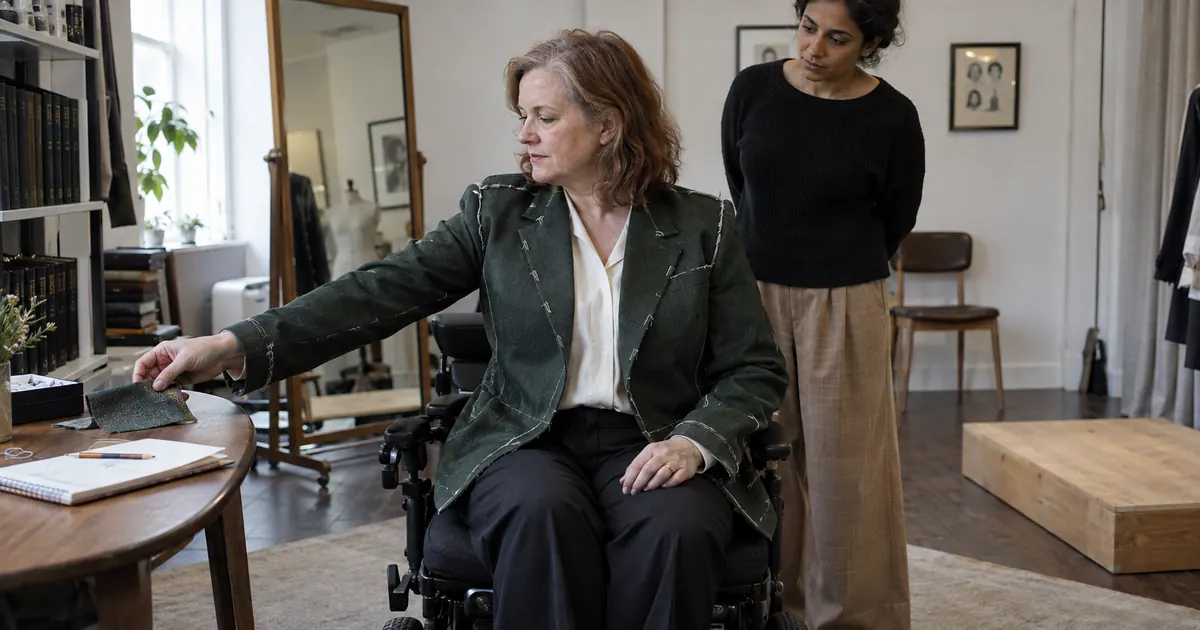
Wheelchair jacket movement fitting - Illustrative Image
Questions clients ask us about adaptive bespoke tailoring
Can a suit be cut for someone who uses a wheelchair part time?
Yes. We balance the cut around the positions that matter most to you, then test how the garment behaves when you sit and stand. The aim is a suit that feels coherent across your actual day.
Does the same thinking apply to overcoats?
Yes, and length becomes the first question. A shorter coat is usually easier to manage when you are seated, because a full-length coat gathers under you and around the chair. The same balance, shoulder room and seam placement decisions still apply.
Do adaptive fastenings have to look obvious?
No. Buttons, magnets, longer zips or concealed openings can be chosen to match your hands and the formality of the garment. The point is to make dressing easier while keeping the style yours.
Can adaptive tailoring work for women’s suits and trouser suits?
Yes. Bespoke cutting applies to womenswear, menswear and non-binary presentation, because the pattern follows your body and how you want the garment to read.
What if hand movement changes during the day?
Tell us how your movement changes, because that can affect cuffs, front fastenings and pocket access. We can then judge the garment around the most demanding moments of your day.