How do you find a good London tailor for your garment?
Start by matching the tailor to the job: alterations for a garment that nearly works, made-to-measure for a new garment adapted from an existing pattern, and bespoke tailoring for a garment cut around you. We judge a good London tailor by a clear process, careful questions, fitting skill and aftercare.
The word tailor covers too much on its own. Someone may be excellent at shortening trousers, yet less suited to creating a wedding suit from scratch. Another may have a refined bespoke process, but still tell you an alteration is the better answer for a jacket that already fits well through the shoulders.
Reputation, Savile Row proximity and a Mayfair setting can all be useful signals, but they do not prove the garment will feel right on your body. We look first at how the tailor listens, how plainly they explain the route, and whether they can tell you what is possible before you commit.
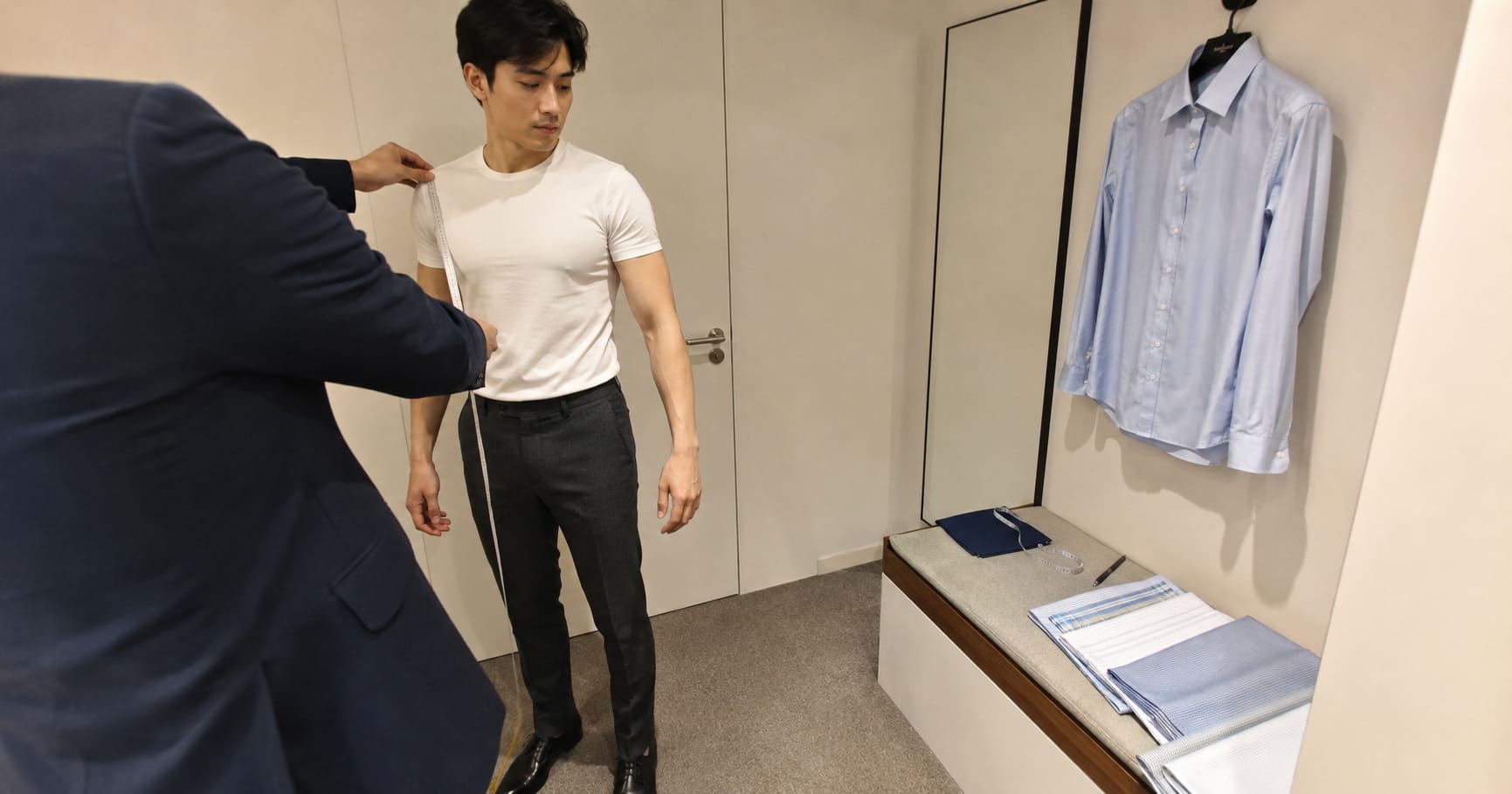
Man wearing white undershirt receives sleeve measurements beside blue shirt in minimalist tailoring studio.
The Right Tailoring Route
You can waste time and money by choosing the wrong type of tailoring before anyone has even measured you. Bring the garment, the occasion and your expectations into the same conversation, because the right answer depends on what needs to change.
Picture a jacket that almost works. The sleeves sit well, the cloth has life in it, and the problem is mainly around length or shape. Alterations may be enough. Now picture a first serious work suit, a ceremony outfit, or a wardrobe rebuild where your posture, proportions and style need to guide the whole garment. That points you to made-to-measure or bespoke.
Here is the simple way we separate the routes.
| Route | Best for | What to check |
|---|---|---|
| Alterations | Existing garments that are sound but need a better fit | Ask what can change without harming balance, shape or comfort. |
| Made-to-measure | A new garment based on an adapted existing pattern | Ask how much the pattern can be adjusted for your body and how fittings are handled. |
| Bespoke tailoring | A garment built around your body, posture, use and personal style | Ask who cuts the pattern, how fittings work, and what aftercare is included. |
Good guidance includes restraint. We would rather see a tailor explain why a small alteration is enough than push you into a bigger order when the garment does not call for it. The same applies across menswear, womenswear and clothing for non-binary clients: the route has to fit the person, not the label on the service menu.
Evidence Before Prestige
A famous address is useful, but proof should carry more weight than prestige. London Mayfair and Savile Row have strong tailoring associations, yet the real test is whether the tailor can show a consistent standard before you sit down for a consultation.
Reviews deserve a careful read. A useful review tells you something specific: the tailor listened, corrected a fit issue, kept the client informed, handled an event garment calmly, or worked well with a body type the client had struggled to dress elsewhere. A thin line about luxury service tells you far less.
Photographs need the same scrutiny. Polished styling can make any garment look appealing for a moment, but we look for proportion, shoulder balance, clean lines when the wearer stands naturally, and signs that the clothes belong to real people rather than mannequins. If every image hides the fit, the image is doing decoration work, not proof work.
In London Mayfair, Fielding & Nicholson sits close to Savile Row, and that local setting matters only because it is paired with a relationship-led way of working. A good tailoring house should be able to talk about fit, records, alterations, aftercare and wardrobe use in plain language. Consistency across those points matters more than one impressive claim.
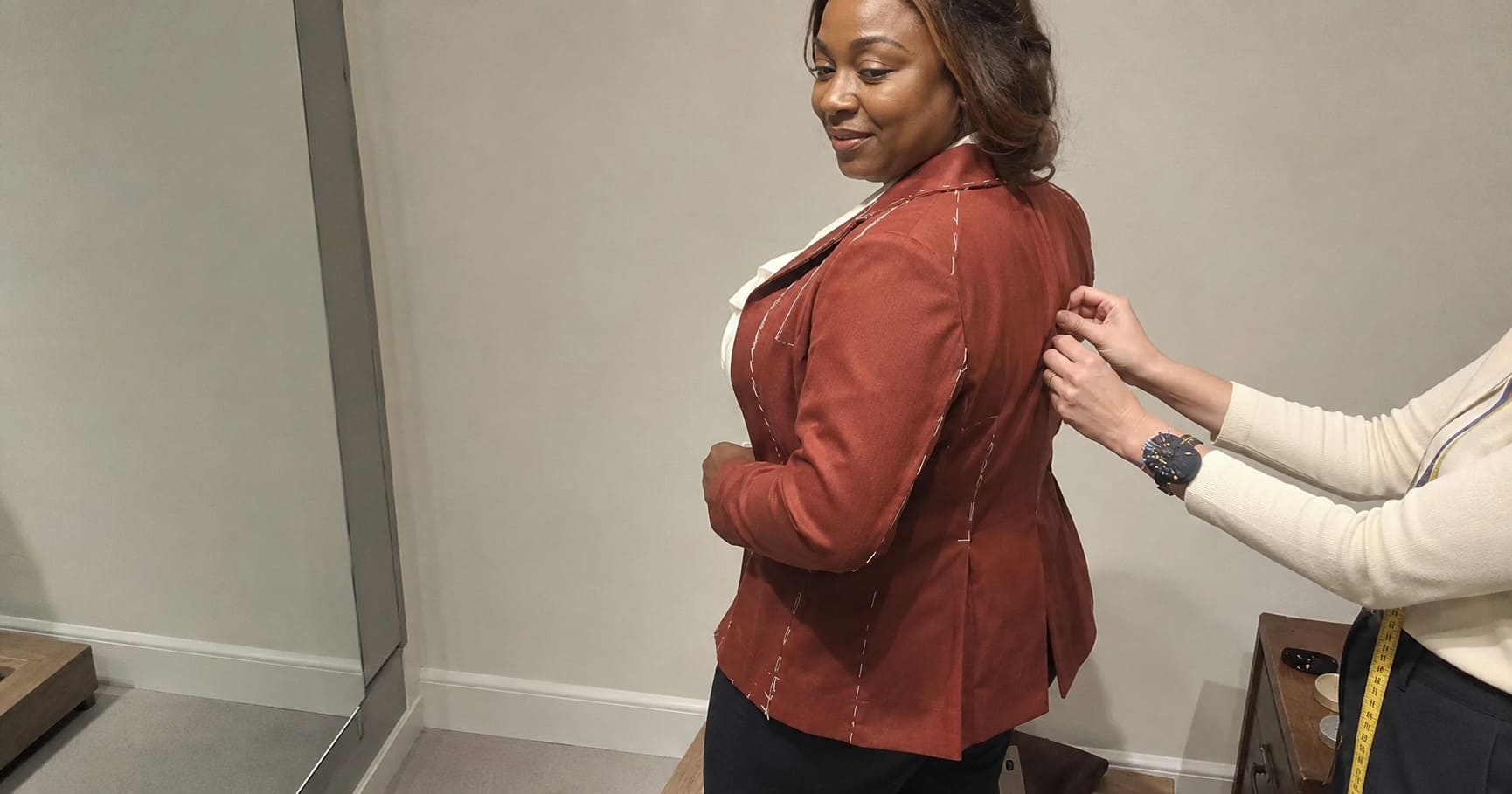
Woman wearing rust tailoring smiles during a bespoke jacket fitting with cropped tailor behind.
Pro Tip: Ask to see how the tailor explains the limits of alterations before you agree to any work. A careful answer usually tells you more than polished showroom language.
The Consultation Standard
When you sit down with a tailor, the first consultation should feel like a proper conversation about how you live in clothes. Measurements matter, but listening comes first.
We want the tailor to ask how you move, where you will wear the garment, how formal it needs to feel, whether you run warm, whether you sit for long hours, and what you dislike about clothes you already own. For ceremony wear, timing and comfort across a long day matter. For business tailoring, the garment has to work under pressure without looking forced.
Use these questions to test whether the tailor has a process behind the talk.
- Which route suits this garment best? Ask whether alterations, made-to-measure or bespoke makes sense for your aim, and listen for a clear reason.
- How will the cloth behave when I sit, travel or wear it all day?
- What parts of the fit can be changed, and what limits are set by the garment or the pattern?
- How many fittings do you expect for this piece? The answer should be specific to the garment, not a vague promise that everything will be fine.
- What happens if the fit needs adjustment after I have worn it?
- How do you account for posture, body confidence, mobility needs or gender expression in the fitting?
Plain answers matter here. If a tailor uses technical words, they should translate them into something you can see or feel on your body. A baste fitting, for example, means an early fitting in a loosely assembled garment, so shape can be refined before the final make is finished.
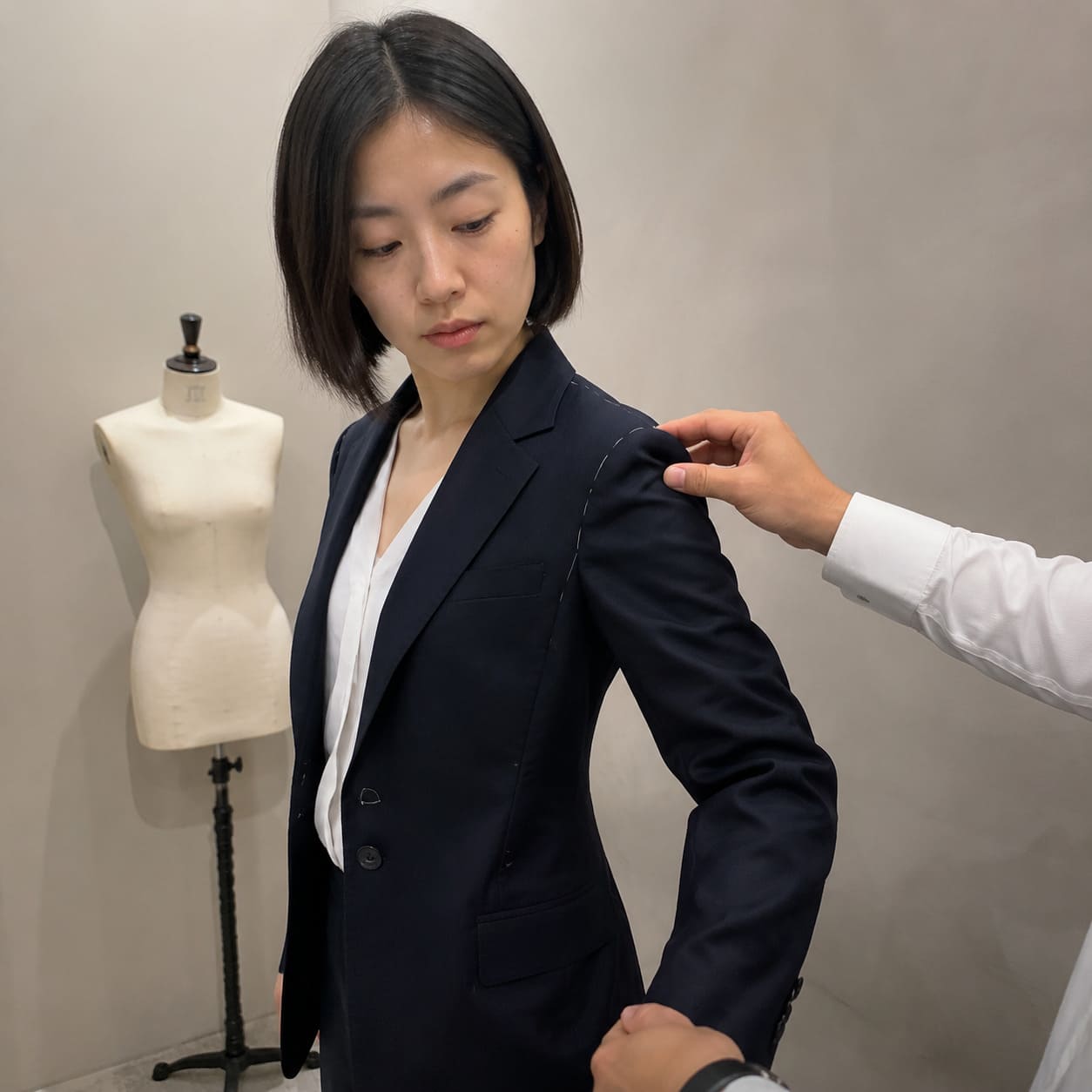
Women's Made-to-Measure Personal Fitting - Sample Image
The Bespoke Process Test
The word bespoke is easy to say. The process behind it is harder to fake, because genuine bespoke work has to explain how a garment moves from your body to a pattern, through fittings, and into aftercare.
Pattern and Cutting Proof
Traditional bespoke tailoring is built around an individual pattern. The Savile Row Bespoke Association says its full members must make Savile Row bespoke garments from an individually cut paper pattern created by a Master Cutter trained to its required standard. That gives you a useful benchmark for the kind of proof to ask about.
You do not need to become a cutter to ask a good question. Ask whether your garment is being cut from an individual pattern or adapted from an existing one. Both routes can produce good clothes, but they are not the same service. Clarity here protects you from paying for a word without receiving the work behind it.
Fittings and Aftercare
Fittings are where the promise becomes visible. A tailor sees how the garment behaves on your body, then refines balance, comfort and line before the finished piece is handed over. If fittings are treated as an inconvenience, we would question how much control the tailor has over the final result.
Fielding & Nicholson describes our bespoke process as a clear route that usually runs over 6 to 8 weeks and usually includes 2 to 3 fittings. Those figures are useful as an example of how a tailor can explain timing, but your own garment and event date still need to be discussed at the start.
Aftercare also tells you a great deal. Bespoke should leave a record of what was made, what was adjusted and how the garment can be looked after later. Pressing, repairs, button matching and fit adjustments sound ordinary, but they are exactly the kind of ordinary details that keep good tailoring alive after the first wear.
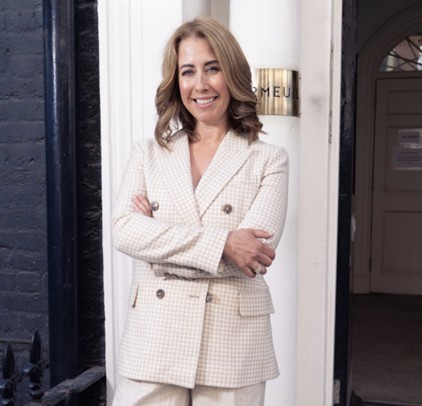
Pro Tip: For bespoke, ask who cuts the pattern and how the fitting stages are handled. Clear ownership of the process is a strong sign that the garment will be managed properly.
Red Flags and Better Choices
Red flags appear early if you know where to look. Most of them show up before money changes hands, in the way the tailor explains the work, handles pressure and answers plain questions.
Be cautious of:
- Vague use of bespoke. The tailor should be able to explain the pattern, fitting and making process without hiding behind grand language.
- Pressure to commit before you have understood cloth, price and timing.
- No clear fitting plan. A high-value garment needs a route from first consultation to final refinement.
- Reluctance to show real work, especially work that lets you judge fit rather than mood.
- Reviews that sound shallow, repeated or oddly polished, with little detail about communication, fit or aftercare.
- Unclear pricing, missing inclusions or surprise extras that should have been discussed earlier.
Current GOV.UK guidance under the Digital Markets, Competition and Consumers Act 2024 says traders may breach consumer law if they mislead consumers, act unfairly or behave aggressively, and it also treats fake reviews and hidden advertising practices as banned. You do not need to study the law to use the principle: clear claims and honest pressure-free selling are basic signs of a serious tailor.
A shortcut choice starts with the quickest confident answer: a famous location, a smooth phrase, a promise that everything can be done. A stronger long-term choice starts with slower evidence: the tailor listens properly, explains what each route can and cannot do, fits the garment in stages, and keeps responsibility for the clothing after it leaves the showroom. The second approach takes more care at the beginning, and that is why it serves you better each time the garment comes out of the wardrobe.
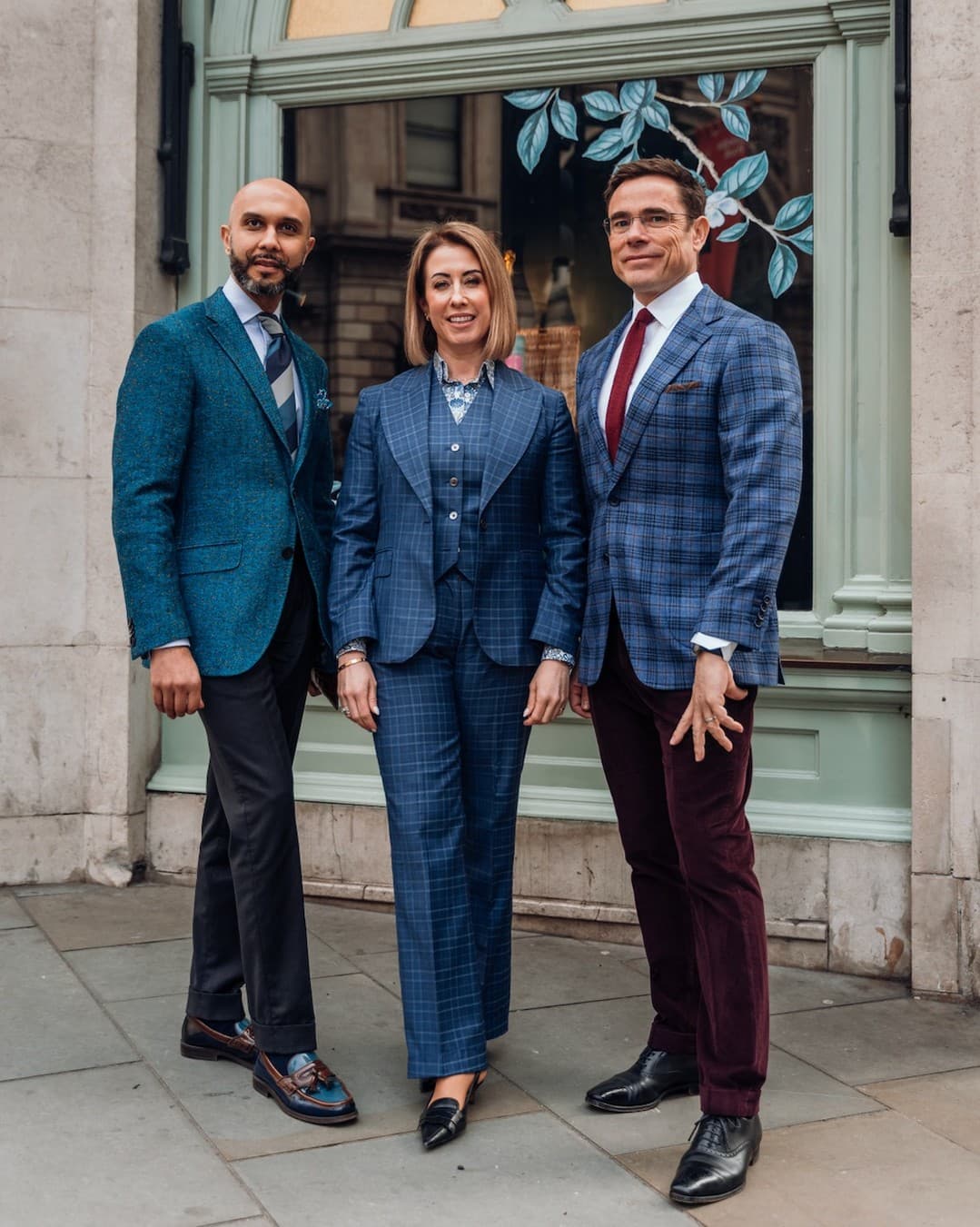
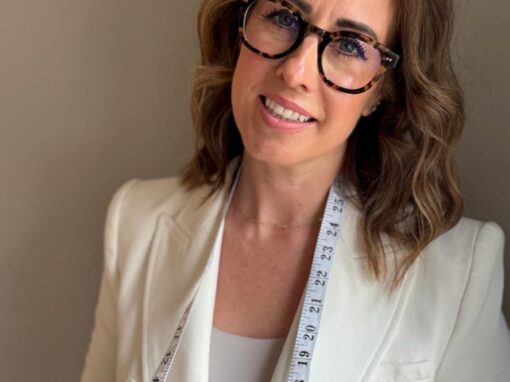
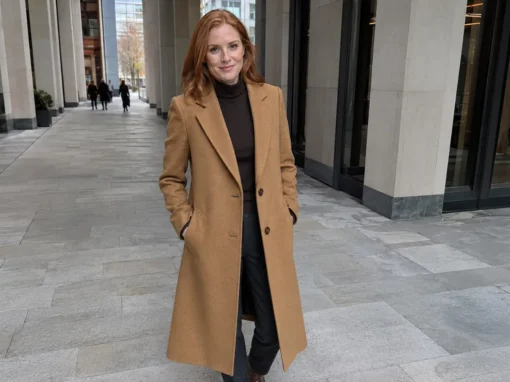
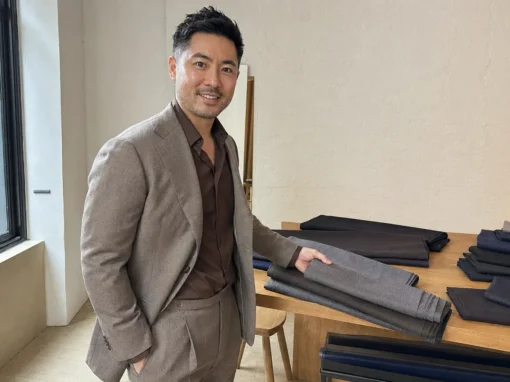
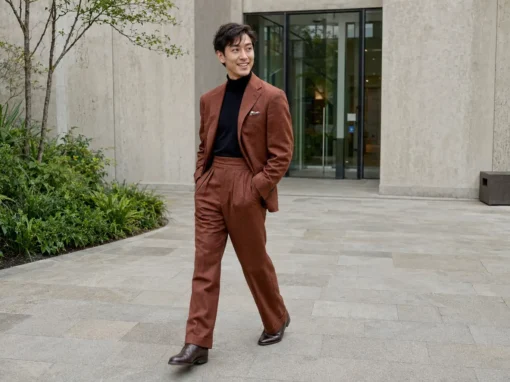
Fielding and Nicholson Tailoring Male and Female Tailoring Team
Questions we get asked about choosing a London tailor
Can a tailor help if you do not know what style suits you?
Yes. A good tailor should guide you through shape, cloth and use in plain language, especially if you are rebuilding a wardrobe or buying an important garment for the first time.
Is Mayfair a useful place to look for tailoring?
Mayfair is a useful starting point because it sits close to London’s traditional tailoring centre, but location should support your decision rather than make it for you. Process, proof and consultation quality matter more.
Can women and non-binary clients use a bespoke tailor?
Yes. Bespoke tailoring should account for body shape, movement, identity and personal style, so the consultation should feel respectful and specific rather than built around one default client.
Should you alter an old suit before buying a new one?
Sometimes, yes. If the garment is well made and fits well in the main structure, alterations can be the neatest answer; if the shape, cloth or purpose is wrong, a new garment may make more sense.
How early should you speak to a tailor before a wedding or event?
Speak to the tailor as early as you can once the date, dress code and main requirements are settled. Fixed events leave less room for rushed decisions, so timing should be discussed before any cloth or route is agreed.
This is general information, not professional advice.