How much does a made-to-measure shirt cost in the UK?
We usually treat £140 to £180 as the starting point for premium made-to-measure or custom-made shirts in the UK, with prices rising to around £330 or more before you move into higher bespoke pricing. Cloth, fit work, construction and service explain most of the difference.
For a current market anchor, Eton lists custom-made shirts from around £140, while a Stenströms made-to-measure GBP price list shows many shirts from £179 to £339. That gives you a sensible made-to-measure shirt price range, not a fixed national tariff.
A lower starting price often means entry cloths, fewer fitting refinements or a simpler service model. A higher price can reflect better fabric, more time spent on fit, a wider choice of collar and cuff styles, or more support after the shirt arrives.
We would not judge a shirt on price alone. A work shirt, an occasion shirt and a black tie shirt do different jobs, so the right budget depends on how often you will wear it and what problem the shirt needs to solve. The useful question is what the price includes.

Woman Wearing Sage Made to Measure Shirt in Modern Bristol Glass Conservatory
What Is In This Article
A made-to-measure price should show what is included
A made-to-measure price is useful only when you know what sits inside it. Two shirts can carry similar labels, yet one may include a fuller fitting process and clearer aftercare while the other charges separately for parts of the service.
Before ordering, we would want the price to make these points clear:
- Measurements that matter. Neck, chest, waist and sleeve length are the basics, but shirt length, shoulder fit and cuff size also affect how the shirt wears.
- Cloth choice, including whether the quoted price applies only to entry cloths or to a wider fabric selection.
- Collar style and cuff style, because proportion matters more than a decorative flourish.
- Finishing details such as a monogram, if you want one, and whether those details alter the price.
- The alteration policy after the first fitting or delivery, especially where a small refinement is part of settling the fit.
- Whether your fit record is kept for repeat orders, since a good repeat shirt should not require you to start again from zero.
Personalisation gets reduced too often to visible extras. In practice, the better value sits in proportion and fit. A collar that suits your neck, a sleeve that sits correctly under a jacket and a waist that follows your body without pulling will matter more than a monogram you barely notice.
Fielding & Nicholson tends to look at a shirt as part of the wider wardrobe, rather than as a standalone specification sheet. That changes the conversation from “which options can I add?” to “which choices will you still want to wear next year?”
Made-to-measure and bespoke are different value decisions
Made-to-measure, custom-made, altered off-the-peg and bespoke are often blurred together. We separate them because each route solves a different kind of fit problem and carries a different level of individual work.
The Savile Row Bespoke Association defines made-to-measure as a garment made to a customer’s individual requirements “to some extent” and “not necessarily by hand.” Its tailoring terms describe traditional bespoke, in the context of suits, as involving an individual cut, a pattern made specifically for the customer and a series of fittings. That distinction matters when you compare cost.
| Route | Fit basis | Best use |
|---|---|---|
| Altered off-the-peg | A ready-to-wear shirt is adjusted where the garment allows | Useful when the shirt is already close and the issue is minor |
| Made-to-measure | An existing fit is adjusted to your measurements and choices | Good for better fit, cleaner proportions and repeatable everyday shirts |
| Custom-made as commonly used | The term varies, so the process needs checking | Works when the maker explains exactly what is being changed |
| Bespoke | A more individual route with greater control over pattern and fittings | Best for complex fit needs or a highly specific garment |
Alterations can be the most sensible choice when the shirt already fits well through the neck, shoulders and chest. Once the base shirt is wrong, alterations start to fight the garment rather than improve it.
Made-to-measure becomes more appealing when you want repeatability and cleaner fit without stepping into full bespoke work. Bespoke becomes worth discussing when posture, body shape, personal preference or a demanding dress code calls for more individual control.
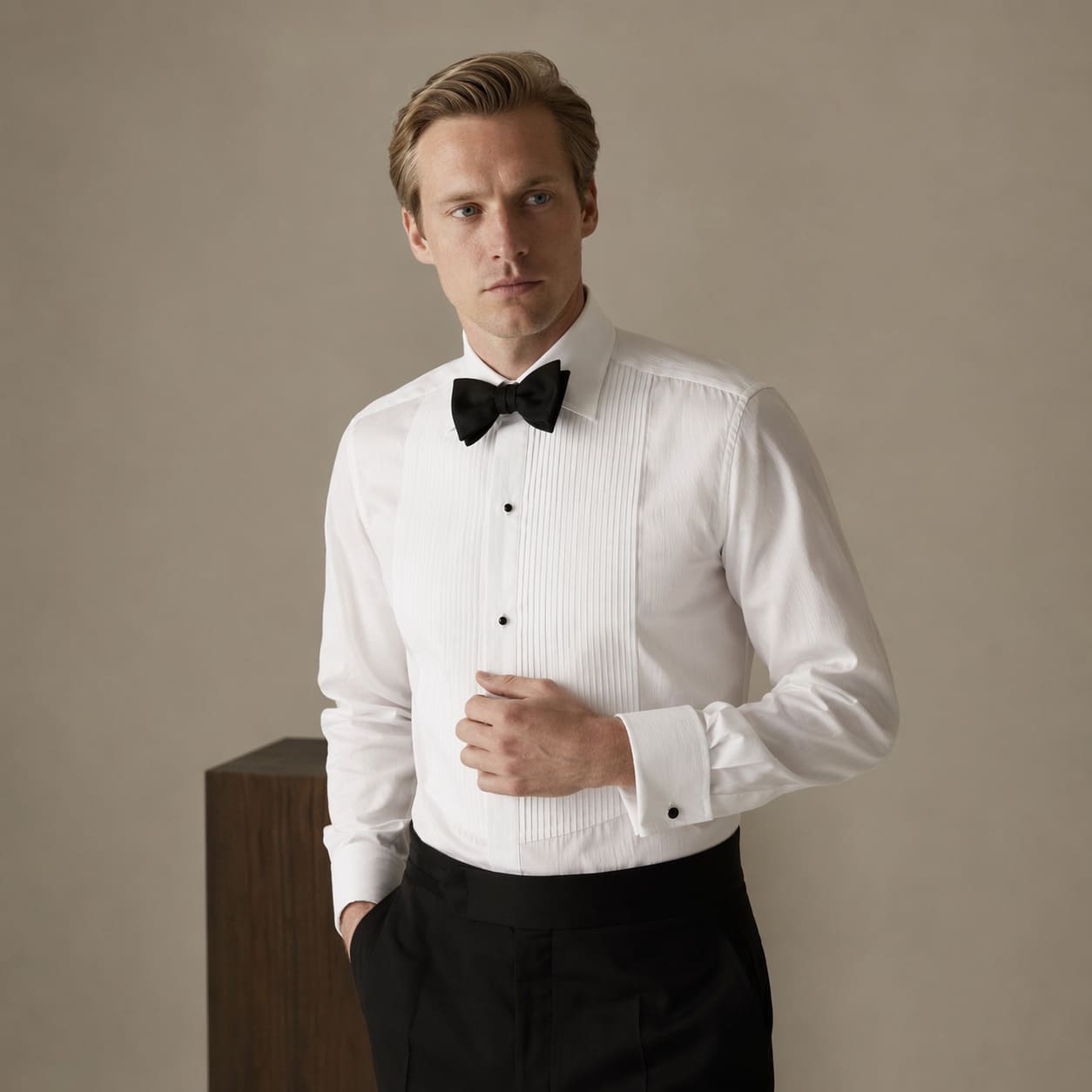
Men’s Shirts – White dress shirt with black bow tie – Sample Image
Pro Tip: Ask what the quoted price includes before comparing shirtmakers. A lower figure can hide limited cloth choice, fewer fitting refinements or separate charges for details such as monograms.
Price rises through cloth, fit and service
Two made-to-measure shirts can both be legitimate and still sit at different prices. One may use a simpler cloth and a lighter service model, while another may involve finer fabric, more careful fitting and stronger guidance on how the shirt will work in your wardrobe.
Cloth changes the bill first
Cloth is the most visible reason a custom shirt price in the UK moves. Fabric quality, the mill behind it, weave, weight and finish all affect cost, and they also affect how the shirt behaves in daily use.
A sharp business shirt needs different thinking from a casual shirt worn open at the neck. A formal shirt for black tie needs restraint and clean proportion. We look at cloth through use first, because a costly fabric that does the wrong job is still poor value.
Construction also matters, although you do not need to become a shirtmaker to judge it. Seams, collar structure and cuff finish all influence how the shirt sits and how it copes with regular wear and laundering. The point is not to buy the highest specification on the page. The point is to buy the specification that suits the way you will wear the shirt.
Fit work changes the result
Tape measurements are only the start of a custom shirt fitting. A good fitter reads how the shirt needs to sit on your frame, where fabric should be allowed to move and where excess cloth will annoy you every time you wear it.
That judgement becomes especially important under a jacket. A sleeve that feels fine on its own can sit badly under tailoring. A collar can look acceptable in a mirror but fail once a tie is added. Small fit decisions make the shirt either useful or irritating.
Our view at Fielding & Nicholson is that upgrades need a reason. We would rather explain the trade-off between cloth, fit and use than treat every higher-priced option as automatically worthwhile. A higher price deserves a clearer answer than “better fabric” if the shirt has a specific job to do.

Woman Wearing Pale Blue Made to Measure Shirt in Modern Leeds Bookshop
Pro Tip: Treat the first shirt as a fit test if you are unsure about the cut. One well judged order gives you a far better basis for repeat shirts than guessing from measurements alone.
The best value is the shirt you can keep wearing
The question behind “are made-to-measure shirts worth it?” is whether the shirt will earn its place in your wardrobe. A shirt worn often, repeated with confidence and refined over time can be better value than a cheaper shirt that never feels right.
We would start with the use case. Is the shirt for office wear, an occasion, casual dressing or formal evening wear? How often will it be worn? What fit issue has made ready-to-wear fall short? If the answer is a slightly long sleeve on an otherwise good shirt, alterations may be enough. If the same fit problem appears every time you buy off-the-peg, made-to-measure starts to make more sense.
Repeatability is another part of value. Once a good fit has been established, future shirts can be chosen with more confidence, especially if you are building a work rotation or adding shirts for specific dress codes. Care still matters, and no shirt is immune to wear, but a well-chosen shirt gives you a better starting point.
Some buyers chase the lowest acceptable first price and then compromise on cloth, fit or the service behind the shirt. Others set a sensible budget around the shirt’s real role, then choose the route that solves that need cleanly. The second approach usually works better long-term because it buys a shirt you can use properly, not a price you liked for a moment.

Made to Measure Blue Shirt UK Price Guide Creative Workspace Featured Photo
Thinking about your own tailoring? We are always happy to help. Get in touch
Questions we get asked about made-to-measure shirts
Can you reorder the same made-to-measure shirt later?
A maker can usually repeat a shirt more reliably if your fit record has been kept and the same or similar cloth remains available. We would still check whether your measurements or preferences have changed before repeating anything.
Do monograms make a made-to-measure shirt more expensive?
A monogram may affect the price, depending on the maker’s option structure. We treat it as a finishing detail, while fit, collar proportion and cloth choice carry more weight in the value of the shirt.
Should you buy one made-to-measure shirt before ordering several?
Ordering one first is a sensible way to test the fit, cloth and service before building a larger shirt rotation. Once the fit is settled, repeat orders become a more confident decision.
Can made-to-measure work for black tie shirts?
Made-to-measure can work well for a black tie shirt if the maker understands formal proportion and the shirt’s role under evening tailoring. Bespoke becomes worth discussing if the garment needs a highly specific fit or design.
Is a higher made-to-measure shirt price always better value?
A higher price does not automatically give a better fit. Better value comes when the price reflects cloth, fitting skill, construction and clear service that match how you will wear the shirt.
This is general information, not professional advice.
Ready to talk it through with a tailor? Get in touch