What does Reddit say about whether a bespoke suit is worth your money?
Reddit’s answer is mixed: bespoke is worth it when you will wear the suit often, your fit needs are hard to solve elsewhere, and you will care for it properly. We would not treat it as automatically buy it for life, because body changes, cloth wear and style changes still matter.
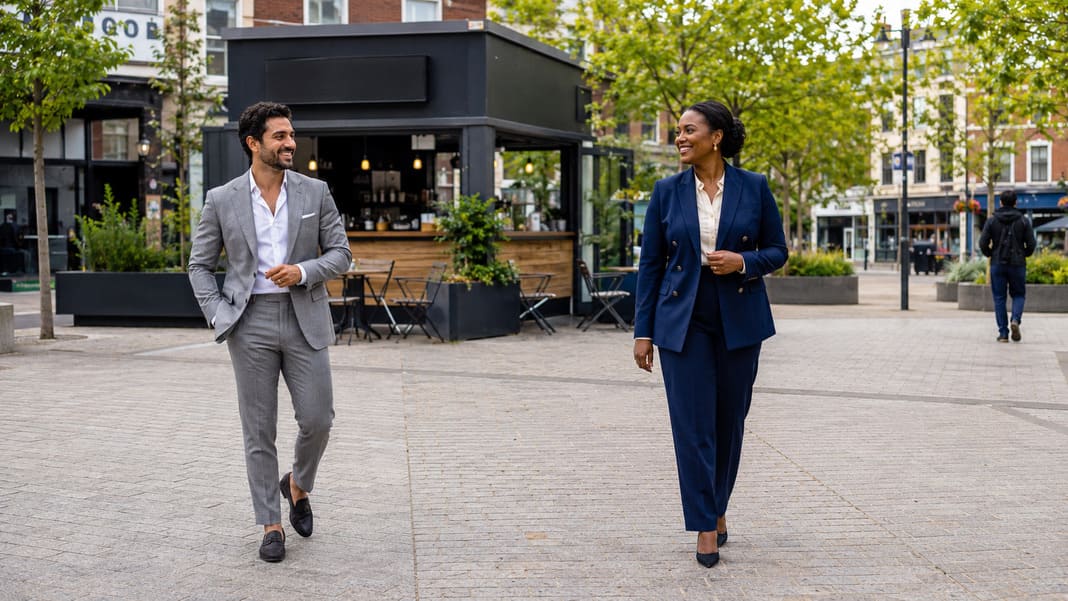
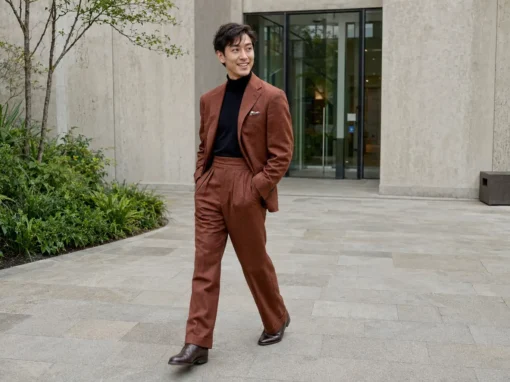
A light grey suit paired with a navy trouser suit highlights the benefits of investing in bespoke or made to measure tailoring, combining personalised fit, premium fabrics and versatile business styling.
What Is In This Article
Reddit treats bespoke as a practical value question
Someone usually arrives at this question after seeing two very different stories. One says bespoke is the obvious top choice. Another, often on Reddit, says a good off-the-rack suit with alterations is enough for most people. The useful answer sits between those views.
Across discussions on r/BuyItForLife, r/malefashionadvice and r/mensfashion, Reddit bespoke suit advice usually comes back to everyday use. People ask how often you will wear the suit, whether your body shape is stable, how well you look after clothes, and whether the style is classic enough to survive your own changing taste.
That scepticism is useful. An expensive suit becomes valuable only when it has a life to live. A suit bought for one photograph, then left in a wardrobe, has a poor cost-per-wear no matter how well it was made.
Reddit is at its best when it asks the unglamorous questions: will you store it properly, press it when needed, alter it when your body changes, and choose cloth that suits real wear? Some users also talk about buying a second pair of trousers, because trousers generally take more strain than a jacket. We think that is the right lens for the decision.
The word bespoke is often used too loosely
Bespoke should mean more than choosing cloth, giving measurements and receiving a suit that has been adjusted for you. Before you judge whether the price is justified, you need to know which process you are actually buying.
The pattern is the dividing line
Traditional bespoke starts with a pattern made for you as an individual. Made-to-measure starts from an existing base pattern, then adjusts it to your measurements and preferences. Made-to-measure can be a very good route, especially when your proportions sit close to a standard block, but it is a different thing.
The Savile Row Bespoke Association describes traditional full member bespoke around an individually cut paper pattern made by a Master Cutter, with customer records kept and aftercare provided. A Master Cutter is the person responsible for turning your measurements, posture and balance into the pattern from which the garment is cut.
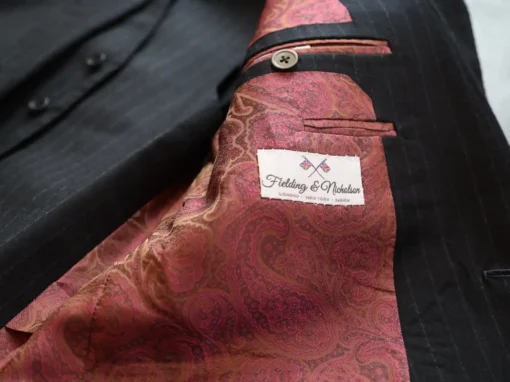
That distinction matters because “custom” can be a vague word online. Two suits can both be described as custom, yet one may involve a personal pattern and proper fittings, while the other may be a modified standard block. With Fielding & Nicholson, we explain that difference early because the label alone does not tell you whether the process justifies the spend.
Fittings turn measurements into fit
Measurements are a start, not the result. A tape measure will not show how your shoulders sit, how you stand, how your arms move, or how the trousers hang when you walk.
A baste fitting, where the garment is first assembled in a temporary form, gives the tailor a chance to adjust balance before the suit is finished. This is where fit becomes less about numbers and more about how cloth behaves on your body. If you have one dropped shoulder, a prominent seat, a curved back, or a posture that ready-to-wear never serves well, the fitting stage carries real value.
We would ask clear process questions before you buy: will a personal pattern be made, who cuts it, how many fittings are part of the process, and what happens if the garment needs refinement later? A confident tailor will answer those questions plainly.
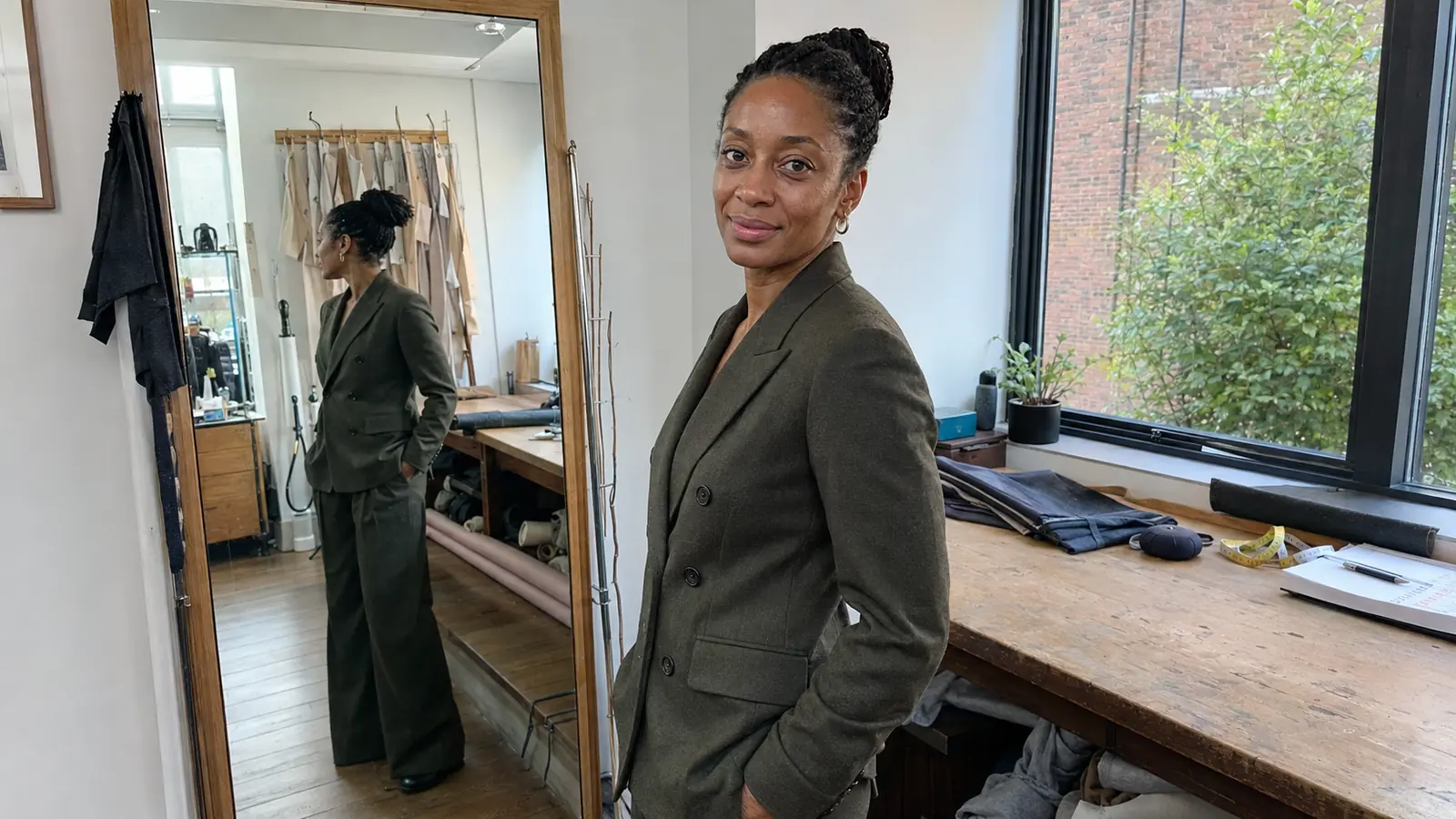
woman bespoke olive suit fitting modern london tailoring studio featured photo
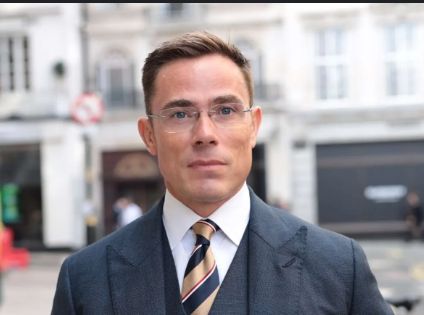
Pro Tip: If you expect frequent wear, ask about a second pair of trousers at the outset. Trousers usually take more strain than the jacket, and that can improve the life of the suit.
Bespoke sits beside made-to-measure and off-the-rack, not above them for everyone
Picture three buyers. One needs a wedding suit for one day. Another wears suits every week. A third has never found a jacket that sits cleanly across the shoulders. Each person has a different answer to “is a bespoke suit worth it?”
Here is the fair comparison we use when helping someone place the options side by side.
| Route | What you are usually buying | Best use |
|---|---|---|
| Off-the-rack | A finished suit in a standard size, with alterations where possible. Fielding & Nicholson’s published guide lists this route at £150 to £500. | Limited wear, simpler fit needs, or a lower upfront spend. |
| Made-to-measure | An adjusted base pattern with more choice over cloth, proportion and details. The same guide lists made-to-measure at £1,400 to £1,800. | Better fit and choice without the full bespoke process. |
| Bespoke | A personal pattern, fittings and refinement around your body and how you move. The guide lists bespoke at £2,500 to £6,700+. | Repeat wear, harder fit needs, occasionwear that will stay in use, or a long-term wardrobe plan. |
Off-the-rack with good alterations deserves respect. If your body is well served by standard sizing and you rarely wear suits, it can be the sensible choice. Made-to-measure becomes attractive when you want better cloth, proportion and personal details, but do not need a pattern made from scratch.
Bespoke earns its place when the standard block keeps fighting you. Shoulder line, trouser balance and sleeve pitch are hard to fix fully after a finished suit already exists. When those details affect comfort and confidence every time you wear the garment, the extra process starts to make sense.
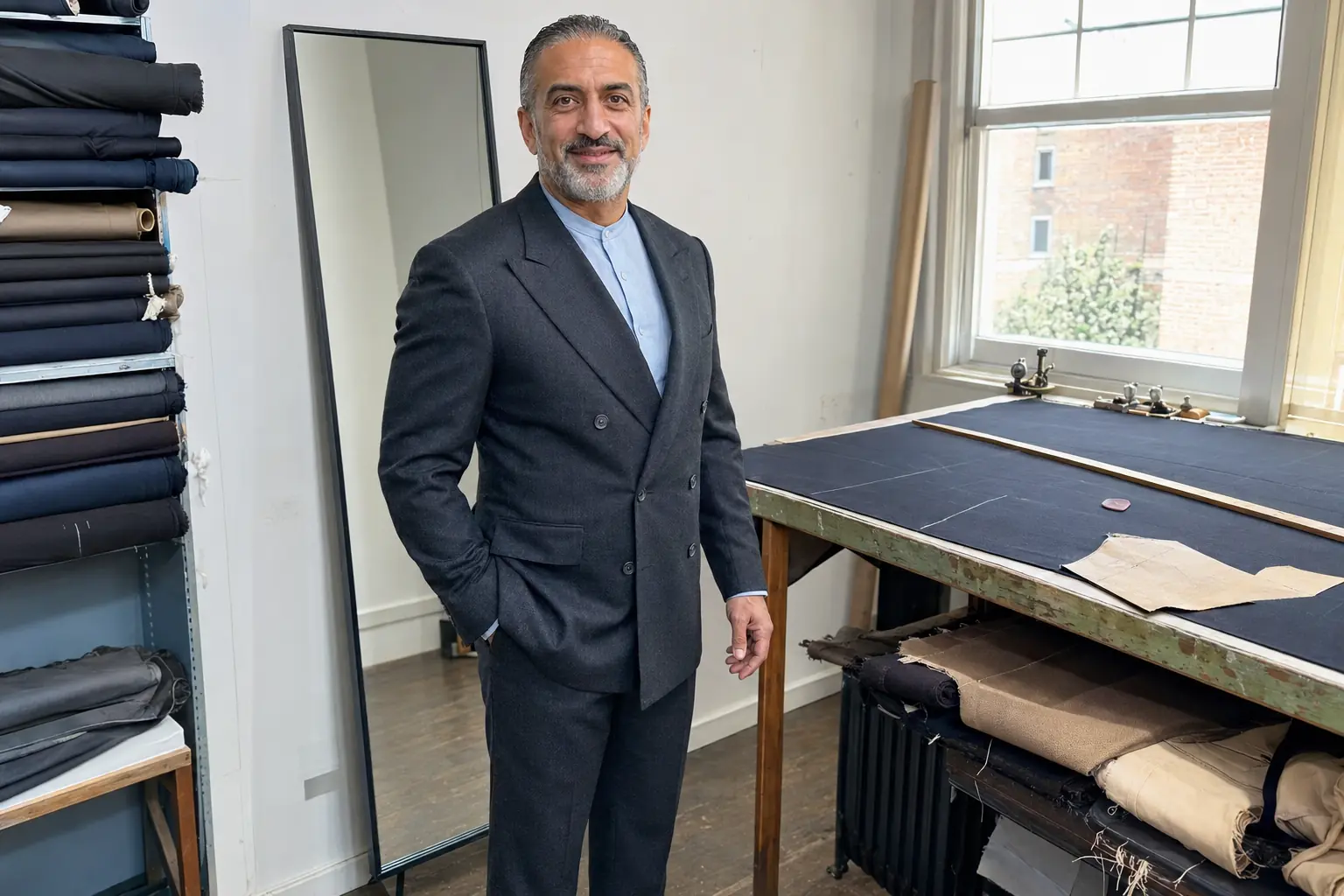
Man checks charcoal bespoke suit value in london tailoring-studio
The upcharge is paid back in use, comfort and continuity
A suit can look tidy in a mirror and still feel wrong once you sit down, reach for a glass, walk across a room, or spend a full day in it. That is where bespoke begins to separate itself from a suit that has merely been made narrower, shorter or longer.
Fit is not just closeness. Good tailoring gives the body room where it needs movement and shape where it needs structure. That matters for many people, including women, non-binary clients, disabled clients and anyone whose body is poorly served by standard blocks. The point is not special treatment; it is simply a garment built around the person in front of us.
Cost-per-wear changes the conversation as well. A business suit worn regularly, cared for well and adjusted over time has a different value from a one-off outfit. A wedding suit can also make sense when it is planned as part of your wardrobe afterwards, perhaps as a jacket and trousers you will wear separately, or as a suit for future formal events.
Aftercare is part of the value. Pressing, repairs and alterations keep a good suit working, and a retained pattern gives future commissions a better starting point. Our tailors at Fielding & Nicholson also look at cloth choice through use, because a fabric that photographs beautifully is not always the right answer for regular wear.
Reddit’s practical advice lands here: look after the garment, allow for future alterations, and think seriously about a second pair of trousers if the suit will see frequent use. Longevity is rarely one decision made at the start; it is a series of sensible choices after the suit enters your wardrobe.
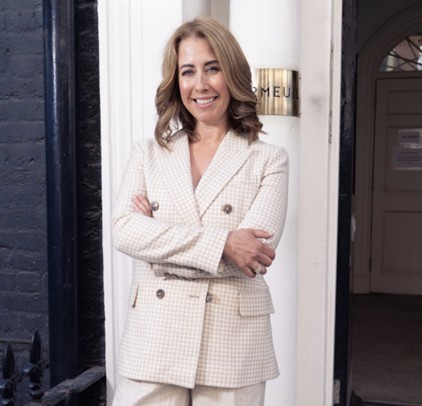
Pro Tip: Treat the first fitting as a check on balance and movement, not just size. Shoulder line, posture and sleeve pitch often determine whether the finished suit feels right in daily use.
The right choice depends on how the suit will be used
The honest test is simple: are you buying a suit to wear, refine and rely on, or are you buying the idea of owning bespoke? We would use that distinction before talking about cloth books, linings or lapels.
- Choose bespoke if fit has been a recurring problem. If standard jackets pull, trousers twist, or alterations never quite settle the garment, a personal pattern may solve problems that small adjustments cannot.
- Give bespoke serious thought if the suit will be worn repeatedly. Cost-per-wear improves when the garment has regular purpose, such as work, events or a formal wardrobe that you genuinely use.
- Pause if your body is likely to change soon. Weight change, gym changes, ageing and posture shifts can all affect how a suit fits. Alterations can help, but they cannot make every future change disappear.
- Avoid treating a one-day wedding suit as an automatic bespoke case. Bespoke can be right for a wedding when the suit will be worn again. If it will never leave the wardrobe afterwards, made-to-measure or off-the-rack with alterations may be the cleaner decision.
- Give the process enough time. Proper fittings matter. A rushed bespoke suit loses much of the reason for choosing bespoke in the first place.
- Be careful with cloth chosen only for appearance. A fabric that looks beautiful but wears poorly can weaken the value of the whole suit, especially if you expect repeat wear.
A first bespoke suit works best when you treat it as the start of a relationship with your wardrobe. The first garment teaches you what you like, what you wear, and how your tailor can refine the pattern later.
Two approaches sit in front of most buyers. One is to buy the most impressive suit once and hope the price alone carries the decision. The other is to build a useful relationship with a tailor who helps you choose what you will wear, looks after the garment, and refines the fit over time. The second approach tends to serve you better because the value is carried in use, not in the receipt.
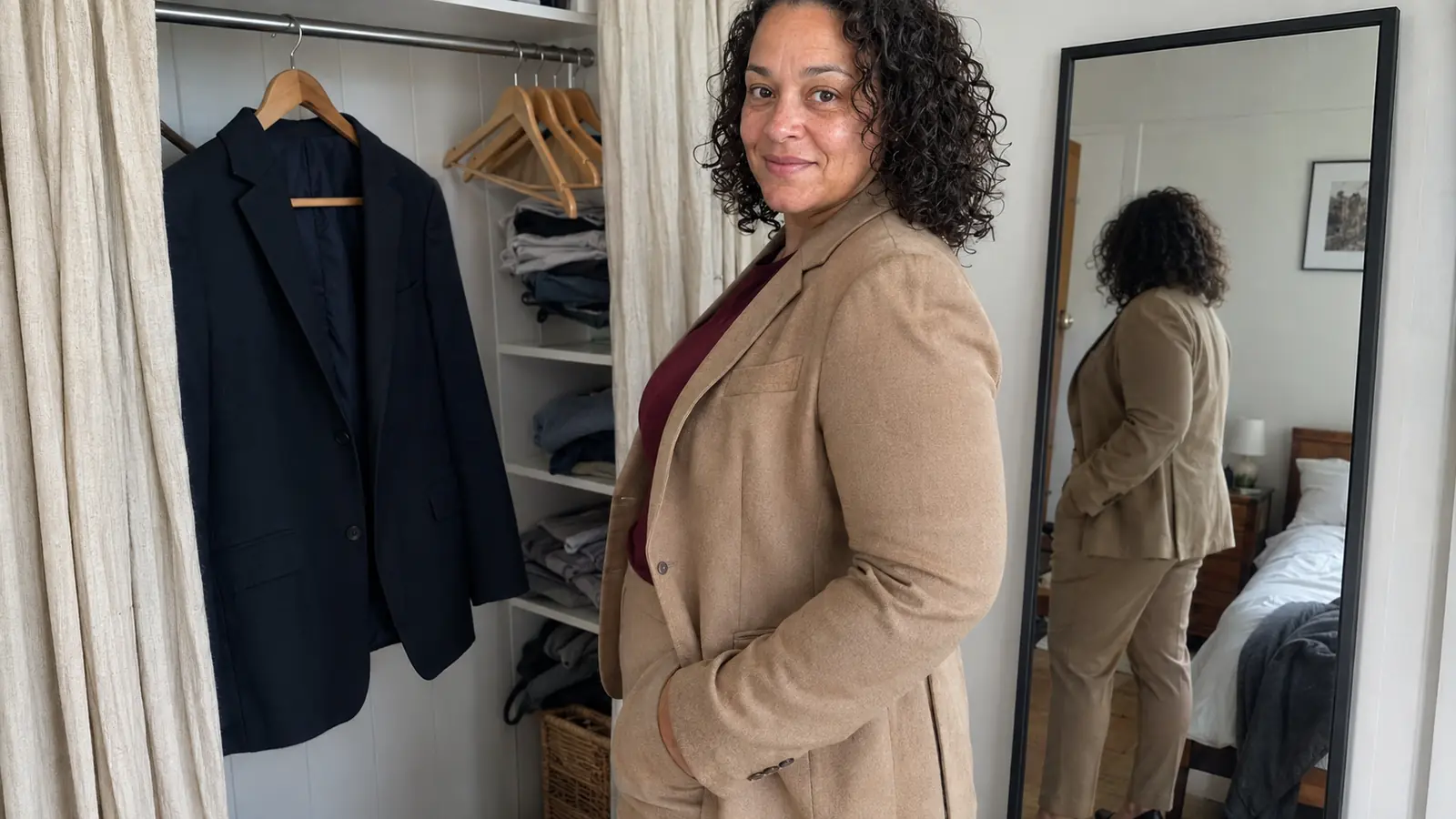
Women's Camel bespoke suit wardrobe comparison London home featured photo
Questions we get asked about bespoke suits
Can a bespoke suit be altered if my body changes?
A bespoke suit can often be altered, but the scope depends on the garment, the cloth and the change in your body. We would treat alterations as part of long-term care, not as a guarantee that any future change can be solved.
Is a second pair of trousers worth considering?
A second pair of trousers can be sensible when you expect frequent wear, because trousers often take more strain than the jacket. This can improve the practical life of the suit without changing its overall look.
Should my first bespoke suit be plain or distinctive?
Your first bespoke suit usually works best when it fits your real life. A classic cloth and shape will give you more wear, while distinctive details can be added with restraint if they still suit your wardrobe.
Does bespoke make sense for women and non-binary clients?
Bespoke can make strong sense for women and non-binary clients because standard blocks often fail a wider range of bodies and style preferences. A personal pattern allows the suit to be built around fit, comfort and expression from the start.
Is bespoke always better than made-to-measure?
Bespoke is not always the better choice. Made-to-measure can be excellent when your fit needs are straightforward and you want better choice without the full bespoke process.
This is general information, not professional advice.