How long should a bespoke suit last in real use?
A bespoke suit should remain useful for many years when the cloth, construction, fit and care all support regular wear. No responsible answer can promise one fixed lifespan for every suit, because wear frequency, body change, storage, cleaning and periodic tailoring review decide how long it keeps its value.
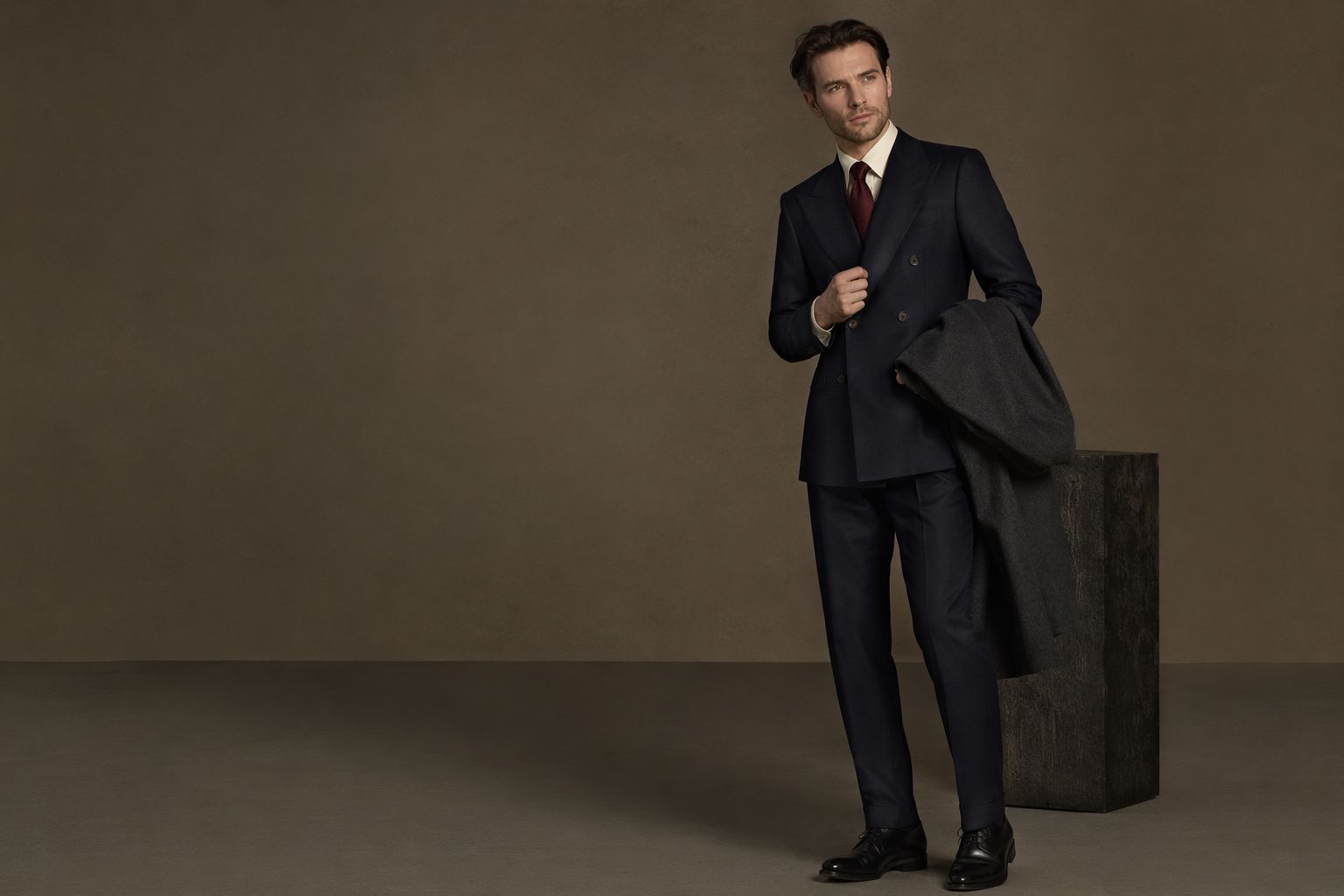
Men's Bespoke – Double breasted navy suit menswear – Sample Image
What Is In This Article
The honest answer on bespoke suit lifespan
Suit longevity is often discussed as if the only question were whether the cloth has worn through. That view is too narrow. A bespoke suit lasts properly when it still fits the body, hangs cleanly, suits the wearer’s current role and remains right for the occasions it serves.
Fabric life concerns thinning cloth, shine, abrasion, stains and damage. Fit life concerns the way the jacket sits across the shoulders and chest, how the trousers settle, and whether movement still feels easy. Style life concerns proportion, cut and purpose, because a garment can be physically sound yet no longer suit the way the owner dresses.
A lightly worn ceremony suit should not be judged in the same way as a business suit worn through frequent travel and long working days. Use creates pressure points, and those points vary from person to person. Body change, posture change and new dress codes can also alter the useful life of a suit, even when the tailoring itself remains sound.
Bespoke gives a better starting point because the garment is made around the wearer rather than selected from a standard block. The Savile Row Bespoke Association describes a bespoke garment as having its own individually handmade pattern, cut by a Master Cutter and made under that cutter’s supervision. That matters, but it does not make the suit immune to real life.
An honest expectation is therefore practical, not absolute: a well maintained suit can serve for many years, but it should be reviewed when fit, condition or purpose changes.
The reasons a bespoke suit lasts or fails earlier than expected
Durability comes from the suit and from the way the owner uses it. Cloth, construction, wear pattern, storage and cleaning all interact, which is why two suits made to the same standard can age very differently.
Cloth choice has to match use. A cloth chosen for ceremony, travel, warm rooms or frequent business wear faces different demands, and the right choice is the one that suits that role. The same logic applies across menswear, womenswear and non-binary tailoring, because fit needs and movement patterns vary by client, not by category alone.
Construction affects how the suit holds its line. The shoulder line, jacket balance, trouser seat and seams all contribute to shape retention. A baste fitting allows major refinements before completion, but later wear can still show how the garment behaves in ordinary movement.
Wear frequency is the factor owners often undercount. Occasional use gives cloth and structure more time to recover, whereas frequent use asks more from the suit. Travel adds compression, sitting affects trouser comfort and jacket balance, and formal events can place repeated strain on the same areas.
Body change does not have to be dramatic before it matters. A slight change in posture, shoulder position, waist comfort or movement can alter the way a suit sits. That is not automatically a fault in the garment; it is often the point at which the suit needs a professional eye.
Why the first adjustment is often about real-world wear
A final fitting checks the suit under controlled conditions, but daily use tests it in ways a fitting room cannot copy. Sitting, walking, dining, presenting, commuting and travelling can all show details that were not obvious before delivery.
Fielding & Nicholson describes a bespoke process that includes consultation, cloth and style discussion, multiple fittings, and a final fitting where the garment is inspected and adjusted if necessary. That final point is useful because it frames fitting as refinement, not guesswork. Even so, a suit can look correct at that stage and still benefit from a small change after real wear.
Early adjustments should not be treated as evidence that the bespoke process has failed. A trouser hem may catch with the shoes actually worn for work. A waistband may feel comfortable standing but tight when seated for a long meal. A jacket may show a pull across the back during travel or at a lectern.
The feedback that helps a tailor refine the suit
Specific feedback gives the tailor something usable. “The waistband feels tight when seated” is better than “the trousers feel wrong.” “The jacket pulls across the back when reaching forward” is better than a general complaint about comfort.
What to record after wear
Good notes identify the place, the movement and the occasion. The owner might record whether the sleeve length works with the intended shirts, whether the trouser break still sits as planned, or whether the jacket balance changes after a full day of wear. Clear detail shortens the route from observation to adjustment.
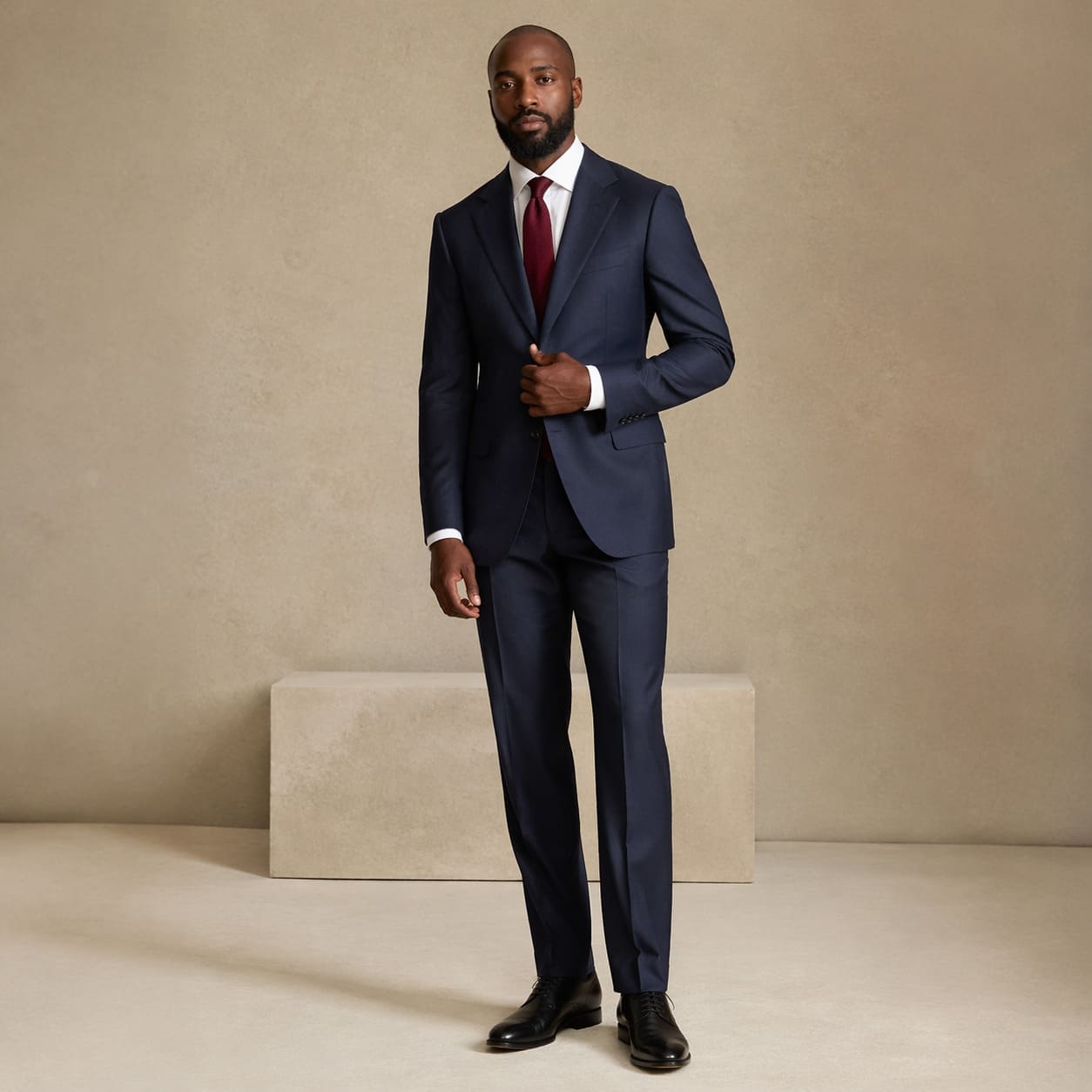
Men's Bespoke Suits – Navy tailored suit with white shirt and tie – Sample Image
Pro Tip: Keep brief notes after wearing a bespoke suit, including where it feels tight, how the trousers break and whether the jacket balance changes during a full day. Those details make the next fitting more precise.
The adjustment triggers that justify returning to the tailor
A suit deserves review when fit, condition or use has changed enough to affect how it performs. Small issues should not be ignored, but constant tinkering can also disturb a suit that is already working well.
- Body change. Weight change, posture change or a shift in muscle shape can alter the jacket chest, trouser waist, seat and sleeve position.
- Heavy or repeated wear. Frequent office use, travel or formal events can expose pressure points before they become larger problems.
- Changed purpose. A suit bought for boardroom use may need different styling decisions if it later becomes an occasion suit, or the reverse.
- Visible damage or wear. Shine, moth activity, stains, pulled seams or abrasion should be assessed before the owner assumes the suit is finished.
- Persistent discomfort. Tightness when seated, shoulder restriction, trouser drag or a collar that no longer sits correctly can all justify review.
Returning to the same tailoring team has a practical advantage because the original pattern, fitting history and intended silhouette are already known. For clients moving between London Mayfair, Manchester, Zurich and New York, Fielding & Nicholson treats long-term review as part of the same continuity rather than as a separate event each time the suit is seen.
The limits of letting out, taking in and reshaping a suit
Alteration has boundaries, even in bespoke tailoring. Inlays, seams and construction can create room for adjustment, but they do not turn a suit into something infinitely changeable.
Savile Row Bespoke Association states that coat construction includes inlays to allow adjustment to the main body seams. It also states that trousers use an international waistband with inlays of 3 to 4 inches and side seams for adjustments. In plain terms, inlays are built-in cloth allowances, but the tailor still has to judge whether using them will keep balance and proportion.
The distinction between adjustment, repair, restyling and replacement is where many owners misread the situation.
| Need | What it usually means | Main caution |
|---|---|---|
| Normal adjustment | Refining waist, hems, sleeve length or small areas of fit | Available cloth and garment balance still set the limit |
| Repair | Addressing damage, wear, loose stitching or local cloth issues | Repair may fix condition without changing fit |
| Restyling | Changing proportion, shape or visual character | The original cut can be compromised if taken too far |
| Replacement | Starting again because fit, cloth, structure or purpose cannot sensibly be restored | A tailor should inspect the garment before that judgement is made |
Trousers often offer more straightforward scope than jackets, but no owner should assume every trouser can be let out or taken in to any degree. Jackets are more interdependent because shoulder structure, sleeve pitch, chest, balance and length all work together. One change can disturb another, which is why professional alterations start with assessment, not assumption.
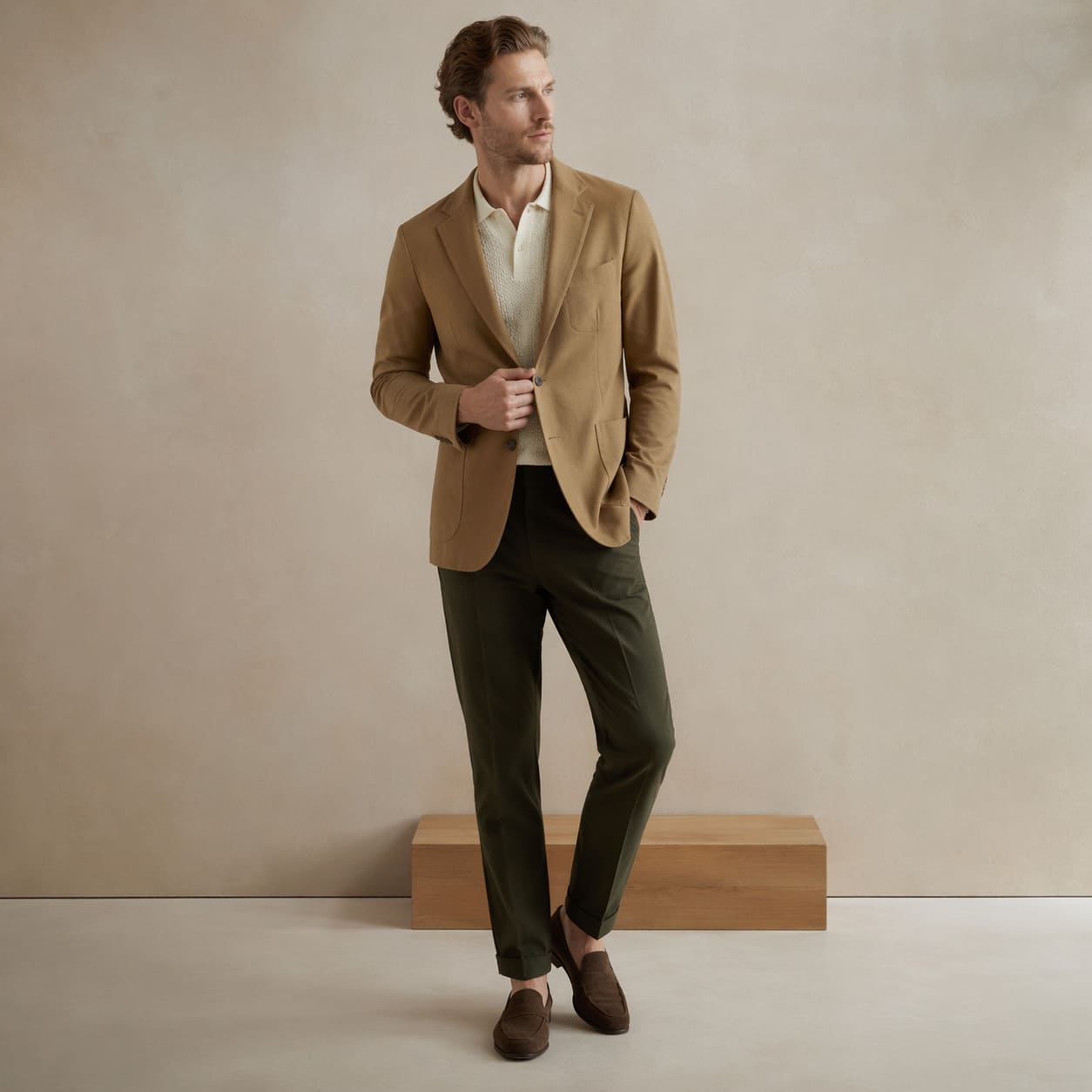
Men's Bespoke Suits – Tan blazer with green trousers – Sample Image

Pro Tip: Rotate frequently worn wool suits and leave them to rest for 24 hours before wearing them again. That helps the fibre recover and supports the suit’s shape over time.
The care routine that protects fit, cloth and structure
Daily care has a direct effect on bespoke suit lifespan because wool, lining, seams and structure all need recovery time. Good care is simple, but it has to be consistent.
The Woolmark Company advises resting wool garments for 24 hours before wearing them again, so the fibre can recover and return to its original shape. That single habit matters for anyone who wears tailoring often.
- Brush after wear. Brushing a woven wool garment lengthwise removes surface soil before it settles into the cloth.
- Air before storage. Airing helps the garment settle after wear without making dry cleaning the first response to every outing.
- Use the right hanger. A shaped or padded hanger supports the jacket shoulder and body better than a thin hanger.
- Dry with care. Wet wool should dry at room temperature, away from direct sunlight or direct heat.
- Clean sparingly. Dry cleaning should follow fabric need, visible condition and tailor guidance, not an automatic habit.
Long-term storage needs a little more thought than placing the suit in a cover. Food stains and body oils attract moths, so wool garments should be clean before being packed away. A suitable moth repellent can form part of the storage plan, but it should not be treated as a substitute for cleaning and sound storage.
Why the real value of bespoke is measured over the life of the garment
Bespoke value comes from continued usefulness. Price matters, but the sharper test is whether the suit keeps serving the wearer’s body, role, occasions and wardrobe over time.
A business suit that still fits after a change in working pattern has value because it remains in use. A ceremony suit that can be refined for a later event has value because it has not become a single-occasion object. A travel-heavy wardrobe benefits when the owner and tailor can judge which garments take the strain and which should be rested.
Client history also matters. An original pattern, past fitting decisions and previous alterations give the tailor a better record than a fresh set of measurements alone. Over time, that history can reduce repeated fit problems and make wardrobe planning more coherent.
Inclusive tailoring belongs in this same conversation. Women, men, non-binary clients, LGBTQ+ clients and clients with disability-related fit needs may all need garments reviewed around real posture, movement and use. Longevity is strongest when the garment continues to respect the person wearing it, not a fixed idea of what tailoring is supposed to look like.
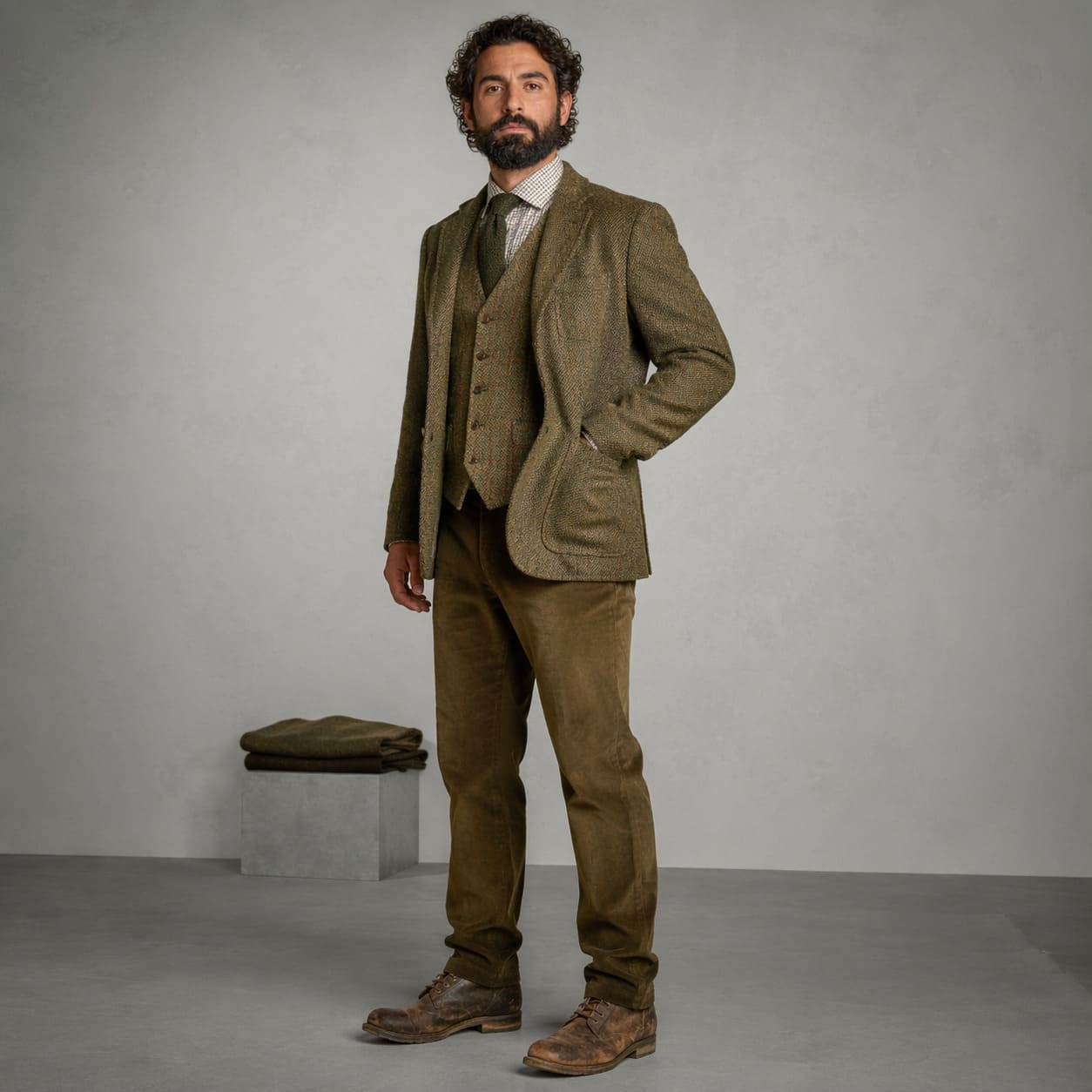
Men's Bespoke Suits – Brown tweed three piece suit with waistcoat – Sample Image
The misconception that a bespoke suit should never need adjustment
The common misconception is that a successful bespoke suit should remain unchanged after the final fitting. That belief sounds neat, but it ignores the way bodies, posture, use and dress needs change.
Adjustment is not the same as failure. A suit can be well cut, well made and still need refinement after repeated sitting, travel, ceremony wear or a shift in body shape. Built-in adjustment options are part of the logic of long-term ownership, not proof that something went wrong.
Replacement becomes the sensible answer only when fit, cloth condition, structure or purpose can no longer be restored without distorting the garment. Until then, the better question is not whether the suit has changed. The better question is whether a skilled review can return it to useful life.
The misconception to leave behind is simple: untouched means successful. Untouched can simply mean unreviewed, and unreviewed is a poor measure of a suit meant to live with its owner.
Frequently asked questions
Should a bespoke suit be dry cleaned before long-term storage?
A wool suit should be clean before long-term storage because food stains and body oils can attract moths. Dry cleaning is one option, but the right decision should match the cloth, visible condition and tailor guidance.
Does a baste fitting guarantee that no later adjustment will be needed?
A baste fitting allows major fit changes before completion, but real wear can still reveal small refinements. Sitting, travel and repeated movement test a suit differently from a fitting appointment.
Can moth damage always be repaired on a bespoke suit?
Moth damage should be inspected before any decision is made. Small local issues may be repairable, but larger damage can affect cloth integrity and the overall look of the garment.
Do womenswear and non-binary bespoke suits need different maintenance?
The care principles are broadly the same, but fit review should reflect the wearer’s body, posture, movement and style needs. Good maintenance follows the garment and the person, not a gender category.
How should a frequent traveller manage a bespoke suit?
A frequent traveller should rotate suits where possible, allow wool time to recover after wear and avoid keeping a suit compressed longer than necessary. Travel can reveal fit and wear issues earlier, so persistent pulling, shine or discomfort deserves review.