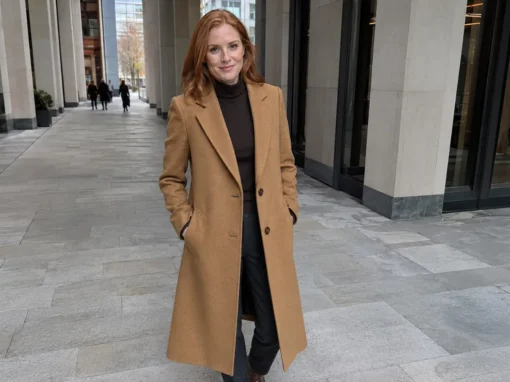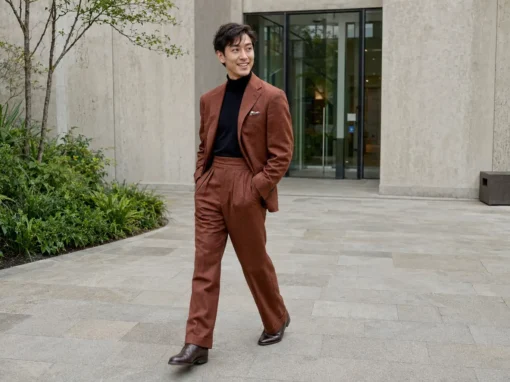
What should you wear to a university graduation?
Wear clothes that meet the university’s rules, sit neatly under academic dress, feel comfortable for standing, walking and photographs, and still suit your own style. Graduates should check gown, hood, cap and footwear rules first. Guests should aim for respectful formalwear that supports the ceremony and does not draw focus.
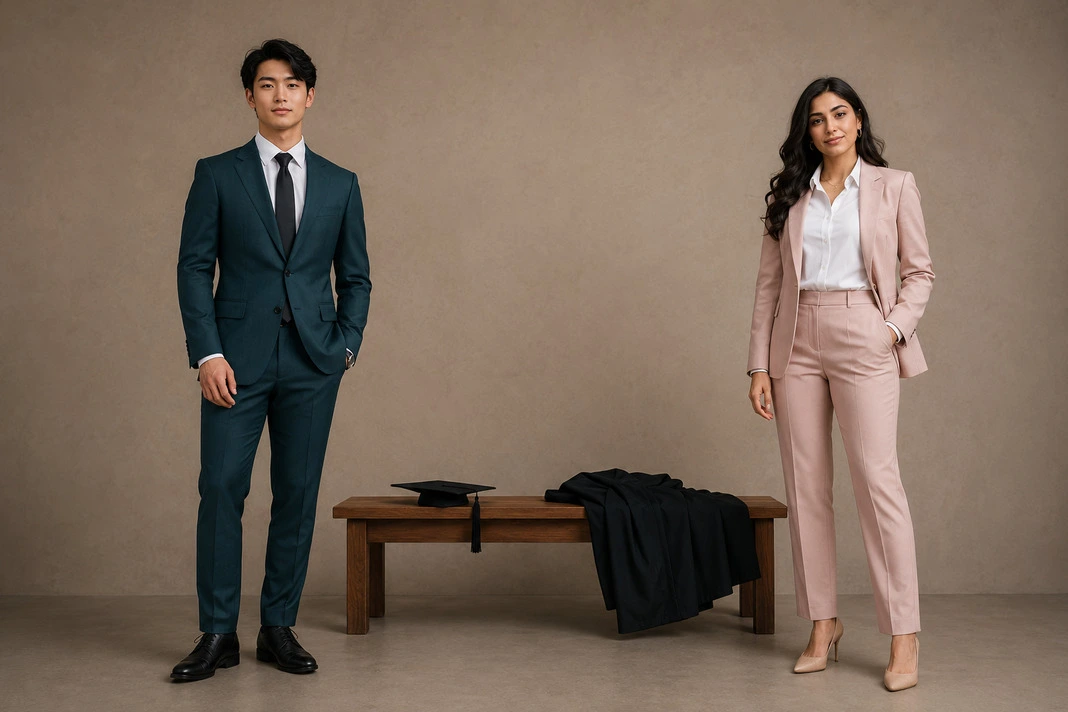
Graduation attire showcasing a men's teal tailored suit with tie alongside a women's blush pink trouser suit with coordinating blazer and formal graduation-ready styling.
What Is In This Article
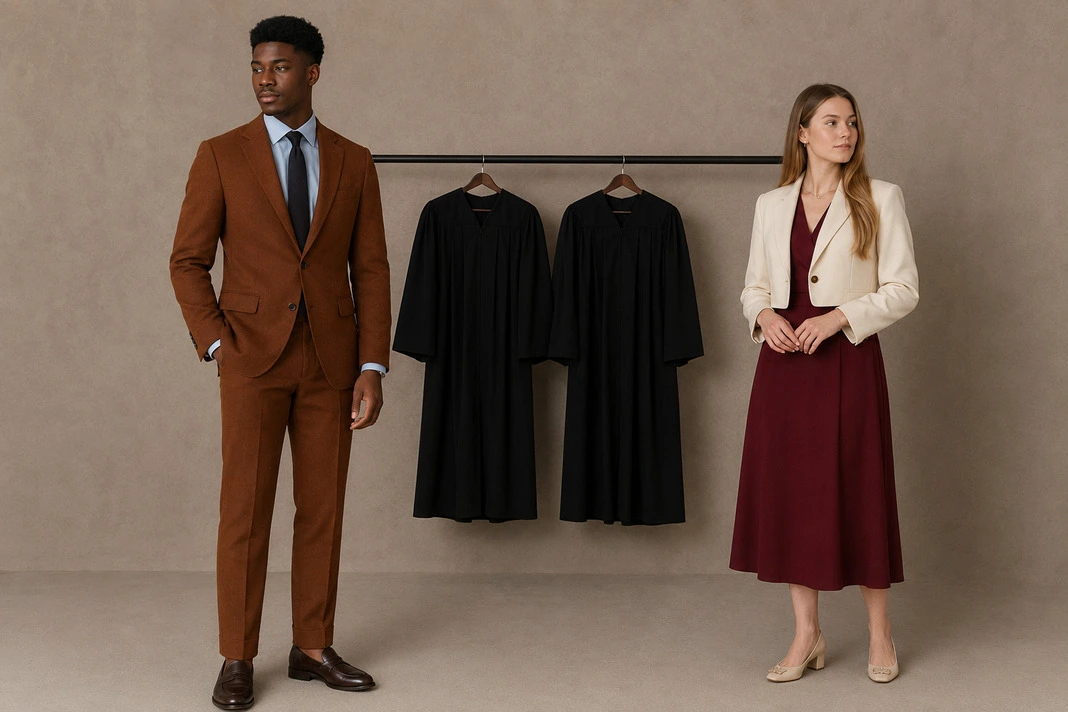
Graduation formalwear featuring a men's rust tailored suit with white shirt and brown shoes alongside a women's ivory blazer, burgundy midi skirt and coordinating graduation-ready separates.
The first decision is the dress code, not the outfit
A polished suit, dress or trouser suit can still be wrong for graduation if it clashes with the gown, leaves nowhere for the hood to attach, or breaks the university’s footwear rules. Graduation dressing has two tests: the outfit must satisfy the institution, and it must look appropriate in a public ceremony.
Graduate and guest requirements are different. Graduates usually have academic dress rules to meet, including the cap, hood and gown system used by their own university. Guests have more freedom, but the setting still calls for formality and restraint.
The University of Cambridge gives a clear example of how strict some ceremonies can be. Cambridge says graduation dress has two parts, formal dress and academical dress according to the degree, and its dress code is strictly enforced. It also warns that graduands who do not observe the dress code may not be permitted to graduate on the day, with dress checked on arrival at the Senate-House.
A sensible order prevents costly mistakes:
- Check the graduate’s university or college dress code.
- Confirm robe, hood and cap requirements.
- Check footwear restrictions.
- Ask whether national, cultural or military dress needs approval.
- Choose the outfit only after those points are clear.
No single UK graduation dress code covers every university. Older or more tradition-led institutions may set tighter rules, and even less formal ceremonies can still require smart clothing and full academic dress. Guests can use the same first step in a lighter way: read any ceremony guidance before deciding how formal to go.
The graduate outfit has to work underneath the gown
A graduation outfit is partly hidden, but the visible details do most of the work. The collar, front fastening, shoulders, cuffs, trouser line, hem and shoes all affect how the gown hangs and how the graduate appears in photographs.
Imagine a smart outfit with a soft neckline, no front button and relaxed shoulders. It may look elegant on its own, yet the academic hood can slip, twist or sit flat against the back. University of Exeter says its robe-makers recommend suit jackets and shirts with visible top buttons because jackets help fill out the shoulders and visible buttons allow the hood loop to attach. University of Reading also recommends a buttoned blouse or shirt because it makes the hood easier to attach, and suggests safety pins for the hood and hair grips for the cap.
The strongest graduate options
Good graduate outfit ideas usually start with structured, sober formalwear, then adapt to the individual. A dark suit, trouser suit, skirt suit, long-sleeved dress, smart separates or modest formalwear can all work where the university rules allow them.
Correctness does not require everyone to look the same. A graduate can wear a sharp jacket and trousers, a formal dress, a skirt suit, a blouse and tailored trousers, or a piece of non-binary formalwear that feels right and photographs cleanly under the gown. Fielding & Nicholson Tailoring often approaches ceremonial dressing through proportion first. The garment needs to hold its line under academic dress, then express the wearer through cloth, cut and detail.
Colour should be considered through the lens of the gown and hood. Very pale, glossy or highly patterned pieces may attract more attention than intended in photographs, but no universal colour rule applies across all ceremonies. The safer question is whether the outfit looks calm beside black or coloured academic dress.
The fit details that matter under robes
Shoulder shape matters because the gown and hood rest over it. A jacket with enough structure can give the academic hood a cleaner base, but an overbuilt shoulder may feel hot or bulky once the gown is added. Sleeve length also deserves care, since cuffs can show in photographs and during handshakes.
Trouser break should be neat enough to avoid bunching over the shoe. Skirt and dress hems should allow comfortable walking, sitting and steps without constant adjustment. Collar stability matters because the neckline is often one of the few visible areas after robing.
Waistbands and hems
Ceremonies involve waiting, sitting, standing and walking in front of people. A waistband that feels fine for a short fitting can become distracting across the day, especially under a gown. Hemlines should be judged with the actual shoes, because a small change in heel height can alter the whole line of the outfit.
Professional alterations can solve many of these problems. Shortening sleeves, refining a waist, adjusting a hem or correcting trouser length may be enough if the outfit already meets the dress code.
The place for national, cultural and military dress
National, cultural and military dress can be dignified and deeply fitting for graduation, but the graduate must check the institution’s process. University guidance varies, and approval may depend on the specific ceremony.
The practical test remains simple: the gown must fit properly over the outfit, and the academic hood must sit securely. A garment can carry personal meaning and still respect the ceremony’s formal structure.
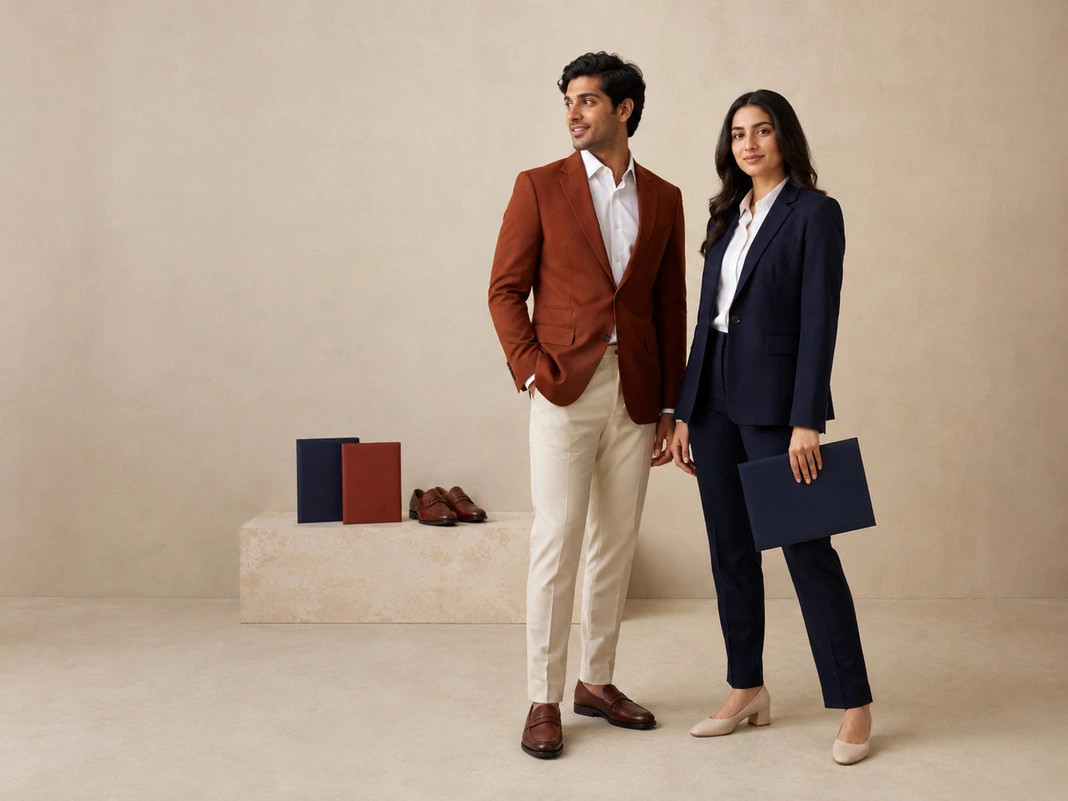
Graduation clothing with a men's rust blazer, cream trousers and brown loafers paired with a women's navy tailored skirt suit and ivory blouse.
The guest outfit should be formal without taking over
Guests should dress as though attending a formal public ceremony where photographs matter and the graduate remains the focus. That usually means polished clothing, clean lines and shoes that suit walking, sitting and standing.
Too casual looks careless beside gowns and official photographs. Too ceremonial can feel as if the guest is competing with the occasion. The middle ground is a suit, structured jacket, smart dress, trouser suit, skirt suit, formal separates or an occasion coat that feels considered without becoming the main event.
University of Exeter advises guests to dress as if they are going to a formal occasion and asks guests not to wear large hats that may obstruct other people’s view. That single detail says a lot about guest dressing: respect includes the people seated behind you.
This table separates the graduate’s practical demands from the guest’s formality level.
| Role | What matters most | Safe outfit direction |
|---|---|---|
| Graduate | University rules and robe compatibility | Formal clothing that works under gown, hood and cap |
| Parent or close family guest | Respectful formality and photographs | Suit, structured separates, dress, trouser suit or smart jacket |
| General guest | Smart, comfortable presence | Polished formalwear suited to sitting, walking and photographs |
Wedding-guest dressing can be a useful reference, but graduation is usually less about display. A parent outfit or partner outfit should look proud, composed and photo-ready, with enough restraint to keep attention on the graduate.

Pro Tip: Choose shoes after the hem length is set, since even a small heel change can alter how trousers or skirts fall in photographs.
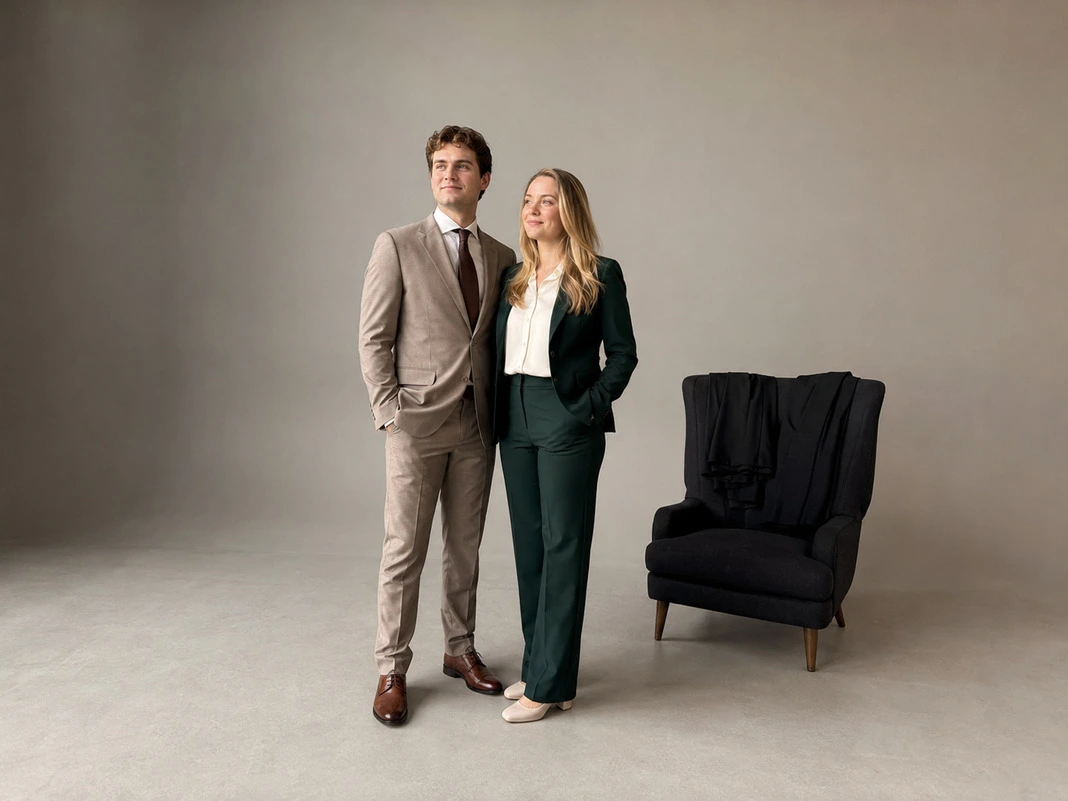
Graduation-ready formalwear featuring a men's warm taupe tailored suit with olive tie alongside a women's deep forest-green trouser suit with ivory blouse.
The wrong shoes and small accessories can undo the best outfit
Shoes are the most underestimated part of graduation dressing. They can affect compliance, comfort, walking, photographs and the way the whole outfit reads under academic dress.
Several universities treat casual footwear and clothing as a serious issue for graduates. University of Exeter asks graduands not to wear jeans or trainers, and University of Reading also does not allow jeans or trainers. Reading recommends comfortable shoes and suggests bringing a spare pair if wearing high heels.
Small day-of choices deserve the same care as the outfit itself:
- Footwear: Choose shoes that meet the university’s rules and can be walked in with confidence.
- Spare shoes: Bring a second pair where heels may become uncomfortable during the day.
- Bag plan: Graduates may need to leave handbags, phones and similar items with guests if processions do not allow them.
- Fixings: Safety pins and hair grips can be useful where the university suggests them for the hood or cap.
- Accessories: Hats and headpieces should not block another guest’s view.
These details rarely show up in outfit inspiration, but they show up quickly on the day. A graduate who can walk, sit, turn and be photographed without fuss will look more assured than someone constantly adjusting a hood, hem or shoe strap.
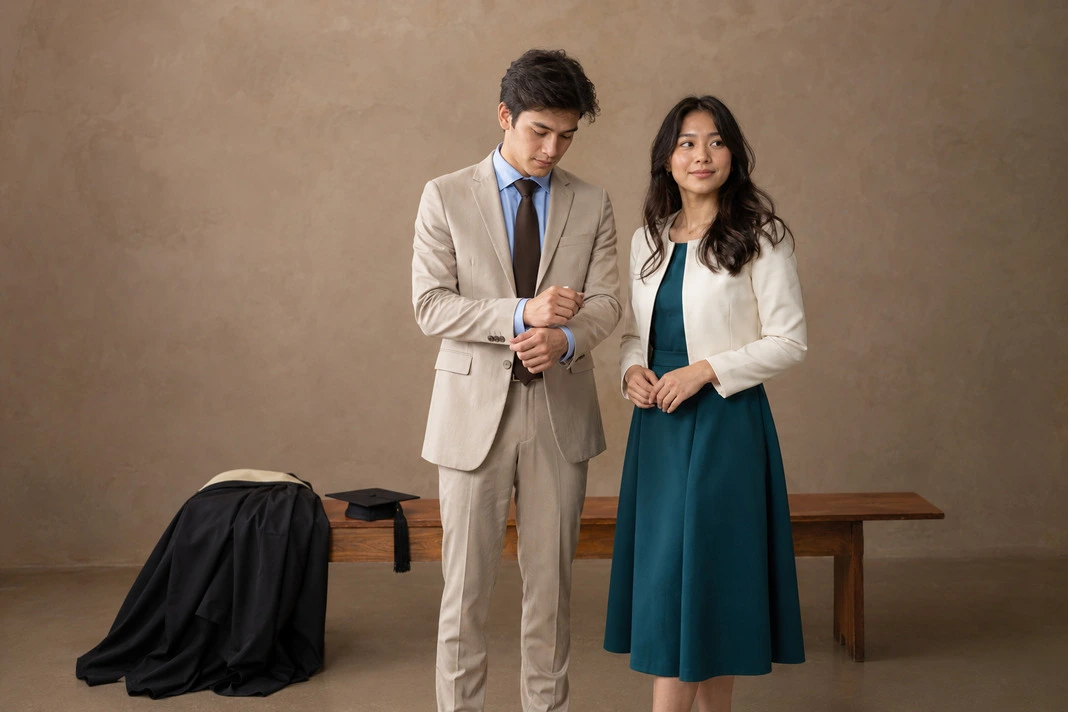
Graduation fashion including a men's light stone suit with blue tie and a women's teal midi skirt with ivory blazer for polished graduation day dressing

Pro Tip: If the gown or hood must attach to a shirt or jacket, check the front fastening early so the outfit works smoothly on the day.
Why tailoring and alterations are about usefulness after graduation
Graduation does not automatically call for a brand-new outfit. The better question is whether the clothes can serve the ceremony and then earn a place in the wardrobe afterwards.
Someone who already owns a suitable suit, dress, trouser suit or jacket may need only small refinements. Sleeve length, shoulder balance, trouser break, hem length and waist comfort can change the impression of an outfit without changing its character. That route makes particular sense when the garment already meets the university’s rules and simply needs to sit better under a gown.
Ready-to-wear can also work well if it is chosen with alteration in mind. A jacket that fits the shoulders but needs sleeve adjustment is often easier to refine than one with poor shoulder line. Trousers that need a hem are a simpler problem than trousers that pull at the seat or waistband. Dresses and skirts should be assessed for movement as much as appearance, because graduation involves walking, sitting and standing in view.
Commissioning a bespoke graduation outfit makes most sense when the garment has a future beyond the ceremony. Fielding & Nicholson Tailoring works in that space where fit, cloth, proportion and inclusive occasion dressing need to come together for repeated wear. A well-cut suit, jacket, trouser suit or formal dress can move from graduation photographs into interviews, formal dinners, work events or family occasions without feeling like a one-day costume.
The strongest graduation garment is rarely the loudest one. It is the piece that looks right under academic dress, feels comfortable for the ceremony and still makes sense once the gown comes off.
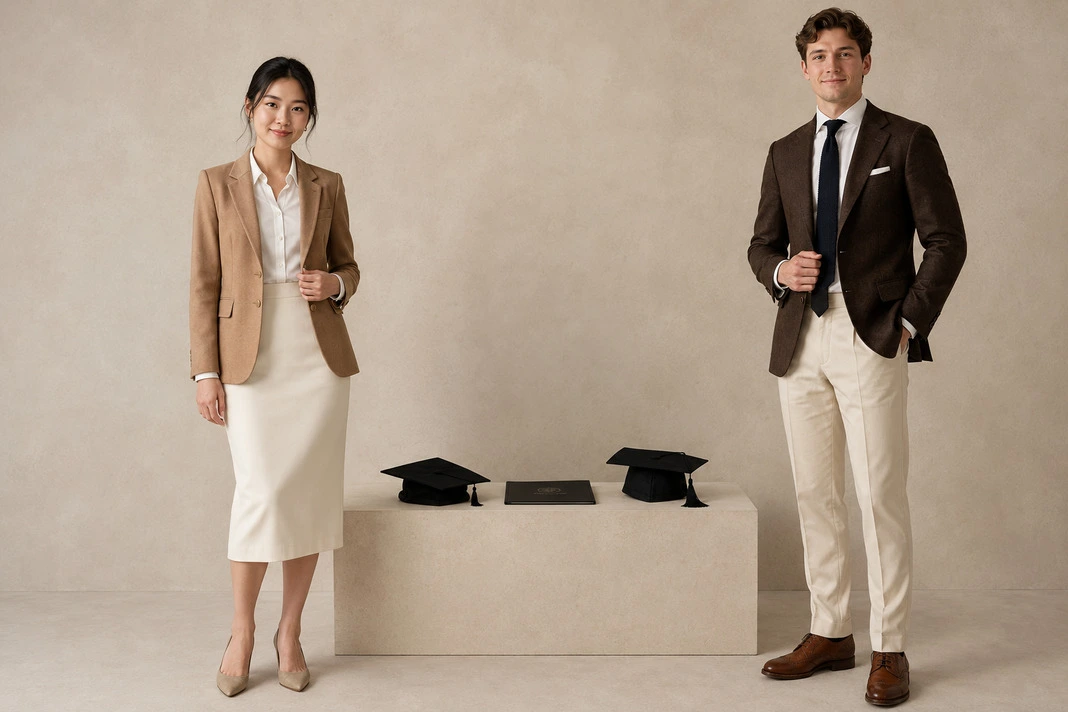
Graduation outfit inspiration with a men's dark brown blazer, white shirt and cream trousers paired with a women's camel blazer, ivory fitted dress and elegant graduation styling.
The real graduation outfit question is whether the clothes support the ceremony
Many people arrive at this topic asking how formal they need to be. A better question is whether the outfit supports the ceremony in every practical sense: the rules are met, the gown sits properly, the shoes behave, the photographs look composed and the person wearing the clothes still feels like themselves.
Correctness and individuality are not opposites. A well-judged graduation outfit gives the institution its due without flattening personal style. The final test is simple: if the clothes let the graduate or guest move through the day with ease, respect and confidence, they are doing their job.
Frequently asked questions
Do graduates have to wear a suit to graduation?
No, a suit is not always required because university rules vary. Many ceremonies allow other formal options such as dresses, trouser suits, skirt suits, smart separates, national dress or military dress where permitted.
Can national dress be worn under a graduation gown?
National dress may be allowed by some universities, but graduates should check the exact process before the day. The gown still needs to fit over the outfit, and the hood must sit securely.
Are bright colours unsuitable for graduation photographs?
Bright colours are not automatically wrong, but they should be judged beside the gown and hood. Strong colour can work well if the cut is formal, the proportions are calm and the outfit does not distract from the ceremony.
Does a graduate need to buy a new outfit?
A new outfit is not always needed. Altering an existing suit, dress, jacket or pair of trousers can be enough if the clothing meets the dress code and works neatly under academic dress.
How can a graduation cap stay secure?
Hair grips can help secure a cap where the university suggests them. Graduates should also check whether the cap is required, because some institutions treat the mortarboard differently.
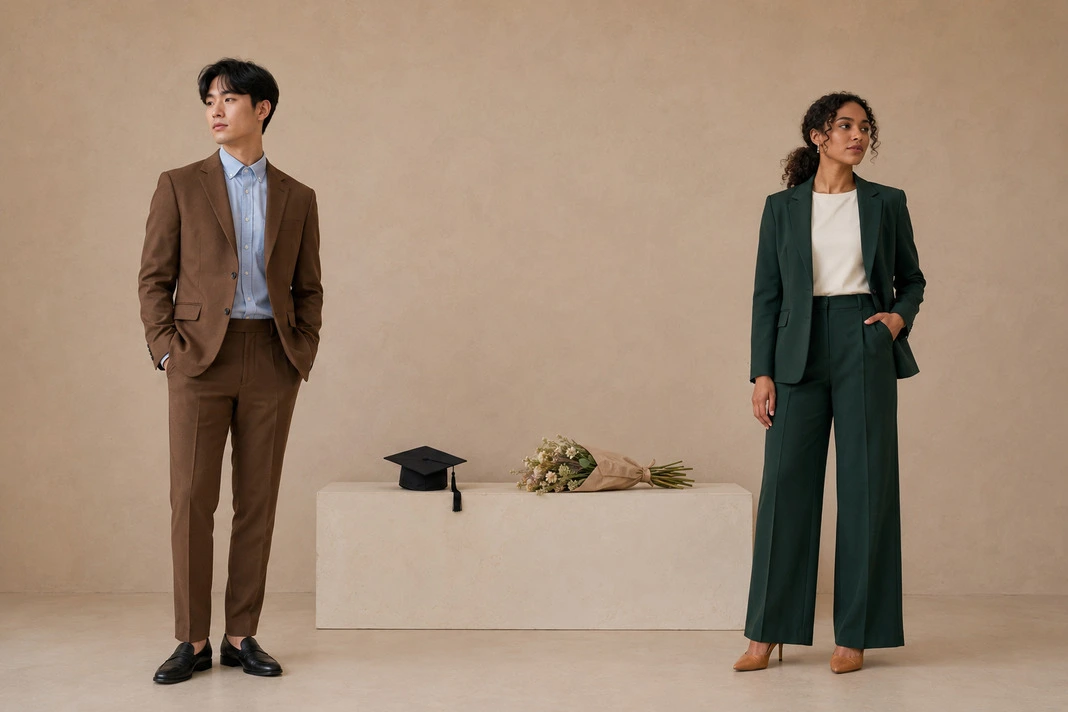
Graduation attire featuring a men's tobacco-brown suit with pale blue shirt alongside a women's forest-green wide-leg trouser suit and ivory shell top.