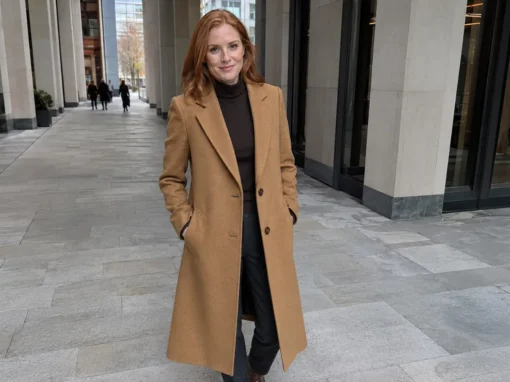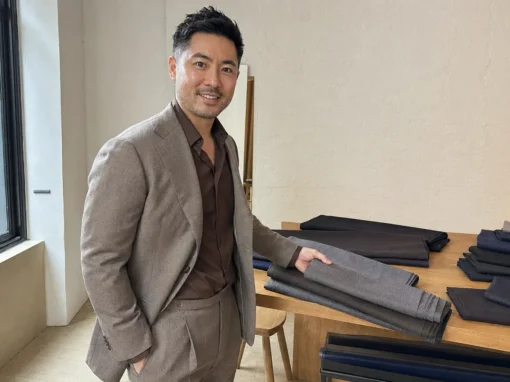
Why do tailoring and travel belong together?
Tailoring and travel belong together because both work best when they are built around the individual. Modern luxury has moved away from display and formality, and it now centres on comfort, adaptability, and a sense that everything fits the way a person actually lives and moves.
A true partnership between travel and tailoring
Whilst we are a British tailoring house focused on modern, bespoke tailoring, Cazenove+Loyd create luxury travel experiences built entirely around personalisation, comfort, and access. Different worlds on paper, but very similar thinking underneath: making things feel effortless, considered, and genuinely personal. This collaboration actually started quite simply.
Our Head of Creative, Ravi, met Kevin from Cazenove+Loyd at a networking lunch in London. A few conversations (and a couple of drinks later), it became pretty clear they were both approaching luxury in the same way. Less about excess or formality, more about ease, experience, and creating something that actually fits around how people live and travel today. The idea grew from there and naturally turned into this partnership. Because once you start talking about it, tailoring and travel really do belong together.
When you travel regularly, you start to notice what you wear matters more. You want pieces that feel easy after a long flight, work indifferent climates, and still make you feel sharp enough for dinner in a new city, whether that’s Dubai, Paris, or somewhere like Mykonos. And that’s where tailoring earns its place.

Fielding and Nicholson luxury travel tailoring partnership with Cazenove+Loyd
What Is In This Article
Luxury Has Shifted: Comfort and Personalisation Outrank Excess
Luxury looks different now. The old signals still exist, but they carry less weight than they once did.
A traveller can have the finest hotel suite in the city and still feel out of place if their clothes pinch, overheat, crease badly, or demand too much attention. By contrast, someone in a well-cut jacket with the right cloth often looks settled immediately, because comfort reads as confidence.
That same shift has changed both luxury tailoring and bespoke travel. Tailoring houses and travel companies used to be judged heavily on spectacle, polish, and ceremony. Modern expectations are quieter and more exacting. People want a personal experience that works smoothly, reflects individual needs, and adapts without fuss.
Comfort now signals discernment. Personal relevance matters more than excess. A tailored experience, whether it concerns a jacket or an itinerary, succeeds when it feels natural enough to forget about.
Fabric Isn’t Just Material. It’s the Difference Between Feeling Ready and Feeling Wrong
You notice fabric most when you have chosen badly. After a long flight, that truth arrives fast.
Imagine stepping into a warm airport terminal in a heavy cloth that traps heat and creases at the first bend of the arm. The cut may be excellent, but the whole effect starts to unravel within minutes. A travel wardrobe rises or falls on what the fabric can do once real life begins.
Lightweight tailoring earns its place here. Breathable cloth, softer construction, and sensible fabric weight make movement easier and packing less stressful. A crease-resistant suit can recover well after time in a case, whereas a stiff or overly delicate cloth can look tired before the day has properly started.
Textile mills and fabric specialists often separate cloth by season, but travel complicates that neat system. One trip may include a cool departure, a humid arrival, and an evening room with strong air conditioning. Travel-friendly fabrics work because they can bridge those shifts without feeling wrong in every setting.
Versatility, in this sense, has nothing to do with blandness. Climate-appropriate clothing should still have character. The point is that a jacket or pair of trousers should stay comfortable, hold shape, and let the wearer focus on the city ahead instead of the cloth on their back.
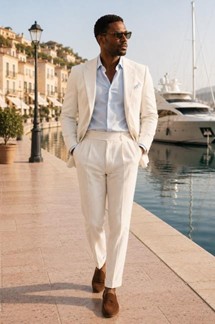
Men's cream linen suit harbourside summer style
Every Destination Demands Its Own Kind of Tailoring. There’s No Universal Solution
No single travel suit works everywhere. That idea sounds efficient, but real destinations expose its limits.
London often rewards structure, depth of cloth, and a certain visual restraint. Dubai asks for something lighter in weight and easier in construction, with breathability carrying far more importance than formality alone. The same jacket that feels composed in Mayfair can feel oppressive under Gulf heat.
Paris tends to favour an ease that still looks considered. Clothes can be polished without appearing overworked. Mykonos shifts the balance again, with softer lines, open collars, linen, and pieces that can move from daylight to dinner without looking overdressed for either.
Zurich presents a different kind of pressure. Quiet quality matters there. Fabric, cut, and proportion often speak more clearly than overt styling choices, which means that city-specific style is about reading the atmosphere as much as the temperature.
International dress codes rarely live in neat rules. Tailoring consultants who think in terms of destination wardrobe planning usually consider cultural context, pace, setting, and the tone of the trip itself. A business dinner, a resort lunch, and a gallery opening may all happen within one week, yet each asks for a different expression of the same personal style.
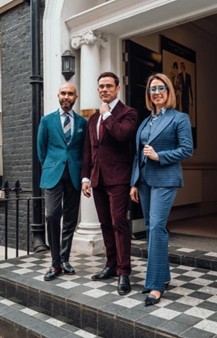
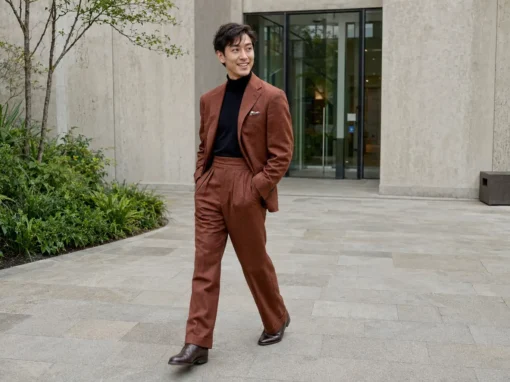
Bespoke coloured suits for men and women
Real Tailoring Travels With You. It’s Not Reserved for Special Occasions
Packing for a multi-stop trip reveals what a wardrobe is really for. Pieces that only work in one narrow setting become dead weight very quickly.
Real bespoke clothing is made for use. It should move from airport lounge to meeting, from afternoon walk to dinner, without feeling precious or stiff. Everyday tailoring has more to prove than occasionwear, because it has to keep performing under ordinary pressure.
That is where a bespoke travel wardrobe starts to make practical sense. A well-cut jacket with soft structure, trousers that hold their line, and shirts chosen with climate in mind can cover far more ground than a suitcase full of compromises. The benefit is not theatrical. The benefit is that getting dressed stays simple even when the trip is not.
Fielding & Nicholson has often framed bespoke as a long-term wardrobe relationship rather than a one-off purchase, and that perspective fits travel especially well. Clothes that are made with ease of movement, versatility, and repeat wear in mind tend to justify their place every time they leave the hanger.
The Only Wardrobe That Works Is the One Built Around How You Actually Move
A static wardrobe does not suit a mobile life.
Some people travel for boardrooms and formal dinners. Others move between warm cities, casual evenings, and weekends that need a jacket but never a tie. Personal comfort depends on those patterns, which means that personalised wardrobe planning has to begin with habits, not ideals.
One traveller may need tailored travel clothing that can handle hand luggage, changing weather, and back-to-back appointments. Another may care more about relaxed evening dressing, soft fabrics, and pieces that work across long lunches and late returns. Both need individual style, but neither needs the same answer.
Travel planners, personal stylists, and tailoring consultants all face the same basic truth. One-size-fits-all thinking breaks down the moment real schedules, real destinations, and real preferences enter the picture. Clothes succeed when they reflect movement patterns honestly.
Long-term relationships matter for that reason. As travel habits change, wardrobes should change with them. A person who once dressed mainly for city meetings may later need more resort-appropriate pieces, lighter cloths, or smarter casual options that still feel coherent. The wardrobe that keeps working is the one built around lived behaviour, not fantasy.
Insight Earned: The Best Tailoring Doesn’t Wait. It Moves With You
The best tailoring proves itself in motion, because a smooth wardrobe is not a collection of special pieces saved for rare moments but a practical part of how someone travels, arrives, works, eats, and settles into unfamiliar places, which means that the one thing worth prioritising above all else is whether the clothes support real movement with ease, since that is where comfort, confidence, and style finally stop competing and start working as one.