How do you find a good tailor in Manchester?
A good tailor in Manchester offers more than quick garment alterations. Look for clear experience, a thorough consultation process, careful fitting work, honest pricing, and a style of communication that makes you feel heard. Avoid anyone who rushes decisions, promises too much too quickly, or cannot explain how a garment will be cut, fitted, and finished.
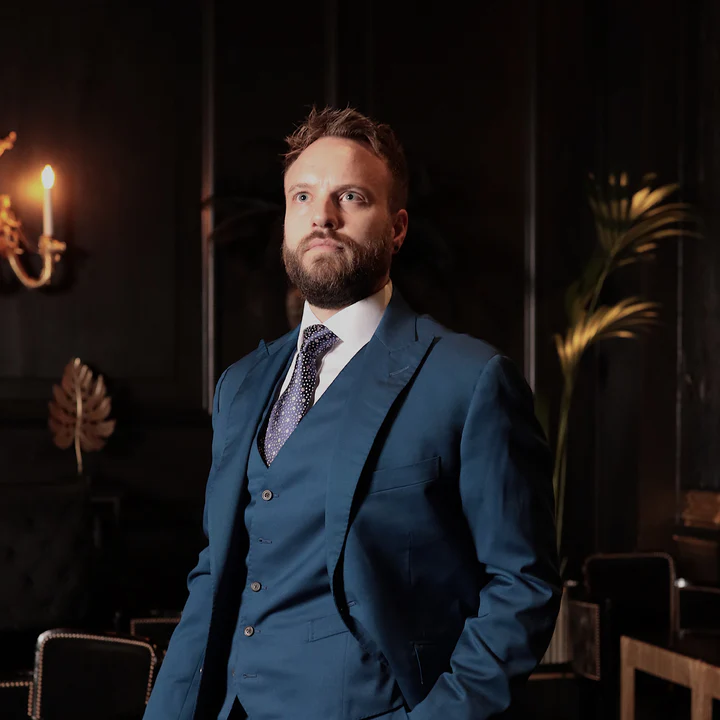
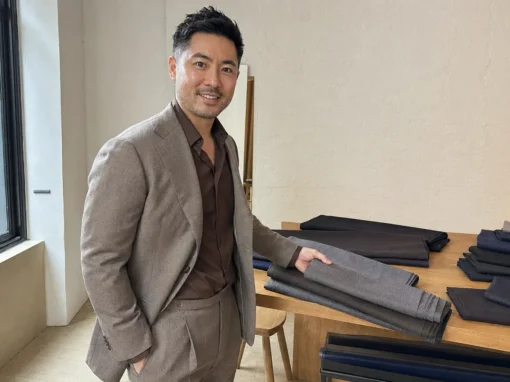
A photo of Lewis - Manchester Tailor for Fielding & Nicholson Tailoring
What Is In This Article
Understanding the Role of a Tailor: Beyond Simple Alterations
Many people use the word tailor to describe anyone who shortens trousers or takes in a waist. In practice, tailoring services can range from straightforward repairs to full bespoke garment construction, and the difference matters.
An alterations specialist adjusts an existing item. A bespoke tailor creates a garment around your body, posture, taste, and intended use. That process involves consultation, measurements, pattern cutting, fittings, cloth choice, and refinements that shape how the piece looks and feels over time.
A simple comparison helps:
- Garment alterations change a finished item that already exists.
- Custom suits are built from the start around the wearer.
- Basic repairs focus on function, such as shortening sleeves or replacing a zip.
- Bespoke tailoring houses focus on structure, balance, drape, and personal style.
Think of it like the difference between adjusting a ready-made bookshelf to fit an alcove and having one built for the room from scratch. Both have value, although they answer different needs.
Across the Manchester tailoring community, service levels vary widely. Some shops mainly handle hems and repairs. Others offer a fuller consultation process with repeated fittings and garment construction methods aligned with British tailoring standards.
What to Look for in a Good Tailor: Key Qualities and Credentials
A skilled tailor is usually easy to spot once you know what to examine. The strongest signs are visible in the process as much as the finished garment.
- Experience that can be explained clearly A reputable bespoke suit maker should be able to talk you through training, previous work, and the types of garments they handle most often. Tailoring apprenticeships, workshop experience, and time spent under established cutters all matter more than vague claims about quality.
- A process that includes proper consultation and fittings One brief appointment is rarely enough for a true bespoke result. Good tailoring expertise usually involves discussion of use, style, fit preferences, fabric selection, and at least one fitting session before the garment is finished.
- Confidence with pattern cutting and garment structure Anyone can take measurements. Fewer people can explain how shoulder shape, stance, sleeve pitch, or chest balance affect the cut. An experienced tailor in Manchester should be comfortable discussing those details in plain language.
- A portfolio with variety Look for evidence of different body shapes, cloths, and style choices. A portfolio full of near-identical navy suits tells you less than one that shows range, restraint, and consistency in finishing.
- Transparent communication A good tailor explains what is possible, what needs compromise, and how long each stage will take. That openness matters as much as technical skill, especially if you are ordering a piece for a wedding, work wardrobe, or significant event.
Savile Row traditions still influence many good British tailors, although heritage language alone proves very little. What counts is whether the tailor can translate those standards into fit, comfort, and a garment that suits your actual life.
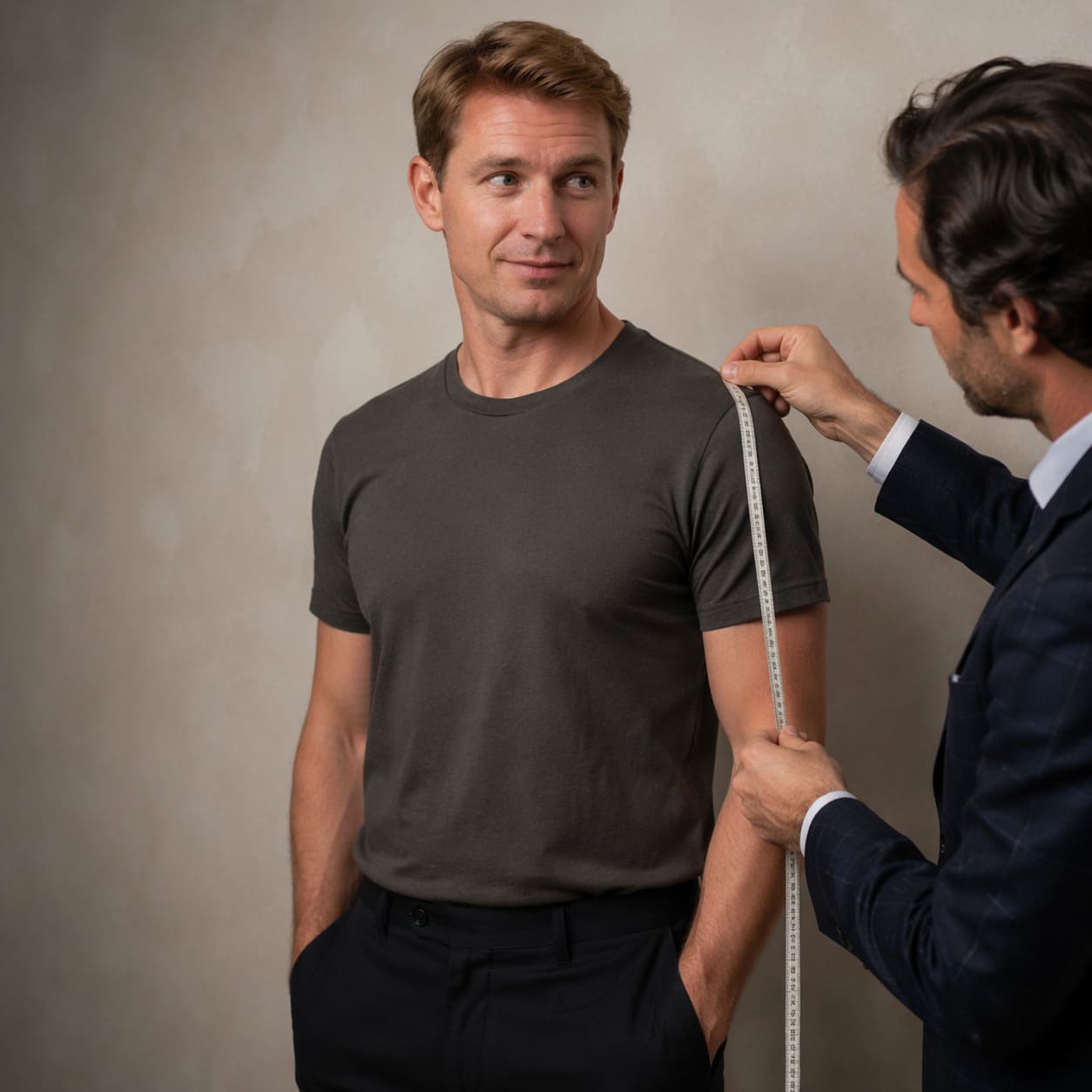
Men's Bespoke – Tailor measuring client – Sample Image
Red Flags: What to Avoid When Choosing a Tailor
Poor tailoring often reveals itself before the first stitch. A rushed meeting, unclear pricing, or evasive answers can tell you more than polished marketing ever will.
Vague pricing
If a tailor cannot explain what is included, caution is sensible. Hidden costs often appear around fittings, cloth upgrades, finishing details, or later alterations.
Unrealistic turnaround promises
A proper fitting process takes time. Anyone offering a fully bespoke garment on a very tight schedule without explaining how that is possible may be cutting corners in pattern work, fittings, or finishing.
Rushed consultations
You should not feel hurried through decisions on cloth, silhouette, or use. Manchester tailoring shops that move straight to taking payment without discussing lifestyle, preferences, and expectations may be treating a personal garment like a standard retail order.
Limited fitting support
A single fitting can work for minor alterations. Bespoke work usually needs more attention. Inconsistent results often begin when fitting stages are skipped or treated as optional.
Poor aftercare
A tailor should be able to advise on pressing, storage, cleaning, and future adjustments. If the relationship seems to end the moment you collect the garment, that says something about the standard of service.
Review platforms can offer useful clues, although they should support your judgement rather than replace it. Repeated mentions of late delivery, inconsistent sizing, or poor communication deserve attention, particularly if the same issue appears several times.
Pro Tip: Keep a record of measurements and preferences after each fitting to make future commissions more precise and efficient.
The Consultation Process: What to Expect and How to Prepare
Picture the first appointment as a conversation before it becomes a measuring session. A good tailoring consultation in Manchester should leave you with a clearer sense of shape, cloth, purpose, and timing.
In many studios, the bespoke tailoring process begins with discussion of where and how the garment will be worn. Office tailoring, occasion wear, and daily separates all call for different choices in weight, structure, and finish. From there, a tailor usually takes measurements, notes posture and body balance, shows fabric swatches, and discusses style preferences in practical terms.
At Fielding & Nicholson, the consultation model often reflects that fuller approach, with attention paid to wearability as well as appearance. That kind of method is useful because people do not always arrive with technical language, and they should not need it.
A typical process looks like this:
- Initial conversation about use, budget, taste, and timing.
- Measurement session with notes on posture, proportions, and fit preferences.
- Cloth and design choices, including lapels, pockets, lining, and trouser shape.
- First fitting to assess balance, comfort, and silhouette.
- Follow-up adjustments before final completion.
Preparation helps, although it does not need to be elaborate. Bring shoes similar to the ones you expect to wear, think about whether you prefer a cleaner or softer fit, and save a few images that reflect your taste. If you already own a jacket or pair of trousers that feels right, take that along too.
Honesty improves the result. If you dislike tight armholes, dislike shiny cloth, or need extra movement for travel, say so early. A tailor can work with clear preferences far more easily than with polite silence.
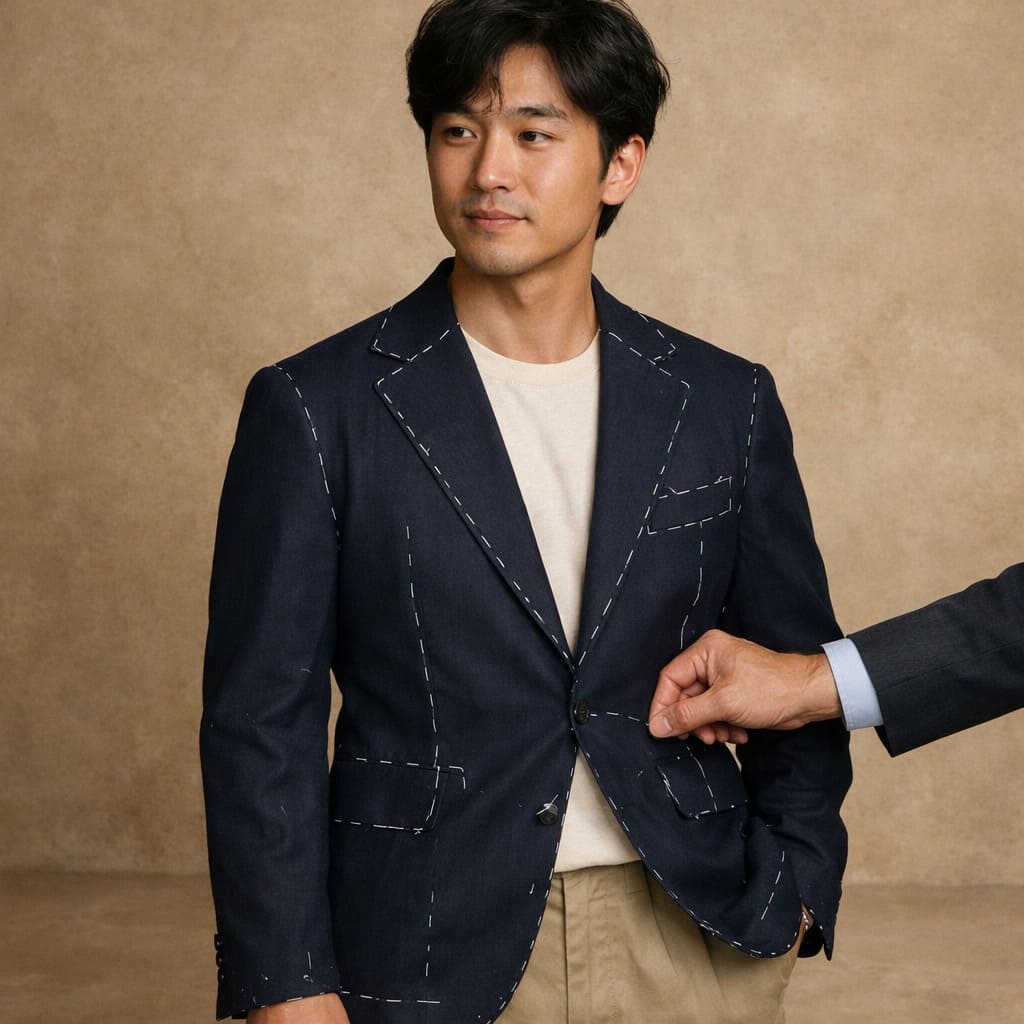
Men's Bespoke – Navy blazer with visible tailoring stitch detail – Sample Image
Assessing Fit and Finish: How to Judge the Results
A finished garment should look composed when you stand naturally, when you pull your shoulders back and pose in a mirror. Good fit has an ease to it.
Several signs are worth checking:
- The collar sits close to the neck without a gap.
- The shoulders follow your frame cleanly without collapsing or extending too far.
- The chest and lapels lie smoothly rather than pulling or bowing.
- The sleeves and trousers hang cleanly, with no twisting caused by imbalance.
- The garment allows movement without strain across the back, seat, or thighs.
- Buttonholes, lining, seam alignment, and pressing all look neat and consistent.
Comfort matters just as much as appearance. A jacket can seem impressive on a hanger and still feel restrictive after twenty minutes. Master tailors pay attention to drape and movement because a suit is worn in real life, not displayed like a showroom sample.
Finish often separates decent work from excellent work. Clean inside seams, tidy stitching, balanced pockets, and crisp but controlled pressing all point to care in garment construction. Think of those details as the difference between a room that looks fine in low light and one that still looks good in daylight, where every edge is visible.
Pro Tip: If you have specific comfort or access needs, mention them at your first consultation to ensure your tailor can fully accommodate you.
Inclusivity and Personalisation: Finding a Tailor Who Understands You
Modern tailoring works best when the client feels respected from the start. Measurements matter, although listening matters just as much.
Women, non-binary clients, LGBTQ+ clients, and people with disabilities may have needs that are often overlooked in more rigid settings. Those needs can involve body shape, comfort, accessibility, gender expression, or simply a preference for language that feels accurate and respectful. An inclusive tailor in Manchester should adapt without making the client do all the work.
One person may want a sharply cut women’s bespoke suit with traditional cloth and strong shoulders. Someone else may want a softer jacket shape that does not sit inside typical menswear or womenswear categories. Both requests are ordinary in a thoughtful studio.
Fielding & Nicholson is often noted for this broader approach, particularly through consultants who work across menswear, womenswear, and inclusive tailoring. The useful lesson is broader than any one house. Good personal tailoring begins with the assumption that the garment should reflect the wearer, not force the wearer into a narrow template.
Markers of inclusive practice include clear respect, flexible style references, thoughtful fit discussions, and a willingness to adapt the consultation around comfort or access needs. That can change the whole experience, especially for someone who has previously felt dismissed in a changing room or fitting appointment.
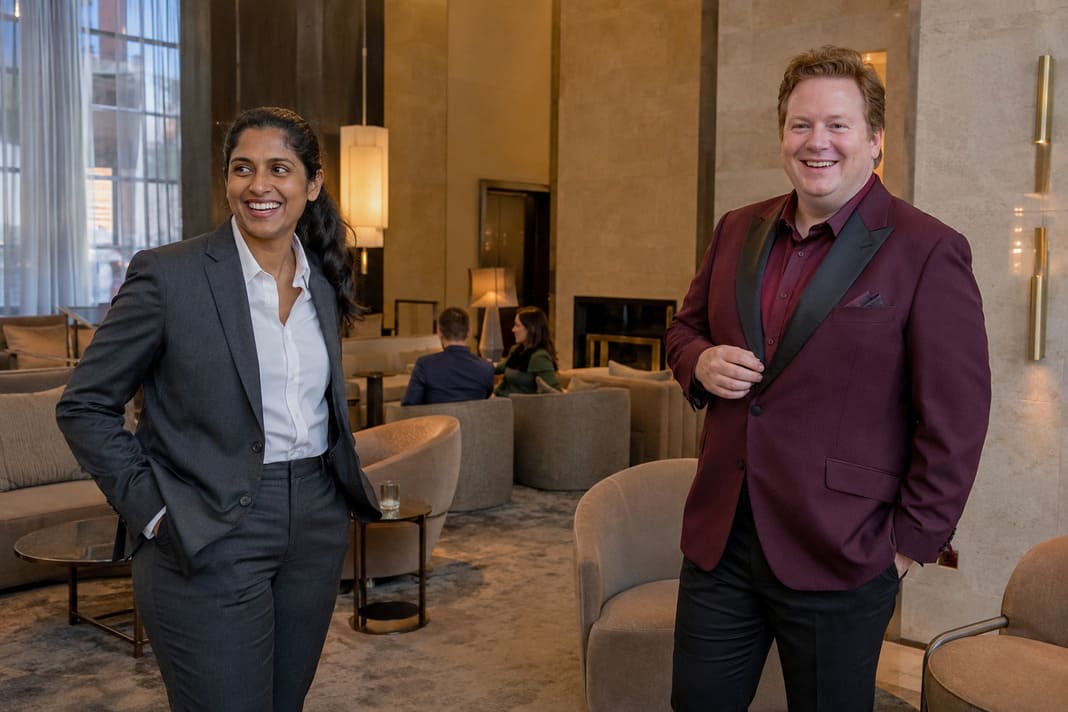
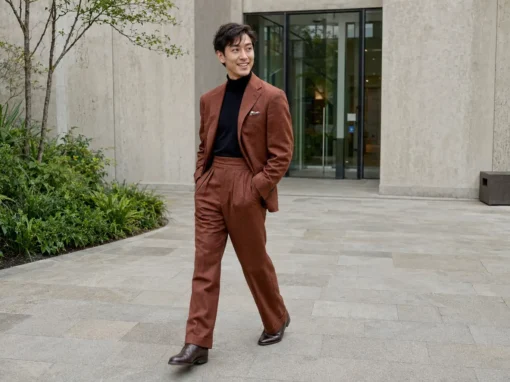
A charcoal tailored trouser suit with an open-collar shirt is paired alongside a burgundy blazer with dark tailored trousers, showcasing bespoke tailoring that embraces different personalities, body proportions, professional wardrobes and individual style preferences.
Long-Term Relationships: The Value of a Trusted Tailoring Partner
A first successful commission often changes how people think about tailoring. Once a tailor understands your posture, preferences, and daily habits, future pieces tend to become easier and more refined.
Over time, a trusted tailor in Manchester builds a record of what works for you. That might include your preferred trouser rise, how much room you like through the chest, which cloth weights you actually wear, and where previous garments needed adjustment after months of use. Continuity like that is hard to recreate with a different person each time.
Wardrobe development grows from those small observations. One client may begin with a navy suit for work, then add a textured jacket, grey flannel trousers, and a coat that works with both. Another may return for occasion wear after seeing how much easier it is to dress when cut and fit are already familiar.
Aftercare matters here as well. Repeat fittings, sensible alterations, seasonal pressing, and practical maintenance advice all support the life of the garment. Tailoring makes more sense as a long-term relationship when the pieces are worn often and looked after properly.
Common Misconceptions About Tailoring in Manchester
Tailoring still carries a few stubborn myths, and they can stop people from making sensible choices.
- All tailors are the same They are not. Some focus on garment alterations, some on made-to-measure, and some on full bespoke work. The difference shows up in consultation depth, fitting stages, and how the garment is constructed.
- Bespoke is always unaffordable Prices vary widely, and bespoke is usually a serious purchase, but blanket assumptions are unhelpful. Value depends on frequency of wear, quality of make, and whether the garment genuinely suits your needs.
- Tailoring is only for formalwear Many local tailoring studios also make jackets, trousers, shirts, coats, and other pieces suited to regular use. Casual tailoring has a place in modern wardrobes, especially where fit has been hard to find off the peg.
- You need fashion expertise to work with a tailor You do not. A good tailor translates ideas into practical choices. Knowing how you want to feel, move, and dress is far more useful than knowing technical terms.
British tailoring traditions still shape expectations in Manchester, although the best experiences tend to feel straightforward rather than intimidating. A good tailor listens carefully, explains clearly, and builds something that fits your body and your life with equal care.