Why does a suit feel too hot in summer?
A suit feels too hot in summer because heat gets trapped between the cloth, lining and your body, especially when the fabric is dense, the structure is heavy, and the fit leaves little room for air to move. Summer comfort depends on more than fabric alone. Construction, lining, cut and even the shirt underneath all affect how warm a suit feels over the course of a day.
Picture a warm July commute followed by a crowded train, a brisk walk and a meeting room with patchy air conditioning. A suit that felt acceptable at nine in the morning can feel stifling by lunchtime.
Heat builds up in a tailored jacket for simple reasons. Traditional suiting often combines an outer cloth, internal canvas, sleeve lining, body lining and shirt beneath it. Each layer can add shape and polish, but each one also affects thermal insulation and airflow.
Movement matters as well. A suit is rarely worn standing still in a cool room. People sit, walk, climb stairs, carry bags and rush between appointments. Once body temperature rises, a jacket with poor breathability tends to hold onto warmth and moisture instead of releasing it.
Off-the-peg suits can make the problem worse. Many are built to look neat on a hanger and suit a broad range of body shapes, which can mean heavier interlinings, synthetic blends and a closer fit than summer really allows. The result is a jacket that appears sleek at first glance yet feels airless after half an hour.
A few common assumptions also get in the way:
- “Lightweight” on a label always means cool to wear.
- Any wool suit will feel hotter than cotton or linen.
- A tighter fit will always look smarter.
- Removing the jacket is the only real fix for overheating in suits.
Those ideas sound plausible, yet summer suit discomfort usually comes from a combination of cloth, structure and fit, not from one simple fault.

Illustrative Image - Man in Dark Navy Suit in Warm Summer Interior
What Is In This Article
The role of fabric choice: what makes a suit breathable?
Fabric makes the biggest first impression on comfort. Before a tailor changes the shape of a jacket or softens the shoulder, the cloth itself decides how much air can move through the suit and how heat sits against the skin.
Natural fibres often perform better than synthetic-heavy blends in warm weather because they tend to breathe more easily. That does not mean every natural cloth feels cool, and it does not mean every synthetic cloth feels unbearable. Weave, weight and finish all matter. A tightly woven cloth can feel warm even if it is light, whereas an open weave can feel fresher despite having more texture.
The idea that all wool is hot is one of the most stubborn myths in suiting. Fine wool, including merino, can work well in summer because it regulates temperature better than many people expect. A breathable tropical wool often feels far cooler than a shiny synthetic blend marketed as easy care.
Here is where the main options differ in day-to-day wear:
- Merino wool: soft, breathable and often better at managing temperature than expected, particularly in lighter weights or open weaves.
- Linen: airy and dry in feel, with a relaxed surface that creases easily and suits a less formal look.
- Cotton: familiar and comfortable, though it can feel heavier and hold moisture more readily than some summer wools.
- Mohair blends: crisp, dry and good at keeping shape, which can be useful in hot weather if the weave remains open.
Weave density deserves as much attention as fibre. A cloth can be technically lightweight yet still feel stuffy if the weave is compact. By contrast, an open-weave fabric allows more air circulation, which means that the jacket does less trapping and more releasing of heat.
British wool producers and textile mills have long supplied cloths intended for different seasons, and experienced tailoring consultants usually start there. In practice, a summer suit fabric should be judged by how it feels in motion, how it drapes after several hours and how well it copes with a warm room, not just by what the swatch says. That kind of guidance is part of the value a house such as Fielding & Nicholson brings when helping clients weigh elegance against comfort.

Pro Tip: A partial or buggy lining can have a greater cooling effect than simply switching to a lighter cloth.

Illustrative Image - A dark business suit jacket in warm interior showing layered formal menswear construction
Construction details: how tailoring techniques influence summer comfort
Fabric starts the conversation, but construction decides how the jacket behaves once it is on the body. Two suits made from similar cloth can feel completely different in heat because the hidden parts are doing different jobs.
Canvas and internal structure
A fully canvassed jacket has a floating layer inside that helps shape the chest and front. A half-canvas version uses that structure more selectively, and a fused jacket relies on adhesive to bond parts together. None of these methods is automatically a summer failure, yet the weight and flexibility of the internal build can alter how much the jacket breathes and how stiff it feels when body temperature rises.
Think of lining and canvas in the same way you might think about insulation in a house. Some insulation is useful and keeps the structure stable. Too much of it in the wrong place can make the space feel sealed off.
Lining choices
Full lining gives a clean finish and can help the jacket slide over a shirt, but it also adds another barrier. Partial lining or buggy lining leaves more of the back uncovered inside, which can make a noticeable difference on warm days. Sleeve lining often stays for ease of movement, though the body of the jacket can be reduced without losing refinement.
Vents, shoulders and chest build
Vents help movement, yet they also influence how air flows through the jacket as you walk and sit. Shoulder padding and heavy chest pieces can trap warmth around parts of the body that already run hot. A softer shoulder and lighter chest construction often feel less restrictive, particularly during long periods of wear.
Savile Row tailoring standards have traditionally balanced structure with elegance, and many bespoke tailoring houses now adapt that balance more consciously for climate. Master cutters can keep the suit looking polished without forcing the wearer into an overly armoured jacket.
If you are discussing summer suit construction with a tailor, ask about three things: the amount of body lining, the weight of the internal chest structure, and whether the shoulder can be softened without changing the overall look too much. Those details often tell you more than a sales label ever will.

Illustrative Image - Man wearing a breathable light taupe linen summer suit in a minimalist interior
Fit and airflow: why a suit's shape matters in the heat
A suit can be made from a suitable cloth and still feel oppressive if the cut sits too close to the body. That often happens with modern jackets that aim for a very lean silhouette.
Imagine walking to work in a fitted suit on a humid morning. The jacket clings across the back, the sleeve feels narrow once you bend your arm, and warm air has nowhere to go. Smartness is still there, but comfort disappears surprisingly fast.
A little ease changes that experience. Air needs room to move through the jacket, around the chest and under the arms. Trousers also play a part. A very narrow leg in a dense cloth can feel hotter than many people expect, particularly on a long commute or during outdoor events.
Armholes and sleeves matter more than most wearers realise. A well-cut armhole can improve movement without making the jacket baggy, and a sleeve with sensible width can stop the whole suit feeling strained in motion. Tailoring consultants usually look for balance here, because a summer suit should neither cling nor collapse.
Useful fit considerations include:
- enough room through the chest and back for air to circulate
- sleeve width that allows movement without pulling
- trousers that skim rather than grip the leg
- vents that open cleanly when sitting and walking
Personal preference still counts. Some people like a sharper line, while others want a softer shape in warm weather. Bespoke fitting sessions make space for those choices, especially once the wearer explains where the heat builds up first. One person struggles across the upper back, another around the waist, and someone else finds the sleeves unbearable by early afternoon.

Pro Tip: Discussing armhole and sleeve adjustments with your tailor can dramatically improve comfort and movement in warmer conditions.
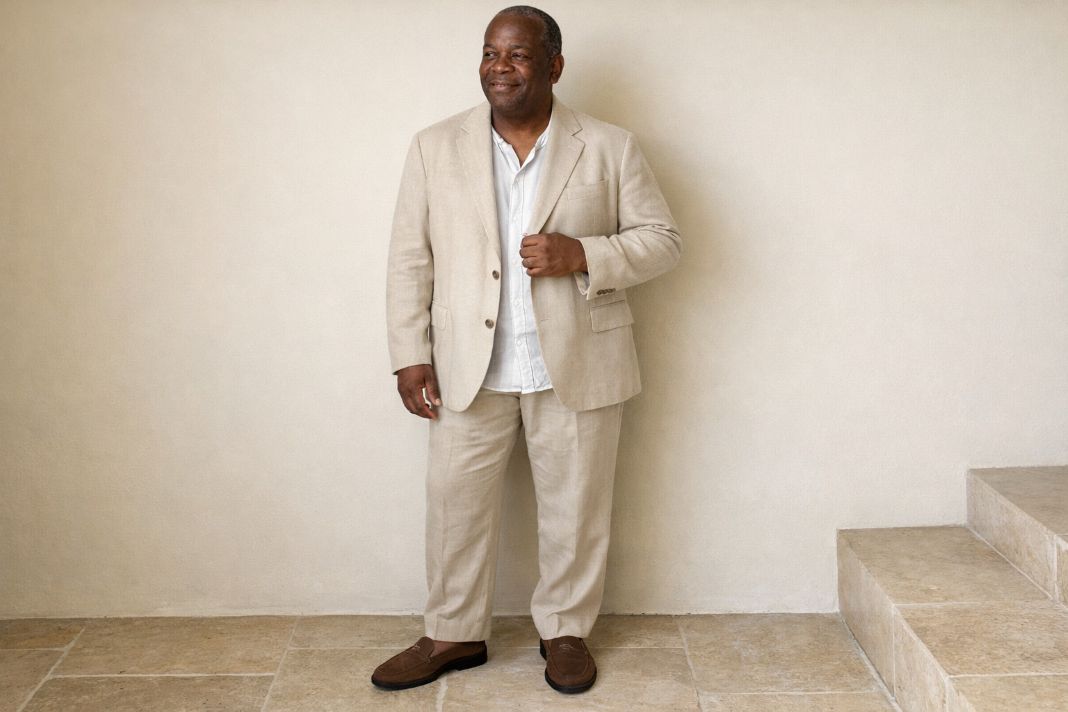
Illustrative Image - Constructed Summer Jacket and Trousers
What your tailor would change: expert adjustments for summer suits
A skilled tailor usually looks for practical changes before suggesting anything drastic. Summer comfort often comes from a series of measured adjustments rather than one dramatic alteration.
- Reduce or change the lining A lighter lining, a partial lining or less lining through the back can improve breathability. The effect is often immediate when the jacket is worn for several hours rather than tried on briefly.
- Reconsider the cloth Open-weave wool, lighter merino, linen blends or cloths with a drier handle may feel cooler than a dense business suiting fabric. Sometimes the answer is not a thinner cloth, but a more breathable one.
- Adjust the fit A jacket may need a little more ease across the back, chest or sleeve. Trousers may benefit from a slightly cleaner line through the thigh rather than a narrow, close cut.
- Soften heavy structure Reducing shoulder padding or choosing a lighter chest build can make the suit feel less insulating. The jacket still needs shape, but it does not need unnecessary bulk.
- Review functional details Vent style, pocket design and internal finishing all affect how the suit behaves in warm conditions. Small changes can alter comfort without changing the character of the garment.
Fielding & Nicholson tailors, like many bespoke tailoring experts, would usually approach this as a conversation about how and where the suit is worn. A jacket for a summer wedding has different demands from one used for daily office wear in the city.
One useful insight from experienced tailors is that alterations have limits. Lining can sometimes be reduced and fit can often be refined, but a densely constructed fused jacket in a cloth that holds heat may never feel truly comfortable in high summer. In that case, the honest answer is usually a better-designed warm-weather suit rather than repeated adjustments to the wrong starting point.
Beyond the suit: practical habits and accessories for staying cool
A suit does not work alone. Shirt choice, colour, accessories and daily habits can all affect how warm you feel by midday.
Breathable shirts make a noticeable difference. Fine cotton poplin can feel crisp, but some people prefer fabrics with a little more texture because they sit away from the skin. Heavy undershirts often add another layer of heat unless they are specifically chosen for moisture management.
Colour plays a part as well. Dark shades can absorb more warmth in direct sun, whereas lighter tones often feel easier outdoors. That does not mean everyone needs pale beige tailoring for summer. Mid-grey, soft blue and lighter brown often sit comfortably between formality and practicality.
A few sensible adjustments can help on hotter days:
- choose shirts with good breathability and avoid overly heavy underlayers
- wear unlined or lighter accessories where possible, including ties
- carry water and allow extra time for walking commutes
- adapt dress codes where the setting genuinely allows it
Personal stylists and wardrobe consultants often stress that accessories should support comfort, not fight it. A heavily constructed tie, a synthetic pocket square and a dense waistcoat can turn a warm outfit into an exhausting one.
Situations vary. An outdoor ceremony, a day of client meetings and an air-conditioned office all place different demands on formalwear. Knowing when to wear the full suit, when to remove the tie and when a lighter jacket is the more sensible option is part of dressing well in summer, not a failure of standards.

Illustrative Image - Man modelling a light blue summer suit
Rethinking summer suits: common misconceptions and forward-looking advice
One persistent myth says that all suits are inherently uncomfortable in heat. That is too blunt to be useful. Some suits are undeniably hot, yet others are built with enough thought that they remain wearable even in demanding conditions.
Older thinking often treated summer formality as a simple choice between enduring the heat or dressing down. Newer thinking takes a more precise view. Cloth can be lighter without looking flimsy. Structure can be softer without losing shape. Personalisation can improve comfort without turning the suit into something casual.
The British tailoring industry and textile innovators have spent years refining these details, including better open weaves, smarter blends and more climate-aware construction. Those changes matter because comfort is rarely visible from across the room, though the wearer feels it immediately.
Long-term wardrobe planning also changes the picture. One dense navy business suit cannot do every job in every month. A small rotation with a true warm-weather option usually performs better than trying to force a winter-weight jacket through July. That kind of thinking tends to lead to fewer compromises and better wear over time.
Summer suiting works best when it respects both tradition and the body inside the clothes. Once fabric, construction and fit are treated as part of the same problem, a suit stops feeling like a uniform you endure and starts behaving as it should: polished, comfortable and fit for the season.