
What is the difference between bespoke and made-to-measure suits?
Bespoke tailoring involves creating an entirely original garment from a unique pattern drafted for the individual. Made-to-measure uses an existing template that is adjusted based on the client’s measurements. The difference lies in how the garment is designed and constructed, which affects fit, structure, and personalisation.
What Is In This Article
Knowledge the Core Difference: Definitions That Matter
Terms like bespoke and made-to-measure are often used interchangeably, but their technical meanings differ significantly. In British tailoring, these differences are more than just marketing. They reflect distinct levels of construction.
Bespoke tailoring means a garment is created entirely from a pattern drafted from scratch, based on the client’s physical measurements, posture and preferences. Every detail is decided in consultation, with fittings used to refine the garment until it fully meets the client’s expectations.
Made-to-measure, by contrast, starts with a pre-existing block pattern. That base is then modified to match key measurements. Certain body nuances, such as asymmetry or unique posture, are typically not addressed with the same precision.
A useful analogy would be: bespoke is like commissioning an architect to design a home just for you, while made-to-measure is closer to remodelling a pre-built home to better suit your needs.
Marketing language often blurs these terms. Some brands use “custom” or “semi-bespoke” without consistency, but under British tailoring standards, particularly those upheld by the Savile Row Bespoke Association, “bespoke” has a defined meaning involving hand-cut patterns and in-person fittings.
Knowledge this distinction clarifies what you are investing in, both in terms of fit and future value.
Pro Tip: Consider investing in bespoke if you anticipate multiple fittings or garments over time, as the initial pattern can evolve with your needs.
The Fit: How the Garment Sits on Your Body
The impact of bespoke tailoring is most immediately felt in the way a suit fits. Shape, comfort and movement all stem from how closely the garment reflects your individual body.
Pattern Creation
In bespoke tailoring, each garment begins with a paper pattern drawn by hand. This factors in everything from shoulder slope to arm length, natural stance to muscle distribution. In made-to-measure, a digital block pattern is altered based on basic measurements, but does not fully account for posture or body nuance.
Shoulder and Sleeve Fit
Clients with uneven shoulders, rotated arms or prominent shoulder blades often find bespoke important. It allows for custom shaping of sleeve pitch and back panels, reducing drag or fabric collapse. Made-to-measure can struggle in these areas, often leading to compromise fits.
Torso Balance and Suppression
Bespoke suits are balanced vertically to suit your posture, particularly important for those with an arched back or forward stance. Waist suppression, the inward shaping of the jacket, is also more refined, producing a natural rather than exaggerated silhouette.
Inclusivity in Fit
Inclusive tailoring, particularly for women, non-binary clients and those with asymmetric or non-standard proportions, benefits from bespoke’s flexibility. Fielding & Nicholson tailors, for example, work regularly with clients across a full spectrum of body types, ensuring garments follow the client’s natural form rather than forcing it into standardised dimensions.
In short, bespoke fit is not simply tighter or more trimmed. It is customised in every sense to your unique posture, shape and movement.
Pro Tip: If you have visible posture irregularities or shoulder asymmetry, a bespoke pattern will ensure cleaner lines and a more natural drape.
The Build: Construction Techniques Behind the Scenes
What lies inside a customised jacket can determine how it feels over time, and how it holds its shape through seasons of wear.
Internal Structure
Bespoke garments typically feature a full floating canvas. This inner layer, often constructed from horsehair and linen, allows the jacket to mould gradually to the wearer’s body. It also gives life to the chest and lapel roll. In made-to-measure, fused or half-canvassed methods are common, simplifying production but limiting flexibility and drape.
Hand Padding and Stitching
In bespoke tailoring, components are hand-padded and stitched. The chest canvas is shaped across curvature points using needle and thread, creating structure where none naturally exists. Made-to-measure jackets rely more on machine shaping, which can be less durable over time.
Detail and Repairability
Because bespoke garments are stitched by hand through layers, they can be remade, altered and repaired more easily. Buttonholes, for instance, are hand-sewn and stronger, whereas machine-made versions in made-to-measure may fray or tear under tension.
At Fielding & Nicholson, tailors regularly construct suits using traditional basted techniques and floating canvasses, ensuring garments look sharp but also adapt with the client over time.
Construction is about visual finish. It governs how a jacket breathes, flexes and endures through wear, travel and change.
Fittings and Adjustments: How Many, and Why They Matter
The number and type of fittings reveal much about the tailoring method, and directly affect how polished the final garment feels.
Made-to-Measure Fitting Process
- Initial Measurement to The client tries on a sample garment. The block is adjusted digitally or manually based on size, sleeve length, waist and similar dimensions.
- Final Fit Check to The adjusted suit returns from the workshop for a single fitting where minor tweaks might be made.
Bespoke Fitting Stages
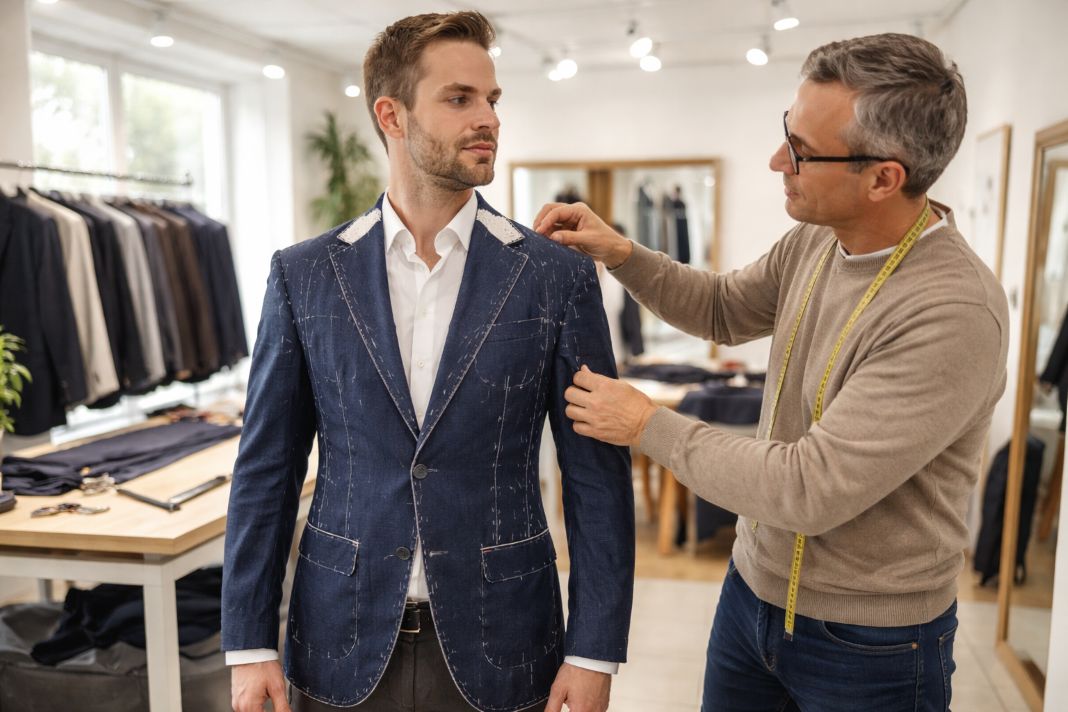
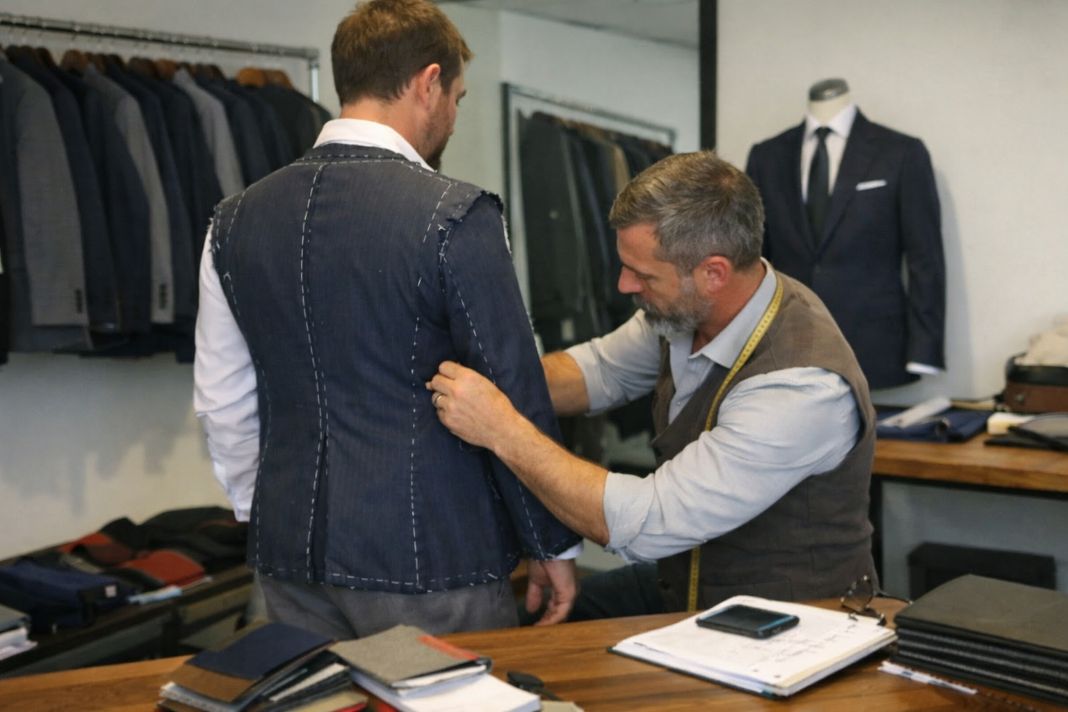
- Baste Fitting to The garment is assembled with loose stitches using preliminary fabric. This allows the tailor to check posture, balance, sleeve rotation and adjust proportions before sewing begins.
- Forward Fitting to After initial changes, the updated suit is re-fit to the client. The tailor refines drape, sleeve shape, and collar behaviour.
- Final Fitting to Details such as button stance, trouser length, or lapel roll are confirmed. Subtle refinements are made to sleeve head or waist curve.
This iterative approach allows the tailor to respond to physical uniqueness but also to feedback gathered across multiple sessions. Posture correction becomes possible, minute shifts can be introduced, and personal preferences shape the final result.
Fitting is a process of translation, converting measurement into motion. The more steps allowed, the more accurate and confident that translation becomes.
Fabric and Styling Freedom: What You Can (and Can’t) Choose
Personal expression plays a central role in why many clients seek bespoke. The extent of your sartorial freedom, however, depends on the tailoring model.
Made-to-Measure Choices
- Limited cloth selection from curated ranges
- Standard lapel shapes, pocket styles and shoulder finishes
- Set button stands and trouser rises
Bespoke Flexibility
- Access to wide cloth libraries from mills such as Dormeuil
- Full control over lapel width, notch angle, functional details and lining
- Unique styling for ceremonial, inclusive, or artistic garments
This flexibility is useful for individuality but also for practicality. For example, a client with limited mobility might benefit from sleeve construction that allows easier movement. A client seeking gender-neutral tailoring can shape the garment free from traditional menswear or womenswear templates.
Fielding & Nicholson often assists clients in building wardrobes over several seasons, taking into account career shifts, climate, and changing preferences, all enabled by the openness of the bespoke process.
Made-to-measure suits can look excellent within their set boundaries. Bespoke removes most of those boundaries altogether.
Time, Cost and Commitment: What to Expect
Choosing between bespoke and made-to-measure is a style decision but a lifestyle one. Each approach comes with its own expectations on time, financial commitment and involvement.
Made-to-Measure
- Timeframe: 3 to 6 weeks
- Cost: Lower price bracket, depending on cloth and construction
- Commitment: One or two meetings, moderate personal involvement
Bespoke
- Timeframe: 8 to 14 weeks, depending on availability and fittings
- Cost: Higher initial investment, but designed for longevity
- Commitment: Multiple appointments, higher personal input, long-term mindset
Made-to-measure may suit urgent timelines, such as a short-notice event or travel requirement. Bespoke is well suited to landmark moments, such as weddings, promotions or wardrobe reinvention, where long-term fit and refinement matter more than speed.
Fielding & Nicholson serves clients across both models and often supports ongoing relationships with those who start with made-to-measure but later transition into full bespoke as their needs evolve.
Tailoring is about garments. It is about the time you choose to invest in how they serve you.
Which Is Right for You? Making a Confident Decision
The decision between bespoke and made-to-measure depends on your body, goals and lifestyle. Neither is inherently better, but one may suit your needs more closely.
- Evaluate Your Fit Needs
- Do you have posture challenges, asymmetry or unique proportions?
- Do you struggle to find off-the-rack fits that feel natural?
If yes, bespoke will likely produce a better outcome.
- Balance Time and Budget
- Do you need the suit soon?
- Are you investing in something to wear often or for life events?
Made-to-measure suits a quicker turnaround. Bespoke entails more investment but offers greater longevity.
- Consider Self-Expression
- Does styling freedom matter?
- Do you want garments that reflect personal or inclusive style preferences?
Bespoke offers unmatched freedom, particularly for clients with non-standard or gender-neutral style preferences.
- Think About Your Wardrobe Process
- Are you building a long-term wardrobe?
- Would you value an ongoing tailoring relationship?
Fielding & Nicholson frequently works with returning clients on seasonal updates, wardrobe strategy and personal evolution. This kind of relationship thrives in the bespoke space.
Whatever your path, knowing the differences between the two approaches allows you to make informed, confident decisions, with garments that serve you authentically over time.