
What is the difference between bespoke and designer suits?
Bespoke suits are individually cut, hand-assembled garments made for one person, from scratch, using their measurements and preferences. Designer suits are pre-designed garments, often made in standard sizes, with limited personalisation, focused around a brand’s aesthetic rather than an individual’s body or style.
What Is In This Article
Bespoke or Designer: What the Terms Really Mean
Knowledge of the distinction between a bespoke and a designer suit begins with recognising that one is a process, the other a product.
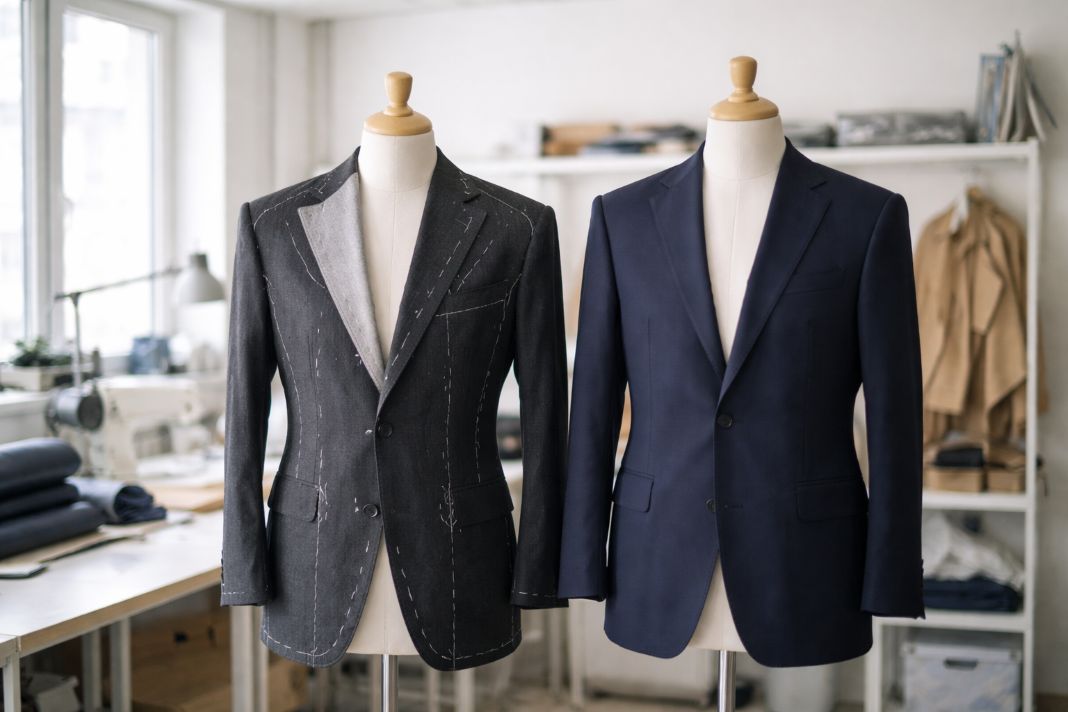
A bespoke suit starts with raw cloth and an individual. The tailor drafts a unique pattern from hundreds of precise measurements. It is built through multiple fittings and guided by dialogue between client and cutter. Every detail, from the shape of the shoulder to the depth of a pocket, is made for one wearer.
A designer suit, by contrast, begins with a fashion house’s predefined style. Patterns are created in standard sizing, often using made-to-measure or off-the-rack systems. Some personalisation may be offered, but it is constrained by brand templates and ready-made forms.
Here’s how they compare:
- Pattern
- Bespoke: Drafted from scratch for the individual
- Designer: Standard base pattern, sometimes altered for fit
- Fit process
- Bespoke: Includes multiple fittings to refine the garment
- Designer: May include adjustments, but fittings are limited or none
- Construction
- Bespoke: Often hand-stitched with floating canvases
- Designer: Machine-made, fused or semi-canvased
- Origin
- Bespoke: Made in specialist workshops using traditional techniques
- Designer: Factory-produced, sometimes overseas
- Price Influences
- Bespoke: Skilled labour, fittings, and client interaction
- Designer: Marketing, brand value, and production scale
The difference lies less in labels and more in how the wearer shapes the garment. With bespoke, personal needs define the suit. With designer, the brand defines the garment.
Pro Tip: When fitting a bespoke suit, prioritise posture and movement over static measurements for lasting comfort.
Craftsmanship and Construction: Where the Money Goes
What makes one suit cost £500 and another £5,000?
Much of the answer lies in what is unseen. A bespoke suit, such as those made by tailors like Raymond Chung at Fielding & Nicholson, often begins with hand-cut cloth and a blank canvas, quite literally. Inside, a floating canvas structure gives the jacket its shape and allows it to move with the body over time. It is basted, deconstructed, reassembled, and refined across several stages.
By contrast, a designer suit may be produced in a matter of hours on machines, using glued interlinings or fused construction. These techniques speed up production but sacrifice the natural drape and breathability of a traditionally customised piece.
Key distinctions in the making:
- A bespoke jacket averages 40 to 60 hours of labour
- Machine-made jackets may involve fewer than 10 hours of assembly
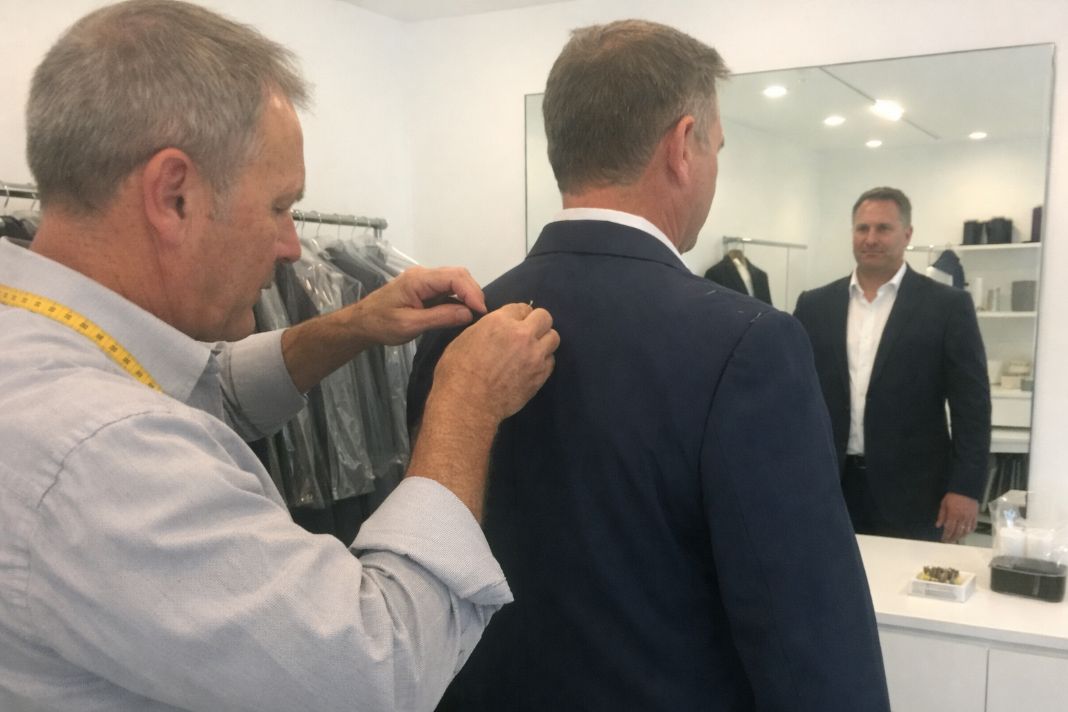
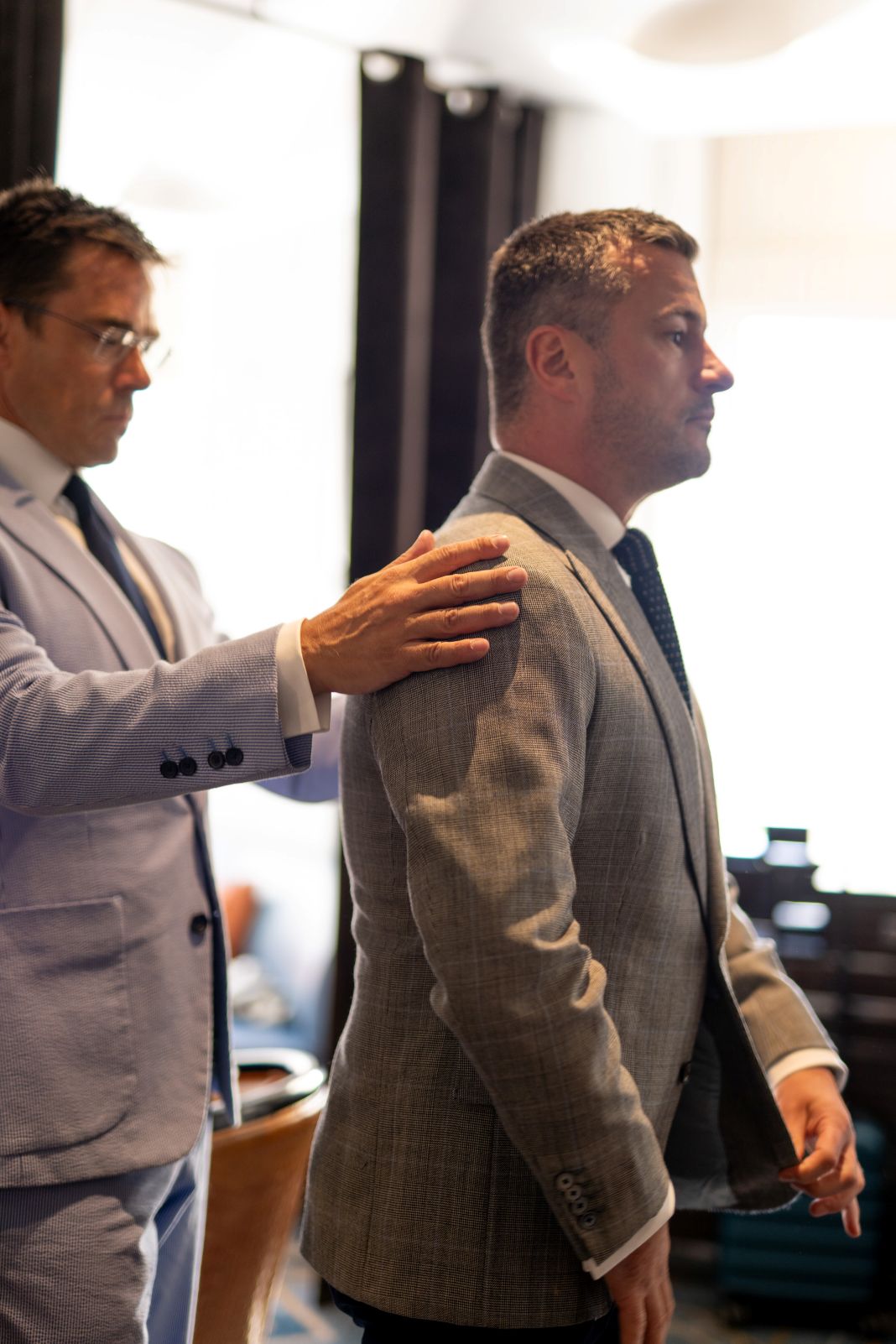
- Multiple fittings during the bespoke process resolve nuances in movement and posture
- Hand finishing provides durability and softness across seams and buttonholes
Bespoke suits often last longer, not purely because of materials, but because they are repaired, re-fitted, and restored over time. The investment goes not just into the fabric, but into craftsmanship built for longevity.
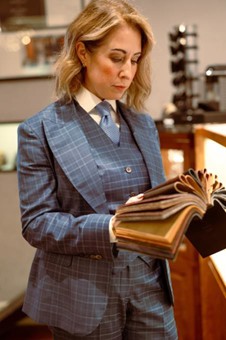
Pro Tip: Use bespoke fittings to refine personal style elements such as lapel shape or pocket style, not just basic measurements.
Fit and Personalisation: How Much Is Truly Yours?
Most people have experienced poor fit, tight shoulders, gaping jacket vents, sleeves that never sit right. Off-the-rack designer suits start from an average profile. Even made-to-measure services adjust limited points rather than redefining shape.
Bespoke eliminates this friction. A suit is built around the client, not the other way around. It accounts for sloped shoulders, a prominent chest, or seated posture. Consultants such as Nathalie May bring particular expertise in fitting clients of all genders, sizes, and identities, offering truly inclusive tailoring.
Fit is about comfort. It shapes silhouette and ease of movement, and often has an emotional impact. A suit that fits properly can alter how a person enters a room, how shoulders square or eyes lift.
Elements that can be customised in bespoke tailoring include:
- Shoulder line and pitch
- Lapel width and roll
- Trousers rise and taper
- Jacket length and vent placement
- Lining material and colour
- Pocket and cuff styles
Through this, clients express identity without relying on seasonal trends. The suit becomes not just clothing, but confidence embodied.

Fabric and Material Choices: What You Can (and Can’t) Choose
Many suits feel wrong not because of fit, but because of cloth. Some fabrics look smart on the hanger but feel stiff in heat, wrinkle quickly, or trap moisture. Others breathe, flow, and age gracefully.
In designer collections, fabric selection is predefined. The client chooses from the options made available for the season, often influenced by cost, trend or production convenience.
Bespoke tailoring opens a much wider palette. Fielding & Nicholson, for example, offers access to over 1,000 premium fabrics, including wool from British and Italian mills, lightweight tropical blends, silks, and strong tweeds.
Here is how choice compares:
- Designer suits
- Seasonal limited runs
- Pre-chosen styles and colourways
- Little control over weave or weight
- Bespoke suits
- Full access to cloth libraries
- Choose weight, weave, origin and pattern
- Guidance from the tailor on functional and stylistic needs
Cloth influences every part of suit performance. Heavier flannel carries structure and warmth; lightweight worsteds travel well and resist creasing. Suit fabric also affects how a garment ages. Good wool softens, breathes and wears in, less like a uniform and more like a second skin.
Brand Value vs Tailor Relationship: What You’re Really Investing In
Are you buying a suit, or a relationship?
Designer labels trade heavily on aesthetic associations. Clients buy into an image, a name, and the story a logo tells the world. This has value, especially in professional or social settings where brand perception carries meaning.
With a tailor, the value grows beyond the garment. Clients build long-term relationships, shaped by consistency, trust, and personal advice. Tailors remember your physical changes, occasions ahead, and preferences established over time.
Ian Fielding-Calcutt’s team, for instance, often works with clients across many years and life stages, and advising on style shifts, adjusting for change in body or purpose, and gradually building a wardrobe that works as a whole.
In the bespoke model:
- A fitting is a conversation, not a transaction
- Choices evolve with the person, not the trend
- A wardrobe can be planned, not just purchased
What you pay for with a tailor includes expertise, memory, and discretion. It is an investment in clothing, but in continuity.
Price Breakdown: What You’re Actually Paying For
Suits vary in cost so dramatically that many buyers feel unsure whether they are paying for quality, marketing, or merely a name.
Designer suits often allocate significant budget to marketing, brand design, and retail operations. Much of the price reflects label value, not labour. By contrast, bespoke tailoring reflects human time, skill, and cloth.
A rough breakdown:
Designer Suit (mid-range to high-end)
- Production: 15%
- Retail overhead: 30%
- Marketing & branding: 30%
- Materials: 15%
- Profit margin: 10%
Bespoke Suit
- Tailor labour and fitting time: 40%
- Fabric cost: 30%
- Workshop and overheads: 20%
- Client service and consultation: 10%
While bespoke suits may have a higher ticket price, the cost per wear often declines over time. They are easier to maintain, repair and update. They also tend to be worn more frequently and last longer.
Extras like alterations, dry cleaning, and early replacement costs often make designer options more expensive in the long run than they first appear.
Is Bespoke Worth It? When to Choose, and When Not To
Bespoke is not for everyone. Nor does it need to be.
Ask yourself:
- Do I wear suits often, or for important occasions?
- Does standard sizing usually fail to fit me properly?
- Do I want control over style, cut, and fabric?
- Am I building a long-term wardrobe, or buying a one-time piece?
- Would I benefit from working with a tailor I trust over time?
If the answer is “yes” to most of the above, bespoke can be well worth the investment. It offers better fit, longer lifespan, and a stronger sense of individual style.
However, if the decision is urgent, the budget fixed, and the occasion rare, a designer suit can still offer a serviceable option, especially when professionally altered.
The value lies not primarily in the label, but in whether the suit serves your body, your needs, and your life. If it does, it was worth the price.