
What truly separates a bespoke tailor from a luxury brand?
Though often grouped together because of their prestige, bespoke tailoring and luxury fashion operate in entirely different ways. One is a highly personalised service built on human connection and expertise. The other is a global product system centred around brand identity and scalability.
What Is In This Article
Bespoke and Luxury Are Built on Different Models
Luxury fashion houses follow a product-led model. They depend on standardisation and global consistency to maintain visibility and reputation. Production is scaled to meet international demand, ensuring that the same look and feel is delivered everywhere.
A bespoke tailor approaches things differently. The model is service-driven and rooted in personal attention, care, and long-term involvement. Fielding & Nicholson, for example, builds relationships with each client and prioritises trust and ongoing refinement over one-time transactions.
Luxury fashion thrives on seasonal change, while bespoke tailoring responds to personal change.
It is easy to mistake one for the other at a glance. Both operate in refined spaces, carry premium price tags, and serve discerning clients. However, they value time, responsibility and human involvement in completely different ways.
Quick Comparison: Bespoke Tailor vs Luxury Brand
- Model: Service-led vs Product-led
- Scale: Individualised vs Mass-produced
- Experience: Personal relationship vs Branded encounter
- Adaptability: Built-in flexibility vs Fixed sizing
- Value: Long-term support vs Seasonal trend
Pro Tip: A strong tailoring relationship saves time on every new piece, because the memory is already built in..

Why Do Luxury Brands Sell Identity, While Bespoke Tailors Take Responsibility?
Luxury brands sell a dream. The brand crafts a vision and invites the customer to step into it. However, that vision is often upheld by many hands, none of whom are directly accountable to the buyer.
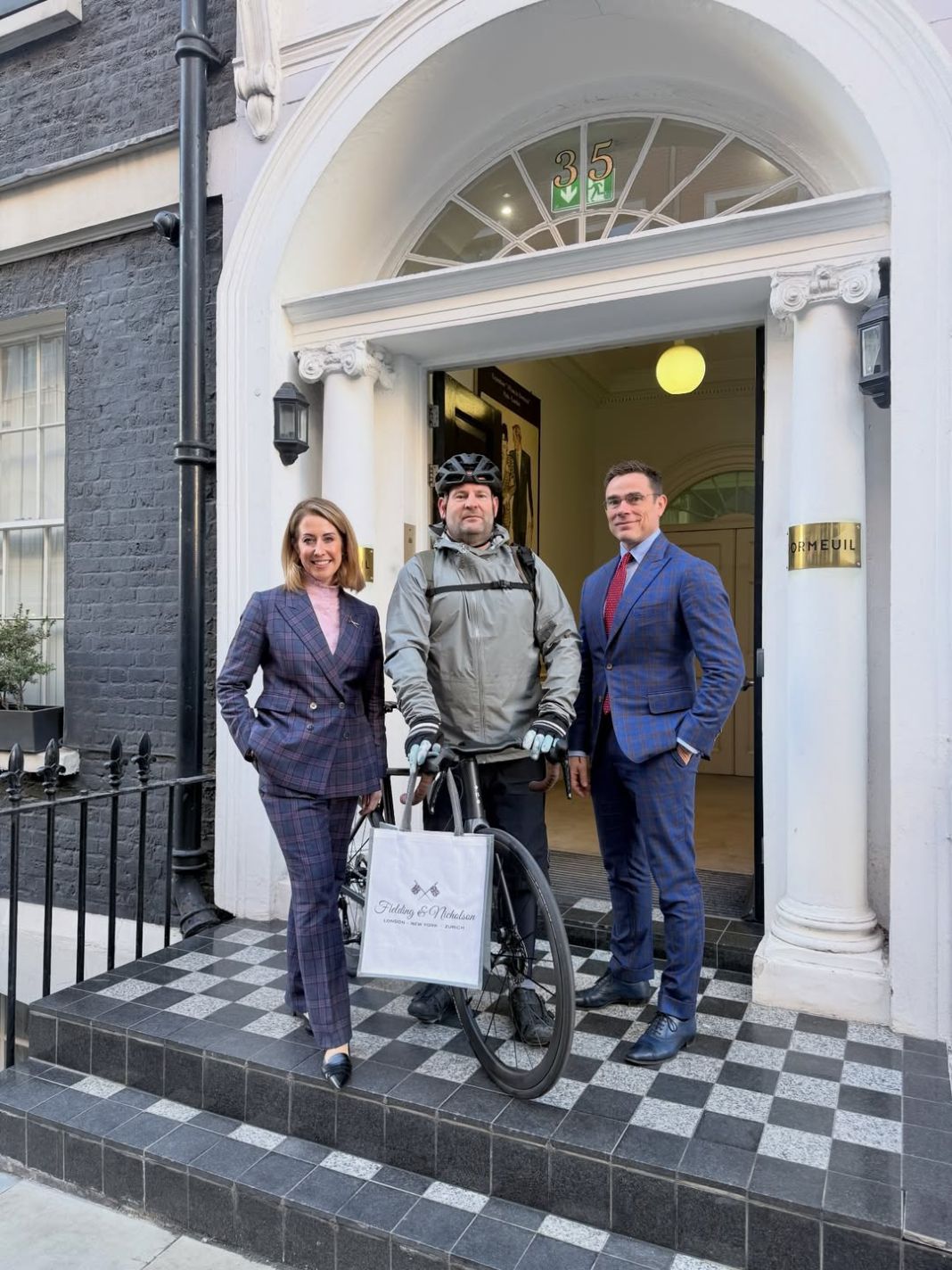
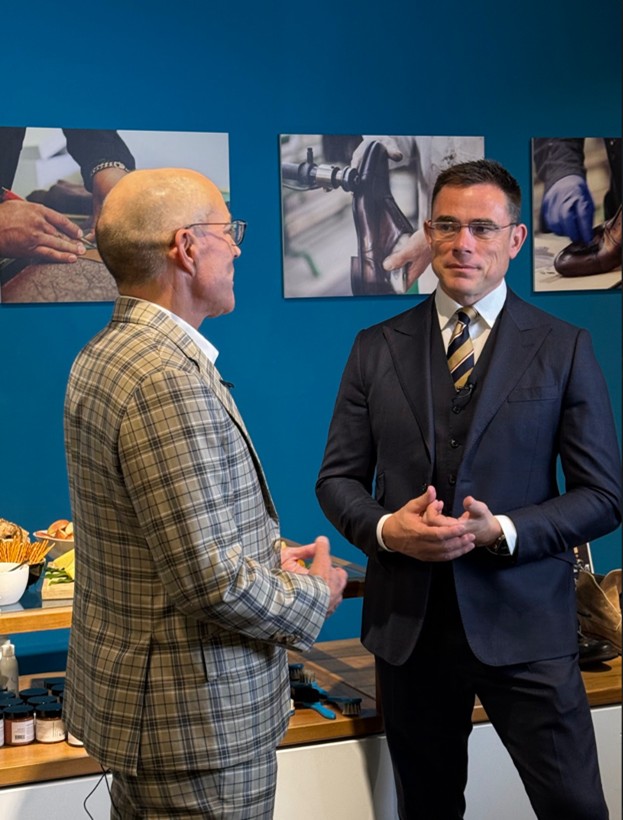
By contrast, bespoke tailoring names its responsibility. The person fitting your suit knows your body, your preferences, and your history. Their role is not just service. It is stewardship. Clients working with Fielding & Nicholson deal with people, not systems. They know exactly who to speak to and understand why things are done a certain way. When responsibility is clear, trust becomes easy.
Pro Tip:Ask your tailor to help you build a wardrobe system, not just a single suit.
Why Fit Is Only the Beginning of the Relationship
A well-fitting suit is only the first step in bespoke. Over time, the real value becomes visible through adjustments, refinements, and evolving comfort.
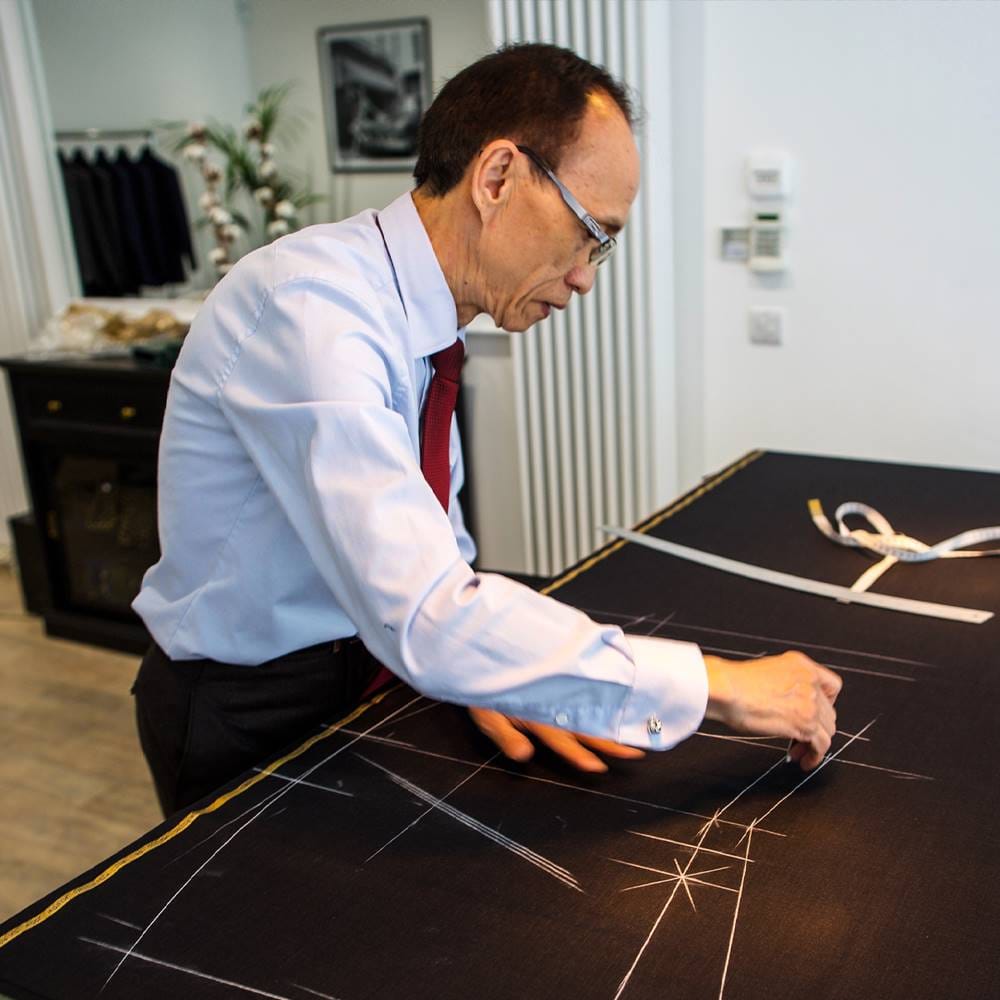
Bodies shift with age and life. A bespoke service anticipates this. Alterations are not seen as mistakes. They are simply part of an ongoing conversation. Each new garment adds to a shared memory between client and tailor. Less measuring is needed. More understanding flows in. Eventually, what starts as fitting turns into fluent interpretation. This becomes a long-term tailoring relationship built over time.
How Does Wardrobe Continuity Compare to Seasonal Fashion?
In luxury retail, the clock drives the product. New designs arrive. Old ones fade. Clients are expected to keep up. Bespoke is not in a hurry. Each piece is created with longevity in mind and designed to complement what is already in your wardrobe. Clothing is not replaced. It is built upon.
A jacket from years ago should still feel at home today. That is not nostalgia. It is cohesion. Tailors help plan for the long term, reducing friction and decision fatigue through a personalised wardrobe system.
What Role Does the Tailor Play That the Brand Cannot?
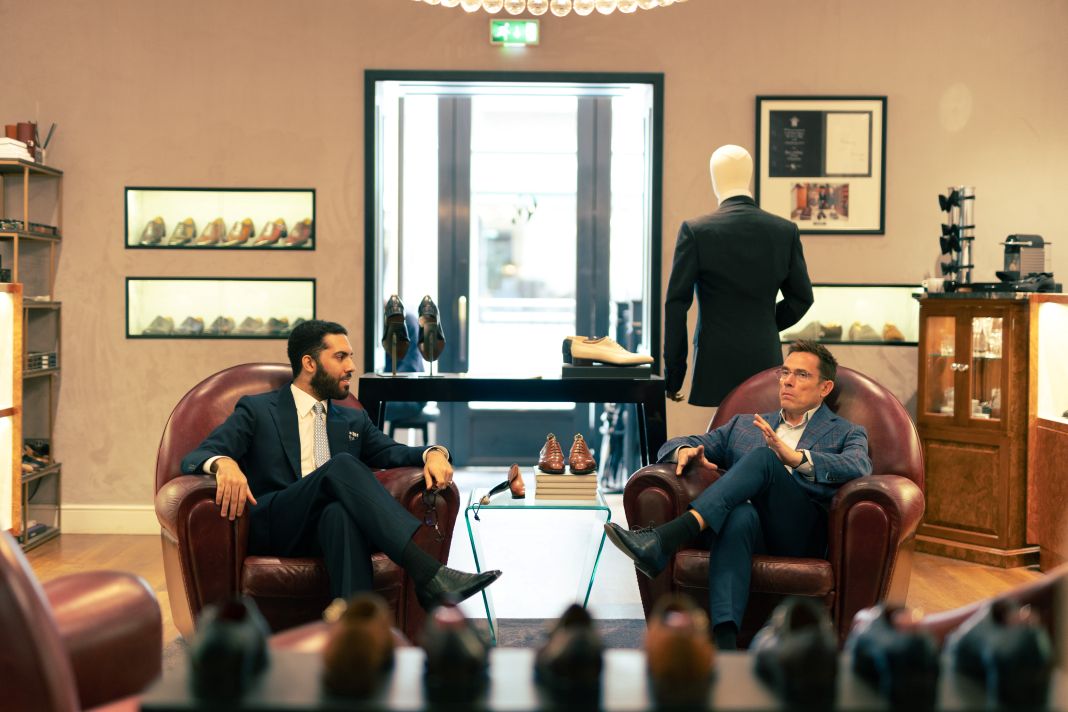
Staff in luxury shops represent something bigger. Their focus is delivering a consistent brand experience, but they rarely shape it. Tailors operate differently. Their advice is personal. Their judgment comes from knowing the client, not reading from a brand manual. When a client returns year after year, the experience deepens. Advice becomes more accurate. Adjustments get easier.
How Does Bespoke Handle Real Bodies Better Than Scaled Luxury?
Luxury brands struggle with diversity. This is not due to a lack of intent but because their systems are rigid. Sizing is fixed. Options are narrow. The process is not built for nuance. Bespoke begins with the individual. It does not expect clients to conform. Instead, it conforms to them.
Tailors like Nathalie May work directly with clients whose needs fall outside standard grids whether related to gender, mobility or body shape. In her work, inclusion is a norm, not a special feature. The result is not performative. It is quietly affirming.
What brings clients in is rarely what keeps them. First-timers want the bespoke experience. Regulars return for ease, comfort and trust. As the relationship develops, so does the outcome. Less explanation is needed. Fewer tweaks are required. It becomes a mutual understanding. Clothing begins to feel less like a chore and more like an expression.
Why Bespoke Tailoring Doesn’t Belong in the Luxury Category
Bespoke does not aim to be the highest tier of fashion. It sits apart. It resists speed. It cannot scale. It lives in the quiet work of ongoing attention. Tailoring houses like Fielding & Nicholson succeed not by trend but by relationship. Their value is built through conversation, time, and trust. For clients looking to be reflected in their clothing rather than reshaped by it, this path offers something clearer and more enduring with a stronger sense of personal style.