How should you dress smart casual for a September event?
The safest September smart casual outfit looks polished, relaxed and ready for a change in weather. Start with the event’s formality, then choose cloth, layers and shoes that suit the room. A lighter jacket can still work, provided the overall outfit has structure and cover.
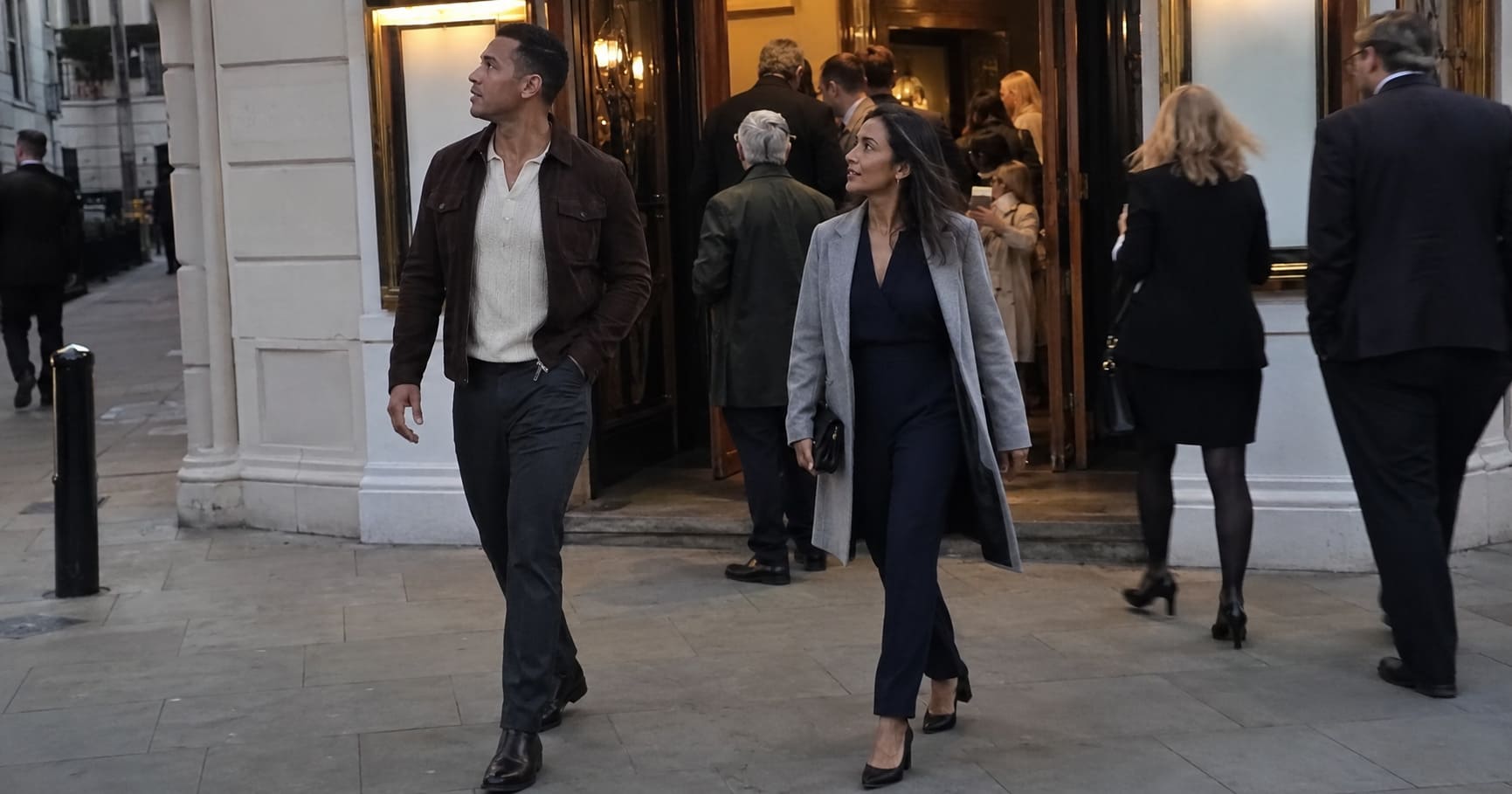
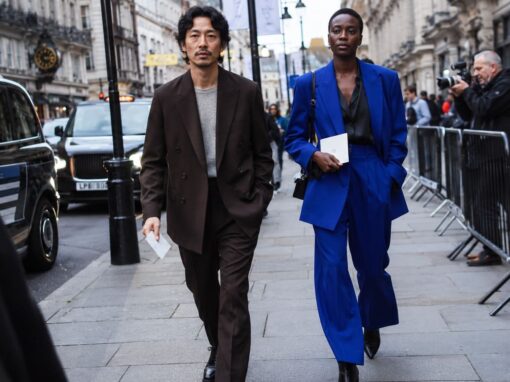
Two professionals wearing dark autumn tailoring walk together through London during a city event.
What Is In This Article
Smart casual shifts from summer ease to September polish
Standing in front of your wardrobe before a September wedding or dinner, the question is rarely whether you own smart clothes. The harder question is whether the summer jacket, open collar or lighter dress still looks deliberate once the evening cools and the room feels more autumnal.
Smart casual still means polished relaxed dressing. You are aiming for ease with shape: a well-cut jacket, a good shirt, refined knitwear, clean trousers, a dress with enough structure, or shoes that feel considered. September moves the balance. Bare summer styling can start to look underprepared, especially at a work reception, private dinner or evening party.
We read smart casual as a flexible dress code, never a universal rule. A suit without a tie can sit comfortably in this space if the cloth, shirt and shoes soften it. Jeans and trainers need more caution, because some hosts and venues still read them as too relaxed for a September event.
Let the invitation, setting and season lead the outfit. A generic smart casual rule will never judge the room as well as those three signals.
September weather makes flexible layers the real rule
September dressing needs room to change. A smart casual September outfit that feels right at midday can fall short after dark if you have no layer, no cover and shoes chosen for a dry pavement that never arrives.
Met Office data for September 2025 shows why we treat the month with caution: the UK recorded a highest daily maximum of 27.8°C and a lowest overnight minimum of -5.0°C. That is too wide a range for fixed summer dressing or full winter dressing. The same month provisionally saw 120.1mm of rain, 32% above the 1991 to 2020 average. This makes footwear and outerwear part of the outfit, not an afterthought.
Here is the practical difference we make between early September and later or evening events.
| Decision | Early September daytime | Later September or evening |
|---|---|---|
| Fabric | Lighter wool, cotton or restrained linen can still work | Wool, cotton twill or softer textured cloth feels more settled |
| Layers | An unstructured jacket or fine knit gives cover without heat | A jacket, knit or light coat keeps the outfit intact after dark |
| Footwear | Loafers or polished leather shoes suit dry, brighter conditions | Smarter closed shoes handle cooler, wetter arrivals better |
| Formality | Keep the look relaxed but shaped | Add structure, especially for dinners, receptions and hospitality |
Once we know the time of day, journey and likely exposure, the clothing choices become simpler. A fine knit under a jacket, a lined overshirt with well-cut trousers, or a light coat over a dress can solve the day-to-evening problem without making the outfit feel heavy.
Rain changes details quickly. Suede can look beautiful in September, but wet ground asks for judgement. Hem length, trouser break and the shoe’s finish all matter when you are moving between cars, terraces, lawns and reception rooms.
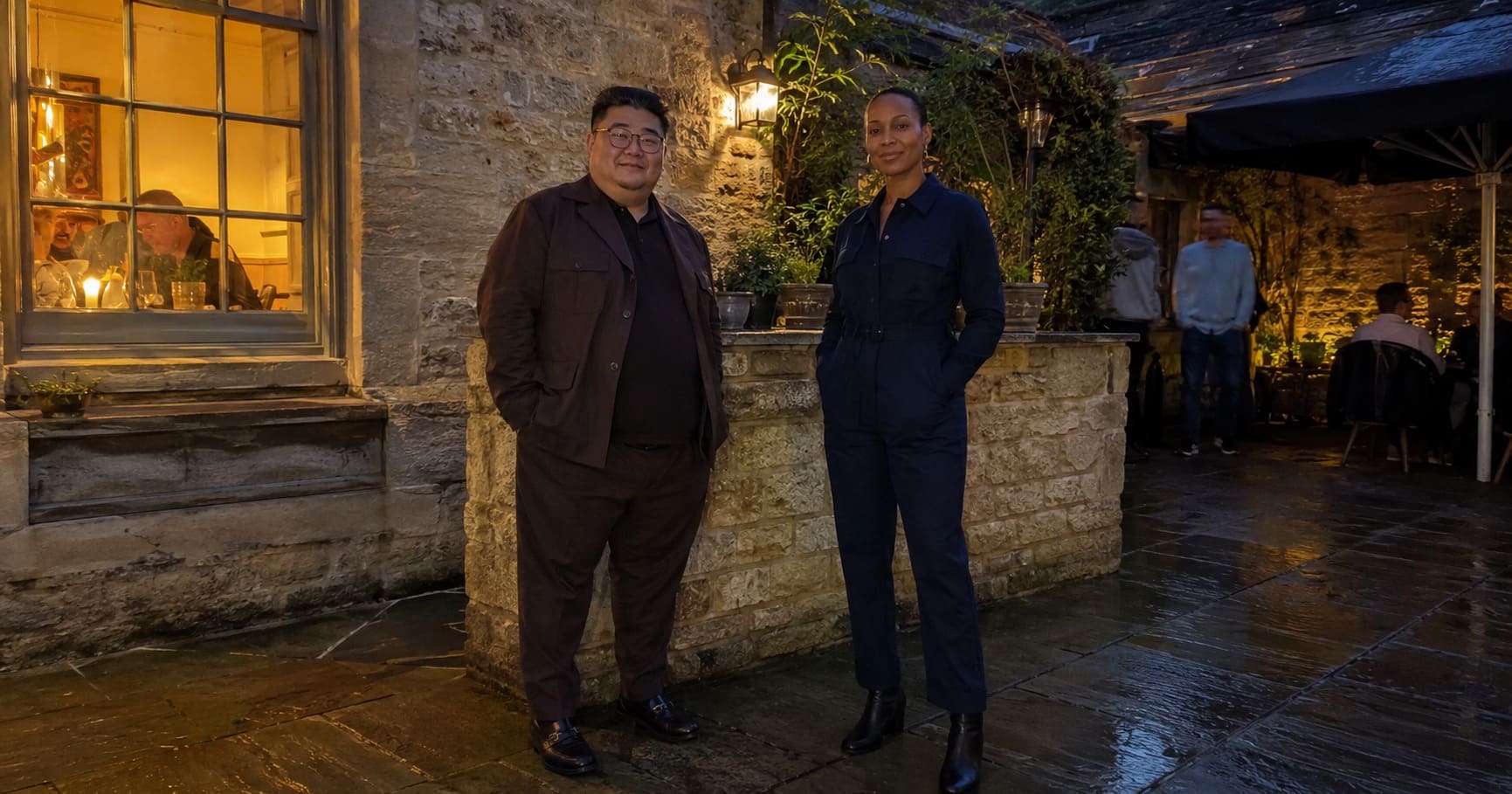
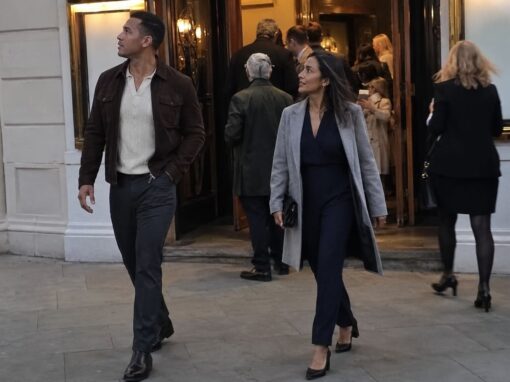
Men wearing navy and charcoal tailoring stand outside a venue during autumn evening events.
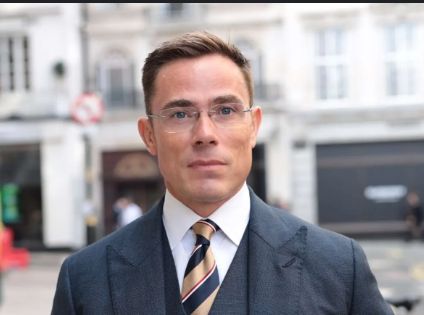
Pro Tip: A September outfit often depends on the outer layer as much as the main garment. A light coat or structured jacket can keep the whole look coherent when the temperature drops after dark.
Formality comes before fabric and colour
Start with the room. A September event dressing decision works best when you choose the level of formality first, then use fabric, texture and colour to make it feel seasonal.
Cloth changes the meaning of a garment faster than colour alone. The same jacket can feel summery, social or quite formal depending on its material and structure.
- Linen still has a place in early September, especially in warmer daytime settings, although we usually ground it with a sharper shirt, a darker shoe or a less airy layer.
- Wool gives a jacket, trouser or dress more drape and polish, which suits dinners and work-related events.
- Cotton twill is useful when you want casual ease with more weight than summer cotton.
- Flannel reads softer and more autumnal, so we reserve it for cooler days or rooms where texture feels right.
- Suede and polished leather send different messages. Suede feels relaxed and tactile; polished leather lifts the formality.
Fielding & Nicholson approaches autumn smart casual through cloth, fit and repeat use, because a good September outfit should work beyond one invitation. We look at how a jacket sits when worn open, how a trouser or skirt shape balances the shoe, and whether the shirt collar holds its place under a layer.
Colour deserves the same discipline. You do not need to dress as if the calendar has issued a palette. Navy, brown, grey, cream, muted green or deeper red can all work, provided the shade suits you and the event. A controlled accent usually serves you better than an outfit built around announcing the season.
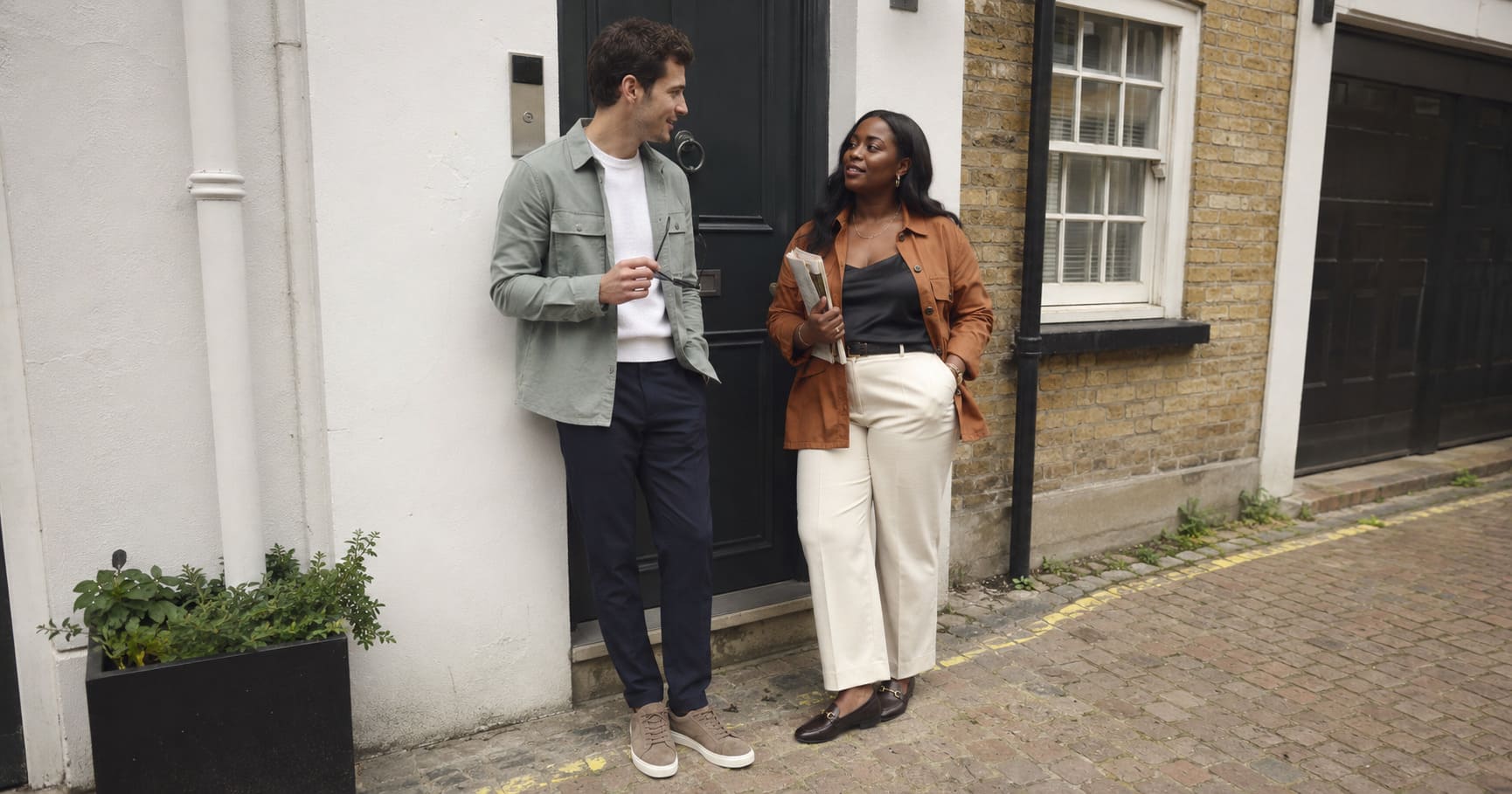
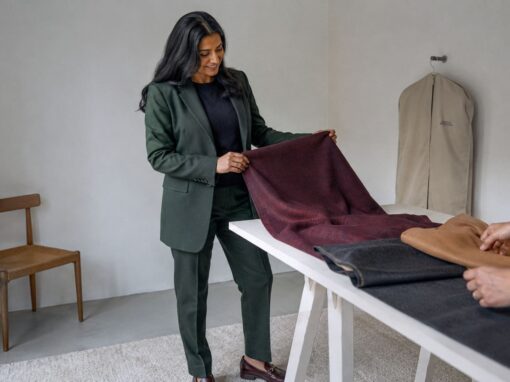
Man wearing light jacket and woman wearing cream tailoring stand outside a contemporary townhouse.
The same dress code changes across different events
When the same dress code appears on different invitations, it rarely means the same outfit. A smart casual September wedding, a race day and a work reception can all ask for polish, but each room has its own ceiling and floor.
We read the invitation first, then the venue guidance and host expectation. Time of day matters as well. Daylight events allow a little more softness, especially in cloth and colour, while evening events usually reward cleaner lines and smarter shoes.
Weddings and private dinners
For a September wedding, softer formality works well. A jacket with an open-neck shirt, a dress with a light coat, a blouse with well-cut trousers, or a co-ord with polished shoes can feel elegant without borrowing too much from weekday business dress.
Private dinners give you more room for texture and personality. Fine knitwear, a softer jacket, a silk blouse or a more interesting shoe can all sit comfortably here. The risk is slipping back into holiday informality, especially with very light fabrics, bare styling or shoes that feel too beach-adjacent for a dining room.
A suit without a tie can work in both settings when the rest of the outfit relaxes it properly. The shirt matters here. A crisp business shirt can pull the look back into the office, while a softer collar or richer cloth changes the mood.
Race days, hospitality and work receptions
Race days and hospitality settings deserve more care than the words smart casual suggest. Goodwood, for instance, states that gentlemen aged 16 and over in the Richmond Enclosure should wear a suit jacket, long-sleeved collared shirt, tie and full-length trousers, and that fancy dress and sportswear are not acceptable.
That example matters because it shows how venue rules can outrank a loose interpretation of smart casual. One enclosure or hospitality area can be stricter than another, so we treat the ticket details as part of the dress code.
Work receptions sit in a different place. The aim is to look sharper than your relaxed weekend clothes, without looking as if you have come straight from a boardroom with no adjustment. Swapping a formal shirt for a softer one, using texture in the jacket, or choosing a less corporate shoe can move the outfit into the right register.
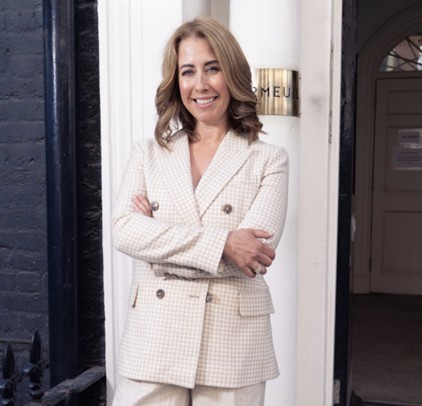
Pro Tip: If the invitation is vague, treat the venue and time of day as part of the dress code. Evening settings usually reward cleaner shoes, stronger structure and less summer styling.
A better September outfit starts as a wardrobe decision
After one or two September invitations, most people realise the single outfit question is too small. The more useful question is which pieces will keep answering different rooms, different weather and different levels of formality without making you feel dressed from scratch each time.
A well-cut jacket usually does the most work. It can sit over a shirt, knit, blouse or dress, and it can be worn open without losing shape. Trousers, skirts and dresses need the same attention to proportion, because a small change in hem, break or waist position can decide whether the outfit looks intentional with loafers, boots or polished shoes.
Outerwear deserves more respect in September. If the coat is an emergency layer, the outfit weakens at the door. A light coat, refined overshirt or neat rain-ready layer should belong to the look, especially for events where you move between outside arrivals and indoor rooms.
For clients planning a new bespoke garment with Fielding & Nicholson, we work to an average of 4 to 6 weeks from the first consultation to final delivery, depending on the garment. That timing matters because the best September pieces are rarely panic purchases. They are the jacket, shirt, coat or altered separate that makes the next invitation easier as well.
So the real September smart casual question is what clothes make you look considered when the season, the venue and the evening all change their mind.
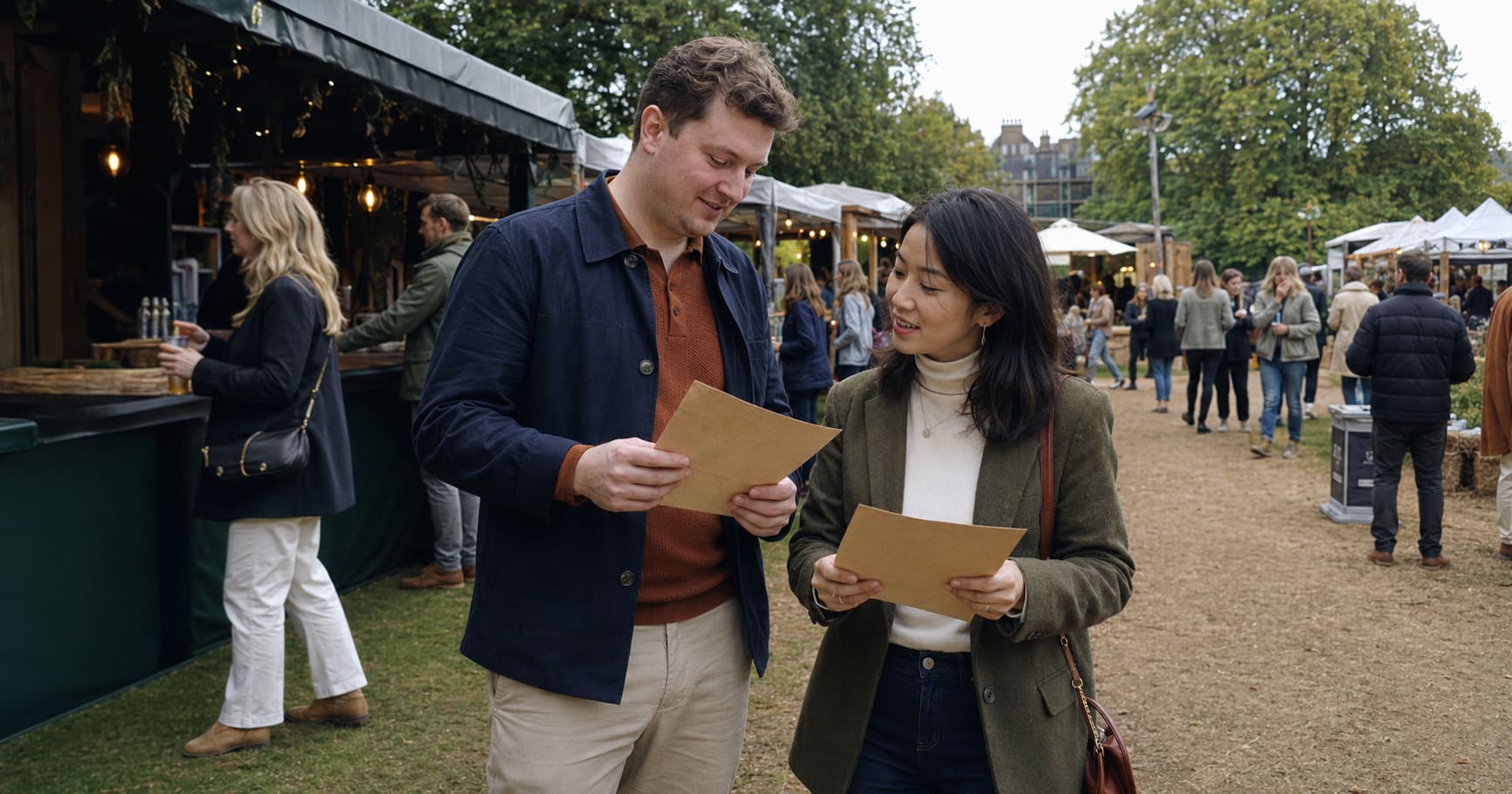
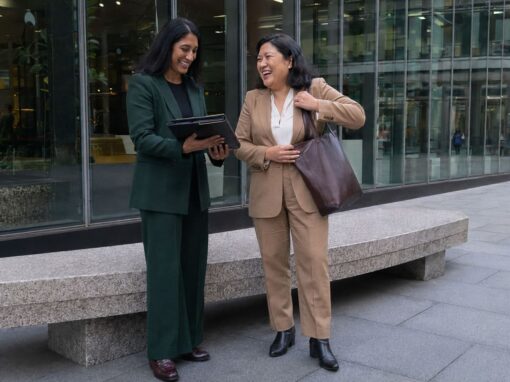
Man wearing navy polo and woman wearing neutral tailoring attend relaxed outdoor autumn event.
Questions we get asked about September smart casual dressing
Can you wear jeans to a September smart casual event?
Jeans depend on the host, venue and exact wording of the invitation. We only treat them as safe when the event is clearly relaxed and the jeans are dark, clean and worn with a structured jacket or refined top.
Are trainers acceptable for smart casual in September?
Trainers are not automatically acceptable, especially at weddings, race days, hospitality events or smarter dinners. If the setting is ambiguous, polished leather shoes, loafers, ankle boots or another refined closed shoe are safer.
Is linen still suitable after summer?
Linen can still work in early September or warmer daytime events. We usually make it feel more settled with stronger shoes, a sharper layer or a colour that does not read as high summer.
Does a suit without a tie count as smart casual?
A suit without a tie can be smart casual if the styling relaxes it. Softer cloth, an open collar, a less corporate shirt and considered shoes help it feel social rather than simply unfinished.
How far ahead should you plan bespoke clothing for a September event?
A new bespoke garment needs planning time. We work to an average of 4 to 6 weeks from first consultation to final delivery, depending on the garment, so September pieces are best considered before the event is close.