
What does a bespoke suit feel like when you first put it on?
A bespoke suit should feel close, balanced and supported, not tight. You notice it in settled shoulders, cleaner chest room, easier arm movement and trousers that stay comfortable when you sit. We aim for controlled ease, so the suit follows your body without making you tug, brace or adjust.
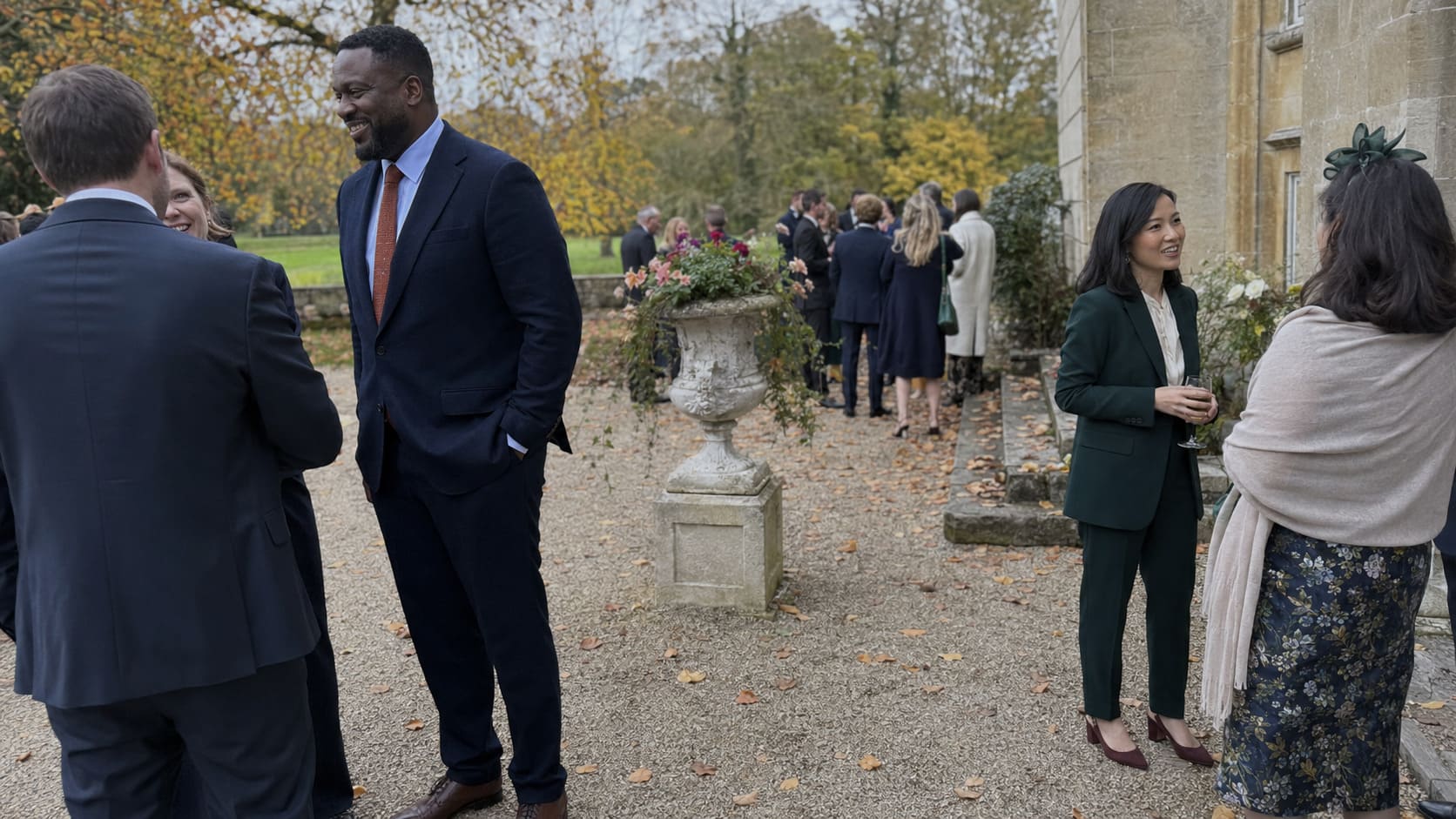
Men wearing navy suits talk at an outdoor autumn reception beside casually dressed guests.
What Is In This Article
A close suit should still let you breathe and move
Bespoke tailoring feels different first because the suit sits in balance. The jacket should rest across your shoulders without one point taking all the weight, and the front should hang cleanly without forcing your chest or waist into place.
Tightness and clean fit are different sensations. A tight suit makes you aware of the garment every time you reach, sit or turn; a clean bespoke suit gives shape without making ordinary movement feel negotiated. You should be able to stand naturally, walk at pace and sit down without pulling the jacket back into position.
That quieter feeling is what many people notice most. Good bespoke suit comfort is less about drama in the mirror and more about the absence of irritation through the day.
The jacket and trousers reveal the difference in motion
Put on the jacket, sit down, reach forward as if taking a glass from a table, then stand and walk a few steps. Ordinary suits often show their limits in those small movements because they were made to fit a standard body standing still.
- Shoulders: The jacket should feel settled, with no sharp pressure near the neck and no sense that the sleeve head is dragging the shoulder down. If one shoulder slopes more than the other, the cut should account for that instead of leaving the collar to gap.
- Chest and waist: Shape should come from the cut, so the chest has room to breathe and the waist has definition without pinching. When the lapels sit flat, the front feels composed rather than stretched.
- Arms: Better arm movement comes from the armhole, sleeve pitch and shoulder line working with your posture. If your suit feels tight when lifting your arms, the problem is often in that relationship, not just in sleeve width.
- Seat and thigh: Bespoke trousers fit around how you sit and move, so the seat should not strain at dinner and the thigh should not bite when you climb stairs.
- Rise and waistband: The rise decides where the trousers sit on your body. A comfortable waistband stays in place without digging in or sliding every time you stand up.
- Full-day wear: Walking between meetings, driving, dancing at a wedding or wearing a suit through a long dinner gives a better test than a mirror check. Movement exposes poor balance quickly.
Bespoke is felt across the whole garment. A jacket front can look neat in a photograph, but the real test is whether the suit remains calm once your body starts behaving like a body.
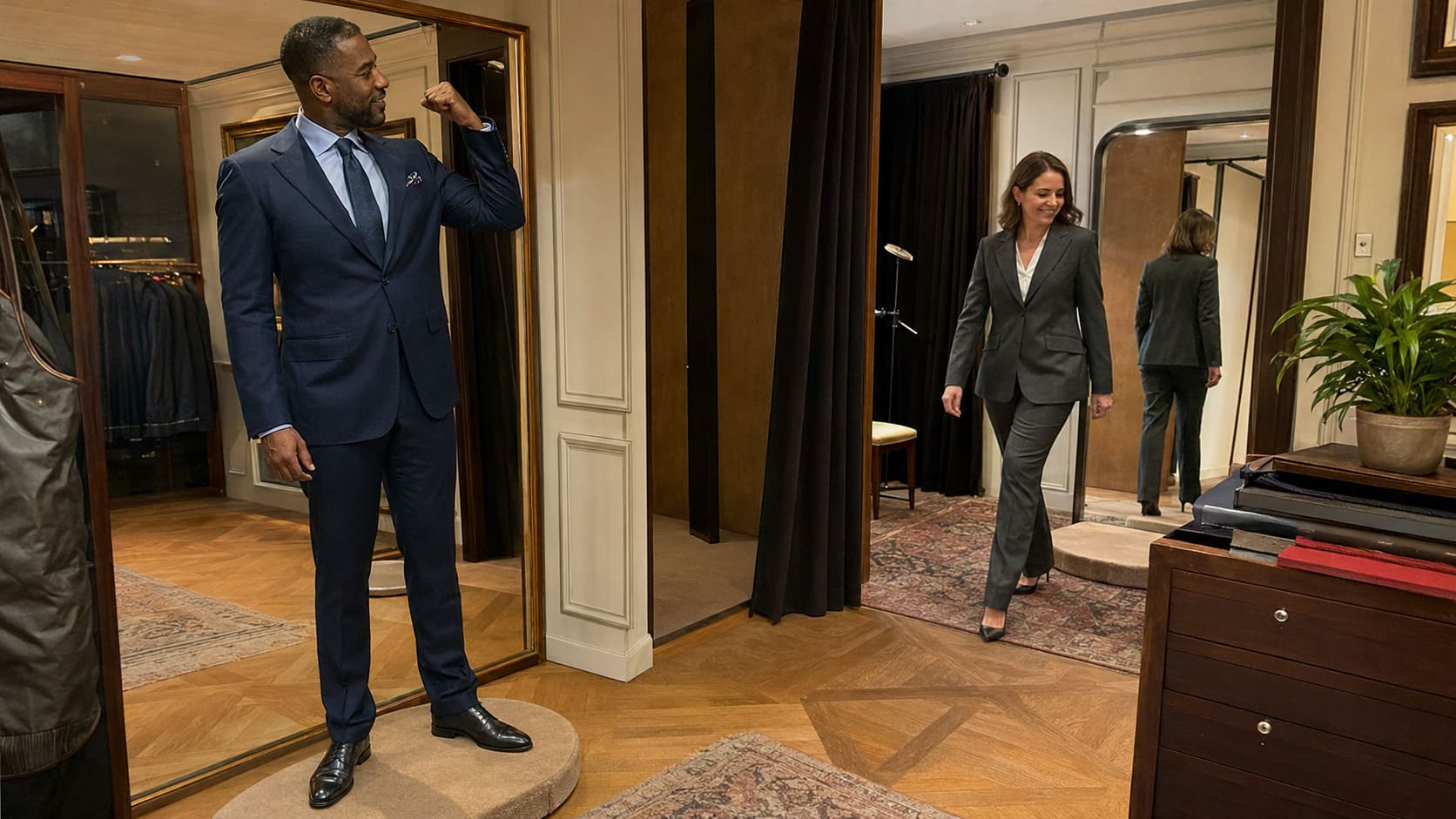
Man wearing navy tailoring stands beside woman in burgundy suit during a bespoke fitting.
Pro Tip: If a jacket feels acceptable only when standing still, test it while sitting, reaching and walking before you judge the fit. Comfort problems often appear in those smaller movements.
Alterations improve a suit, but they cannot rebuild its starting balance
Two suits can look similar when you stand still, then behave very differently when you move. Off-the-peg alterations can improve length, taper and local fit, but they work within the decisions already built into the garment.
Here is the practical difference between the main routes.
| Off-the-peg | Made-to-measure | Bespoke |
|---|---|---|
| Starts from a finished standard size, so comfort is improved by alteration within the garment already made. | Starts from a standard block adjusted before making, so it can answer more of your measurements. | Starts from your body and posture, then the garment is refined through fittings. |
| Shoulder balance is hard to change once the jacket exists. | Shoulder fit improves where the block suits your body reasonably well. | Shoulder line and jacket balance can be built around your stance from the start. |
| Arm movement depends on the original armhole and sleeve setting. | Sleeve and armhole choices can be adjusted within the system used. | Sleeve pitch, armhole comfort and reach can be considered as part of the cut. |
| Trouser comfort is limited by the original rise, seat shape and waistband position. | Trouser proportions can be adapted before making. | Rise, seat, thigh and knee line can be planned for how you sit and walk. |
| Refinement happens after purchase through alteration. | Refinement happens before making and may continue at fitting. | Refinement is part of the process, from measuring through to fitting and final adjustment. |
Traditional Savile Row bespoke standards, as set out by the Savile Row Bespoke Association, require an individually cut paper pattern made by a Master Cutter. That matters because the physical feel starts before the cloth is even cut.
In our own fitting process at Fielding & Nicholson, we record over 30 precise measurements and look at posture, movement and body nuance, including details such as shoulder angles and sleeve lengths. Measurements alone never tell the whole story. The way you stand and move decides where pressure appears.
Made-to-measure has its place, and good off-the-peg can look smart on the right body. The limit is simple: a standard starting point cannot be changed into the same body-specific architecture as a suit built around you from the beginning.
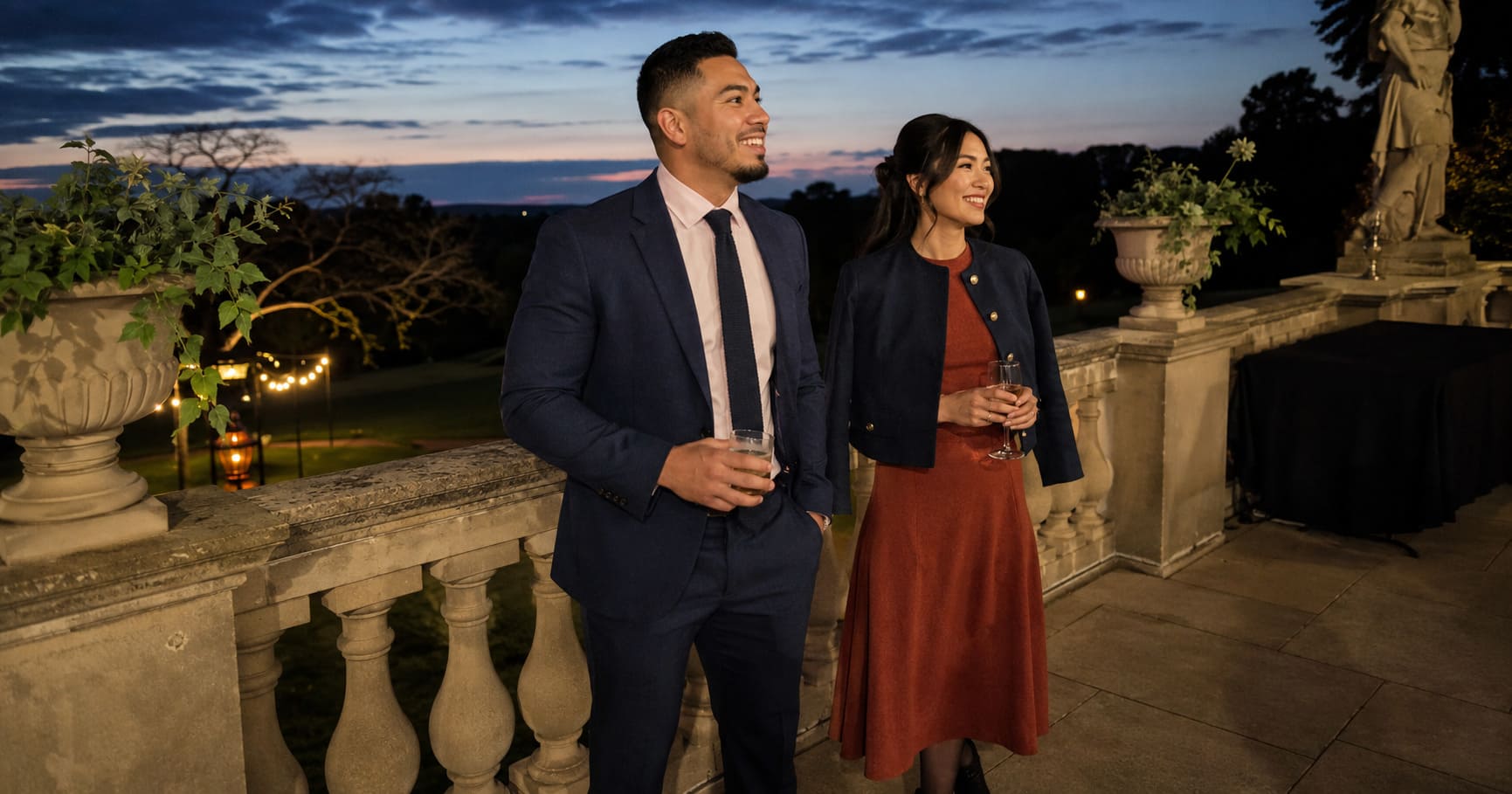
Man wearing navy suit and woman wearing rust dress attend an outdoor autumn wedding.
Cloth, construction and fittings decide how the suit feels after hours of wear
A suit can feel promising for a few minutes and still become warm, tight or tiring after several hours. Long wear exposes cloth choice, internal structure and the quality of fitting, especially in workwear, wedding tailoring and evening dress.
Cloth changes how the suit lives on the body
Cloth affects weight, drape, recovery and breathability. A crisp cloth may give a sharper line, while a softer cloth may move with more ease; neither choice is automatically better, because the right answer depends on where and how you will wear the suit.
Wool earns its place in suiting because it manages moisture and temperature well. The International Wool Textile Organisation states that wool can absorb up to 35% of its own weight in moisture and release it as vapour, which helps explain why a good wool suit can feel less clammy during long wear.
Lining choice matters too. A suit for a warm wedding, a long business day and regular travel will not all benefit from the same decisions, because comfort comes from matching the garment to its use.
Fittings turn measurements into movement
Fittings are where a bespoke suit becomes personal in the physical sense. The tailor can see how the jacket behaves on your shoulders, where the front wants to pull and whether the trousers stay comfortable when you sit.
Bespoke is refined, not made perfect from a tape measure. Small changes at fitting can alter how the sleeve moves, how the waist settles and how the trouser line behaves in motion. Those adjustments are quiet work, but you feel them later when the suit no longer asks for your attention every few minutes.
Construction supports that feeling. Internal structure gives the jacket shape, but it should also let the garment relax into your body with wear. Comfort through the day is planned early and corrected in person.

Pro Tip: Pay close attention to shoulder balance and trouser rise during fittings. Those two areas usually shape how settled a bespoke suit feels over a long day.
Bespoke has value beyond difficult bodies and formal days
One common mistake is assuming bespoke only matters when off-the-peg fails completely. If your ready-made suits already work well for occasional wear, bespoke may not feel urgent. If suits are part of your working life, your wedding clothing or your long-term wardrobe, the physical difference carries more weight.
Recurring discomfort gives the clearest signal. Shoulder pull, collar gaps, trouser strain, waist restriction and poor arm movement all suggest that the suit is asking your body to fit the garment, instead of the garment being made around your body.
Bespoke also matters for people whose posture, proportions, mobility needs, gender expression or style preferences are poorly served by standard blocks. Inclusive bespoke tailoring is practical before it is symbolic: the garment has to sit correctly, move comfortably and represent the wearer without compromise.
Fielding & Nicholson treats that relationship as a long-term one because fit knowledge becomes more useful over time. Purpose, cloth, linings and functional needs are discussed before making, and a proper record of what works for your body makes repeat commissions easier to refine.
The common misconception is that bespoke is reserved for awkward bodies. That assumption misses the point because the physical gain is being fitted as yourself instead of being asked to make peace with an average size.
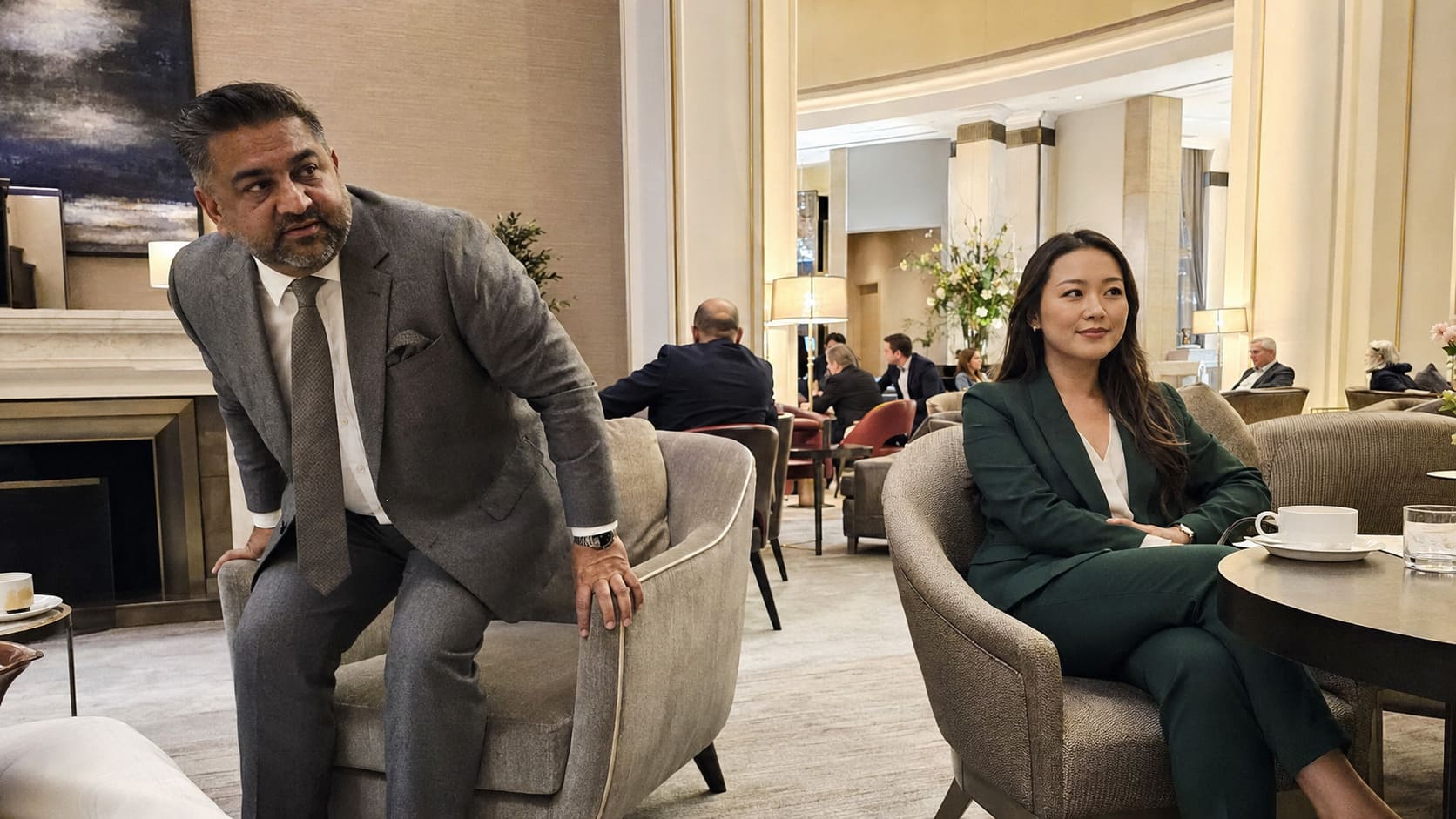
Man wearing grey suit and woman wearing green tailoring relax in bespoke clothing together indoors.
Questions we get asked about wearing a bespoke suit
Will a bespoke suit feel tight at first?
A bespoke suit should feel close and supported, but it should not feel restrictive. If a suit limits normal sitting, walking or reaching, that is a fitting issue to refine.
Will bespoke trousers feel different from altered ready-made trousers?
Yes, they can feel different because the rise, seat, thigh and waistband position can be planned before the trousers are made. Alterations can improve ready-made trousers, but they cannot always change the original balance.
Can bespoke help if one shoulder sits lower than the other?
Yes, bespoke can account for uneven shoulders, posture and body asymmetry during cutting and fitting. The aim is to let the jacket sit naturally without forcing one side to compensate for the other.
Does cloth choice affect comfort as much as fit?
Cloth choice has a real effect on comfort because weight, breathability and drape change how the suit feels through the day. Fit sets the balance, and cloth decides much of the temperature and movement feel.
Is bespoke useful for womenswear and non-binary tailoring?
Yes, bespoke can be especially useful when standard suit blocks do not match your body, proportions or presentation. We focus on how the garment sits, moves and feels on you, rather than forcing you into a fixed ready-made template.