What should you pack for a holiday if you want to wear more than once?
Pack a small group of versatile, comfortable pieces that work across different parts of the day. Clothes that fit well, feel good in heat, and shift easily from casual settings to smarter ones will usually serve you better than a suitcase full of single-use outfits.
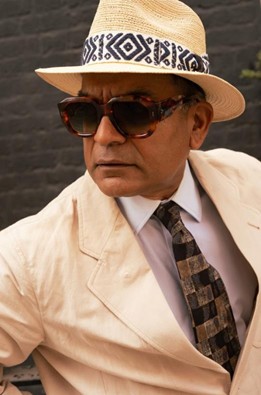
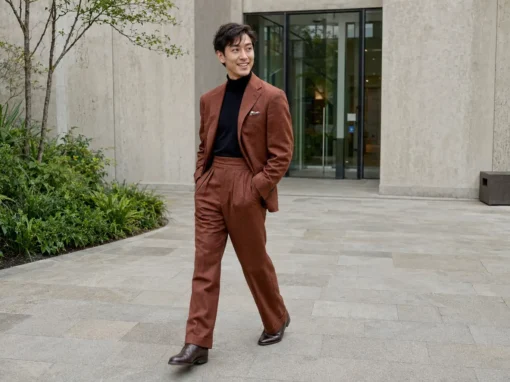
Menswear For Grand Prix – Tailored Smart Casual Style – Sample Image
What Is In This Article
Reframe Your Packing Mindset from “More” to “Versatile Essentials”
You open the suitcase, add a few options for daytime, a few for dinner, something for the beach, something smarter just in case, and suddenly half the wardrobe is on the bed. Most of it looks useful in the moment. Very little of it earns its place once the trip starts.
Packing anxiety often comes from trying to solve imaginary problems in advance. A better approach is to think like an editor. Keep the pieces that work in more than one setting, and leave behind the ones that need a very specific occasion to make sense.
More choice can create more decision fatigue, not less. A compact holiday wardrobe with real flexibility usually makes mornings easier, evenings simpler, and the whole trip less cluttered. Savile Row has long treated clothing as a matter of purpose and fit, and that same logic works surprisingly well for a suitcase.
Identify Pieces That Transition Smoothly from Day to Night
Picture the kind of day most holidays actually involve. You head out for a relaxed lunch, wander through town, stop for a drink near the water, go back briefly to freshen up, and then realise dinner is happening in the same mood, just slightly smarter. Clothes that can follow that rhythm are far more useful than outfits built for one narrow moment.
Instead of packing separate looks for every shift in atmosphere, build around pieces that change character with small adjustments. A lightweight shirt worn open over a tee during the day can look sharper with sleeves rolled properly and tailored trousers in the evening. Relaxed tailoring has an advantage here because it keeps structure without feeling overdressed.
Fielding & Nicholson tailors often work from this same idea in wardrobe planning. The aim is not to create formal clothes and casual clothes as two sealed categories. The aim is to create garments that move well between them.
A few transition-ready examples tend to do the heavy lifting:
- Lightweight shirts that can be worn open, tucked, or buttoned cleanly
- Tailored shorts or easy trousers with a neater line than typical holiday basics
- Soft polos or relaxed separates that sit comfortably between casual and smart-casual
That is what makes repeat holiday outfits feel polished instead of repetitive. The clothes are doing more work, which means you have to do less.
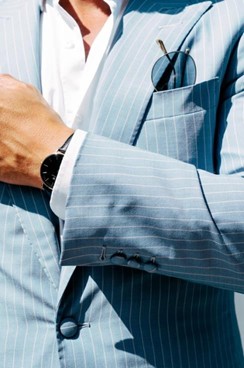
Men’s Light Blue Pinstripe Suit Detail – Tailored Jacket and Accessories Close-Up

Pro Tip: Try everything on before packing to ensure each piece works in at least two types of settings.
Choose Fabrics That Stay Fresh and Comfortable in Any Climate
Heat changes everything. Humidity changes it again. A garment that looks good in the mirror before you leave can feel completely wrong after twenty minutes outside.
Fabric matters just as much as the cut if you plan to wear something more than once. Breathable holiday clothes tend to stay in rotation because they remain comfortable after a full day, not just for the first hour. Linen and cotton are popular for good reason, especially in warm destinations, although the exact weave often matters as much as the fibre itself. Some technical fabrics can also be useful for travel, particularly where easy care and quicker drying are priorities.
A simple check helps:
- Does the fabric let heat escape and air move through it?
- Does it recover reasonably well after sitting, folding, or being packed?
- Does it still feel pleasant against the skin once the temperature rises?
Plenty of holiday packing mistakes begin with clothes that photograph well but wear badly. A shirt that traps heat, a dress that clings uncomfortably, or trousers that crease at every movement tend to get worn once and ignored. By contrast, fabrics chosen with some care usually become the pieces you reach for on repeat, whether you are walking through a city, sitting outdoors for lunch, or heading out again after sunset.
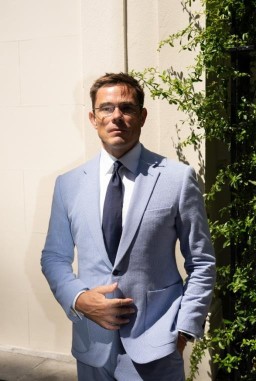
Men’s Light Blue Suit with Tie – Classic Business and Occasion Wear
Select Shoes That Balance Comfort, Versatility, and Style
Shoes take up too much space to be packed on instinct. Many people bring four pairs, wear two, and still wish they had chosen differently.
A smarter method starts with how the trip will actually unfold. If one pair can handle a marina lunch, a casual dinner, and an evening drink without feeling out of place, that pair has value. If another only works with one outfit or one imagined plan, it is probably using space better given to something else.
Try building around a short, realistic selection:
- Sandals for genuine heat and the most relaxed parts of the day
- Boat shoes for easy movement near the water and casual daytime wear
- Loafers for restaurants, evenings out, and slightly sharper settings
Comfort and style do not have to pull in opposite directions. A well-shaped loafer, specifically, can bridge more situations than people expect, whereas flimsy footwear often looks tired long before the holiday ends.

Pro Tip: Prioritise clothes in neutral or complementary colours for easier outfit combinations throughout your trip.
Build Outfits Around Core Pieces You’ll Actually Wear More Than Once
Think back to your last holiday. Chances are, a small number of items carried most of the week while several others stayed folded and untouched. Those repeat pieces are the ones worth paying attention to.
A core wardrobe for travel usually reveals itself through use, not intention. Classic shirts, polo shirts, relaxed dresses, and tailored trousers often rise to the top because they are easy to pair, easy to wear, and easy to trust. They suit the reality of holiday dressing, which means variable plans, warm afternoons, and evenings that ask for only a slight lift in polish.
Outfit repetition is rarely the issue people imagine it to be. What tends to matter is whether the clothes still look considered on the second or third wear. Good fit, comfortable fabric, and a clear sense of personal style make that possible without fuss.
Bespoke tailoring has always understood this point well. A garment that sits properly on the body and works with several other pieces earns repeat use almost automatically. That is a far better test than whether it felt exciting during packing.
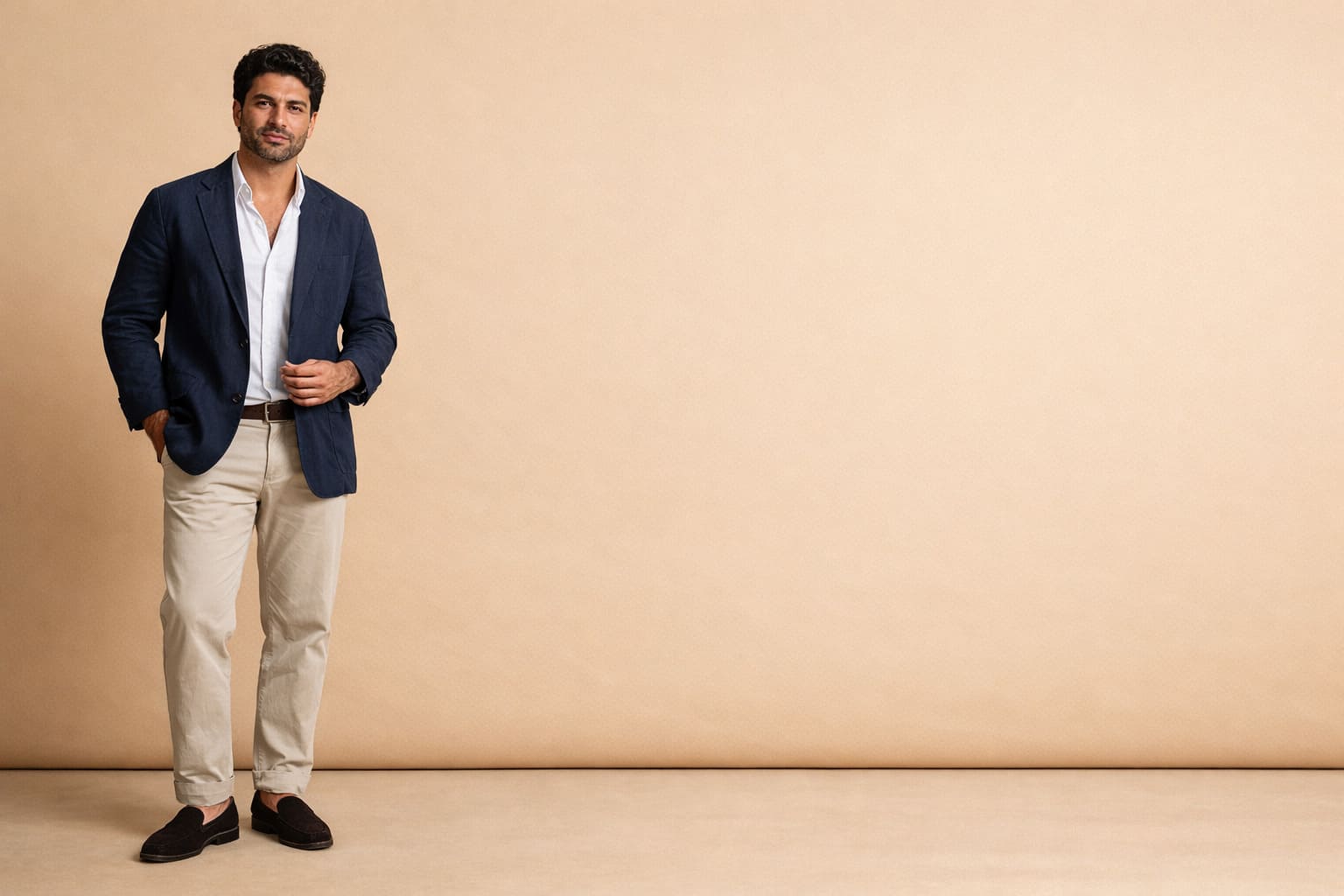
Men's Casual Wear – Navy blazer with beige trousers – Sample Image
Contrast “Pack for Scenarios” with “Pack for Adaptability”, and Why One Always Wins
One approach says you should pack for every possible version of the trip: the extra dinner, the unexpected invitation, the mood change, the weather shift, the outfit you might want if the photographs matter more than expected. That method usually ends with a heavy suitcase and a familiar result, namely too many options that do too little.
The better approach is to pack for adaptability. That means choosing clothes with enough range to handle real life as it happens, in the same way bespoke tailoring rewards long-term wardrobe planning over one-off decisions. A shirt that works at lunch and dinner is more useful than two shirts that each work once. Trousers that hold their shape through travel and evening wear are more useful than a statement piece that only suits one setting.
Scenario packing tries to answer every what-if before you leave. Adaptable packing trusts a smaller group of well-judged clothes to answer most situations once you arrive. Over time, the second approach tends to leave you with less luggage, fewer unworn mistakes, and a holiday wardrobe that actually earns its place.
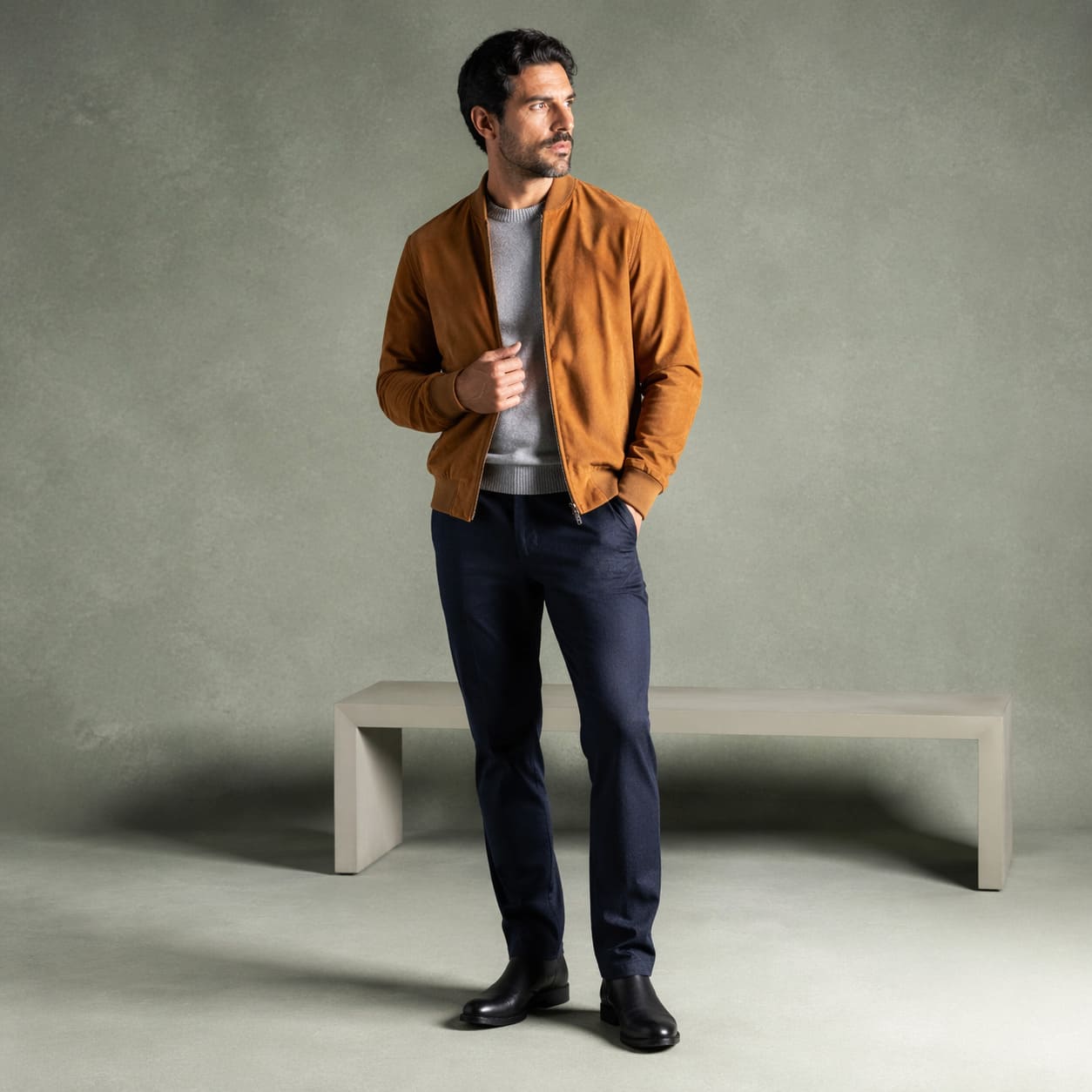
Men's Casual Elegance – Tan jacket with navy slim fit trousers – Sample Image