What defines a women’s bespoke suit as truly boardroom-ready?
A boardroom-ready bespoke suit for women combines precise fit, structural integrity, and refined understatement. It must convey executive presence, support confident movement, and align with professional expectations without reliance on fashion trends or overt styling cues.
What Is In This Article
Knowledge the Boardroom Suit Brief
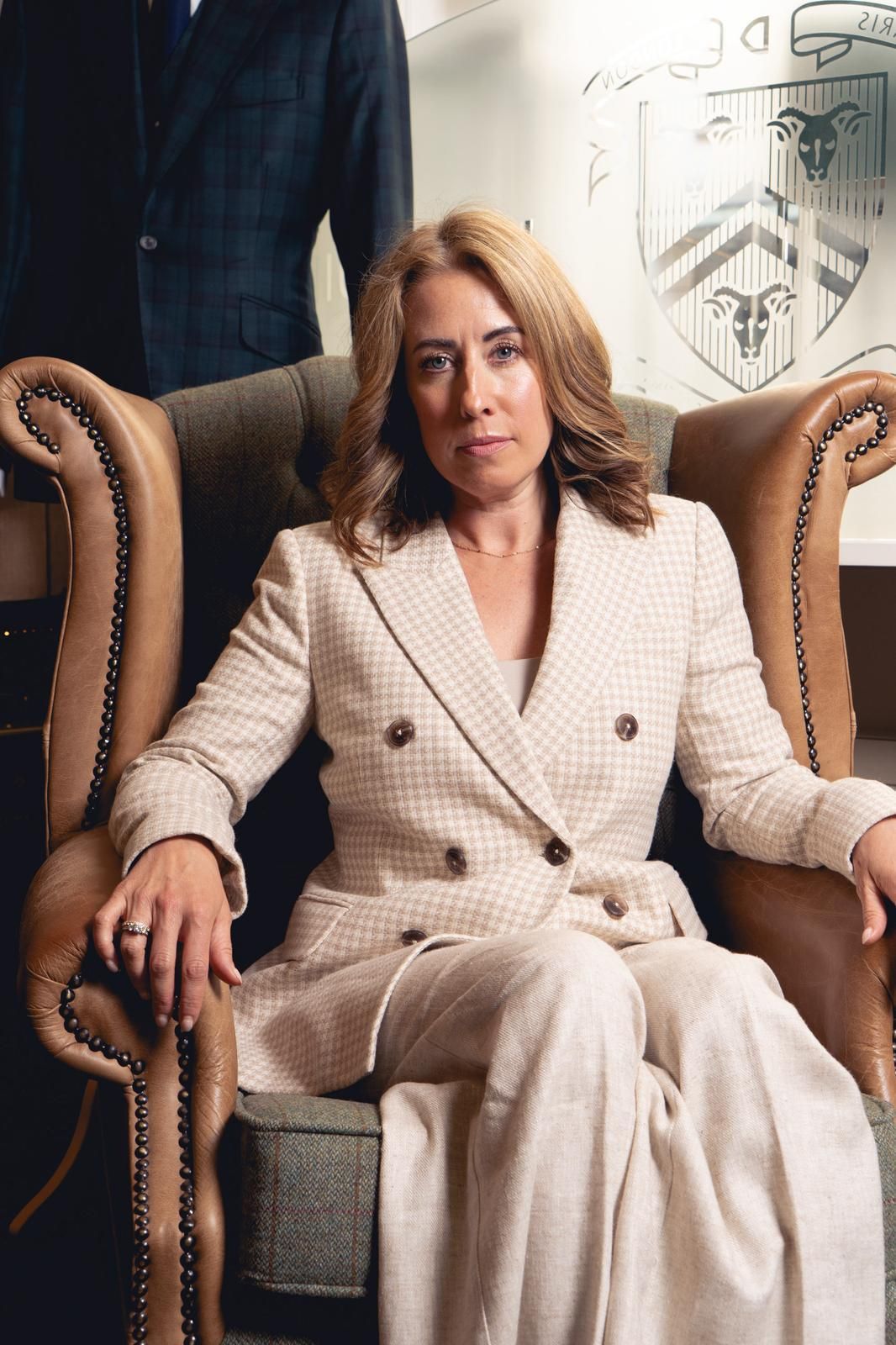
A boardroom suit is a working tool, not a fashion statement. Its purpose lies in clarity, competence, and command. In these settings, details are scrutinised, from how a jacket sits when seated to how a shoulder line holds under pressure.
Contrary to clichés around “capability dressing”, the goal is not to impress through boldness, but to reassure through control. Showiness can undermine seriousness. So can ill-fitting garments, impractical cloth, or ornamental flourishes.
A boardroom suit for women must manage several practical tensions at once:
- Strong presence without rigidity
- Feminine shape without delicacy
- Structure without distraction
- Comfort without compromise
Subtle tailoring choices carry weight. Structured shoulders, closing stance, lapel angle, and trouser cut all contribute silently to how a woman is perceived, by clients, boards, peers or investors.
Fit-for-purpose design begins with a bespoke process that respects the client’s role, not just her proportions. Fielding & Nicholson, for example, approach each boardroom commission by knowledge how the suit must fit the body, but how it must support authority, movement, and long hours of leadership. This cannot be replicated by brand labels or mass-market tailoring, no matter how expensive.

Pro Tip: Choose a mid-weight wool between 10 and 12 ounces to maintain structure without sacrificing comfort in long meetings.
Fabric and Construction: The Foundations of Authority
What a suit is made from defines its potential. Fabric weight, structure, and movement influence comfort and visual impact throughout the working day.
Wool from British mills remains the foundation of professional tailoring. It breathes, resists creasing, and drapes with authority. Dormeuil, known for innovation and refinement, offers cloths that combine these strengths across seasons.
Avoid shiny or stretchy blends. These can flatten under pressure and undermine professionalism. Lighter weights should not mean limpness. Conversely, overly heavy cloth can bulk the silhouette and restrict movement.
Structure is equally important. A fully canvassed jacket, shaped using horsehair and layers of interlining, helps the garment hold its lines over time. Internal construction supports posture and presence, particularly under the scrutiny of long board meetings or tense negotiations.
Considerations include:
- Shoulder construction: A softly padded shoulder offers warmth and form, while a roped shoulder delivers sharper authority.
- Lining and breathability: A half-lined jacket allows airflow without compromising polish.
- Seasonal weight: Mid-weight wool (around 10 to 12 ounces) balances form and comfort year-round.
A suit that is physically comfortable, visually articulate, and structurally sound becomes a silent ally in high-responsibility settings.
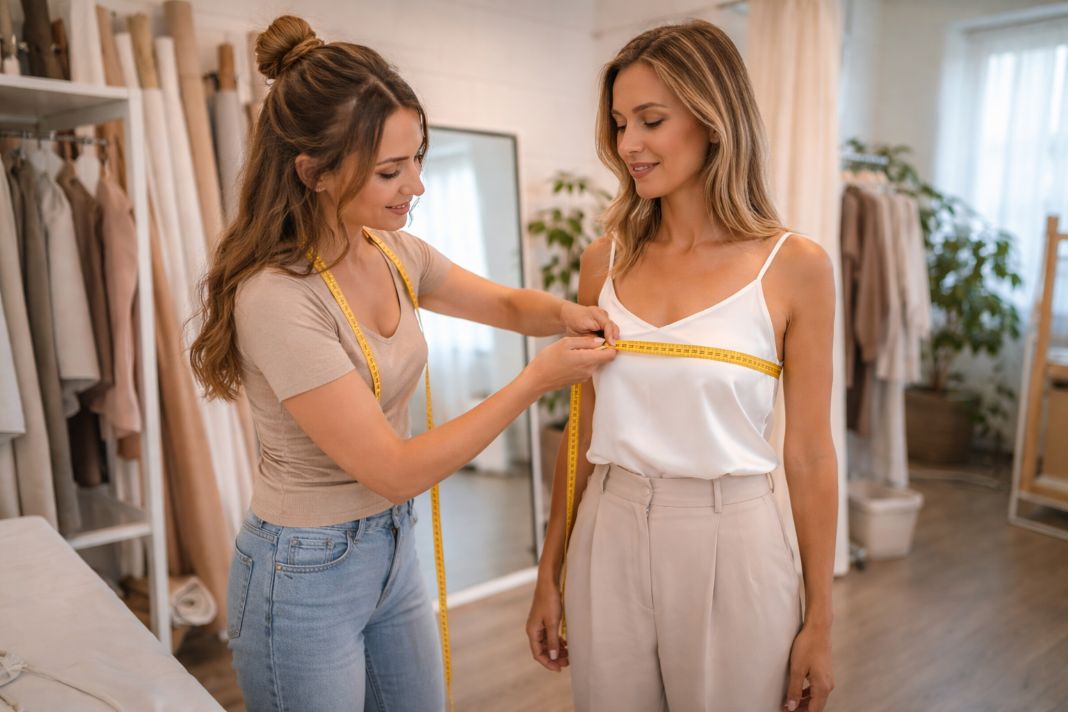
An illustrative photo of a female tailor taking measurements of a female client in a fitting room

Pro Tip: Ask your tailor to evaluate your seated posture as part of the fitting process to ensure the suit performs during presentations and boardroom sessions.
Fit and Form: Sculpting Confidence
Bespoke fit is an act of respect, for the client, the create, and the role the suit must perform.
Off-the-rack suits, even adjusted, cannot recognise functional needs such as seated posture, long-torso balance, or bust-hugging darts that preserve shape without strain.
Common frustrations include:
- Jacket gape at the chest caused by misjudged darting or high armholes
- Trousers that shift when seated, showing waistband gaps or creasing
- Sessile hip fabric or inadequate rise that compromises proportion
Bespoke tailoring approaches these as solvable design questions. Clients work with cutters who assess both static posture and active movement. Bust, waist, and hip lines are balanced to each other. Sleeve pitch is evaluated by natural shoulder angle, and jacket length is customised to leg length and stance.
Inclusive tailoring principles go further, acknowledging body diversity across gender identities and abilities. At Fielding & Nicholson, fit is never standardised or assumed. Each suit is cut as a response, not a template.
A properly fitted bespoke suit avoids strain, enables fluid movement, and projects consistency from every angle. The authority it supports feels natural because it is.
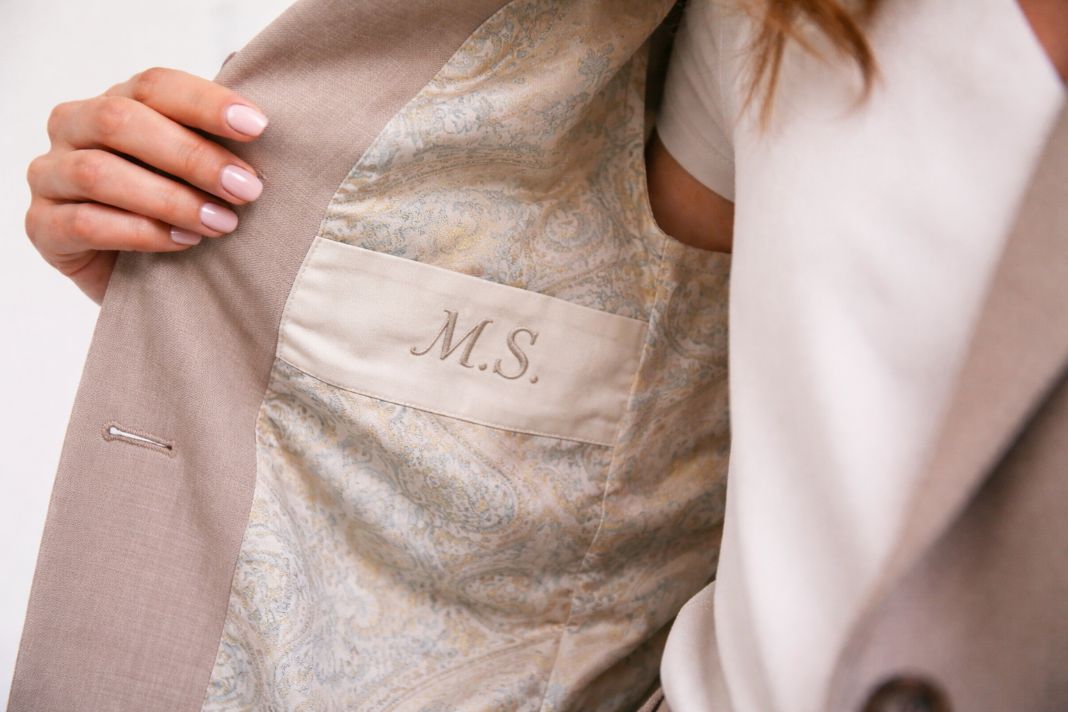
An illustrative photo of a close-up interior of a womans suit jacket showing a subtle monogram and patterned lining
The Jacket: Command, Comfort and Customisation
The jacket, more than any other item, carries visual authority. It frames the shoulders, anchors eye lines, and defines silhouette.
Key decisions include:
- Single vs double-breasted: Single-breasted remains the most boardroom-appropriate for women, providing cleaner lines and flexibility across roles. Double-breasted may suit specific body shapes or formal settings where presence needs amplification.
- Lapel style: A peak lapel adds defined structure and assertiveness, especially in width around 3.75 to 4 inches. Notch lapels are more restrained, suitable when subtlety is preferred.
- Shoulder finish: Light padding smooths form and supports posture. Roped shoulders add formal edge. Soft, unstructured styles can appear too casual unless cut with care.
- Vent choice: Double vents offer flexibility and a neat rear-view when seated. Single vents can gape if not precisely placed.
- Functional details: Cuffs with working buttons indicate bespoke quality but should not be used ostentatiously. Pockets, angled or flapped, must balance with body length and jacket rhythm. Internal pockets can discreetly accommodate small items.
Comfort and command must coexist. A jacket that pinches, flares or pulls speaks louder than words. Design decisions should anticipate practical use without drawing attention to themselves.
The Trousers: Structure, Movement and Balance
Trousers play a decisive role in silhouette, particularly for women in seated environments where jacket lines compress and midsections reveal their fit.
Points to consider:
- Rise: High-rise trousers support posture and complement jacket length, keeping the midsection smooth when seated. Mid-rise may suit short torsos, but must avoid dig-in discomfort.
- Leg shape: A customised straight-leg suits most boardroom settings. Tapered cuts can feel contemporary, but must not constrict. Wide-leg trousers should be carefully cut to avoid visual heaviness.
- Waistband shaping: Slight curvature at the waist, along with proper internal structuring, prevents rolling or stretching over time.
- Length and break: A gentle break over the shoe keeps proportions clean. Excess pooling or high-cropped lengths should be avoided in formal spaces.
- Shoe compatibility: Consider the footwear worn most often. Bespoke trousers can be finished to support a block heel, loafer or brogue without disruption to line.
Trouser fit determines flow and confidence. Proper cut aligns the leg in motion, maintains clean lines at the hip, and avoids pocket gaping or imbalance.

An illustrative photo of a woman standing confidently speaking at a modern boardroom setting in a dark plumb bespoke suit and white shirt
Shirt and Layering Strategy
Shirt choice is functional, not decorative. Improper layering undermines fit, crease lines, or jacket integrity.
A suitable shirt for boardroom wear should feature:
- Structured collar: A semi-spread or point collar complements most lapels. Avoid wispy or oversized collars which disrupt symmetry.
- Stable placket: Shirts with reinforced plackets maintain a cleaner front when worn under a jacket and resist crumpling under pressure.
- Material: High-quality cotton poplin is a dependable staple. Silk blends add softness, but risk friction if cut without precision. Stretch fabrics can assist comfort for long hours, but must be tightly woven and breathable.
Layering extends beyond shirts:
- Waistcoats: These can strengthen vertical lines and offer formality, particularly in finance or legal sectors. They should be cut slim to avoid bulk beneath the jacket.
- Fine knits: Lightweight merino or silk-cotton blends offer warmth without volume in cooler seasons.
Avoid layering combinations that cause bunching at the shoulder or armhole. A cohesive outfit depends on materials and cuts working in partnership, not against each other.
Personalisation Without Compromise
Personalisation in bespoke tailoring is often invisible to others, but known and appreciated by the wearer.
Thoughtful touches include:
- Lining characterisation: A patterned or coloured lining, chosen carefully, provides enjoyment without public display. It becomes a private confidence layer.
- Monogramming: Discreet initials stitched inside the waistband or jacket lining add a considered touch.
- Button variations: Horn, mother-of-pearl, or matte finishes can be selected with restraint. Avoid contrast buttons unless firmly aligned with professional tone.
- Stitching details: Contrast stitching works best when minimal, such as a single accent on the lapel or cuff. It must never distract.
- Signature cuts: A slightly longer jacket, a curved pocket flap, or shaped waistband can all act as silent signatures, noticed mainly by those who pay attention.
Personalisation should support identity, not perform it. A bespoke boardroom suit earns its distinctiveness through context, quality, and narrative, not embellishment.
A customised women’s business suit for the boardroom requires more than measurements and fabric. It demands clarity of intent, collaboration with an experienced tailor, and a respectful knowledge of the environments in which it must succeed.
When built through precise construction, responsive fit, and measured personal touches, bespoke tailoring becomes more than clothing. It becomes part of professional expression, serious, considered and absolutely fit for purpose.