What should men wear to the Winter Olympics to stay warm and stylish?
To stay warm and look sharp at the Winter Olympics, men should focus on tailored, layered outfits. Use a three-layer approach: a moisture-wicking base, an insulating mid-layer, and a weatherproof outer layer. Add practical cold-weather accessories, sturdy waterproof boots, and avoid bulky or cotton-based clothing. Choosing breathable fabrics like merino wool and packing smartly makes all the difference.
What Is In This Article
Understanding the Winter Olympics Cold: What Men Should Expect
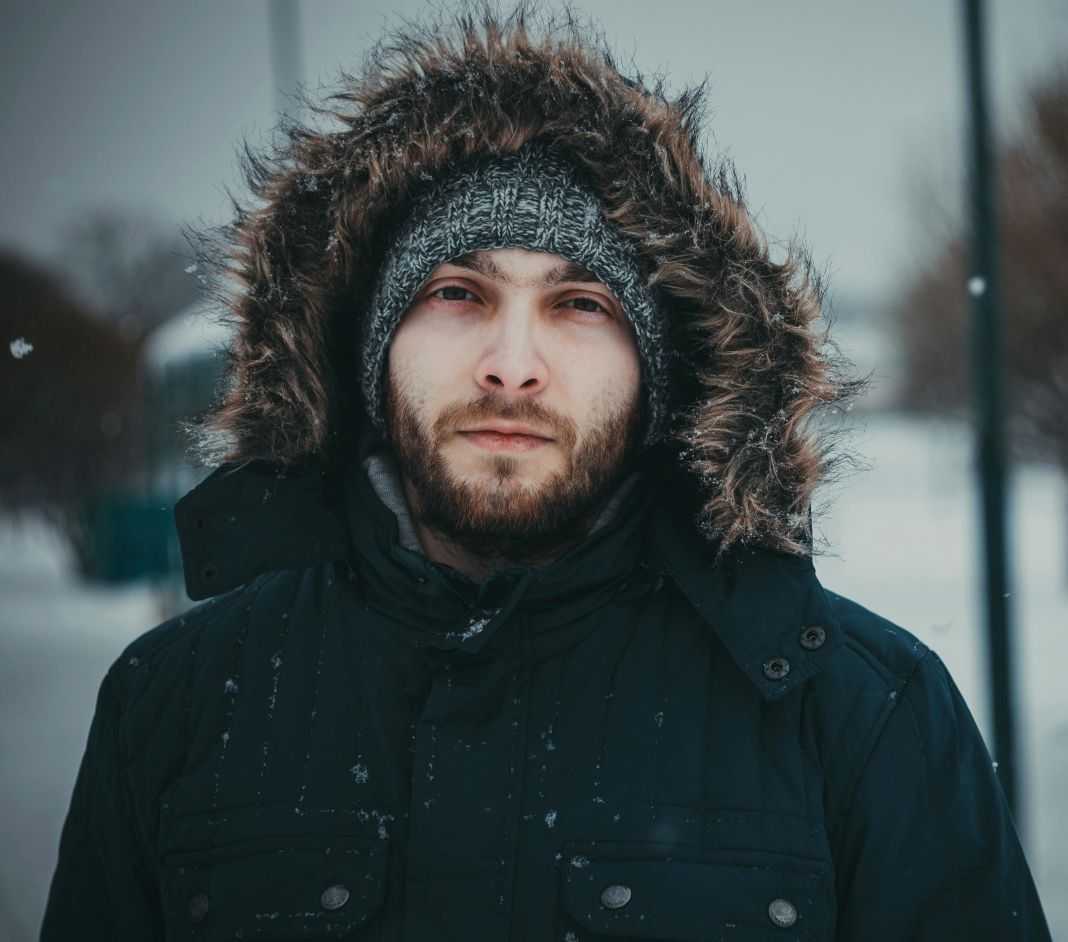
Cold weather at the Winter Olympics often feels more biting than expected. Spectators spend long stretches seated outdoors, which lowers core body temperature. Gusty winds, sudden snowfall, and drastic shifts in sunlight create changing conditions that demand thoughtful dressing.
Wind chill and heat loss are major concerns. Cold creeps in through gloves, trouser cuffs, and seams, gathering in areas like the lower back and hands. Spectators, being mostly stationary, generate less body heat. This makes layered, technical clothing essential.
Why Spectator Cold Hits Harder: The Reality Behind Long Winter Events
Remaining still in cold weather causes body heat to drain quickly, especially from the extremities and back. This is known as passive cold. It is different from the cold athletes face while active.
Wearing too much when walking to the venue often leads to sweating. Once damp, moisture turns cold. Many men overdress, overheat, and then freeze when seated. Smarter layering means staying dry and warm without overdoing it.

Pro Tip: Structured wool coats with hidden insulation outperform bulky puffers in both warmth and style.
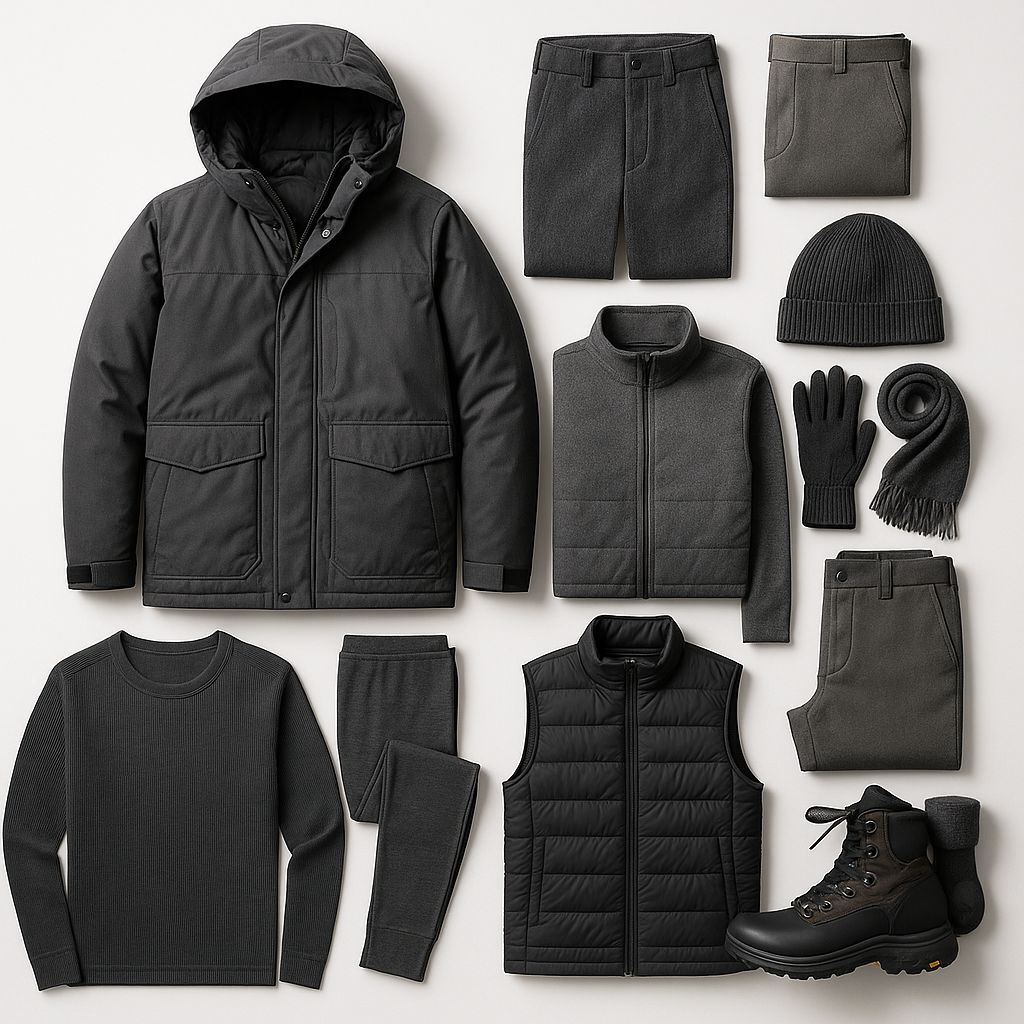
An AI photo of a Alpine Winter Outfit Flat Lay Technical Layers Cold-Weather Apparel
How to Layer Properly for the Winter Olympics
Follow the trusted three-layer system:
- Base layer: Pulls moisture away from the skin. Merino wool or technical synthetics are ideal. Look for garments with a strong breathability rating to ensure moisture escape.
- Mid layer: Traps heat without adding bulk. Choose fleece, lightweight down, or fine knitwear. Prioritise warmth-to-weight ratio for insulation that performs well but packs easily.
- Outer layer: Shields from wind, snow, and rain. Go for tailored coats or technical parkas. Hard shell jackets are a durable option for particularly harsh conditions.
Think of it like building a structure: start with a dry foundation, insulate it well, and protect it from the elements. Proper layering keeps you warm and polished.
Choosing the Right Base Layer: Warm, Breathable, Tailored to You
An effective base layer keeps your skin dry and prevents sweat from chilling you. Use merino wool or high-performance synthetics. Cotton should be avoided, as it holds moisture.
Fit is crucial. It should feel like a second skin: snug yet comfortable. Merino wool is excellent because it adapts to changing temperatures and fits well under tailored clothing.
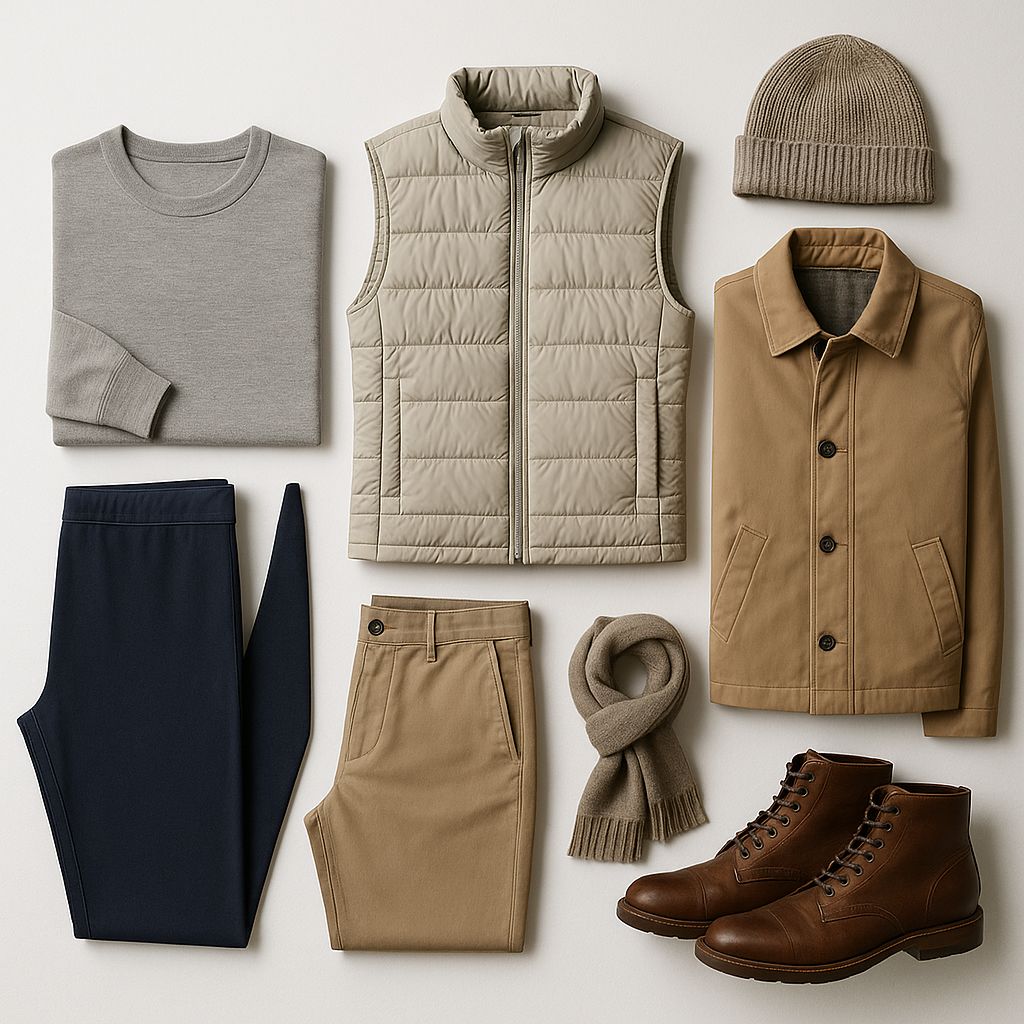
An AI photo of a All-Day Neutral Capsule Flat Lay Premium Layered Menswear Essentials on White Background

Pro Tip: Always remove a layer before you overheat to avoid moisture chill later in the day.
Mid Layers That Add Warmth Without Bulk
Bulky jumpers or loose fleece disrupt a clean silhouette. Choose slimline options such as cashmere, fine wool, or structured fleece.
These materials keep you warm without puffiness. British wool suppliers offer tailored mid-layers that layer neatly under coats and move naturally. Look for options that balance warmth-to-weight ratio and compressibility to fit well into a travel capsule.
Outerwear That Handles the Elements While Elevating Your Look
Outerwear should combine protection with style. Look for breathable, water-resistant fabrics like GORE-TEX or insulated wool blends. Pieces with high hydrostatic head ratings and windproof membranes add dependable defence against severe weather.
Tailored overcoats or sleek parkas with modern features create a sharp look. Prioritise clean lines, matte finishes, and textures that photograph well in snowy settings. For extended outdoor exposure, consider outerwear that integrates a RECCO system for added safety.
Smart Trousers and Legwear for Sub-Zero Temperatures
Legwear matters. Choose lined wool trousers, flannel-lined chinos, or layer thermal leggings beneath tailored trousers.
The fit should allow for layering but maintain structure. A good cut gives freedom of movement and keeps everything in place. Neatly hemmed trousers that sit well over boots complete the look.
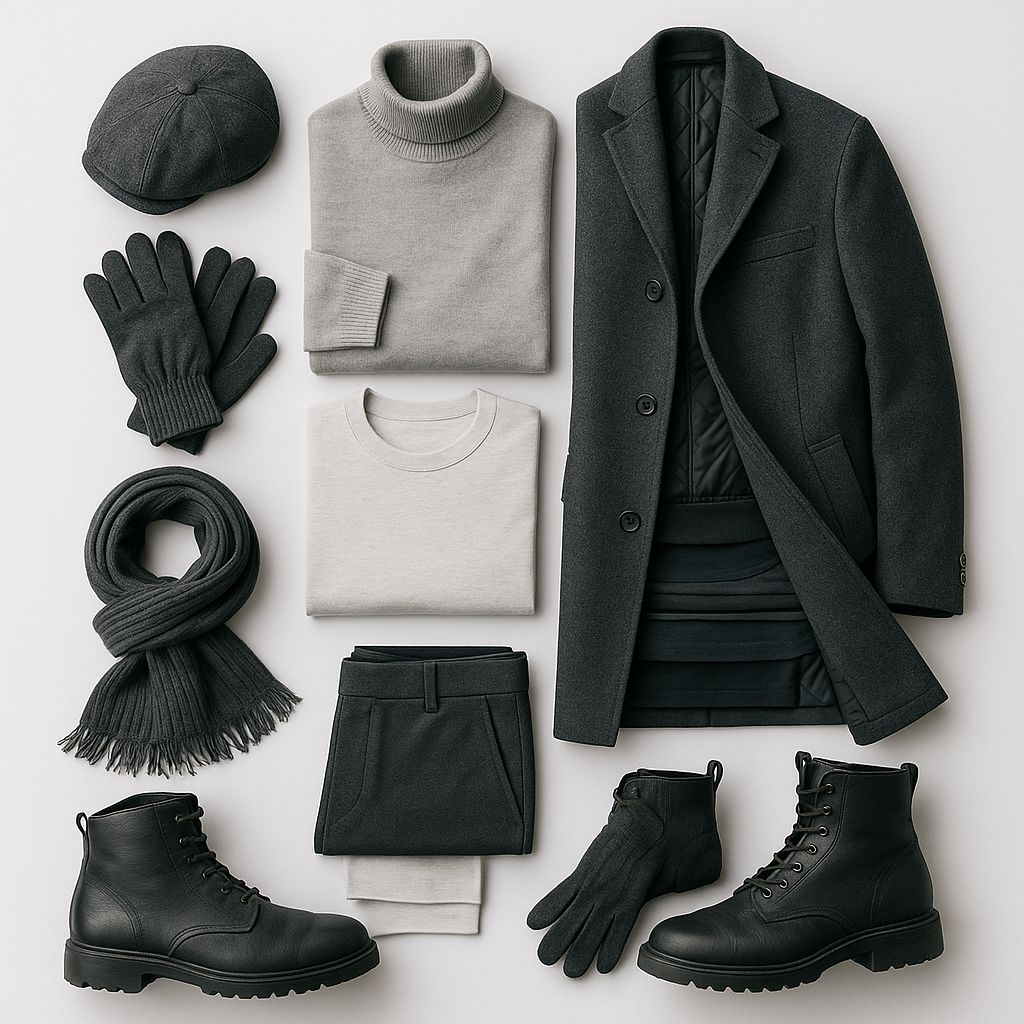
An AI photo of a City-to-Venue Winter Outfit Flat-Lay in Neutral Wool and Leather Layers
Winter Accessories Every Man Needs at the Olympics
Accessories are both functional and stylish. Look for quality materials and practical features:
-
Hats: Merino beanies or wool flat caps that fully cover the ears.
-
Gloves: Waterproof, insulated, and touchscreen compatible.
-
Scarves or neck gaiters: Wool or fleece, in solid or textured finishes.
Use accessories to add colour or texture. A good scarf or pair of gloves brings balance and stands out in photographs. Choose items that contribute to cold-weather palette cohesion and layer easily.
Keeping Hands and Feet Warm: Your Most Important Style Decisions
Cold extremities are often why people end their day early. Pay attention to:
-
Gloves: Insulated and wind-resistant, with flexibility.
-
Socks: Thermal or merino wool. Avoid cotton.
-
Foot warmers: Compact backups that help during long periods outside.
These items affect comfort and endurance more than any coat.
Boots Built for Ice, Snow and Long Days on Your Feet
Footwear must manage unpredictable terrain and long walks. Choose:
-
Waterproof uppers (technical fabric or treated leather)
-
Lug soles with grip (like Vibram)
-
Insulated linings to retain warmth
Sorel boots and Vibram soles perform well in these conditions. Pair with trousers that fall neatly above the boot. Avoid slick leather soles and purely fashion-led options.
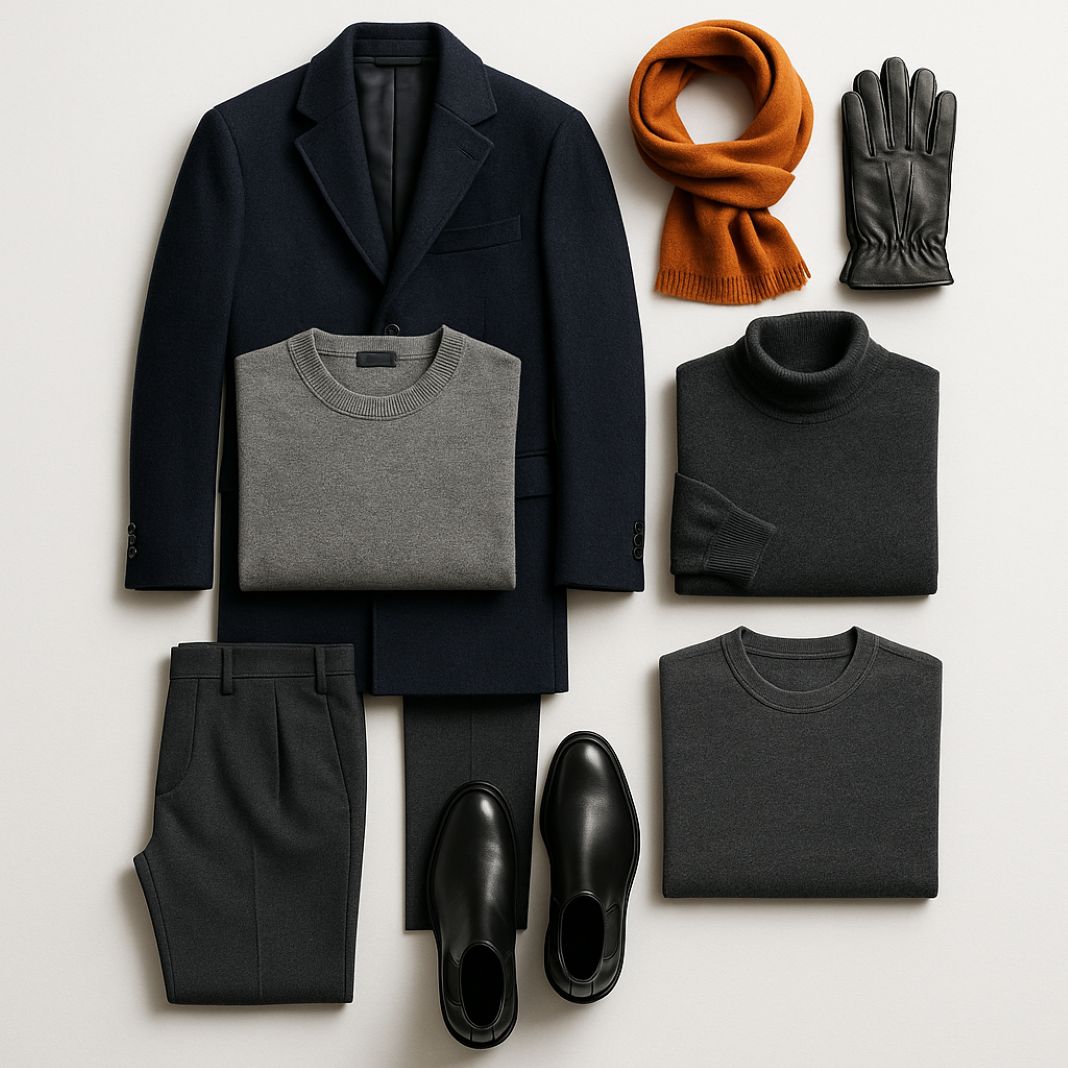
An AI photo of a Photogenic Winter Menswear Flat-Lay Premium Wool, Cashmere & Leather Outfit Essentials
How to Look Stylish in Heavy Winter Conditions
Looking good in winter is about coordination and contrast. Stick with palettes like navy, grey, olive, and stone. Mix textures: combine technical fabrics with wool or cashmere.
Tailored silhouettes stand out. Keep accessories purposeful and colour schemes balanced. With attention to these details, you can stay elegant in any conditions.
Men’s Winter Olympics Outfit Formulas You Can Copy
Start with:
- Base: Merino long-sleeve and leggings
- Mid: Wool jumper or insulated vest
- Outer: Waterproof coat or technical parka
- Accessories: Beanie, gloves, scarf
- Footwear: Thermal socks and waterproof boots
Outfit examples:
- City venue: Wool trousers, roll-neck knit, camel overcoat
- Mountain venue: Thermal base, fleece mid-layer, insulated parka
- All-day combination: Breathable layers, packable vest, neutral scarf
Each combination provides warmth, adaptability, and style.
What Men Should Avoid Wearing to the Winter Olympics
Common mistakes include:
- Cotton garments that trap moisture
- Jeans that get damp and stay cold
- Leather gloves without insulation
- Coats with no weather protection
- Bulky sweaters that do not layer easily
- Footwear with no grip or insulation
Every piece should support warmth, comfort, and movement.
How to Pack Smart: A Simple Winter Travel Capsule for Men
Create a compact, efficient capsule wardrobe:
- Two merino or synthetic base layers
- One wool or fleece mid-layer with compressibility
- One insulated or waterproof outer coat (preferably breathable with technical performance ratings)
- One hat, scarf, and gloves set
- Two thermal sock pairs plus one spare
- One backup layer for extra warmth
Choose colours that coordinate well. Every piece should work in more than one outfit.
Why Tailored Layers Give You an Advantage in Winter Conditions
Tailored clothing traps heat efficiently, enhances movement, and avoids excess bulk. Made-to-measure pieces help regulate warmth without compromise.
Fielding & Nicholson’s layering expertise ensures trousers, knits, and coats work seamlessly together. Tailored fits prevent bunching, sagging, or heat gaps.
In cold conditions, a refined fit is as functional as it is elegant.
Final Thoughts: Stay Warm, Look Sharp and Enjoy the Games
The Winter Olympics is a standout event. What you wear shapes how much you enjoy it. With careful layering, tailored details, and practical choices, you will stay warm and look composed.
Fielding & Nicholson offers garments designed for these conditions. Prepare with purpose, dress with confidence, and make the most of your Olympic experience.