
How many shirts do you really need in your weekly rotation?
The useful number depends on your week: five office days may call for 10 to 15 work or dress shirts, while mostly remote work or occasional formal wear can often be covered by 3 to 5 smarter shirts. Your office days, laundry rhythm, dress code and social life decide the split, so a smaller set of excellent shirts often beats a crowded wardrobe full of near-duplicates.
Buying by instinct is where wardrobes go wrong. You add two white shirts, then a casual Oxford, then something for dinner, and somehow you still reach for the same few pieces each week.
We look at shirts by use first. Work shirts need to sit cleanly under tailoring. Weekend shirts need to look good without a jacket. Occasion shirts need enough formality to carry an evening, ceremony or smarter lunch without looking like office overflow.
Once you split the wardrobe that way, the number becomes far easier to judge.
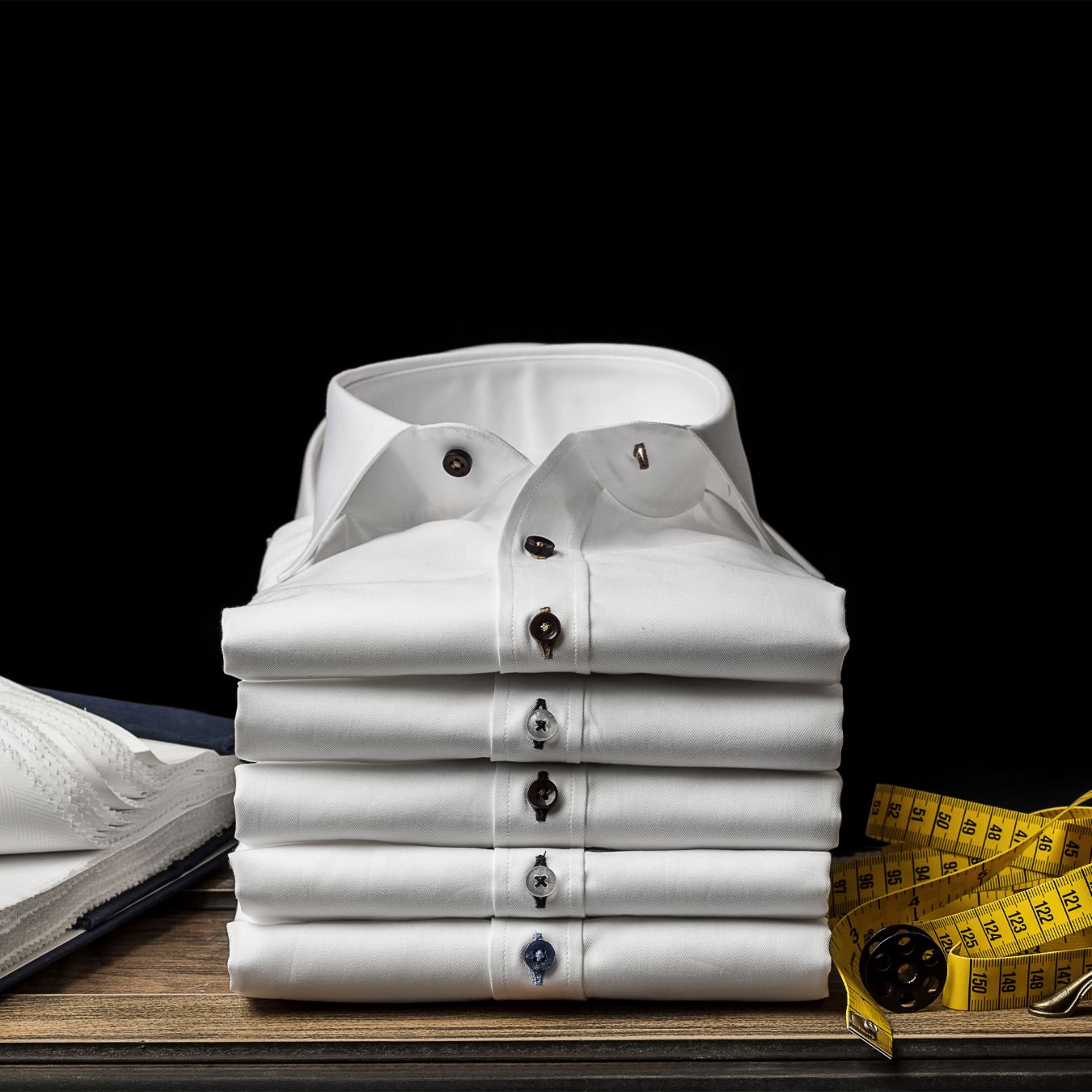
Bespoke Shirts - Fielding & Nicholson
The right number starts with rotation
Plenty of men own a stack of shirts and still feel short on a Monday morning. The problem is rarely the absolute count. The problem is that too many shirts are doing the wrong job, have tired collars, or only work in one narrow setting.
A useful shirt wardrobe is a working rotation, not a trophy count. We would count what you actually wear across a normal week, then allow room for laundry, travel, spills and warmer days. That gives you a practical shirt count instead of a vague sense that more must be better.
The table below compares lifestyle pattern with a practical shirt rotation.
| Lifestyle pattern | Practical shirt rotation |
|---|---|
| Five office days each week | 10 to 15 work or dress shirts may be useful, with weekend shirts counted separately. |
| Two or three office days each week | A smaller work shirt rotation can work well, provided you still allow a laundry buffer. |
| Mostly remote work or occasional formal wear | 3 to 5 smarter shirts can cover many needs, with casual shirts doing the separate weekend work. |
That broad range covers most professional wardrobes because it starts with use. A man who wears a shirt under a suit every weekday needs a different work shirt rotation from someone who works remotely and only dresses formally for client meetings, dinners or events.
Why office days decide the work shirts
Office attendance controls the work shirt number because each office day creates a real wear, a real laundering need and a real risk of running short. Hybrid working has made that calculation more personal. ONS data showed that 28 percent of workers in Great Britain were hybrid workers between 8 January and 30 March 2025.
Use this simple sequence before you buy another batch of office shirts.
- Count office days. Start with the number of days each week you wear a proper work shirt, whether that means a suit, separates or a smart business casual jacket.
- Match the count to laundry rhythm. Weekly laundry needs a bigger buffer than a midweek wash, because shirts need time to be washed, dried and pressed properly.
- Add buffer for travel, heat and accidents. A spare shirt matters when a day runs long, a collar wilts, or you are dressing straight after travel.
- Adjust for formality. Formal offices call for more dedicated dress shirts, while business casual wardrobes allow some overlap with softer fabrics.
White and light blue earn their place early because they work cleanly under tailoring and repeat without drawing attention to themselves. From there, subtle stripes, checks or textured weaves can add variety without making the wardrobe harder to use.
With Fielding & Nicholson, we assess collar shape, cuff style, fabric and business dress needs over time because the shirt that looks right at 9am also has to hold its line through the rest of the day. For a formal week, begin with the shirts you trust under your best jacket.
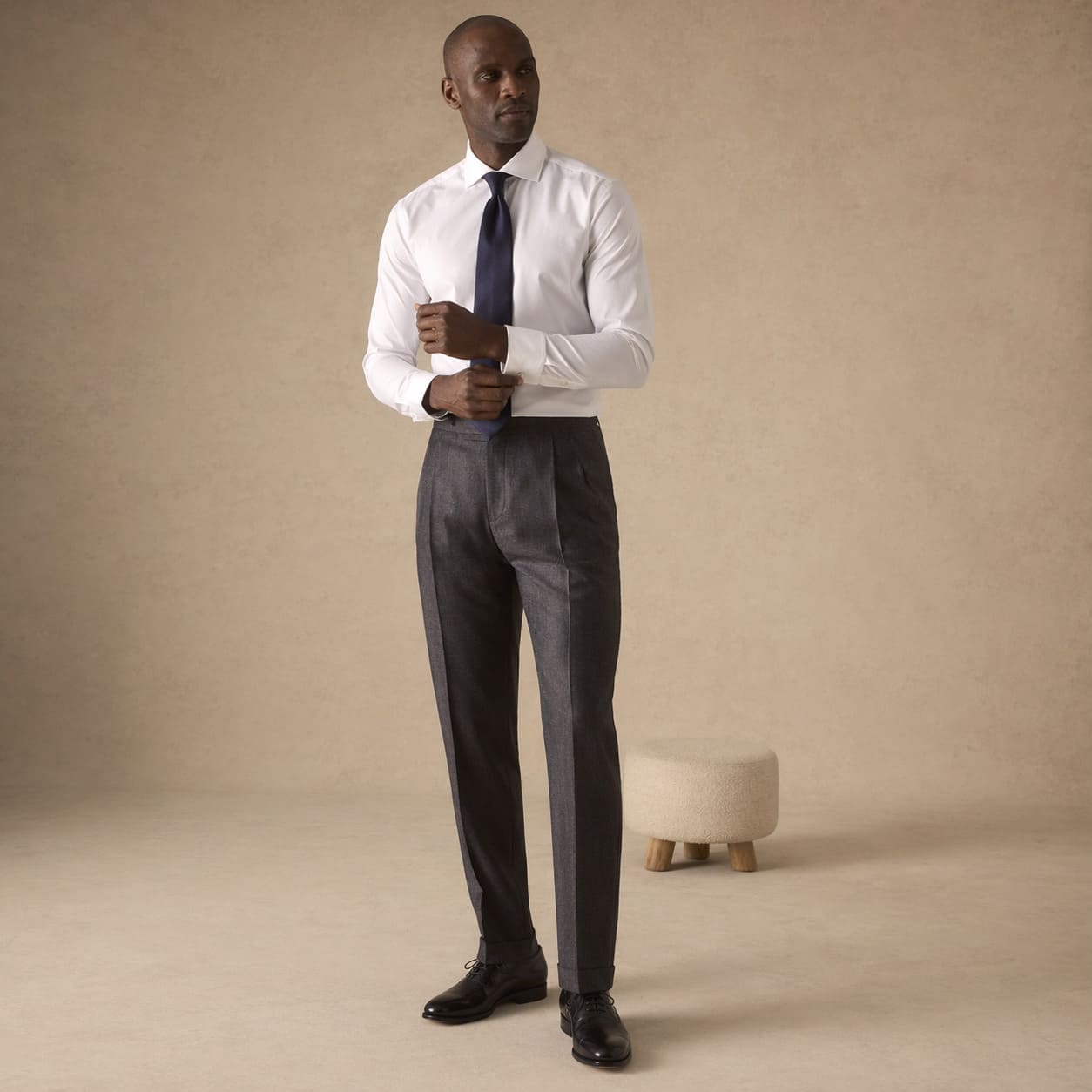
Men’s Shirts – White dress shirt with tie and tailored trousers – Sample Image

Pro Tip: Rotate from the back of the drawer rather than the top of the pile. Shirts worn in strict rotation wear evenly, which keeps the whole set usable instead of thrashing three favourites.
The weekend shirt count has a different logic
Off-duty shirts have to stand on their own. Without a jacket to sharpen the outline, fit through the shoulder, chest and hem becomes much more visible, and a casual shirt that billows or collapses never feels quite right.
Weekend shirts for men usually work across relaxed lunches, travel, family days and informal dinners. Oxford cloth is the dependable middle ground: smart enough with chinos, relaxed enough with jeans. Linen earns its place in warm weather, flannel in cooler months, and an overshirt gives structure when you want a layer without the feel of a jacket.
Polos sit slightly apart from woven shirts, but they still count when you are planning a men’s casual shirt rotation. A well-fitting polo can cover remote working days, relaxed Fridays or warm-weather travel, provided the collar sits cleanly and the fabric keeps its shape.
Washing frequency matters here. Which? gives T-shirts and whites a guideline of 1 to 2 wears before washing, assuming there has been no messy or strenuous activity. That guideline applies to pieces worn close to the skin, which need faster turnover than a heavier overshirt worn briefly over another layer.
Occasion shirts deserve their own small reserve. A dinner shirt, a refined dark shirt, or a crisp white shirt for ceremonial wear should not be dragged into ordinary weekday use just because the work drawer is thin. Count weekend and occasion shirts by the moments they serve, and the casual side of the wardrobe starts to feel deliberate.


Pro Tip: Measure a shirt that already fits you well and keep the numbers on your phone. Collar and sleeve sizing varies between makers, so a label size is a poor guide when buying from somewhere new.
Why fit, fabric and care shape the long-term wardrobe
A shirt number only helps if the shirts earn their place after repeated wear. We see this clearly with bespoke shirts for men: once a man knows the collar he likes, the cuff that suits his watch and the fabric weight he reaches for, the next shirts become more precise choices.
Fit decides whether fewer shirts do more
Fit is the reason a smaller rotation can feel easier to wear than a larger one. A shirt that sits cleanly at the neck, gives enough room across the chest and stays balanced at the hem works in more settings because you do not keep correcting it.
Men’s shirt fit also changes how formal a piece feels. A crisp white poplin with a sharper collar belongs naturally under tailoring, while a softer Oxford can move into smart casual use without looking overdone. Neither is better in every setting. Each has a job.
Fabric gives each shirt a role
Poplin and twill suit sharper work shirts because they press well and look controlled under a jacket. Oxford cloth has more texture, so it moves easily between business casual and weekend wear. Linen and flannel are more seasonal, which makes them useful in smaller numbers because they answer a specific need.
A mature wardrobe grows from shirts you actually wear, not from guesses made in one afternoon. That is why we prefer gradual building at Fielding & Nicholson: first establish the core business shirts, then add casual or evening shirts once your real habits are clear.
Care keeps the rotation useful
Care decides how long a shirt keeps its shape, colour and finish. Better fabric helps, but laundering, pressing and repairs matter just as much. Clear care labels, sound construction and the ability to adjust or repair worn areas all support a longer-lasting shirt wardrobe.
Washing everything after the briefest wear can wear clothing faster than necessary. Which? notes that washing clothes less often can help keep them in better condition for longer while saving energy and water, so judgement matters: sweat, stains, skin contact and fabric all influence what needs washing.
The sharper question, then, is not simply how many shirts should a man own. The sharper question is how many shirts you can wear well, care for properly and rely on without thinking about them every morning.
Questions we hear about men’s shirt wardrobes
Do undershirts change how many work shirts you need?
Undershirts can help protect collars and underarms, especially on long or warm days. They do not remove the need for laundering, but they can make a smaller work rotation easier to manage.
What actually makes a shirt last longer?
WRAP’s guidance on extending clothing life points to high quality fabric, classic cut and colours, clear care guidance, the option to repair or adjust where possible, and specialist aftercare. Those are worth checking before you buy, because they decide how many wears you get from each shirt.
Should casual shirts be tucked in or worn out?
A casual shirt can work either way if the length is right. Longer hems look neater tucked in, while a shirt intended to be worn out needs a clean hem and balanced proportions.
Are button-down collars suitable for business casual dressing?
Button-down collars work well for business casual wardrobes because they look relaxed while still holding shape. For very formal tailoring, a cleaner dress collar usually looks sharper.
How do you avoid buying the same shirt again and again?
Lay out your best-worn shirts and look for the pattern before buying more. If every favourite is pale blue, the next useful addition may be texture, collar shape or fabric weight, rather than another near-identical colour.