What does looking smart in summer actually mean?
Looking smart in summer means dressing with ease, context and self-possession. The aim is not to recreate winter formality in lighter cloth, but to look considered without seeming sealed into your clothes.
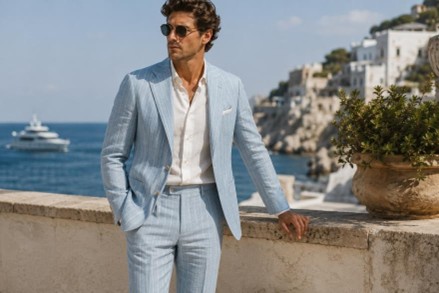
Pale blue linen suit men's coastal summer style
What Is In This Article
What Does ‘Looking Smart’ Really Mean in a Summer Context?
Smartness changes with the season. In colder months, sharper structure, darker cloth and a more formal outline often feel natural. Under summer light, the same choices can look too weighty for the setting, even if they are beautifully made.
Heat changes what people expect from clothing. A jacket worn to dinner in the city, a terrace lunch by the water, or an evening event outdoors all ask for a different kind of polish. Summer dress codes often sit somewhere along a gentler formality spectrum, where relaxed elegance reads more convincingly than stiffness.
That is where many people get caught out. They assume smart dressing must feel rigid, or that comfort automatically looks casual. In practice, the strongest summer style standards come from reading the room, choosing breathable pieces and allowing the outfit to move with the day.
Savile Row traditions still matter here, but the best of those traditions have always been about judgement rather than costume. A skilled tailor knows that a smart summer wardrobe should look intentional in warm weather, not simply formal by habit.
How Do Fabrics and Construction Change for Summer Tailoring?
Picture a summer evening in a heavy suit that holds warmth long after the sun has dipped. Now picture a linen jacket or a lightweight wool piece that lets air move, sits more lightly on the body and still keeps its shape. That difference is the real starting point for summer tailoring fabrics.
Linen earns its place because it feels alive in warm weather. It breathes well, softens the line of a jacket and carries a natural texture that suits the season. Creasing comes with it, yet that is part of the appeal. A linen jacket with a little movement in the cloth often looks more convincing in July than something too pressed and too perfect.
Lightweight wool works differently. It gives cleaner drape, more shape through the chest and a slightly sharper finish, which means that it can be a strong choice for business settings, summer occasions and anyone who wants structure without bulk. Good versions do not feel heavy in the way people sometimes assume.
Cotton and silk blends sit in their own useful space. They can feel dry, airy and refined, with enough body to keep a silhouette neat. Depending on the weave, they may offer a quieter finish than linen and a softer hand than some wools.
Construction changes as much as cloth. A summer jacket often benefits from less internal weight, lighter canvassing and a softer shoulder, because the garment needs to breathe as well as flatter. Fielding & Nicholson tailors, like many experienced bespoke specialists, work with these small adjustments through the bespoke tailoring process rather than relying on fabric alone. Dormeuil cloths are often part of that conversation because weave, handle and drape matter just as much as fibre content.
If you are judging what to look for, focus on how the jacket feels in motion and how it settles when worn open. A smart summer piece should hold its line, but it should never feel as though it is fighting the weather.
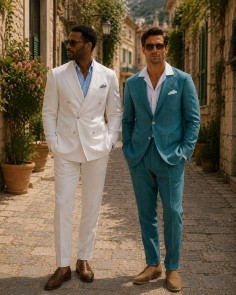
White and teal linen suits men's summer style
What Colours and Tones Work Best for Looking Smart Without Overdoing It?
A pale blue suit in sunlight gives off a very different mood from a dark navy suit in January. One feels open, fresh and easy to approach. The other can feel more formal, more businesslike and more enclosed, even if the cut is identical.
Lighter tailoring shades often work well in summer because they create visual lightness. Cream, stone, soft grey, pale blue and muted sage all soften the impression of tailoring without making it look unfinished. Those tones tend to sit comfortably in bright surroundings, where darker colours can absorb light and feel heavier than intended.
Warm neutrals are especially useful because they pair easily with shirts, polos and lighter knitwear. Stone trousers with a soft brown belt, or an off-white jacket over a blue striped shirt, can look polished without feeling ceremonial. The effect comes from balance, not showiness.
Bold colour has its place, though summer usually rewards restraint. A very bright jacket can dominate the wearer, and very pale tones can wash someone out if there is not enough contrast around the face. That is why muted shades often do more work than loud ones. They keep the attention on the person rather than the palette.
Colour theory in tailoring sounds abstract until you see what it does in real life. Lighter tones relax the message of an outfit before anyone notices the details, which is useful if the whole aim is to look smart without seeming overdressed.

Pro Tip: Opt for muted tailoring shades like stone or sage for a polished summer look that balances formality and comfort.
How Should Fit and Silhouette Evolve for Summer Comfort and Smartness?
Imagine moving from a city dinner onto a riverside walk in the same jacket. The right summer suit fit allows that shift without making you want to peel the garment off after twenty minutes.
Relaxed tailoring does not mean oversized tailoring. A summer silhouette still needs shape through the shoulder, a clean line through the sleeve and enough definition through the body to look deliberate. The difference is in the ease built into it. Extra room through the chest, lighter suppression at the waist and trousers with a little more freedom through the leg can make a tailored outfit feel far more natural in heat.
Bespoke tailoring handles this well because the fitting process can respond to body shape, posture and how someone actually lives in their clothes. A tailoring consultant may suggest a softer jacket front, a slightly easier trouser cut, or a sleeve shape that sits better when the arm is bent rather than held straight at the side.
What tends to fail in summer is the wrong kind of extreme. A jacket that is too tight looks strained and feels hotter by the hour. A cut that is too loose loses the line that makes tailoring look smart in the first place. The sweet spot sits in controlled ease, where movement is built in and the silhouette still reads clearly from across the room.
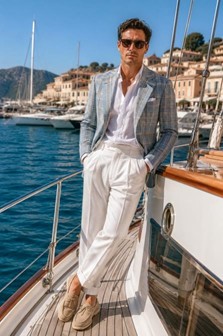
Grey checked linen jacket white linen trousers
What Role Do Accessories and Layering Play in Summer Smartness?
Restraint usually does more for summer smartness than adding extra pieces.
An open collar can immediately shift tailoring into a more relaxed register, particularly outdoors or in the evening. A tie still works in the right setting, but summer style often looks stronger when the shirt neckline is allowed to breathe and the jacket does not have to carry the full weight of formality by itself.
Pocket squares are similar. A soft linen square in a quiet colour can lift a jacket. A very crisp fold in a bold silk print can tip the whole outfit into overstatement. Small details matter more in warm weather because there are fewer layers competing for attention.
Layering needs a lighter touch too. A fine knit over the shoulders, an unstructured overshirt, or a light scarf for late evening can all make sense. Bulk rarely does. Summer layering should answer a practical need, such as changing temperature or a longer day, rather than serve as decoration.
Stylists and bespoke shirtmakers often talk about finishing touches in terms of proportion. If the jacket, cloth and colour already say enough, the best accessory may be none at all.
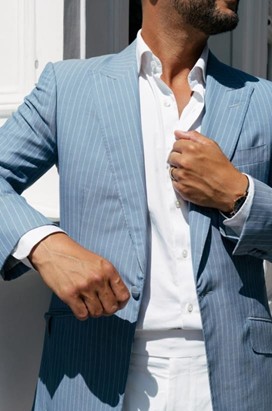
Men’s Light Blue Pinstripe Blazer with Open Collar Shirt – Relaxed Summer Tailoring
How Can You Transition Summer Tailoring Across Different Occasions?
A summer outfit often has to work harder than a winter one. You may start the day in town, head to lunch, move into an early evening gathering and finish outdoors after dark, all without changing completely.
That is why adaptable tailoring matters. A softly structured jacket in a breathable cloth can sit over a shirt for daytime, then work with an open collar at dinner. Trousers in stone, taupe or light grey can move between smarter and more relaxed settings with a change of shoes and very little else.
One useful approach is to build around pieces that can shift tone quickly:
- Choose a jacket that looks natural both buttoned and worn open.
- Pick trousers that hold shape but do not feel tied to one occasion.
- Keep shirts and knitwear simple enough to move up or down in formality.
Wardrobe versatility is less about owning one outfit for every event and more about choosing garments that are not trapped inside a single use. Tailoring consultants often guide clients in that direction because modern life rarely divides itself neatly into formal and informal hours. Fielding & Nicholson has spoken about long-term wardrobe development in much the same spirit, with pieces chosen to work across settings rather than wait in the wardrobe for one annual invitation.
A multipurpose summer wardrobe feels calmer to wear because it removes the sense that every plan needs its own costume. That freedom is often what makes the clothes look better by the end of the day.
What’s the Real Secret to Not Feeling Overdressed in Summer?
The real secret is that the question is slightly wrong. Feeling overdressed in summer rarely comes from wearing a jacket, a suit or even a formal piece in itself. The discomfort usually starts when the clothes ignore the weather, the setting or the person inside them. Effortless summer style is rarely accidental, yet it does not come from chasing perfection either. It comes from choosing garments with enough lightness, enough ease and enough character to feel like a natural extension of how you want to move through the season. Once that clicks, the goal stops being to look smart without feeling overdressed, and becomes something far simpler: to look at home in your own clothes when summer asks for less armour and more judgement.