What does inclusive tailoring actually change in a bespoke garment?
Inclusive tailoring changes the starting point: the garment is planned around the client’s body, identity, movement and preferred presentation before cloth is cut. That affects silhouette, balance, comfort and privacy, so a suit can feel precise without forcing someone into old menswear or womenswear assumptions.
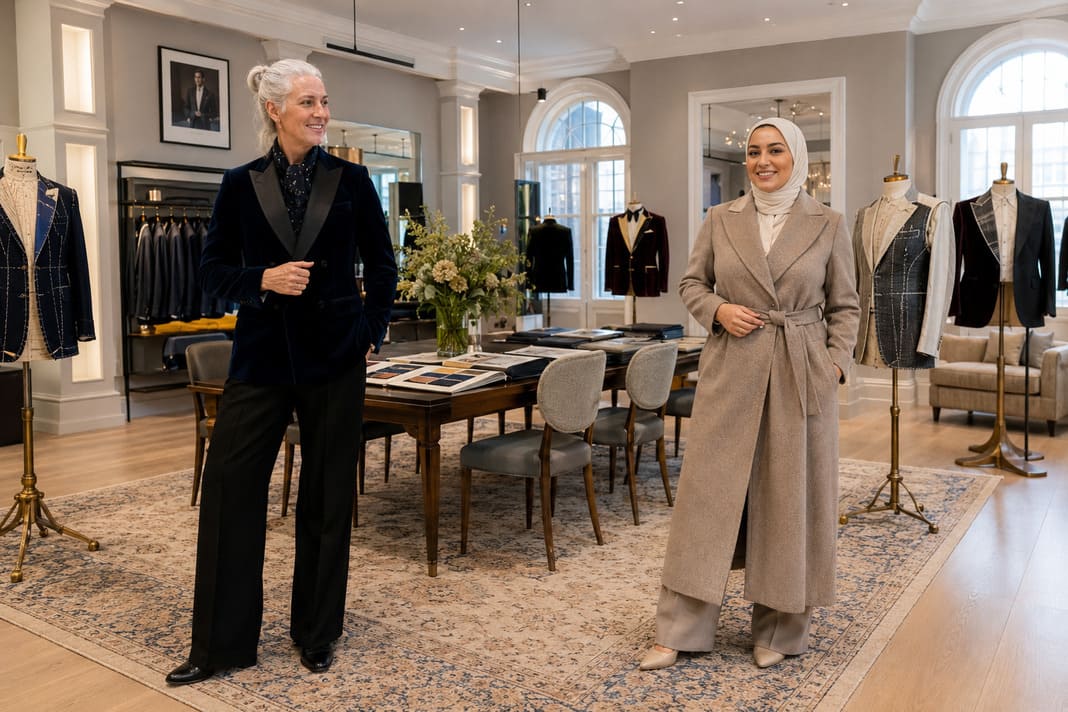
Bespoke tailoring for diverse clients featuring a in a classic black tailored suit and a woman wearing a flowing beige tailored outfit with a coordinating headscarf, showcasing personalised formalwear that accommodates modest styling, different ages and individual preferences.
What Is In This Article
Inclusive tailoring starts with the person before the category
Many clients do not worry about whether a tailor can technically make a suit, jacket, shirt or coat. They worry about whether the room will make assumptions before they have spoken. Inclusive bespoke tailoring answers that concern by treating identity, body shape, posture, comfort and presentation as normal parts of the brief.
Inclusive tailoring has no single look. One client may want a sharper shoulder line and straighter chest shaping. Another may want waist definition, hip room, softness through the jacket or a trouser rise that changes the balance of the whole outfit. Non-binary tailoring, bespoke womenswear tailoring and gender-inclusive suits can each look very different because the decision belongs to the person wearing the garment.
Bespoke pattern cutting matters because it starts from the client rather than from a size block. Measurements give the cutter information, but posture, shoulder balance, sleeve pitch, hip shape, chest preference and garment purpose all change the pattern. A client may want shape emphasised, softened, balanced or reframed, and a good tailor should translate that into proportion, structure and ease.
Privacy also sits inside the fit. Private fittings, careful language and clear consent around measurements are not extras. They affect how relaxed the client feels, which affects how openly they can explain what the garment needs to do. Every inch is there for a reason the client can feel.
Good appointments begin before the tape measure appears
A useful bespoke tailoring consultation starts with conversation because the brief decides what the measurements mean. Style references matter, but purpose, comfort, mobility, modesty, undergarments and language often shape the garment more than a picture on a phone.
Fielding & Nicholson says its women’s workwear process starts with the client’s measurements, posture and what the clothes need to do. Its first consultation for that service takes about an hour and includes discussing needs, looking at cloths and taking measurements. This reflects a sensible order: listen first, measure after the brief has substance.
A client can make an inclusive tailoring appointment easier by bringing or mentioning a few practical things:
- Shoes. Shoes affect trouser length, stance and the way a jacket balances over the body.
- Preferred underwear or a binder. The garment should be fitted over the shape and support the client expects to wear with it.
- Existing garments. A jacket that works or a pair of trousers that fails can show fit priorities faster than abstract style words.
- Inspiration images. Images help with mood and proportion, but they should guide the brief rather than overrule the body.
- Mobility aids or movement notes. Canes, wheelchairs, braces, seated posture, arm movement and daily routines can all affect cut and comfort.
- Presentation preferences. Notes on masculine, feminine, androgynous, fluid, formal or understated presentation help the tailor avoid guesswork.
None of these details should feel like an exception. A binder affects chest shaping. A wheelchair affects seated balance. A preference for modesty affects fitting pace and changing privacy. A pair of trousers that pulls across the thigh tells the cutter something useful before chalk ever touches cloth.
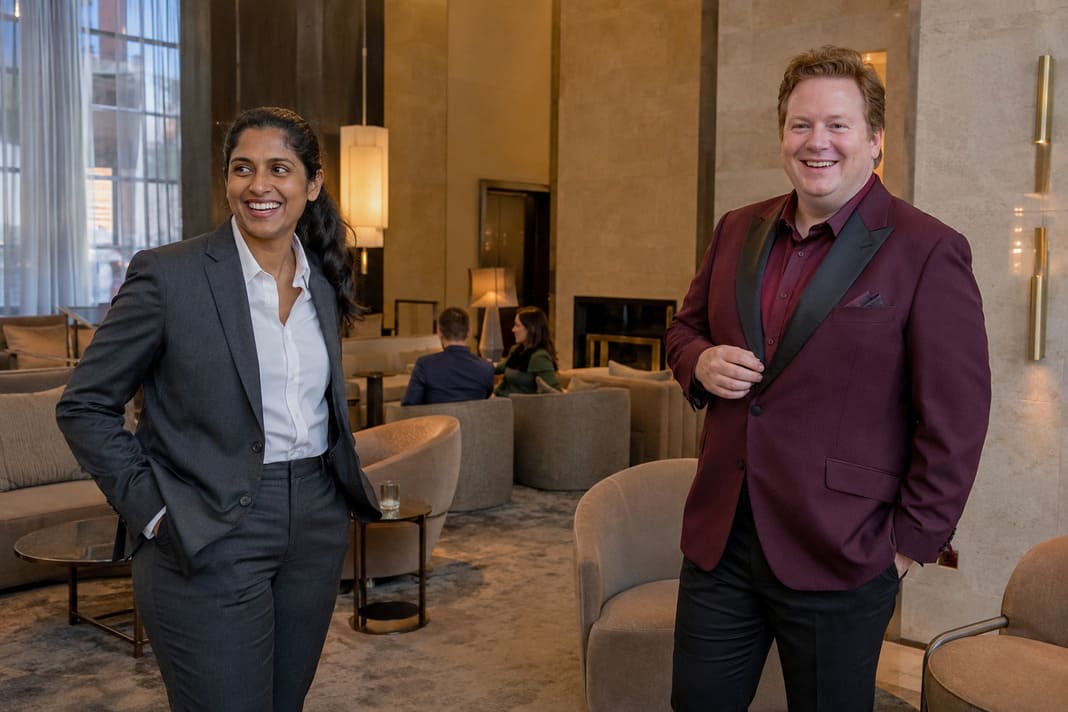
A charcoal tailored trouser suit with an open-collar shirt is paired alongside a burgundy blazer with dark tailored trousers, showcasing bespoke tailoring that embraces different personalities, body proportions, professional wardrobes and individual style preferences.
Fit is built through observation, cutting and correction
Bespoke fit is a sequence of decisions, not a single measurement session. Inclusive intent becomes real only when the consultation, cloth choice, pattern, fittings and final refinements all respond to the same brief.
- The consultation sets the brief. The tailor should ask how the garment will be worn, what the client wants to express, what they want to avoid and how they need to move. A wedding suit, a professional jacket and an everyday coat can ask very different things of the same body.
- Cloth selection changes the outcome. Cloth weight, drape and texture can sharpen or soften a silhouette. A cloth that hangs cleanly through the front may support a straight line, while another cloth may give more ease and movement.
- The pattern gives the brief a shape. Bespoke pattern cutting turns posture, shoulder slope, chest preference, waist, hips, rise and sleeve angle into a personal draft. This stage decides far more than the label attached to the garment.
- Fittings test the cut on the body. Early fittings show whether the jacket sits cleanly, whether the collar hugs the neck, whether the trouser rise feels right and whether the garment moves as intended. Corrections are part of the process, not a sign that something has gone wrong.
- Final refinement settles the garment. Small changes to sleeve rotation, fastening position, seat room, lapel line or trouser break can change how composed the finished garment feels. Precision often lives in these small corrections.
Silhouette is built through proportion, not gender rules
Masculine, feminine and androgynous silhouettes are made through structure, line and proportion. Shoulder width, chest shaping, waist suppression, hip room, trouser cut and lapel scale all send visual signals, and those signals can be adjusted without flattening the client into a category.
Shoulders, chest and hips carry much of the signal
A straighter jacket front can reduce emphasis at the waist. A softer shoulder can make a suit feel more relaxed. Extra hip room can improve both comfort and line, especially when a jacket needs to close cleanly without pulling. For some clients, a masculine suit for an AFAB body may mean managing the relationship between shoulder width, chest shape and hip ease with care, rather than copying a menswear block.
Fittings test movement as much as appearance
A garment that looks still in the mirror can fail in daily life. Sitting, walking, reaching, fastening the jacket, placing hands in pockets and wearing the garment over the right underlayers all reveal different fit issues.
Sleeve pitch is a good example. A sleeve can hang neatly when the arms are still, then twist or pull when the client reaches forward. Trouser rise works the same way, because seated comfort and standing line can pull against each other. A sleeve that looks fine at rest but fights the arm in motion has not been fitted for the life the client leads.
Pro Tip: Bring the shoes and underlayers you expect to wear with the finished garment, because they affect stance, balance and trouser length.
Bespoke inclusive tailoring starts earlier than ready-made clothing
Gender-neutral ready-to-wear, alterations and bespoke inclusive tailoring can all serve a purpose. The difference lies in where the work begins and how much control the client has over fit, silhouette, privacy and movement.
| Route | Where it starts | What it can control |
|---|---|---|
| Gender-neutral ready-to-wear | The garment starts from standard sizing with fewer gendered style cues. | It can simplify presentation and offer quick access, but fit still depends on the size range and block pattern. |
| Alterations | The garment already exists, so the work begins with correction. | It can improve length, small shape issues and some comfort problems, but the original cut limits the result. |
| Bespoke inclusive tailoring | The pattern starts from the client’s body, posture, purpose and preferred presentation. | It can control balance, structure, silhouette, mobility, privacy and repeat fit from the beginning. |
Alterations can be very useful when a garment is close to right. They cannot always change shoulder width, trouser rise, chest structure or the basic relationship between waist and hips without fighting the original make. Made-to-measure sits somewhere between ready-made and bespoke, because it adapts an existing base rather than creating a full personal pattern.
A non-binary suit also has no fixed template. The garment may look sharp, soft, formal, expressive or quietly professional. Bespoke simply gives the client and tailor a better starting point for making that choice physical. No later alteration can make an unsuitable block behave like a pattern drawn around the wearer.
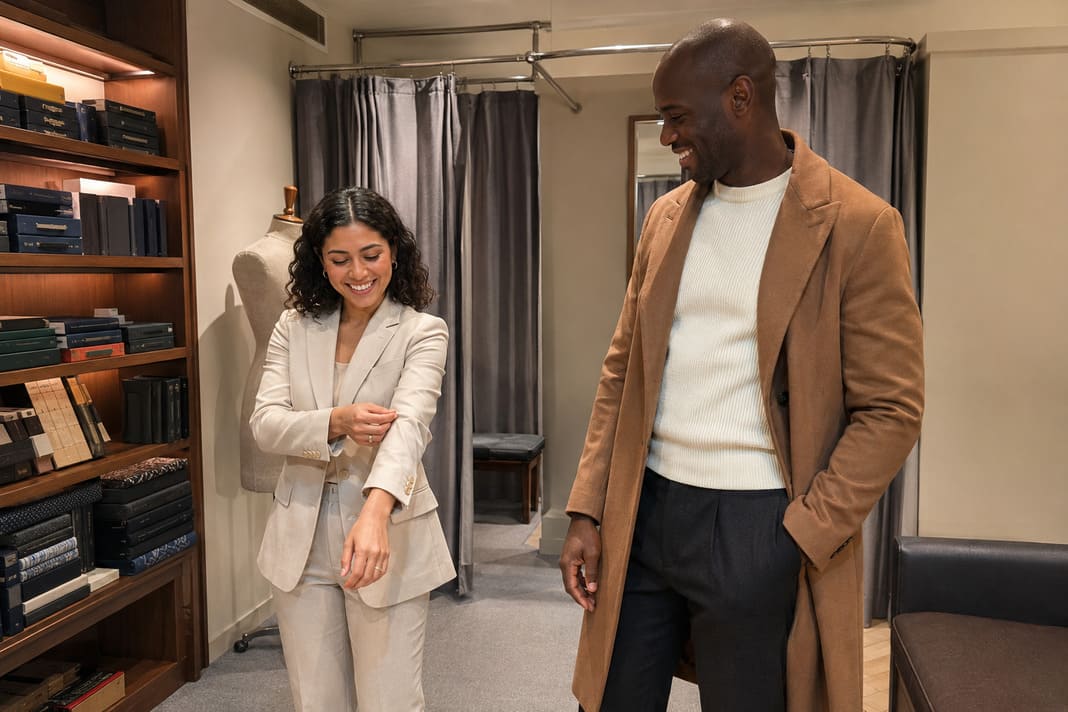
A camel blazer with dark tailored trousers creates a relaxed smart-casual look for the man, while the woman wears an ivory trouser suit with soft tailoring, demonstrating bespoke clothing designed for different body shapes, personal styles and fit preferences.
Adaptive tailoring treats comfort and access as design requirements
Adaptive tailoring belongs inside inclusive bespoke tailoring, because clothing has to work with the client’s body and routine. Disabled clients, clients with sensory sensitivities and clients with mobility or dexterity needs may all need different solutions, so the useful question is what the garment must allow the person to do.
This is general information, not legal advice. GOV.UK guidance on the Equality Act 2010 explains that discrimination, harassment and victimisation in services are covered in relation to protected characteristics including disability, gender reassignment, sex and sexual orientation. The 2026 draft Code of Practice also explains that service providers have a duty to make reasonable adjustments for disabled people in relation to services to the public.
Movement concerns can affect jacket length, armhole comfort, trouser shape, pocket position and the amount of ease through the seat and thigh. A client who sits for long periods may need a different balance from a client who stands, walks and reaches through most of the day.
Dexterity can shape fastening choices, lining choices and ease of dressing. Buttons, hooks, closures and pocket access should be discussed without awkwardness, because small changes can decide whether a garment gets worn often or stays in a wardrobe.
Sensory comfort can influence cloth handle, lining, seam placement, labels and pressure points. A fabric that looks beautiful but feels scratchy at the neck or heavy at the shoulder will not serve a client who needs calm, predictable contact against the skin.
Seated fit deserves specific attention. Jacket fronts, trouser rise, waistband position and pocket placement can all behave differently when the client is seated. A fitting that only studies a standing posture may miss the moment that matters most.
Privacy matters throughout the appointment. Some clients need more time, clearer consent before touch, a slower fitting pace or firmer boundaries around changing. The better fitting room treats those needs as practical information, just like cloth weight or sleeve length.
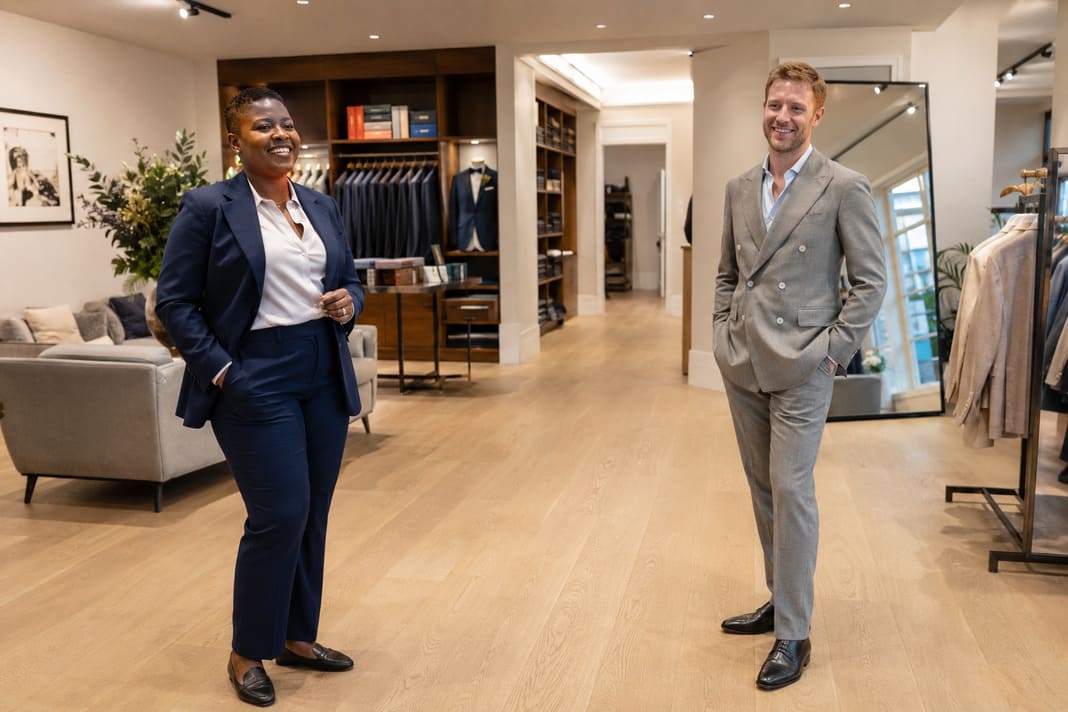
A navy tailored trouser suit and a light grey checked suit demonstrate bespoke businesswear created for different clients, highlighting inclusive tailoring through personalised fits, diverse styling choices and clothing that reflects individual confidence.
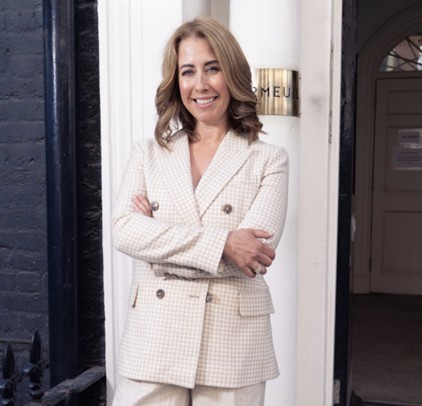
Pro Tip: If privacy or mobility is important, mention it at the start of the consultation so the fitting pace and room setup can support it properly.
Cloth and construction carry identity as well as style
Cloth selection is one of the clearest ways to control how a garment reads and feels. Weight, drape, texture and handle can make a jacket feel sharper, softer, cleaner or more relaxed, and those qualities matter for gender expression as well as visual polish.
Construction then gives the cloth direction. Shoulder padding, canvas, lapel roll, chest structure, button stance, vents and trouser width all affect the message of the garment. A firm shoulder can add presence. A softer chest can reduce formality. A fuller trouser can change proportion without making the outfit look casual.
Styling details should support the client’s presentation rather than decorate it. Lapel width, waistcoat shape, shirt collar, lining comfort, pleats, buttons and pocket placement all have jobs to do. Each choice should answer a real question: how formal the garment must be, how the client wants their body framed, how much movement they need and how the item will sit with the rest of the wardrobe.
Fielding & Nicholson lists women’s workwear options across two-piece and three-piece business suits, blazers and jackets, trousers for work, skirts, dresses, shirts and blouses. That breadth matters because inclusive tailoring should not be confined to one type of suit or one kind of client. Shirts, outerwear, separates, ceremonial clothing and professional wardrobes all benefit from the same care over proportion and use.
Good styling can be expressive, but it should never become costume unless the client wants theatre. A refined garment can hold personality through small decisions: the lapel that frames the chest cleanly, the trouser width that steadies the line, or the lining that feels smooth against the body all day.
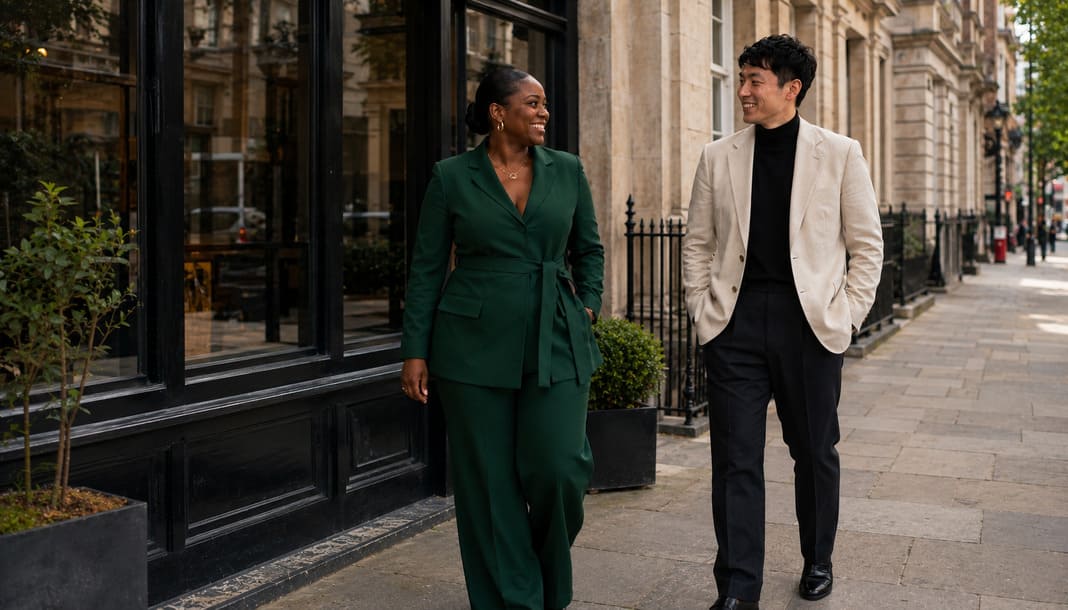
A woman wears a structured forest-green trouser suit while a man pairs an ivory blazer with black tailored trousers, illustrating inclusive bespoke tailoring with personalised silhouettes, contrasting styles and clothing designed to suit different wearers.
Inclusive tailoring is moving into everyday wardrobes
Inclusive tailoring is shifting away from the single occasion outfit and into clothing that has to work repeatedly. Wedding suits and ceremonial looks still matter, but many clients now need jackets, trousers, shirts, outerwear and separates that support work, travel, formal events and daily presentation with the same level of care.
A good bespoke pattern can become a reference point. Future garments can keep the parts that work and adjust the parts that no longer fit the client’s body, role, routine or presentation. That continuity is where long-term wardrobe planning becomes useful: the client avoids isolated pieces that look right once but do not connect to real life.
Wardrobes also need room for change. Bodies change, professional settings change, mobility needs can shift and gender expression may become more settled or more fluid over time. During the next 12 to 24 months, the strongest inclusive tailoring will be judged less by a single striking outfit and more by whether its garments can keep working across everyday life, ceremony and change.
Frequently asked questions
Can a woman get a bespoke suit from a tailor known for menswear?
Yes, a woman can work with a tailor associated with menswear if the process can interpret her measurements, posture, silhouette and presentation properly. The important point is whether the pattern is made for her body, not whether the house began with menswear traditions.
Can bespoke tailoring work with a binder?
Yes, bespoke tailoring can account for a binder when the client intends to wear one with the finished garment. The garment should be fitted over the underlayer that reflects the client’s real use, because chest shape, jacket closure and comfort can all change.
What should someone wear to a tailoring appointment?
A client should wear or bring the shoes and undergarments they expect to use with the finished garment. Existing clothes that fit well or fit badly can also help the tailor see what the client wants to repeat or avoid.
Can an existing suit be changed to feel more gender-affirming?
Sometimes an existing suit can be altered to better support a client’s presentation, especially through length, waist shape, trouser finish or small proportion changes. Large changes to shoulders, rise, chest structure or hip balance may be limited by the original cut.
Why think about a wardrobe instead of one bespoke outfit?
A single outfit can solve one event, but a wardrobe approach helps the client build repeatable fit, useful separates and consistent presentation. Over the next 12 to 24 months, inclusive tailoring will matter most in clothing that works across work, ceremony, travel and changing bodies.