What is a fused suit, and why does it matter?
A fused suit uses adhesive to bond the interlining to the outer fabric, rather than stitching the layers together. This technique is common in machine-made suits and allows for faster, lower-cost production, but it sacrifices structure, longevity and natural movement.
Unlike canvassed suits, which use stitched layers of canvas (often made of horsehair and wool) to shape the garment over time, fused suits rely on glue to hold everything in place. The result may look tidy at first, but the construction lacks flexibility and often breaks down more quickly.
Key differences between fused and canvassed suits:
- Construction method: Fused suits use adhesive; canvassed suits use hand or machine stitching
- Structure: Canvas shapes the chest naturally over time; fused layers are flat and rigid
- Durability: Adhesives degrade faster, especially with heat and moisture
- Drape: Canvassed suits flow and contour with the body; fused suits can appear stiff or boxy
- Feel: Fused suits often lack the softness and subtle support of canvassed tailoring
The interlining of a suit plays a important role in defining how it fits, moves and ages. Knowledge this hidden layer helps explain why two suits that appear similar may behave very differently in wear.
What Is In This Article
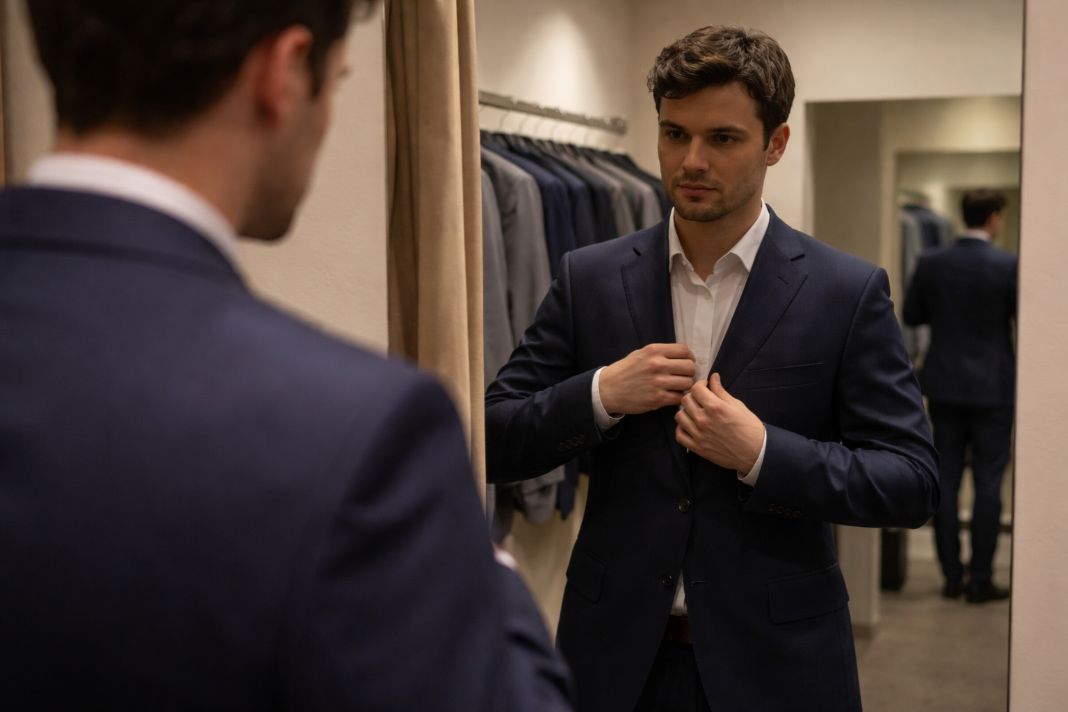
An illustrative photo of someone inspecting the lapel of a suit in a fitting room mirror
How to Spot a Fused Suit
Trying on a suit that looks promising on the hanger can quickly become disappointing when you move in it. Fused construction often reveals itself in subtleties that are easy to miss without knowing what to check.
Look for these signs:
- Stiff or unyielding lapels The lapel should roll softly from the collar, not sit flat or feel rigid. A fused lapel often creases sharply or springs back unnaturally.
- Flatness in the chest area A canvassed chest will have a gentle, rounded structure that responds to your movement. In contrast, a fused chest can feel like a single, inflexible sheet.
- Bubbling under the surface Over time, or even in-store with poor storage, you may notice small blisters forming in the fabric. This is caused by the glue separating under stress or moisture.
- No natural drape If the suit hangs awkwardly or creates sharp angles rather than flowing lines, it may be fused. The interlining controls how the suit follows the body's shape.
- Heat or pressure distortion If you press your hand over the front panel and feel unevenness or stiffness, it could indicate adhesive beneath the surface.
If you're uncertain, ask your tailor or retailer directly. A reputable professional will be open about how a suit is built and why it suits a particular price point.

Pro Tip: Press lightly along the front chest of a suit to detect glue distortion or bubbling before purchase.
Why Fused Suits Fail Over Time
A fused suit may look sharp when new, but its structural integrity often deteriorates more quickly than stitched alternatives. These failures arise not from style choices, but from how materials respond to wear and care.
When glue is used to bond the suit's layers, it introduces a vulnerability that stitching avoids. The adhesive can break down due to heat, friction or cleaning solvents, which causes telltale bubbling or sagging.
Common problems seen in fused suits:
- Delamination: The glued layer separates from the fabric, leading to bubbling or rippling
- Loss of shape: Without stitched canvas, the suit cannot retain its form over time
- Heat damage: High temperatures from pressing or daily wear accelerate adhesive failure
- Reduced flexibility: Fused panels cannot adapt to body movement or posture changes
- Dry cleaning wear: Solvents and repeated pressing weaken the glue, shortening the suit's life
For someone who wears a suit regularly, for meetings, travel or events. These issues compound quickly. What seemed like a budget-friendly choice becomes a costly replacement within a few seasons.
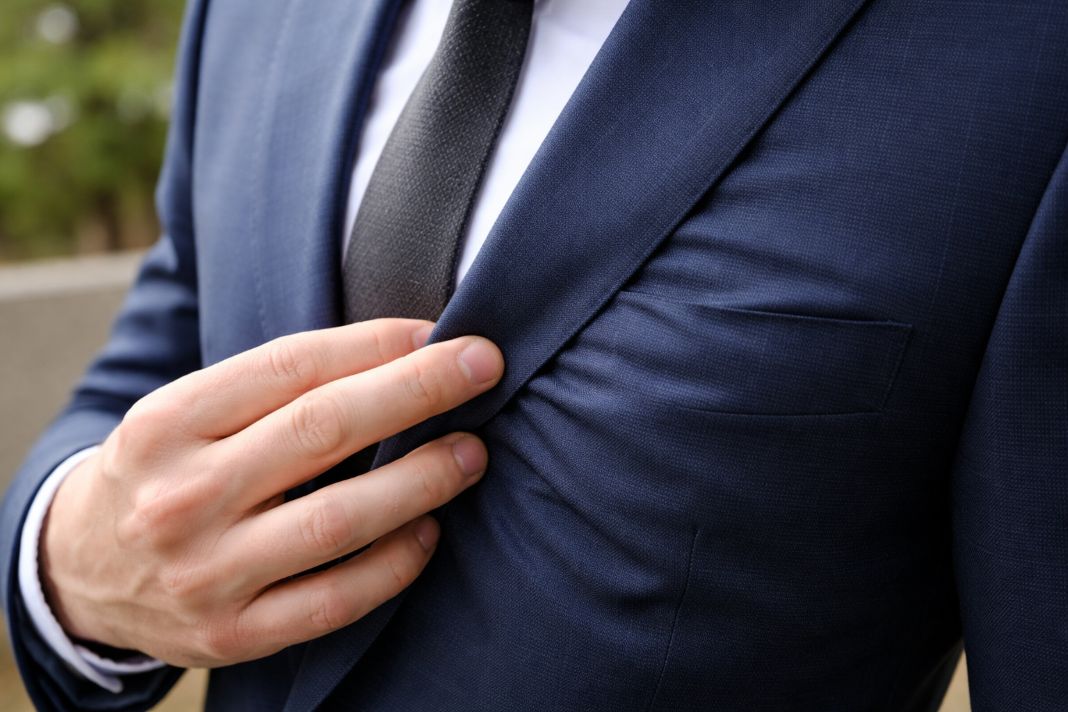
An illustrative photo of bubbling on a suit’s chest panel under natural light, with fingers pressing lightly to highlight the shape

Pro Tip: Choose suits with higher natural fibre content in the interlining to minimise adhesive-related failures.
The Role of Canvas in Suit Construction
Canvas is the structured layer between the outer fabric and inner lining of a suit, usually made from horsehair or a blend of natural fibres. It is stitched, not glued, which allows the garment to move, shape and settle over time.
There are two main types:
- Full canvas: Extends from the shoulder to the hem, offering the best structure and long-term performance
- Floating (half) canvas: Covers the chest and lapel, providing some structure while reducing weight and cost
Unlike fused suits, which maintain a fixed shape, a canvassed suit evolves with the wearer. It subtly conforms to your body and becomes more comfortable after repeated wears.
Canvas vs fused: A summary
- Flexibility: Canvas adapts to your movements; fusing stays rigid
- Longevity: Canvas retains structure for years; glue breaks down
- Feel: Canvas supports the fabric with subtle resilience; glue often feels plasticky
- Appearance: Canvas promotes a natural drape and clean line
Wearing a well-canvassed suit is much like breaking in quality leather shoes. It takes time, but the result is distinct comfort and simplicity that reflects your posture over years, not days.
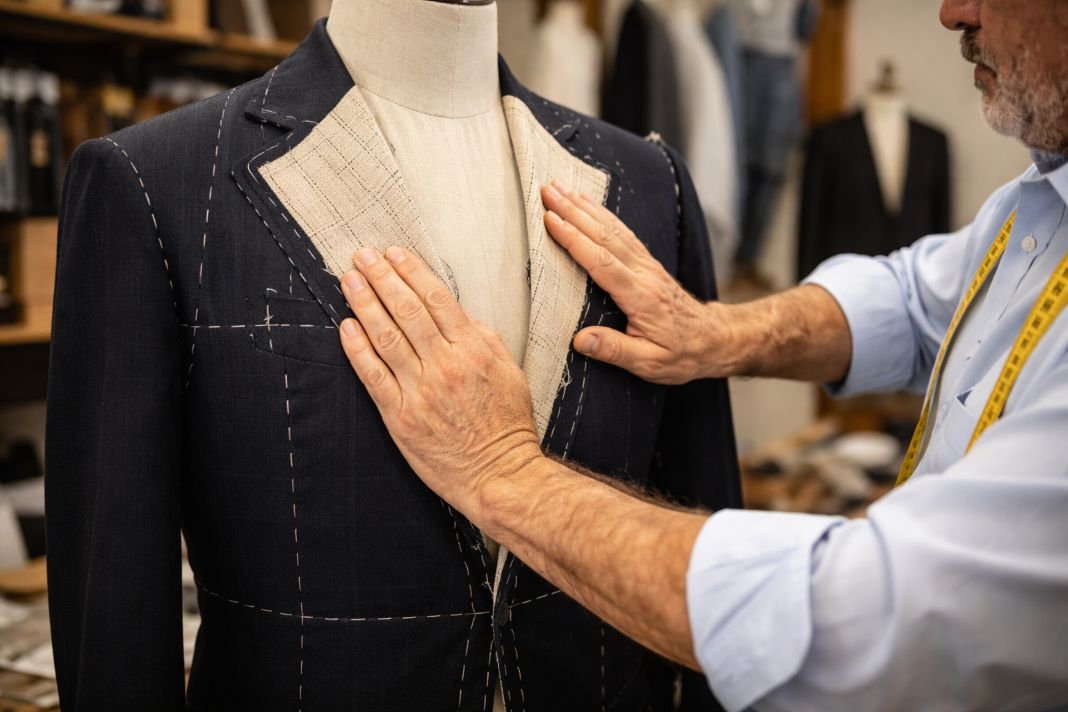
An illustrative photo of a tailor conducting a canvas test using hand pressure over a jacket front on a mannequin
When Fused Suits Might Be Acceptable
Fused construction has its place, especially for occasional wear or where long-term durability is not a priority. Choosing a fused suit is not inherently wrong, so long as expectations align with the intended use.
Scenarios where a fused suit could be a reasonable option:
- One-off events such as weddings or interviews
- Travel wardrobes where weight and cost matter more than endurance
- Budget purchases with planned limited wear
- Growing wardrobes where sizing may change
When selecting from the fused category, opt for reputable brands using good-quality outer fabrics and consistent taping in stress areas. Inspect the chest carefully for early signs of bubbling or stiffness and ensure that fit is prioritised, as there is no canvas to compensate structurally.
Awareness of trade-offs allows you to make practical decisions without getting caught by false economy.
How Bespoke Tailoring Avoids These Pitfalls
Unlike mass-produced suits, bespoke tailoring begins with construction, not cost-cutting. These garments are shaped over a series of fittings using full canvas and hand-stitched techniques, which remove the need for synthetic adhesives entirely.
Tailoring houses such as Fielding & Nicholson create garments that develop with the client. The interlining is hand-padded and basted together to allow natural flexibility, and layers are shaped to the individual’s posture and proportions through multiple fittings.
Benefits of bespoke construction:
- Longer lifespan: Proper canvas and careful stitching mean the suit maintains its shape for years
- Repairability: Parts can be adjusted or restored without compromising structure
- Comfort over time: The internal canvas moulds to the wearer, offering increasing comfort
- Personalisation: Every detail, from cloth to cut, is tuned to the client’s taste and daily life
A bespoke suit built this way does not just survive time but improves with it. The canvas works invisibly but consistently, correcting posture, supporting movement and aging with quiet dignity.
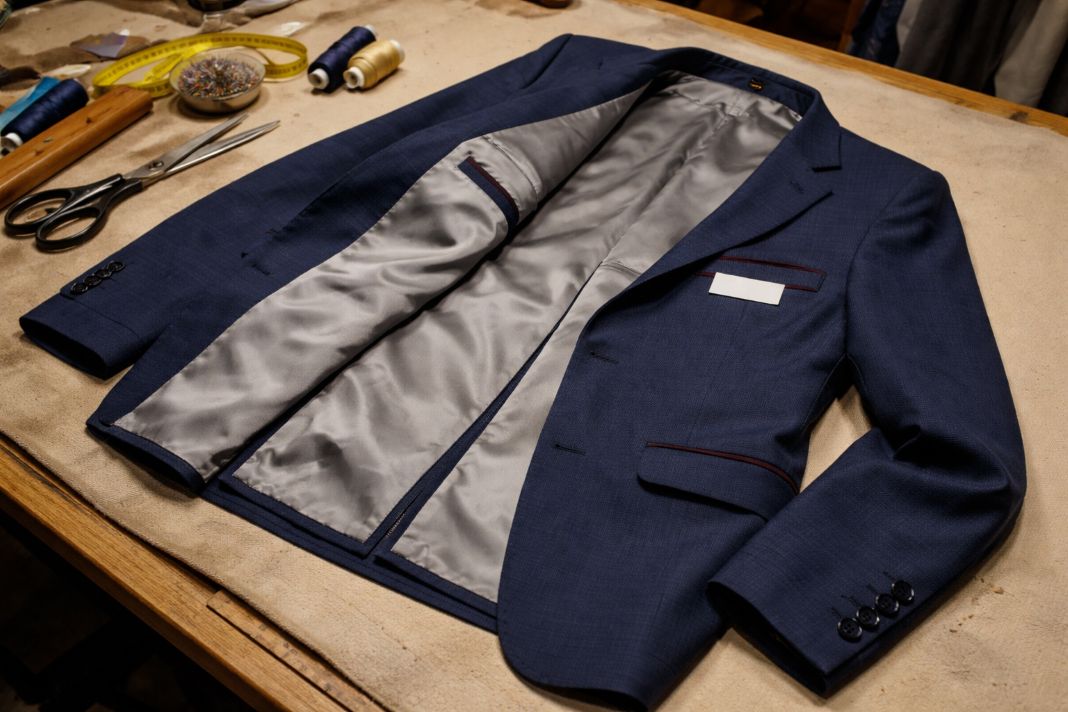
An illustrative photo of a suit jacket laid flat on a tailor’s table, partially turned inside out showing the inner lining
Questions to Ask Before Buying a Suit
The decision to invest in a suit, whether off-the-rack, made-to-measure or fully bespoke, becomes easier when you know what questions to ask. These help reveal the true quality behind the showroom lighting and elegant mannequins.
Smart questions to ask:
- What type of construction does this suit use, canvas or fused?
- Is the chest fully canvassed or partially?
- Will the interlining be stitched or glued?
- How should this suit age with wear?
- What happens if the suit needs repairing in a few years?
- How does this cloth respond to regular cleaning or travel?
- How many fittings are included in the process?
Tailors at Fielding & Nicholson, for example, welcome questions like these because they reflect a thoughtful, engaged client. A good tailor will not rush technical queries but instead use them as an opportunity to explain how construction and cloth selection affect wearability over time.
Knowing which details matter helps you approach tailoring with confidence. Whether you choose a fused or canvassed suit, the focus should always be on aligning construction with purpose, and trusting that the internal build matters as much as the visible fit.