What happens during a client’s first tailoring consultation, and how does that lead to a long-term wardrobe?
The first bespoke consultation isn’t about picking fabrics or finalising a look. It starts quietly, with a conversation. The tailor listens more than they speak. That’s how trust begins. Over time, through fittings and feedback, clients gain confidence and clarity. Their clothes start to reflect who they are. A long-term wardrobe doesn’t appear all at once. It’s built in stages, shaped by growing between client and tailor.
What Is In This Article
Why the First Consultation Is About Listening, Not Decisions
A private showroom can feel surprising. It’s not a display space, and there’s no expectation to know your style. Instead, you’re invited to sit, talk, and describe your life, not just your clothes.
Many clients arrive thinking they need answers. But the first tailoring consultation is the start of a conversation–often the beginning of style discovery. Especially with tailors trained in the Savile Row tradition, the process begins with your lifestyle and habits, not your measurements. They’ll ask about work, comfort, routines–what you wear when you feel most like yourself. These questions guide choices about fit, cut and cloth.
There’s no rush to decide anything. Many clients leave that first meeting with a sense of ease. You don’t need a defined style, or a clear outcome. The bespoke consultation process supports uncertainty. You’re not being sold to. You’re being understood.
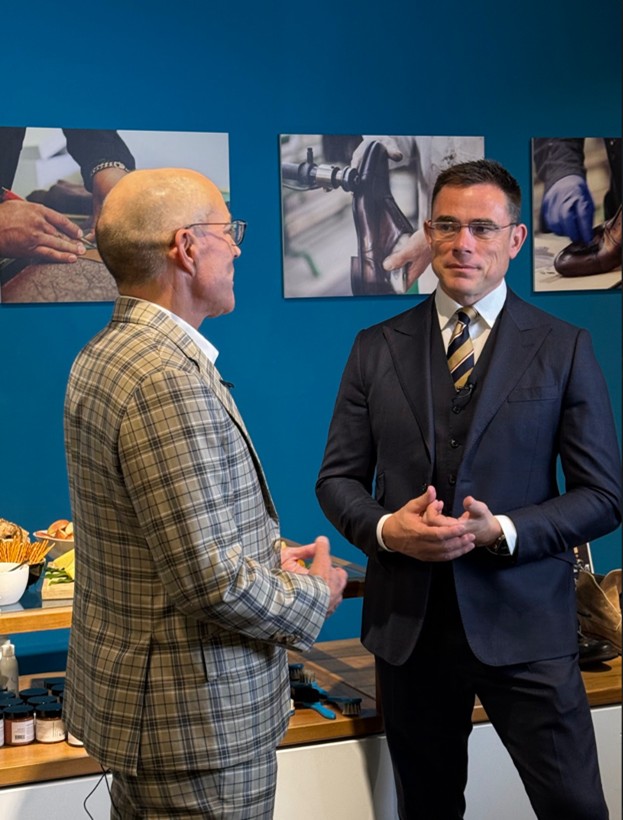
Fielding & Nicholson’s private showroom consultations reflect this. They create space for slow impressions, welcoming clients into a relaxed, listening-first environment. Often at a bespoke fitting, the process begins with conversation rather than decisions, setting a calm and thoughtful tone.
Pro Tip: Don’t overthink your first visit. The best consultations start with listening, not decisions.

Early Uncertainty and the Role of the Tailor as Guide
Feeling unsure is a common place to start. A good tailoring consultant recognises this and gives space to explore. Confidence builds through subtle guidance, not direct instruction.
Tailors often act like interpreters, noticing posture, hesitation and comfort cues. Suggestions are rooted in lifestyle rather than fashion trends. Inclusive tailoring–for all genders and body types–respects that each client brings their own story and needs.
At this early stage, it’s less about proving taste and more about feeling understood. That’s where style reassurance begins. A good tailor doesn’t dictate. They observe, interpret and recommend. For clients meeting a bespoke tailor for the first time, this quiet reassurance makes all the difference.
The First Commission as a Learning Phase, Not a Finished Answer
First commissions often begin with conservative choices not to restrict, but to allow learning. Wearing a garment teaches more than any fitting room mirror. This is where familiarity with fit begins. How a jacket moves, how trousers sit, how fabric behaves over time.
Tailors pay attention to use. They’ll ask how sleeves feel when you’re at your desk, or how the collar sits when you’re on the move. These insights inform future garments. The aim here isn’t immediate precision. It’s to start the feedback loop.
At Fielding & Nicholson, a first tailoring commission begins the bespoke suit learning curve. Clients are encouraged to wear the garment and let that experience shape what comes next.
Pro Tip: Your first commission is not your final statement. It’s where learning begins.
What Fittings Quietly Teach Clients About Their Own Style
Fittings are where garments meet reality. Clients begin to notice what feels right, not just what looks good. A basted fitting reveals how posture influences shape. A forward fitting might show how shoulder slope affects balance.
Tailor cutters guide the session carefully. There’s no jargon or pressure–just movement, observation and dialogue. The mirror becomes a tool, helping clients tune into their own proportions and preferences.
Each fitting builds confidence. Clients learn what comfort means for them. They begin to recognise small changes–an eased seam, a better drape–and how those affect how they feel in their clothing. This is where personal style starts to take root. The bespoke fittings process offers a form of style recognition grounded in body awareness, personal proportions and comfort discovery.
What Really Changes Once the First Garment Is Delivered
Garment delivery isn’t a finish line. It’s the moment the clothes go to work. Clients find that dressing becomes simpler. There’s less hesitation. Choices feel clearer.
A good fit brings calm. The garment behaves as expected. It supports, rather than distracts. Small adjustments or alteration follow-ups are natural, and part of refining the outcome.
This is what often happens after bespoke suit delivery. Dressing takes less thought. There’s a quiet sense of assurance in knowing something fits your body, your lifestyle, and your sense of self. The feedback loop continues with each wear, building trust.
From Repeat Commissions to Thinking in Wardrobes
Often, one commission leads to another. But not from a desire to buy more–rather, from seeing what works. Clients start thinking in outfits, not one-off pieces. They consider what complements the jacket they already own, or what they might need for colder months.
Wardrobe planning happens gradually. Pieces start to work together:
-
A casual jacket might balance out a formal suit
-
A lighter fabric adds seasonal variation
-
Accessories may echo colours already present in earlier commissions
-
Trousers and jackets begin to be selected with layering or versatility in mind
The mindset shifts from buying clothes to building a system. Sequencing garments based on need and coherence becomes natural.
The focus isn’t on accumulation; it’s on cohesion. Capsule wardrobes and long-term wardrobe planning become a form of ease. Fielding & Nicholson supports this approach, helping clients think across seasons and life events.
How Trust Reduces Effort and Refines Personal Style Over Time
As trust builds, the process simplifies. Clients no longer need to explain everything. The tailor remembers their preferences–the structure of a lapel, the feel of a cuff, the shape of a shoulder. This trust reduces decisions. It replaces doubt with recognition. There’s no need to start over each time. Instead, each new commission builds on what came before.
This is what bespoke tailoring trust looks like. Style becomes less of a task and more of a rhythm. Clients aren’t reinventing themselves. They’re refining what already works. With Fielding & Nicholson, personal style is a quiet process. The more is known, the less needs to be said. Long-term tailoring relationships create mutual and decision fatigue reduction.
Long-Term Ease, Confidence, and Continuity in Dressing
Over time, dressing becomes instinctive. The hesitation fades. There’s clarity in what works and comfort in returning to it. Clients with long-term bespoke wardrobes often describe this as continuity. Their clothes adapt to shifts in work, life and season without needing reinvention. Styles evolve, but they do so gently.
A wardrobe built this way doesn’t demand attention. It fits your life. It provides consistency. It supports who you are, every day. Lifetime wardrobe development becomes a personal rhythm rooted in quiet confidence and long-term ease, this is what defines a long-term bespoke wardrobe.